Last Updated on July 27, 2026 by Daniel Globe
Choosing the best hiking shoe is less about finding one model that beats every competitor and more about matching the footwear to your feet, terrain, weather, pack weight, and hiking style. A shoe that feels perfect on a dry day hike may be a poor choice for a wet, rocky backpacking trip, while a heavy boot can be unnecessary on smooth local trails.
The most reliable approach is to start with fit, then compare traction, cushioning, protection, breathability, waterproofing, and weight. Current models such as the Salomon X Ultra 5 GORE-TEX and Merrell Moab 3 show how modern hiking footwear balances these traits, but your own fit test should decide which pair goes home with you.
Quick Answer
The best hiking shoe is one that fits securely without pressure points, leaves enough room for your toes, grips the terrain you hike, and provides the protection you need without unnecessary weight. Choose waterproof footwear for persistently wet or cold conditions and more breathable footwear when heat and fast drying matter more.
Key Takeaways
- Fit matters more than brand. Hiking footwear should feel secure at the heel and midfoot without pinching, while leaving room for your toes to move.
- Trail runners suit lighter, faster hiking; hiking shoes balance flexibility and protection; hiking boots add structure and coverage for rough terrain and heavier loads.
- Waterproof membranes help in cold, muddy, or persistently wet conditions, but non-waterproof shoes are usually cooler and can dry faster.
- The Salomon X Ultra 5 GORE-TEX is a current comfort-focused option with EVA cushioning, stable chassis construction, GORE-TEX protection, and an All-Terrain Contagrip outsole.
- The Merrell Moab 3 remains a strong durability-focused option thanks to its protective rubber heel and toe caps, supportive construction, and Vibram TC5+ outsole.
- Try hiking shoes with your real hiking socks and orthotics, test them on an incline if possible, and wear them before committing to a long trip.
- Clean muddy footwear promptly, dry it away from direct heat, and use only care products recommended for its materials and waterproof membrane.
Note: There is no universal “most comfortable” or “most durable” hiking shoe. Foot shape, shoe volume, terrain, pace, pack weight, and climate can make the same model excellent for one hiker and uncomfortable for another.
Disclosure: As an Amazon Associate I earn from qualifying purchases. Some links on this page are affiliate links, at no extra cost to you.
Key Features to Look for in a Hiking Shoe
A good hiking shoe should work as a system. Fit keeps the foot stable, the midsole cushions and supports it, the outsole supplies traction, and the upper protects against trail debris and weather. According to REI’s hiking-footwear fitting guide, the best choice also depends on trip length, terrain, and the load you plan to carry.
Finding the Right Fit
A well-fitting hiking shoe helps reduce rubbing, heel movement, and toe impact on descents. The shoe should feel snug without feeling tight. Your heel should stay reasonably secure when you walk uphill, and your toes should not hit the front of the shoe when you walk downhill.
Try shoes later in the day, when your feet may be slightly larger from normal activity. Wear the same socks you expect to hike in, and bring your regular orthotics or aftermarket insoles if you use them. REI also suggests checking the insole under your foot; roughly a thumb’s width between your longest toe and the end of the insole is a useful starting point for length.
Warning: Do not assume a shoe will become wider, longer, or stop creating a major pressure point after “breaking in.” Stiffer footwear may soften with use, but an obviously poor fit in the store is a reason to try another size, width, or model.
Traction and Grip
Look at the outsole pattern as well as the rubber compound. Widely spaced, more pronounced lugs can help shed mud and bite into loose soil, while less aggressive tread can feel smoother on maintained trails and hard surfaces. Technical terrain may also benefit from a firmer platform that resists twisting when you step on rocks or roots.
No outsole grips every wet rock, root, slab, and muddy slope equally well. Treat traction as extra security rather than permission to ignore careful foot placement.
Weight, Breathability, and Comfort
Lighter footwear can feel less tiring and more agile during long days, but weight should not be judged alone. A slightly heavier shoe or boot may provide greater underfoot structure, abrasion resistance, toe protection, or ankle coverage.
Breathability matters in warm conditions. Lower-cut hiking shoes and trail-running shoes usually use lighter materials and can release heat and moisture more readily than burly waterproof boots. In cold, muddy, or consistently wet environments, a waterproof membrane may be worth the extra warmth and slower drying time.
Support, Cushioning, and Protection
The midsole controls much of the shoe’s cushioning and underfoot feel. Softer foam can feel comfortable on long walks, while a firmer platform may feel more stable on uneven ground. Some shoes also use shanks, chassis systems, or other structural pieces to limit excessive twisting.
For rocky trails, look for a durable toe bumper and enough underfoot protection that sharp stones do not become painful after several hours. Backpackers carrying heavier loads may prefer more structure than hikers carrying only water and a light daypack.
Trail Runner, Hiking Shoe, or Hiking Boot?
| Type | Best Use | Advantages | Trade-Offs |
|---|---|---|---|
| Trail runner | Fast hiking, maintained trails, light packs | Light, flexible, breathable, usually little break-in | Typically less protective and may wear faster |
| Hiking shoe | Day hikes and light-to-moderate terrain | Good balance of support, flexibility, protection, and weight | Less coverage than a mid- or high-cut boot |
| Hiking boot | Rugged terrain, colder weather, heavier packs | More structure, coverage, protection, and durability | Heavier, warmer, and often slower to dry |
Waterproof vs. Non-Waterproof Hiking Shoes
Waterproof hiking shoes are useful when you expect prolonged rain, mud, wet vegetation, shallow stream crossings, or cold conditions. A waterproof membrane is not automatically the best choice for every hike, however. Once water enters over the collar, a waterproof shoe can take longer to dry.
For hot weather or trips where your feet are likely to become wet regardless of the membrane, a ventilated, quick-drying shoe may be more comfortable. The choice is therefore about the conditions you hike in, not simply whether one construction is “better.”
The best hiking shoe is the one you stop thinking about once the trail begins.
Comfort-Focused Pick: Salomon X Ultra 5 GORE-TEX
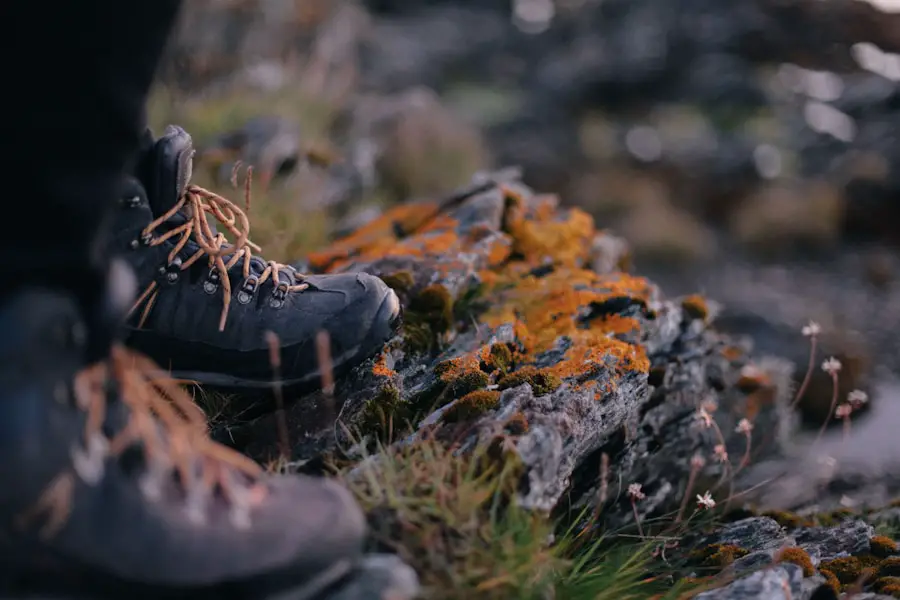
The older Salomon X Ultra 3 GTX mentioned in the original guide has been succeeded by newer generations. A current alternative is the Salomon X Ultra 5 GORE-TEX, a low hiking shoe designed for full-day hikes and mixed terrain.
Salomon lists the men’s low version at 13 ounces per shoe, with an 11 mm heel-to-toe drop. It combines an EnergyCell EVA midsole with an Advanced Chassis for lateral support, SensiFit construction around the foot, a GORE-TEX membrane, and an All-Terrain Contagrip outsole.
Those specifications make it a strong comfort-and-stability candidate for hikers who want a relatively light waterproof shoe without moving to a bulky boot. The cushioning is described by Salomon as soft and protective, while the chassis adds structure for uneven terrain.
That does not mean it will be the most comfortable shoe for every foot. Salomon’s regular version may feel different from wider-fitting brands, so heel hold, forefoot width, and shoe volume still need to be tested in person whenever possible.
Pro Tip: When testing a hiking shoe, spend time walking both uphill and downhill. Heel lifting on the climb and toes striking the front on the descent are stronger warning signs than how plush the shoe feels while standing still.
Durability-Focused Pick: Merrell Moab 3
The original comparison included the Merrell Moab 2 Mid WP, Salomon X Ultra 3 Mid GTX, KEEN Targhee III Mid WP, and La Sportiva Nucleo High GTX. Those generations and their old prices are no longer the most useful comparison, so the table below uses their closest current equivalents.
Note: Prices below were checked on July 27, 2026 and can change by color, size, sale, and retailer.
| Current Model | Upper | Listed Weight | Waterproof | Listed Price |
|---|---|---|---|---|
| Merrell Moab 3 Mid Waterproof | Pig suede leather and mesh | 16.36 oz per shoe | Yes | $170 |
| Salomon X Ultra 5 Mid GORE-TEX | Matryx synthetic/textile | 16 oz per shoe | Yes | $190 |
| KEEN Targhee IV Waterproof | Premium nubuck leather with mesh lining | 20.11 oz per shoe | Yes | $190 |
| La Sportiva Nucleo High II GTX | Nubuck leather with breathable Nano-Cell construction | 2 lbs. 1.6 oz per pair | Yes | $259 |
For hikers who liked the older Merrell Moab 2 Ventilator, the current Merrell Moab 3 carries forward the same general all-purpose concept. The current non-waterproof version uses a pig-suede leather and breathable mesh upper, protective abrasion-resistant rubber at the heel and toe, a molded nylon arch shank, Merrell Air Cushion in the heel, and a Vibram TC5+ outsole.
These features make the Moab 3 a sensible durability-focused choice for hikers who want more protection than a lightweight trail runner without stepping into a heavy backpacking boot. The ventilated version also remains more suitable for warm conditions than a waterproof membrane model.
Durability has several meanings, however. If sole separation is a particular concern, the KEEN Targhee IV Waterproof takes a different approach. KEEN uses its fused KEEN.FUSION construction instead of a conventional glued bond and markets the current Targhee IV specifically around improved resistance to delamination.
Comfort vs. Durability in Hiking Shoes
Comfort and durability are not strict opposites, but each design choice has consequences. Softer foam and lightweight mesh can make a shoe feel flexible and cool, while thicker leather, protective overlays, firmer midsoles, and larger toe bumpers can add weight and stiffness.
A long-distance day hiker carrying a light pack may value cushioning, low weight, and breathability. Someone carrying camping equipment over loose rock may prefer a firmer platform and more upper protection, even if the footwear weighs more.
| Your Priority | Features to Favor |
|---|---|
| Long, fast day hikes | Lower weight, breathable upper, responsive cushioning, secure heel |
| Rocky technical terrain | Stable platform, protective toe, durable upper, strong multi-surface traction |
| Wet or cold conditions | Waterproof membrane, secure tread, enough volume for appropriate socks |
| Hot, dry conditions | Ventilated upper, lower weight, quick-drying materials |
| Heavier backpack | More underfoot structure, stable midsole, protective upper, secure lacing |
You do not necessarily need multiple pairs, but hikers who regularly switch between hot day hikes and wet backpacking trips may find that one pair cannot optimize both conditions.
Tips for Choosing the Right Hiking Shoe for Your Needs
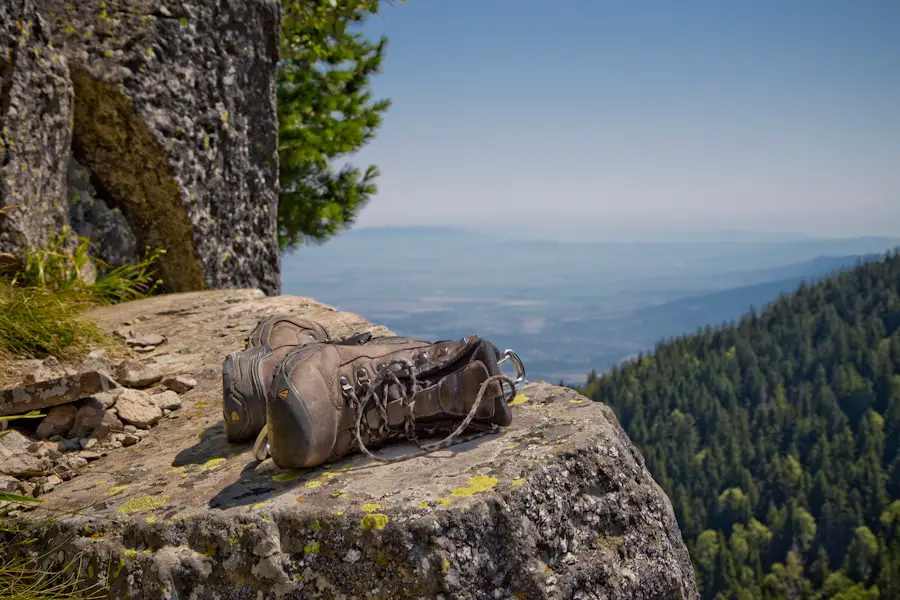
Selecting hiking footwear should start with the hike rather than the logo on the shoe. A practical fitting process makes it easier to eliminate unsuitable models before small problems turn into painful ones on the trail.
1. Define the Terrain and Trip
For groomed, mostly flat trails and a light pack, a flexible hiking shoe or trail runner may be enough. For frequent rocks, roots, steep grades, or a heavier load, consider more structured hiking shoes or boots.
2. Decide How Much Weather Protection You Need
A waterproof membrane is useful for sustained moisture and cold conditions. In hot climates, breathable non-waterproof footwear may be more comfortable and can dry more quickly after becoming wet.
3. Wear Your Real Hiking Socks
Sock thickness changes the available room inside a shoe. Try footwear with the type of socks you actually plan to use rather than thin store socks that create an unrealistically loose fit.
4. Bring Orthotics or Preferred Insoles
If you normally hike with custom orthotics or aftermarket insoles, bring them to the fitting. They can change heel position, foot volume, and available toe room.
5. Check the Heel, Toes, Width, and Volume
- Your heel should stay reasonably secure rather than repeatedly lifting.
- Your toes should have room to move without sliding excessively.
- The sides of the shoe should not squeeze the forefoot.
- No seam or overlay should create a sharp hot spot.
- Your toes should not hit the front when walking down an incline.
6. Walk on an Incline Before Buying
If the store has a ramp or test surface, use it. Walk up, down, and across the slope. A shoe that feels comfortable on flat carpet may reveal heel lift or toe pressure immediately on an incline.
7. Break In and Test the Shoes Before a Major Trip
Flexible hiking shoes and trail runners may need little break-in, while stiffer boots generally benefit from several shorter outings first. Start around the house or neighborhood, progress to a local trail, and confirm that the footwear remains comfortable before relying on it for a remote or multi-day hike.
Pro Tip: Judge fit after walking for a while, not after the first 30 seconds. Pay attention to rubbing, pressure, numbness, heel lift, and downhill toe contact rather than choosing the pair with the softest first impression.
Maintenance and Care for Hiking Shoes
Proper care can help your hiking shoes retain their comfort, traction, and weather protection. After muddy hikes, remove loose dirt before it works deeper into the upper and flex points.
Clean the Shoes Gently
Remove the laces and, when practical, the insoles. Shake out gravel and debris, then brush away loose dirt. For GORE-TEX footwear, GORE-TEX recommends lukewarm water with a small amount of liquid detergent after brushing off surface dirt. Do not use bleach or automatically put hiking shoes in a washing machine.
Dry Them Away From Direct Heat
Let wet shoes dry at moderate temperatures with good airflow. Avoid placing them next to a heater, fire, radiator, or other strong heat source because excessive heat can damage adhesives and footwear materials.
Removing the insoles and loosening the laces can help air circulate through the shoe. If you hike frequently, rotating between pairs can also give a wet pair enough time to dry fully before its next use.
Maintain Water Repellency Correctly
A waterproof membrane and the water-repellent treatment on the outer material do different jobs. When water stops beading on suitable GORE-TEX footwear, the membrane manufacturer recommends restoring the durable water-repellent treatment with an appropriate water-based product.
Do not automatically coat waterproof hiking shoes with heavy wax or grease. GORE-TEX warns that these products can affect breathability. Leather footwear may have different requirements, so follow the shoe manufacturer’s care directions before applying a conditioner or waterproofing treatment.
Inspect High-Wear Areas
Check the outsole, toe cap, heel, flex points, stitching, laces, and the bond between the upper and sole. There is no single mileage at which every hiking shoe must be replaced. Terrain, body weight, gait, storage, and construction all affect lifespan.
Replacement becomes reasonable when the tread has lost the traction you need, the midsole no longer provides adequate support, the upper or sole is separating, persistent leaks cannot be corrected through proper care, or the shoe has become uncomfortable because its structure has broken down.
Warning: Do not take badly worn footwear onto technical terrain simply because the upper still looks acceptable. A smooth outsole, separating sole, damaged lacing hardware, or collapsed support can matter more than cosmetic appearance.
The Ultimate Hiking Shoe for Your Next Adventure
The ultimate hiking shoe is not one universal model. It is the pair that matches your foot shape and keeps working when the trail becomes steep, wet, rocky, hot, or long.
For hikers seeking a light but supportive waterproof shoe, the current Salomon X Ultra 5 GORE-TEX is a strong option to try. For those who prefer the familiar combination of leather, mesh, protective rubber, and Vibram traction, the Merrell Moab 3 remains a practical durability-focused choice. KEEN’s Targhee IV and La Sportiva’s Nucleo High II GTX provide additional options when a more substantial waterproof boot is appropriate.
Do not choose solely from specifications. Try the footwear with your hiking socks, check your heel and toe clearance on an incline, consider your terrain and pack weight, and test the pair on shorter outings before a major hike. A properly fitted shoe will do more for trail comfort than an impressive feature list attached to the wrong shape.
If you also carry photography equipment outdoors, our guide to the best travel camera backpacks can help you choose a practical way to carry camera gear while hiking and traveling.
Love travel? Join Our Facebook Community For More Tips.
Frequently Asked Questions
What features should I look for in the best hiking shoe?
Prioritize a secure fit, terrain-appropriate outsole, comfortable midsole, protective toe area, durable upper, and lacing system that holds your foot without pressure points. Waterproofing is useful when conditions justify it, but it is not essential for every hike.
What hiking footwear is best for different terrains?
Trail runners and flexible hiking shoes work well on maintained trails with light loads. Rough, steep, or debris-covered terrain may justify a more structured hiking shoe or boot with greater toe, upper, and underfoot protection.
How should a hiking shoe fit?
It should feel snug but not tight. Your heel should remain reasonably secure, your forefoot should not be squeezed, and your toes need enough room to move without striking the front of the shoe on descents. Try footwear with your normal hiking socks and orthotics.
What are the benefits of wearing proper hiking footwear?
Well-fitted hiking footwear can improve traction, comfort, underfoot protection, and stability for the conditions you encounter. The amount of structure and protection you need depends on the trail, weather, load, and your own preferences.
How should hiking shoes be maintained?
Brush away dirt, clean the shoes according to the manufacturer’s instructions, and let them dry naturally away from strong direct heat. For waterproof footwear, use only compatible water-repellent treatments and avoid products that the membrane or shoe manufacturer warns against.
Are waterproof hiking shoes always better?
No. Waterproof shoes can be useful in cold, muddy, or persistently wet conditions, but they are generally warmer and can take longer to dry. Breathable non-waterproof shoes can be more comfortable for hot weather and trips where quick drying is a priority.
Do hiking shoes need to be broken in?
Flexible hiking shoes and trail runners often require little break-in, while stiffer hiking and backpacking boots may soften with use. Even comfortable footwear should be tested on shorter walks before you rely on it for a long or remote trip.
When should hiking shoes be replaced?
Replace or retire hiking shoes when worn tread no longer gives suitable grip, the midsole has lost needed support, the upper or sole is separating, structural damage affects fit, or waterproof footwear continues leaking despite correct cleaning and care.
Sources
- REI Co-op — How to Choose Hiking Boots and Shoes — footwear types, terrain, load, fit, toe room, socks, orthotics, and break-in guidance.
- Salomon — X Ultra 5 GORE-TEX — current X Ultra 5 specifications, weight, construction, cushioning, outsole, membrane, and support.
- Merrell — Moab 3 Mid Waterproof — current Moab 3 construction, weight, outsole, waterproofing, and protective features.
- KEEN — Targhee IV Waterproof Hiking Boot — current construction, weight, KEEN.FUSION bonding, outsole, and cushioning information.
- GORE-TEX — Footwear Care Instructions — cleaning, drying, DWR restoration, and treatment precautions.
- REI Co-op — La Sportiva Nucleo High II GTX — current model weight, materials, waterproofing, outsole, and construction details.