
Last Updated on September 10, 2026 by Daniel Globe
A good hiking boot is not simply the heaviest, stiffest, or most waterproof option on the shelf. The best boot is one that fits your foot, matches the terrain and load you carry, grips the surfaces you hike on, and provides the right balance of protection, flexibility, breathability, and durability. Choosing well can make long miles more comfortable while reducing rubbing, hot spots, and unnecessary fatigue.
Quick Answer
A good hiking boot fits securely without pinching, leaves room for your toes, holds the heel in place, and matches your terrain. Look for durable uppers, a supportive midsole and shank or chassis, reliable outsole traction, appropriate water protection, and enough cushioning and protection for the distance and load you plan to carry.
Key Takeaways
- Fit comes first. Your toes should not hit the front, your heel should stay reasonably secure, and the boot should not pinch.
- Match the boot to the hike. Smooth trails and light loads usually need less structure than rough terrain, backpacking, or alpine travel.
- Waterproof boots are useful in wet and cold conditions, but non-waterproof footwear can feel cooler and dry faster in hot weather.
- Traction depends on outsole rubber, lug depth, spacing, and shape rather than one universal tread pattern.
- A high boot collar does not guarantee protection from ankle sprains; overall fit, underfoot stability, conditioning, and terrain awareness still matter.
- Regular cleaning, careful drying, and material-appropriate conditioning or reproofing can extend boot life.
Disclosure: As an Amazon Associate I earn from qualifying purchases. Some links on this page are affiliate links, at no extra cost to you.
Durability: A Good Hiking Boot Should Match the Terrain
Hiking boots face abrasive rock, roots, mud, water, dust, and thousands of repeated flexes. Durable construction therefore matters, especially on rugged trails or multi-day trips. Full-grain leather is valued for abrasion resistance and long service life, while many modern synthetic uppers reduce weight and drying time. Neither material is automatically best for every hiker.
Look beyond the upper material. Stitching, bonded areas, toe protection, the heel counter, outsole attachment, and abrasion-resistant overlays can all affect how well a boot holds up. A reinforced toe cap or rubber rand is especially useful on rocky trails where the front and sides of the boot regularly strike stone.
Do not assume that a more expensive boot automatically lasts longer. Check the manufacturer’s warranty, repair options, and whether the model can be resoled. Warranty coverage varies by brand and normally has specific terms rather than guaranteeing unlimited performance for the life of the boot.
Finding the Right Fit for Comfortable Hiking
Fit is the most important feature of a hiking boot. A technically impressive boot can still cause blisters, pressure points, bruised toes, or numbness if its shape does not match your foot.
Length is only one part of fit. Width, foot volume, heel shape, arch position, and the point where the boot flexes also matter. Different brands and models use different lasts, so the same labeled size can feel very different from one boot to another.
Danner’s boot-fitting guidance recommends room at the toes, a secure heel that does not slide substantially, a snug feel at the sides, and no pinching while walking.
Hiking Boot Fit Checklist
- Wear your hiking socks: Try the boots with the same thickness of socks you expect to use on the trail.
- Check toe room: Your longest toe should not touch the front when standing normally or walking downhill.
- Check heel hold: A small amount of movement can occur in some boots, but substantial heel lift can create friction and blisters.
- Check width: Your forefoot should feel contained without being squeezed.
- Walk on an incline: Use a ramp or stairs when available. Your toes should not slam into the front on descents.
- Look for pressure points: Sharp rubbing, numbness, or pinching in the store is unlikely to become a good fit simply through break-in.
Pro Tip: Feet can swell during a long day of walking. Trying boots later in the day and testing them with your normal hiking socks can give you a more realistic picture of trail fit.
Do Hiking Boots Need to Be Broken In?
Some leather and structured backpacking boots soften and flex more naturally after gradual wear, but break-in should not be used to rescue a poor fit. A new boot should not cause sharp pressure, numbness, severe heel movement, or toe contact from the start.
Before a long trip, wear new boots around the house and on several shorter walks. Increase distance gradually so you can identify hot spots and adjust socks, insoles, or lacing before committing to an all-day hike.
Materials Matter: Choosing the Best Hiking Boot for You
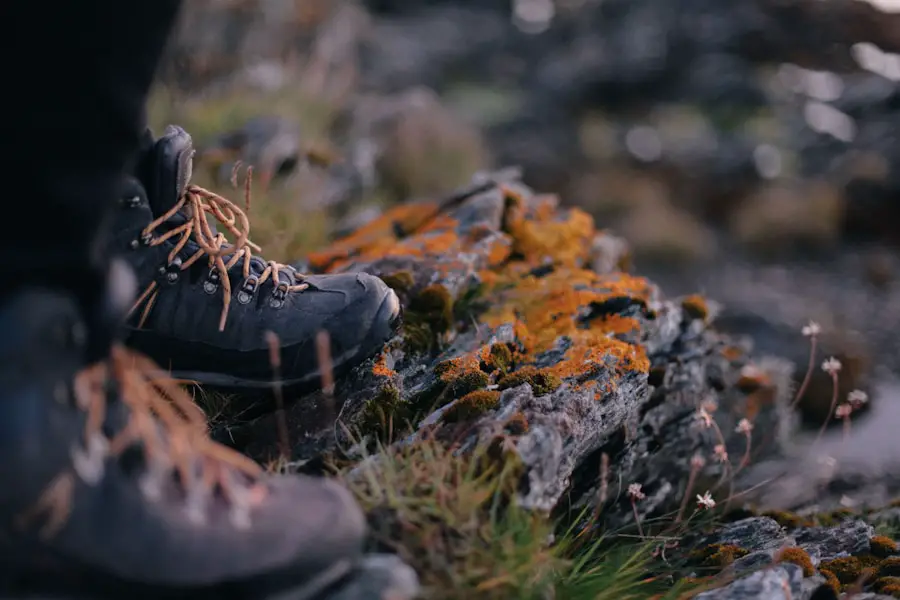
The materials in a hiking boot influence its weight, durability, flexibility, drying speed, weather protection, and feel on the trail. Traditional leather boots can provide excellent abrasion resistance and mold to the foot with use, but they are often heavier and may require more care than synthetic footwear.
Synthetic uppers made with nylon, polyester, technical woven fabrics, or synthetic leather can reduce weight and often dry faster. They also tend to require less break-in. Their durability depends on the fabric, reinforcements, stitching, and construction rather than the word “synthetic” alone.
Many boots combine materials. A model might use leather or abrasion-resistant overlays around high-wear areas while adding technical textile or mesh elsewhere to reduce weight and improve comfort.
Know the Main Parts of a Hiking Boot
- Upper: Covers and protects the foot. Its material strongly affects durability, ventilation, and water resistance.
- Toe cap or rand: Protects the front or perimeter of the boot from rock and abrasion.
- Heel counter: Helps hold the rear of the foot in position.
- Footbed or insole: Provides the immediate platform beneath your foot and can sometimes be replaced for a different fit.
- Midsole: Provides cushioning and contributes significantly to underfoot stiffness and stability.
- Shank or chassis: Adds structure and can limit excessive twisting or flex on rough ground.
- Outsole: The rubber surface that contacts the trail and provides traction.
Match the Hiking Boot to Your Trip
There is no single ideal boot for every trail. The right amount of structure depends on terrain, distance, weather, and the weight you carry.
- Easy paths and short day hikes: Lightweight hiking shoes or flexible boots can provide adequate grip without unnecessary weight.
- Mixed or rocky day hikes: A more protective hiking shoe or mid-height boot can add toe protection, underfoot structure, and debris coverage.
- Backpacking with a heavier load: A firmer midsole and more structured chassis can feel more stable on rough ground.
- Technical alpine terrain: Purpose-built trekking or mountaineering boots may provide greater stiffness, weather protection, and compatibility with specialized equipment.
Note: A mountaineering boot and an ordinary hiking boot are not interchangeable. For routes that require crampons, verify the exact crampon compatibility stated by the boot and crampon manufacturers.
The Role of Support and Stability in a Quality Hiking Boot
| Brand | Current Example | Verified Structure / Cushioning Features | Verified Traction / Protection Features |
|---|---|---|---|
| Salomon | X Ultra 5 Mid GORE-TEX | AdvancedCHASSIS structure, Active Support system, EnergyCell EVA midsole | All Terrain Contagrip outsole and GORE-TEX membrane |
| Merrell | Moab 3 Mid Waterproof | Molded nylon arch shank, heel Air Cushion, Super Rebound Compound midsole | Vibram TC5+ outsole, 5 mm lugs, protective heel and toe cap |
| KEEN | Targhee IV Waterproof | Luftcell cushioning and KEEN.FUSION bonded construction | KEEN.RUGGED outsole with aggressive multi-surface traction |
| La Sportiva | Trango Tech Leather GTX | Low-density polyurethane midsole and 3D Flex System for structured alpine use | Vibram outsole, protective toe and heel rubber, GORE-TEX lining |
Support is not simply a matter of how high the boot rises around the ankle. Much of a boot’s underfoot support comes from the midsole, shank or chassis, heel structure, and the way the boot holds your foot over the sole.
A more rigid platform can feel reassuring when carrying a load or edging across uneven rock, while a flexible boot may feel more natural on smoother trails. The best choice is the amount of structure you actually need rather than the stiffest boot available.
Warning: Do not rely on a high boot collar alone to prevent ankle sprains. Research on high-top footwear and ankle-sprain prevention is mixed, and clinical benefit has not been firmly established. A secure fit, appropriate footwear, strength and balance, careful footing, and any brace recommended for a previous injury may all be more relevant.
Understanding Waterproofing and Breathability in Hiking Boots
Waterproof footwear is valuable when trails are consistently wet, muddy, snowy, or cold. Systems such as GORE-TEX footwear technology use waterproof-breathable construction designed to keep liquid water out while allowing water vapor to move away from the foot.
That does not mean a waterproof boot feels as airy as an open-mesh, non-waterproof hiking shoe. A membrane adds another barrier, so hikers with hot feet or those traveling in warm, dry climates may prefer non-waterproof footwear that ventilates and dries faster.
Mesh can also appear in waterproof footwear, but the mesh itself is not what keeps water out. Waterproof performance depends on the membrane and the complete construction beneath or around the outer material.
When Waterproof Boots Make the Most Sense
- Cold, wet trails
- Frequent mud or shallow puddles
- Wet grass and brush
- Shoulder-season hiking
- Snowy conditions when the boot is also appropriate for the temperature
When Non-Waterproof Footwear Can Be Better
- Hot, dry climates
- High-output summer hiking
- Trips where ventilation matters more than keeping out occasional water
- Conditions where footwear is likely to become fully submerged and fast drying is valuable
Remember that even a waterproof boot can fill with water if it enters over the cuff. Waterproofing does not eliminate the need to choose routes and stream crossings carefully.
Maintaining Your Hiking Boots for Longevity and Performance
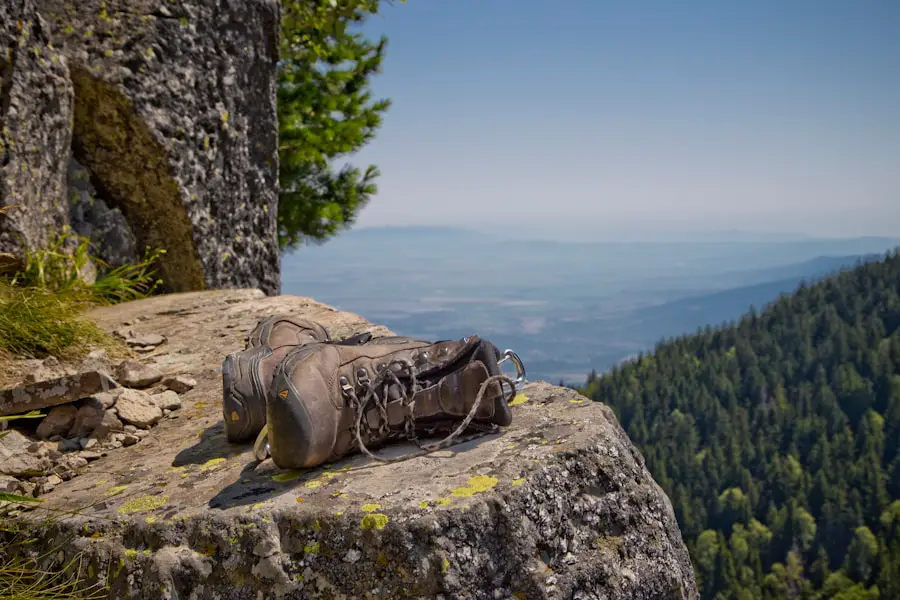
Proper maintenance can slow material damage and help a good pair of boots last longer. Dirt and grit should not be allowed to remain packed into seams, flex points, and hardware after muddy hikes.
For routine care, remove loose dirt with a soft brush or cloth and follow the cleaning instructions for the boot’s specific materials. LOWA’s care guidance recommends drying wet footwear in a well-ventilated area away from radiators, ovens, direct sun, hot cars, and other strong heat sources that can damage leather.
Leather boots may need a compatible conditioning product to keep the material from drying and cracking. Waterproof treatments can also be refreshed when water stops beading effectively on the upper. Always follow the boot manufacturer’s instructions because waxes, sprays, oils, and conditioners can affect different leathers and membranes differently.
Pro Tip: Remove the insoles and loosen or remove the laces before drying soaked boots. This opens the boot, improves airflow, and makes it easier to clean around the tongue and eyelets.
When Should Hiking Boots Be Replaced?
There is no reliable mileage number that applies to every boot. Terrain, body weight, pack weight, gait, storage, materials, and construction all affect wear. Inspect the boots instead of relying only on age.
Replacement or professional repair may be appropriate when you see:
- Outsole lugs worn smooth enough to reduce useful traction
- Sole separation or significant delamination
- Cracked or badly damaged uppers
- Compressed cushioning that no longer feels supportive
- Persistent leakage caused by damaged waterproof construction
- Broken eyelets, hooks, or structural components that cannot be safely repaired
Some traditional trekking and mountaineering boots can be resoled, while many lightweight injected or bonded designs cannot. Check with the manufacturer before discarding an otherwise serviceable boot.
The Impact of Traction and Grip on Hiking Boot Performance
Traction is critical on rock, loose dirt, mud, roots, gravel, and steep grades. A hiking boot’s outsole combines rubber compound with a tread pattern made from individual lugs.
Deeper, more widely spaced lugs can bite into soft ground and clear mud more effectively, while lower-profile tread can provide more rubber contact on firm surfaces. Lug direction and edge shape also influence climbing and braking traction.
Vibram, for example, develops multiple outsole technologies rather than one universal hiking tread. Its Traction Lug technology specifically focuses on lug geometry to increase contact and traction.
The best outsole is not the one with the deepest tread on paper; it is the one whose rubber and lug design match the surfaces you actually hike.
No hiking outsole is slip-proof. Wet roots, algae-covered rock, ice, loose gravel, and polished stone can overwhelm even an aggressive tread, so good foot placement remains essential.
The Balance of Weight and Protection in Hiking Boots
Light footwear can reduce the amount of mass you lift with every step and often feels more agile. Heavier footwear can provide thicker protection, a firmer platform, or more durable construction. Neither category is automatically better.
Fast hikers on maintained trails may prefer light hiking shoes or boots. Backpackers carrying larger loads across talus, scree, roots, or uneven ground may prefer a more structured platform and additional toe or side protection.
Modern designs blur the old distinction between heavy protective boots and lightweight footwear. Technical textiles, molded chassis systems, abrasion-resistant overlays, and improved foams allow manufacturers to add structure without always using thick leather throughout the upper.
Cold Weather, Insulation, and Technical Terrain
A waterproof hiking boot is not automatically a winter boot. In freezing conditions, consider insulation, sock volume, circulation, snow depth, and how long you expect to remain outside. An overly tight insulated boot can restrict toe movement and make warm socks less effective.
Technical snow and ice routes may require mountaineering footwear rather than ordinary hiking boots. When crampons are required, use only combinations that the boot and crampon manufacturers describe as compatible.
Do Hiking Socks Matter?
Even a well-fitting boot works better with socks suited to the conditions. Moisture-managing wool or synthetic socks can help keep the skin more comfortable and reduce the damp environment that contributes to rubbing.
Merino wool is popular because it manages moisture and remains comfortable across a wide range of temperatures. For more information, see this guide to merino wool travel socks.
The important point is to fit your hiking boots while wearing the type and thickness of sock you expect to use. A thick sock can noticeably change the available space inside the boot.
Frequently Asked Questions
What are the key features of a good hiking boot?
A good hiking boot should fit securely without pressure points, provide appropriate cushioning and underfoot structure, protect the toes and feet from the intended terrain, and use an outsole suited to the trail surface. Waterproofing, insulation, boot height, and stiffness should be chosen according to weather, terrain, distance, and pack weight.
What materials are commonly used in hiking boots?
Common upper materials include full-grain leather, nubuck or suede, nylon, polyester, technical woven fabrics, mesh, and synthetic leather. Midsoles commonly use foam or polyurethane-based materials, while outsoles generally use specialized rubber compounds. Many boots combine leather and synthetic materials to balance durability, weight, flexibility, and ventilation.
How important is waterproofing in a hiking boot?
Waterproofing is valuable for prolonged wet, muddy, snowy, or cold conditions. It is less essential in hot, dry weather, where a non-waterproof shoe may ventilate better and dry faster. Choose waterproofing according to the conditions rather than treating it as a requirement for every hike.
What type of traction is best for hiking boots?
There is no single best tread. Deep, open lugs are useful in mud and loose soil, while broader contact areas can work well on firm trails and rock. Rubber compound, lug shape, spacing, direction, and the condition of the outsole all affect grip.
How should a hiking boot fit?
The heel should feel secure, the sides should hold the foot without painful pressure, and the toe box should leave enough space so your toes do not strike the front on descents. Test the boots with your hiking socks and walk on an incline before deciding.
Do high hiking boots prevent ankle sprains?
Not reliably. A high collar may restrict some ankle movement, but research has not established that ordinary high-top footwear consistently prevents ankle sprains. Overall fit, sole structure, terrain, fatigue, balance, prior injuries, and appropriate medical bracing can also affect ankle stability.
How do I know when hiking boots need replacing?
Inspect them for smooth or badly worn lugs, sole separation, cracked uppers, damaged eyelets, persistent waterproofing failure, and cushioning that feels compressed or unsupportive. Some sturdy trekking boots can be resoled, so check repair options before replacing the entire boot.
Sources
- Danner — New Boots and Correct Fit — supports guidance on toe room, heel hold, side fit, and avoiding pinching.
- GORE-TEX — Footwear Technologies — supports waterproof and breathable membrane guidance.
- LOWA — Hiking Boot Care Tips — supports cleaning, drying, leather care, waterproofing, and maintenance guidance.
- Vibram — Traction Lug Technology — supports the role of lug geometry in outsole traction.
- PubMed — The Role of Shoes in the Prevention of Ankle Sprains — supports the caution that biomechanical effects of high-top footwear do not establish consistent clinical ankle-sprain prevention.
- Salomon — X Ultra 5 Mid GORE-TEX — supports current-model examples of chassis, midsole, outsole, and waterproof construction.

