
Last Updated on July 27, 2026 by Daniel Globe
The most comfortable hiking boots are not simply the softest or most heavily cushioned pair on the shelf. Comfort comes from getting the right fit for your foot shape, then matching the boot’s support, traction, weight, waterproofing, and stiffness to the trails you actually hike. A boot that feels excellent on an easy day hike may feel completely wrong under a heavy pack on rocky terrain.
Quick Answer
The most comfortable hiking boots are the pair that match your foot shape and the hike you plan to do. Look for a thumb’s-width of toe room, a secure heel, no pressure points, enough underfoot support for your load, and traction for your terrain. Choose waterproofing only when wet conditions justify the breathability tradeoff.
Key Takeaways
- Fit comes first: your toes need room while your heel and midfoot should feel secure without pinching.
- Try hiking boots with the socks, insoles, or orthotics you plan to use on the trail.
- More cushioning, a higher collar, or a waterproof membrane does not automatically make a boot more comfortable.
- Match the outsole, stiffness, and protection to your terrain and the weight you carry.
- Break in stiff boots gradually, but do not expect break-in to fix the wrong size or shape.
Disclosure: As an Amazon Associate I earn from qualifying purchases. Some links on this page are affiliate links, at no extra cost to you.
How to Choose the Right Fit for Hiking Boots
Fit is the most important part of hiking-boot comfort. Feet vary not only in length and width but also in arch length, instep height, heel shape, and overall volume. Two people who wear the same numbered size can therefore need very different boots.
Current REI hiking-footwear guidance recommends a fit that is snug without being tight and leaves enough space to wiggle your toes. One useful length check is to remove the insole, stand on it, and look for roughly a thumb’s width between your longest toe and the front.
Measure both feet because they may not be exactly the same size. Fit the larger foot first, and pay attention to more than the number printed on the box. A good hiking boot should hold your heel securely while allowing your forefoot and toes enough room to spread naturally.
Try boots later in the day when your feet are likely to be slightly larger from normal activity. Wear the same thickness of hiking socks you expect to use outdoors. If you wear prescription orthotics or aftermarket insoles, bring those too because they can change both volume and heel position inside the boot.
Pro Tip: Walk up and down an incline before buying. Your heel should not lift excessively on the way up, and your toes should not hit the front of the boot on the way down. Persistent rubbing, numbness, or pinching is a fit problem—not something you should plan to “tough out.”
At a Glance
| Time Required | About 20–30 minutes for a careful in-store fit check, plus additional indoor wear before committing to a pair |
| Difficulty | Easy, but comparing several shapes and sizes usually gives a better result than buying by size alone |
| Tools Needed | Your intended hiking socks, plus any orthotics or aftermarket insoles you normally wear |
| Cost | Fit testing itself should cost nothing; boot prices vary widely by construction, materials, and intended use |
Importance of Support and Stability
Support matters most when your terrain becomes rougher or your backpack becomes heavier. A hiking boot’s midsole, heel structure, shank, rock plate, and overall stiffness can all affect how stable and protected your feet feel.
Stiffer backpacking boots can reduce how much the foot flexes over sharp or uneven ground. Some boots also include a shank for load-bearing stiffness or a rock plate that helps protect the sole of the foot from pointed rocks. Lighter day-hiking footwear usually flexes more easily and may feel more natural on smooth trails.
A higher collar can add structure around the ankle and help keep debris out, but height alone should not be treated as a guarantee against ankle sprains. Your own strength, previous injuries, terrain, fatigue, pack weight, and the overall fit of the boot also matter.
Warning: A hiking boot should not cause persistent numbness, sharp pain, or severe pressure. If you have a painful bunion, significant foot deformity, ongoing plantar or heel pain, neuropathy, or another medical foot problem, consider professional fitting and advice from a podiatrist or other qualified clinician rather than relying on a boot to correct the condition.
Breathability and Waterproofing
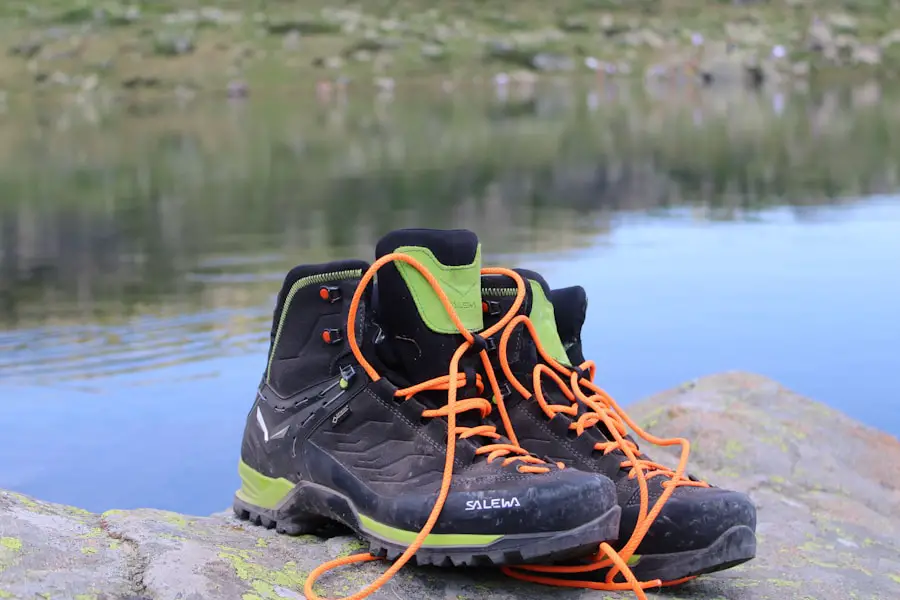
Waterproofing can improve comfort when you regularly hike through rain, snow, wet grass, shallow puddles, or muddy trails. Products using a GORE-TEX footwear membrane, for example, are designed to provide waterproof protection while allowing water vapor to escape.
That does not mean a waterproof boot is always the most comfortable choice. Waterproof liners add another layer to the footwear and can make a boot feel warmer and less breathable than a comparable non-waterproof model. Current hiking-footwear guidance therefore treats waterproofing as a tradeoff rather than an automatic upgrade.
For hot, dry conditions, a breathable hiking shoe or non-waterproof boot may feel cooler and can dry faster after getting wet. For cold or persistently wet conditions, a waterproof boot often makes more sense.
Note: Waterproof boots can still become wet from sweat or from water entering over the collar. Keeping socks reasonably dry is just as important as choosing the membrane.
Traction and Grip
| Trail Condition | Outsole Feature to Look For | Why It Helps |
|---|---|---|
| Hard-packed trail | Moderate, closely spaced lugs | Provides useful grip without feeling overly aggressive on firm ground |
| Mud or loose soil | Deeper, widely spaced, multidirectional lugs | Helps bite into soft ground and gives mud more room to shed |
| Wet rock | Rubber compound designed for wet-surface grip | The rubber compound matters as much as the visible tread pattern |
| Steep descents | Pronounced heel lugs or heel-brake design | Can improve control when loading the heel downhill |
The outsole is the part of the boot that connects you to the trail. Good hiking traction comes from a combination of lug shape, lug depth, lug spacing, rubber compound, and the way the entire sole interacts with the surface.
A deeper tread is useful in mud and loose ground but is not automatically superior everywhere. Wet rock, for example, also depends heavily on rubber friction. Vibram Megagrip is one example of a compound specifically designed for grip on both wet and dry terrain, but the word “Vibram” alone does not tell you exactly how every outsole will perform.
No hiking sole is slip-proof. Slow down on wet roots, polished stone, ice, loose gravel, or other surfaces where even aggressive tread can lose traction.
Durability and Longevity
Durability affects comfort because a boot that loses its structure, cushioning, or tread no longer feels or performs the way it did when new. Construction and materials also involve tradeoffs.
Full-grain and nubuck leather are commonly used in more robust backpacking boots because they resist abrasion well and can provide substantial structure. Synthetic uppers usually weigh less, tend to dry faster, and often require less break-in, although they may show wear sooner depending on their construction and use.
Do not judge a hiking boot’s remaining life by calendar age alone. Inspect the outsole for worn or rounded lugs, check whether the midsole feels permanently compressed or uneven, look for separation between the sole and upper, and watch for torn fabric, cracked leather, damaged waterproof liners, or a heel structure that no longer holds your foot properly.
Cleaning off mud, allowing wet boots to dry naturally, and following the manufacturer’s care instructions can help preserve the materials. Avoid forcing boots dry with extreme heat because heat can damage some adhesives, leather, and synthetic components.
Cushioning and Impact Absorption
The midsole supplies much of the underfoot cushioning and determines how soft or firm a hiking boot feels. EVA foam is widely used because it can provide relatively light, soft cushioning. Firmer polyurethane-style materials are also used in hiking footwear where durability and support under heavier loads are priorities.
More cushioning is not automatically more comfortable. A very soft midsole can feel pleasant on an easy trail but may feel unstable to some hikers on uneven ground. A firmer boot may feel less plush at first yet provide a steadier platform when carrying a heavier backpack.
The stock insole also affects comfort. If a boot fits well but you need a different amount of arch support or volume, an aftermarket insole may help. Always reassess the fit after changing insoles because a thicker insert can reduce toe-box or instep space.
Weight and Flexibility
Boot weight and flexibility change the way footwear feels over a long day. Lightweight hiking shoes and trail-oriented footwear can feel agile and require little break-in, while traditional backpacking boots trade some of that lightness for more structure, abrasion protection, and load support.
| Footwear Type | Comfort Strength | Best Match |
|---|---|---|
| Hiking shoe | Light, flexible, usually easier to wear immediately | Day hikes, maintained trails, light packs |
| Day-hiking boot | Balance of cushioning, protection, and moderate structure | Longer day hikes and mixed terrain |
| Backpacking boot | Stiffer platform and more support under heavier loads | Multiday trips, rugged trails, heavier packs |
| Trail-running shoe | Very light and flexible | Fast hiking with light loads when less protection is acceptable |
The most comfortable category therefore depends on how you hike. A stiff backpacking boot can be unnecessary on an easy local trail, while an ultralight shoe may not provide the underfoot protection you prefer for a rocky multiday trip.
How to Match Hiking Boots to Your Hike
Before comparing brands, define where the boots will be used most often.
- Easy day hikes: prioritize comfortable fit, moderate traction, flexibility, and low weight.
- Long or rocky day hikes: consider more underfoot protection, stronger traction, and a somewhat stiffer platform.
- Backpacking: match the boot’s structure to your pack weight and terrain rather than automatically choosing the tallest boot available.
- Wet or cold trails: waterproof footwear may be worth the added warmth and reduced airflow.
- Hot, dry trails: breathable non-waterproof footwear can feel cooler and may dry faster.
- Mud and loose terrain: prioritize deeper, more widely spaced lugs that can dig into soft surfaces.
Comfortable Hiking Boots Worth Trying in 2026
No current hiking boot can honestly be called the most comfortable for every foot. However, the REI field-tested hiking-boot guide updated June 30, 2026 provides useful current starting points across different trail types.
| Current Model | Good Starting Point For | Comfort Character |
|---|---|---|
| Merrell Moab Speed 2 Mid GORE-TEX | Moderate terrain and longer hikes | Relatively light construction with a cushioned midsole and underfoot protection |
| Lowa Renegade Evo GTX Mid | Rugged hiking and backpacking | More structured platform with a supportive feel for rough terrain and heavier use |
| Salomon X Ultra 5 Mid GORE-TEX | Rugged day hikes where agility matters | Cushioned, lighter-feeling design with aggressive trail traction |
| HOKA Transport Hike GTX | Light terrain and hikers who prefer more underfoot cushion | Softer, running-shoe-inspired ride compared with many traditional hiking boots |
Use lists like this only to narrow your options. A highly rated boot that does not match your heel, toe box, width, or foot volume will not be comfortable for you.
How to Test Hiking Boots Before You Buy
- Measure both feet. Check length and width, and pay attention to instep height and overall foot volume.
- Wear your real hiking socks. Sock thickness can change how much room you have in the toe box and around the instep.
- Install your usual orthotics or insoles. Do not evaluate the boot with a temporary setup you will never use outdoors.
- Lace the boot normally. The heel and midfoot should feel secure without needing to overtighten the laces.
- Walk on an incline if possible. Check for heel lift going uphill and toe contact going downhill.
- Pay attention to hot spots immediately. Pinching, rubbing, numbness, or pressure at a bunion or toe joint is a warning that the shape may be wrong.
Do not buy a boot simply because your usual shoe size technically fits. Different manufacturers and different models from the same manufacturer can use different shapes.
Break-In and Blister Prevention
More flexible hiking footwear may feel comfortable immediately, while stiff leather or backpacking boots often need gradual wear before a long trip. Start indoors, then take short walks, then increase distance and pack weight before committing to an all-day or multiday hike.
Break-in can soften materials and help your feet adapt to the footwear, but it cannot make a fundamentally wrong size, width, or shape fit properly.
Blisters form through repeated shear and friction, and moisture can make the problem worse. A 2022 study of 203 long-distance hikers found that walking in wet socks was associated with a substantially greater blister risk.
In a study of 203 long-distance hikers, finishing the day in wet socks was associated with about 1.94 times the risk of developing foot blisters.
The study is available through PubMed. The practical lesson is simple: start with properly fitting footwear and do what you can to keep your feet and socks reasonably dry.
Carry a spare pair of socks on longer or wetter hikes. At the first sign of a hot spot, stop and address the friction rather than waiting until a blister develops.
Additional Features and Considerations
Once fit and trail suitability are correct, smaller design details can make a noticeable difference.
- Removable insoles: useful when you need an aftermarket footbed or prescription orthotic.
- Gusseted tongue: helps keep dirt, gravel, and debris from entering around the tongue.
- Toe cap or rand: adds protection when hiking through rocks, roots, and scree.
- Lacing hardware: should let you adjust heel hold and forefoot pressure without creating painful pressure points.
- Heel brake: can add control on steep descents.
- Gaiter attachment: useful for hikers who regularly encounter snow, sand, mud, or loose debris.
Lacing adjustments can sometimes improve a basically good fit. For example, changing tension around the ankle may reduce minor heel movement, while loosening the forefoot can relieve unnecessary pressure. Lacing should not be used to force a clearly wrong boot shape to fit.
Hikers with bunions generally benefit from avoiding a narrow toe box that presses directly against the joint. The American Podiatric Medical Association recommends footwear with a wide, deep toe box for people dealing with bunions.
Note: If you’re planning a hiking trip to Alaska or another cool, wet destination, choose footwear for the actual route and season rather than the destination name alone. A rainy coastal trail may favor waterproof protection, while a well-drained summer trail can place more value on breathability and fast drying.
Frequently Asked Questions
What are the most comfortable hiking boots?
There is no single most comfortable hiking boot for everyone. The best pair fits your foot length, width, heel, instep, and overall volume without pressure points and also has the right amount of cushioning, stiffness, traction, and weather protection for the hikes you do.
What features make hiking boots comfortable?
A secure heel, roomy toe box, appropriate width and foot volume, comfortable midsole, smooth interior, supportive footbed, useful flexibility, and an outsole suited to the terrain all affect comfort. The best combination depends on your feet, pack weight, distance, and trail surface.
Are waterproof hiking boots more comfortable?
They can be more comfortable in cold, wet, snowy, or muddy conditions because they help keep outside water away from your feet. In hot or dry weather, a non-waterproof boot or hiking shoe may feel cooler and breathe better. Waterproofing is therefore a condition-specific benefit rather than a universal comfort upgrade.
How should hiking boots fit for maximum comfort?
They should feel secure through the heel and midfoot without being tight. Your toes should be able to wiggle, and roughly a thumb’s width of space in front of the longest toe is a useful starting check. Your toes should not strike the front when walking downhill, and there should be no persistent pinching or rubbing.
What are some comfortable hiking boot brands and models?
Comfort is more model- and foot-specific than brand-specific. Current 2026 models worth trying include the Merrell Moab Speed 2 Mid GORE-TEX, Lowa Renegade Evo GTX Mid, Salomon X Ultra 5 Mid GORE-TEX, and HOKA Transport Hike GTX. Use these as fitting starting points rather than assuming one will be best for every foot.
Are hiking boots more comfortable than hiking shoes?
Not necessarily. Hiking shoes are usually lighter and more flexible, which many people prefer for day hikes and lighter loads. Boots generally offer more structure, protection, and weather coverage, which can feel better on rugged terrain or when carrying a heavier backpack.
Do new hiking boots need to be broken in?
Some do. Flexible hiking shoes and lighter synthetic boots may require little break-in, while stiff backpacking or leather boots can need gradual wear. Start with short walks and increase distance slowly. Break-in should never be used to justify a boot that is clearly too small, narrow, or painful.
When should hiking boots be replaced?
Replace them when wear begins to compromise fit or trail performance. Warning signs include badly worn lugs, uneven or compressed cushioning, sole separation, damaged uppers or waterproofing, or a heel structure that no longer holds your foot securely. There is no single mileage limit that applies to every hiking boot.
Sources
- REI Co-op — How to Choose Hiking Boots and Hiking Shoes — current guidance on footwear types, components, fit, toe room, foot volume, socks, orthotics, and break-in.
- REI Co-op — The Best Hiking Boots of 2026: Tested — current field-tested examples and hiking-boot construction information.
- GORE-TEX — Waterproof Footwear — manufacturer information on waterproof and breathable footwear membranes.
- Vibram — Megagrip Technology — manufacturer information on wet- and dry-terrain outsole grip.
- PubMed — The Influence of Sock Composition on the Appearance of Foot Blisters in Hikers — 2022 research on wet socks and blister risk during long-distance hiking.
- American Podiatric Medical Association — Bunions — guidance on toe-box space and when professional foot care may be appropriate.

