
Last Updated on September 10, 2026 by Daniel Globe
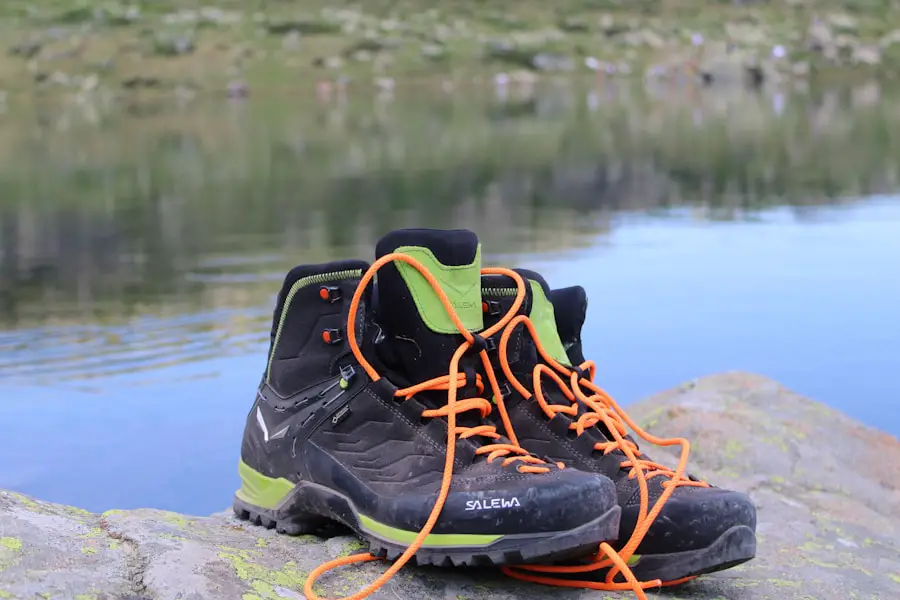
Hiking boots do not come with a universal expiration date. Some pairs wear out after heavy use on sharp rock and rough trails, while sturdy boots may remain serviceable much longer. The best time to replace hiking boots is when their traction, sole structure, fit, or support has deteriorated enough that they no longer feel secure on the terrain you hike.
Quick Answer
There is no universal mileage or age at which every hiking boot must be replaced. Replace or professionally repair boots when traction is badly worn, the midsole is cracked or crumbling, the sole is separating, the upper no longer holds the foot securely, or comfort and support have clearly deteriorated. Inspect them before major trips.
Key Takeaways
- Do not treat a mileage number as an automatic expiration date for every hiking boot.
- Worn tread, cracking or crumbling midsoles, sole separation, damaged uppers, and lost foot security are more useful replacement signs.
- Older polyurethane midsoles can deteriorate even when the boots have not accumulated many trail miles.
- Loss of surface water beading may call for cleaning and renewed water-repellent treatment rather than a new pair of boots.
- Some boots can be resoled or professionally rebuilt if the upper and supporting structure are still sound.
At a Glance
| Time Required | About 5 minutes for a basic pre-hike inspection |
| Difficulty | Easy |
| Tools Needed | Good lighting, your hands, and a clean cloth or soft brush if the soles are dirty |
| Cost | $0 to inspect; repair, resoling, or replacement cost depends on the boot and construction |
Disclosure: As an Amazon Associate I earn from qualifying purchases. Some links on this page are affiliate links, at no extra cost to you.
How Often Should You Replace Hiking Boots?
There is no single replacement interval that applies to every hiking boot. Internet guides often quote mileage ranges, but the useful lifespan of a boot depends on its construction, materials, terrain, pack load, frequency of use, storage, care, and the way the wearer moves.
It is also important not to confuse hiking boots with trail-running shoes. REI’s current hiking-footwear guide notes that trail-running shoes typically break down at around 500 miles, while sturdier hiking and backpacking footwear is built differently. That figure should therefore not be treated as a universal hiking-boot limit.
A better approach is to use mileage as a reminder to inspect your boots. When a pair has seen a lot of trail time, check the tread, midsole, upper, heel structure, seams, laces, eyelets, and overall fit more often.
Age matters too. Some boots use polyurethane, or PU, in the midsole. According to LOWA’s material-aging guidance, moisture in the air can contribute to hydrolysis over time, causing PU to crack, crumble, or separate even after long periods of storage. That means an older pair with low mileage still deserves a close inspection before a demanding trip.
Mileage can tell you when to inspect hiking boots, but their actual condition should determine when you repair or replace them.
Signs of Wear and Tear
The outsole is one of the easiest places to begin. Hiking footwear relies on rubber lugs and tread patterns to provide useful grip on dirt, rock, mud, and uneven surfaces. When the lugs become rounded, smooth, or badly worn in key contact areas, traction can decline.
Check both boots rather than looking at only one. Uneven wear may also reveal that one side of a heel or forefoot is wearing faster than the other.
1. The Outsole Lugs Are Worn Smooth
Look at the heel, forefoot, and edges of the outsole. A little cosmetic wear is normal. More serious wear appears when the original lug pattern has become shallow or smooth enough that the boot no longer grips the terrain for which it was designed.
This matters most on steep, loose, muddy, wet, or rocky trails. LOWA’s current safety guidance notes that heavily worn sole profiles can no longer be relied on for their original grip.
2. The Midsole Is Cracked, Crumbling, or Permanently Compressed
The midsole sits between your foot and the outsole and helps provide cushioning, stiffness, and underfoot protection. REI identifies EVA and polyurethane-based materials among the common materials used in modern hiking footwear.
Fine surface creases are not automatically a failure. More concerning signs include deep cracks, brittle material, pieces breaking away, major deformation, or a sole unit that feels noticeably different from when the boot was in good condition.
3. The Sole Is Separating From the Boot
A gap opening between the sole and upper deserves immediate attention. Separation may begin around the toe or heel and can worsen as the boot flexes.
Warning: Do not start a remote, steep, or technical hike in boots with a crumbling midsole or meaningful sole separation. A small-looking failure can become much worse once the boot is repeatedly flexed, wet, loaded, and exposed to rough terrain.
4. The Upper Has Structural Damage
Leather, mesh, synthetic fabric, seams, rands, and reinforced panels all help the boot hold your foot in place and protect it. Small scuffs are usually cosmetic. Large tears, holes, failed seams, or serious cracking are more important because they can affect fit, protection, water resistance, or the boot’s ability to be repaired.
Danner, for example, states that major holes and cracking can make some boots ineligible for its recrafting service.
5. The Heel No Longer Feels Secure
The heel counter and surrounding structure help hold the rear of your foot in position. If the boot has become misshapen, the heel slips much more than it once did, or the two boots sit at noticeably different angles on a flat surface, inspect them carefully.
A worn insole may be replaceable, but a collapsed supporting structure is a different problem and may require professional assessment or replacement.
6. Eyelets, Hooks, or Laces Can No Longer Secure the Boot
Frayed laces alone do not mean a boot is finished; laces are replaceable. The same is true for some other hardware repairs. However, damaged eyelets, torn attachment points, or upper material that can no longer hold the lacing system securely can affect the fit of the entire boot.
7. The Boots Feel Noticeably Less Comfortable or Supportive
Pay attention when a familiar pair suddenly causes more foot fatigue, pressure, slipping, or discomfort than it did before. That change can be a reason to inspect the insole, midsole, heel structure, and fit.
Pain alone does not prove that a boot is worn out. Foot, ankle, knee, or hip pain can have many causes. If pain is severe, persistent, or recurring, stop treating boot replacement as a diagnosis and seek appropriate medical advice.
Impact on Performance
Worn hiking boots can affect performance mainly by changing traction, foot security, cushioning, and how confidently you can move over uneven ground.
When outsole lugs wear down, the boot may not bite into loose or muddy surfaces as effectively. When the midsole or supporting structure deteriorates, you may notice more underfoot harshness, instability, or fatigue. A damaged upper can also allow excess movement inside the boot.
It is better to describe these effects carefully than to claim that an old boot directly causes a particular injury. Research on athletic footwear and injury risk is complex, and evidence from running shoes does not automatically translate to hiking boots.
For hiking, the practical question is simpler: does the boot still give you dependable traction, fit, protection, and support for the route you intend to hike?
Comfort and Support
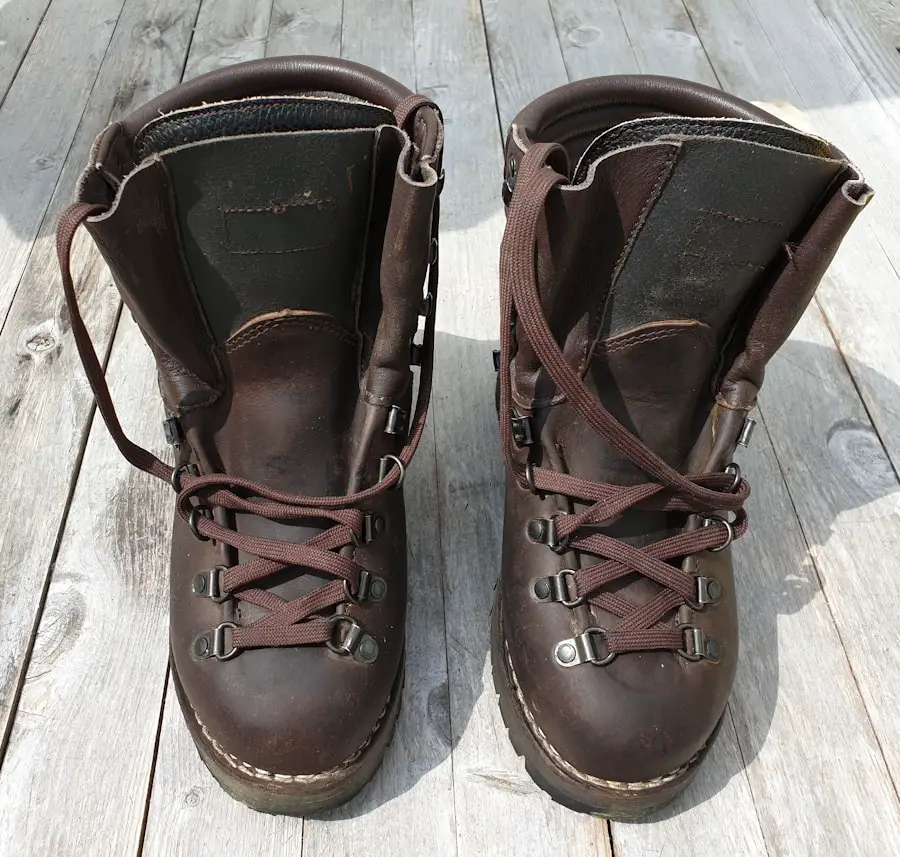
Cushioning changes gradually, so a worn boot may not feel dramatically different from one hike to the next. Over many outings, however, midsole foam and internal components can age, compress, or lose some of their original feel.
Support also depends on fit. A boot that once held the heel securely may begin to feel loose as liners and other components wear. Insoles can also compress over time and are often inexpensive to replace compared with an entire boot.
Replacing an insole does not repair a cracked midsole, a separating sole, or a failed upper. Check which component is actually responsible before spending money on an insert.
The American Academy of Orthopaedic Surgeons notes that shoes that are too tight, too loose, or insufficiently supportive can place unwanted stress on the feet and lower body. Its shoe-fit guidance also emphasizes choosing footwear that matches the shape and size of the foot.
Durability and Longevity
Hiking-boot longevity is best understood component by component. A rugged leather upper may remain in good condition after an outsole has worn down, while an older sole unit can deteriorate even when the upper still looks excellent.
| Component | What to Check | Likely Action |
| Outsole | Rounded or smooth lugs, cracks, uneven wear | Resole if the model allows it; otherwise replace when traction is no longer dependable |
| Midsole | Deep cracking, crumbling, separation, major deformation | Professional assessment, rebuild if supported, or replacement |
| Upper | Holes, major tears, failed seams, severe leather cracking | Repair if minor and approved; replace if structural integrity or fit is compromised |
| Insole | Flattening, odor, loss of comfort, visible damage | Often replaceable without replacing the entire boot |
| Laces and hardware | Frayed laces, damaged hooks, loose or torn eyelets | Replace simple parts; assess the upper if attachment points are damaged |
Material quality matters, but construction matters just as much. Full-grain and nubuck leather can be highly durable when cared for properly. Lighter synthetic hiking footwear can dry faster and weigh less but may show abrasion or seam wear sooner depending on the design.
The sole construction also determines whether a worn outsole can be replaced. Some manufacturers build particular models specifically to be resoled or recrafted, while other lightweight footwear uses construction that makes full sole replacement impractical.
Terrain and Conditions
The surface beneath your feet has a major effect on wear. Sharp rock, scree, rough scrambling, and repeated contact with abrasive surfaces can wear rubber and uppers more quickly than smooth dirt trails.
Road use can also wear trail-focused rubber differently. Hiking outsoles are designed around trail traction, and softer compounds generally trade some durability for grip. REI’s current footwear guidance notes that harder outsoles tend to be more durable, while softer outsoles can wear faster.
Heavy packs and rugged terrain can also increase the demands placed on footwear. That is one reason backpacking boots are generally built with more substantial uppers, midsoles, and support than lighter day-hiking shoes.
Wet conditions add another concern: drying and storage. Repeatedly leaving boots wet, muddy, or exposed to extreme heat can accelerate material aging. Clean them after dirty trips and dry them at moderate temperatures rather than placing them beside a heater, fireplace, or other strong heat source.
Snow and ice require a separate traction assessment. Normal hiking tread may not be enough for icy terrain. Use footwear and traction equipment appropriate to the route rather than assuming a deep-looking tread alone guarantees safety.
Fit and Sizing
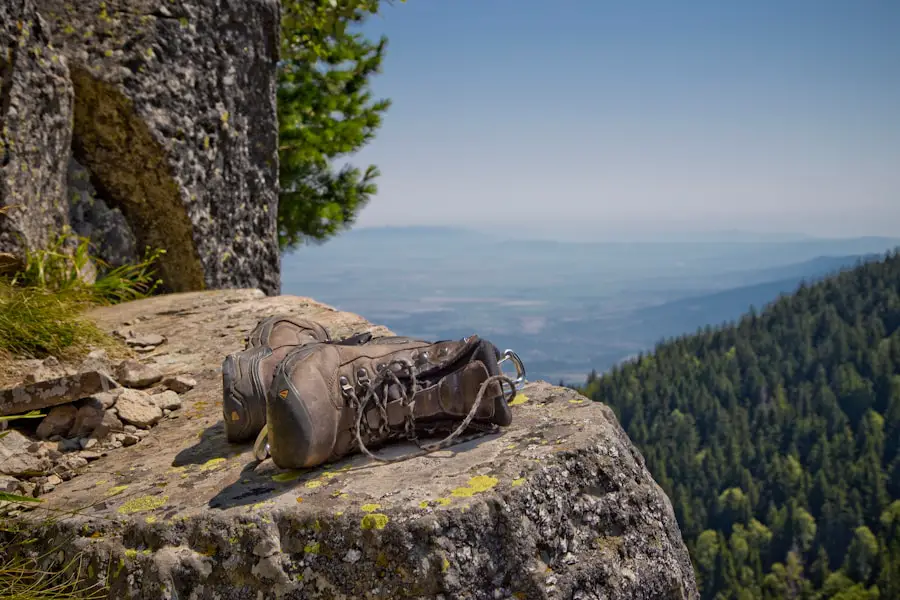
Fit is essential for both comfort and control. Hiking footwear should feel secure without pinching the foot. REI’s current fitting guidance describes a good fit as snug throughout but tight nowhere, with enough space to move the toes.
Measure both the length and width of your feet when buying a replacement pair. Feet and footwear fit can change over time, so do not assume the size printed on an old pair will always be the best size in a new model.
A practical fitting check is to remove the insole and stand on it. REI recommends about a thumb’s width between the longest toe and the end of the insole. Trying boots later in the day can also help because feet commonly swell with normal daily activity.
Wear the socks you expect to hike in and pay attention to heel movement, toe pressure, and hot spots. On an incline, your toes should not repeatedly strike the front of the boot.
Pro Tip: Replace worn boots before an important trip rather than immediately before departure. Give a new pair enough local walking and hiking time to confirm the size, lacing, socks, and fit before relying on it in the backcountry.
Construction, Materials, and Innovation
Modern hiking footwear uses many combinations of foam, rubber, leather, textiles, waterproof membranes, support plates, molded components, and adhesives. These choices affect weight, comfort, stiffness, traction, and durability.
REI notes that EVA midsoles are generally lighter and cushier, while thermoplastic polyurethane is typically firmer and more durable. Other manufacturers use additional foam formulations and construction methods for specific footwear designs.
Polyurethane deserves special attention in older hiking boots because it can age chemically. LOWA explains that PU midsole deterioration can appear as cracking, crumbling material, or separation of the sole unit after storage.
New manufacturing methods, custom lasts, molded components, and technologies such as 3D printing can improve component design or fit, but they do not eliminate normal wear. Every outsole, midsole, upper, liner, and adhesive system still needs periodic inspection.
Repairability also varies by design. LOWA states that many of its trekking and mountaineering models can be resoled, while some lighter injected constructions cannot be fully resoled. Danner likewise limits recrafting to eligible models and to boots whose uppers remain in suitable condition.
Waterproofing Failure Does Not Always Mean Replacement
A waterproof boot that starts wetting out may not automatically be worn out. First determine what has failed.
If water no longer beads on the outer material, the durable water-repellent finish may simply need cleaning and renewal. GORE-TEX footwear care guidance recommends restoring DWR once water stops beading and running off the exterior.
Note: Surface wetting and an actual leak are different problems. Re-treating the outer fabric may restore water repellency, but it cannot repair a punctured membrane, open seam, large tear, or separating sole.
Repair, Resole, or Replace?
Not every worn part requires an entirely new pair of boots. The decision depends on which component failed and how the boot was built.
Repair Small Replaceable Parts
Frayed laces and worn removable insoles are common examples of components that can often be replaced. Some hooks or eyelets may also be repairable by a qualified cobbler or manufacturer.
Consider Resoling When the Upper Is Still Healthy
A worn outsole does not always mean the whole boot is finished. Manufacturers including LOWA and Danner offer resoling or recrafting options for eligible models.
Before paying for a resole, check the midsole, upper, heel structure, seams, and overall fit. Installing a fresh outsole on a boot with a failing midsole or badly damaged upper may not solve the real problem.
Replace Boots With Major Structural Failure
Replacement is usually the safer choice when the sole unit is deteriorating and cannot be properly rebuilt, the upper has major structural damage, the heel structure has collapsed, or the boot can no longer provide a secure fit for the terrain you hike.
If you are unsure whether a favorite pair is repairable, ask the manufacturer or a qualified hiking-boot cobbler. Repairability is model-specific.
How to Inspect Hiking Boots Before a Big Trip
A short inspection can catch problems before you are several miles from the trailhead.
- Clean enough dirt from the sole to see the tread. Look for smooth lugs, cracks, missing rubber, and uneven wear.
- Inspect the midsole. Look for deep cracks, brittle or crumbling foam, separation, or obvious deformation.
- Check the bond around the entire sole. Pay special attention to the toe and heel.
- Inspect the upper. Look for failed stitching, large tears, holes, dried or severely cracked leather, and damaged rand material.
- Check the lacing system. Replace badly frayed laces and make sure hooks and eyelets remain secure.
- Set both boots on a flat surface. Compare them for obvious leaning, deformation, or very uneven heel wear.
- Put them on with your hiking socks. Walk, climb stairs if available, and check for unusual slipping, pressure, or discomfort.
Warning: Older boots that have spent years in storage should be inspected before you depend on them for a remote trip. Low mileage does not guarantee that every sole material or adhesive system is still in good condition.
Maintenance and Care
Good care will not make hiking boots last forever, but it can prevent avoidable damage and make emerging problems easier to spot.
Clean Off Dirt and Mud
Dirt, grit, and dried mud can work into leather and textiles as the boot flexes. Salomon’s hiking-footwear care guidance recommends removing mud, cleaning with water and a soft brush or sponge when needed, and allowing the footwear to dry completely.
Follow the instructions for your specific boot because leather, suede, nubuck, textiles, and waterproof membranes may require different products.
Dry Boots at Moderate Temperatures
Remove the insoles when practical and let wet footwear dry in a ventilated area. Avoid radiators, fires, heaters, and other strong heat sources. Excessive heat can age leather and weaken some adhesives and other materials.
Store Them Clean and Dry
Do not leave damp hiking boots sealed inside a plastic bag or in a hot vehicle. Store them in a dry, ventilated place with moderate temperatures.
Maintain Leather and Water Repellency Correctly
Leather treatments should match the leather type and the manufacturer’s instructions. Waterproof footwear may also need its exterior water-repellent treatment renewed periodically.
Avoid assuming that more conditioner is always better. Some hiking-boot care guidance warns that excessive conditioning can soften leather and reduce the support it provides.
Inspect During Cleaning
Cleaning gives you a good chance to spot damage while it is still small. Check the tread, sole bond, midsole, seams, hooks, eyelets, and upper each time you perform a deeper clean.
For avid hikers, the most useful replacement schedule is therefore not a fixed 300-mile, 500-mile, 1,000-mile, or one-year countdown. Keep a rough mileage record if it helps you remember to inspect your gear, but let the boot’s construction, age, condition, fit, and intended use determine whether it is ready for another trail.
Frequently Asked Questions
How often should hiking boots be replaced?
There is no universal mileage or calendar interval for every hiking boot. Replace or professionally repair them when tread, midsoles, uppers, sole bonds, fit, or supporting structure have deteriorated enough that the boots no longer provide dependable traction, protection, or comfort for your hiking conditions.
What are the signs that hiking boots need to be replaced?
Important signs include badly worn outsole lugs, deep midsole cracks, crumbling foam, sole separation, serious upper damage, a collapsed or unstable fit, and a noticeable loss of support or comfort. Small replaceable parts such as laces or removable insoles do not necessarily require replacing the entire boot.
How can I make my hiking boots last longer?
Remove mud and grit, follow the manufacturer’s cleaning instructions, dry boots at moderate temperatures, avoid direct heat, store them clean and dry, and use leather or water-repellent treatments appropriate for the material. Regular inspections can also catch repairable damage before it becomes severe.
Can I repair hiking boots instead of replacing them?
Sometimes. Laces and removable insoles are easy examples. Some boots can also be professionally resoled or rebuilt. Repairability depends on the model and construction, and a new outsole will not solve a failing midsole or badly damaged upper. Check with the manufacturer or a qualified cobbler.
What factors affect the lifespan of hiking boots?
Terrain, outsole compound, upper material, midsole construction, pack load, frequency of use, storage conditions, moisture, cleaning habits, and the boot’s repairability can all affect how long it remains useful. Abrasive rocky terrain generally places greater wear demands on footwear than smooth trails.
Can old hiking boots fail even if they were rarely used?
Yes. Certain materials age even in storage. Polyurethane midsoles, for example, can deteriorate through hydrolysis over time and may crack, crumble, or separate. Inspect an older pair closely before relying on it for a long or remote hike.
Do leaking hiking boots always need to be replaced?
No. If the outer material simply stops beading water, cleaning and restoring its durable water-repellent finish may help. Replacement or professional repair becomes more likely when there is a damaged waterproof membrane, open seam, major upper tear, or sole separation.
Sources
- REI Co-op — How to Choose Hiking Boots and Hiking Shoes — hiking-footwear construction, materials, outsole characteristics, fit, terrain, and trail-running shoe lifespan context.
- LOWA — Warranty and Hydrolysis Guidance — polyurethane midsole aging, cracking, crumbling, and sole separation.
- Danner — Boot Recrafting — resoling, rebuilding, upper-condition requirements, and model-specific repairability.
- Salomon — How to Clean and Care for Your Hiking Shoes — cleaning, drying, storage, and hiking-footwear maintenance.
- GORE-TEX — Footwear Care Instructions — cleaning, moderate-temperature drying, and renewing durable water repellency.
- American Academy of Orthopaedic Surgeons — Shoes: Finding the Right Fit — footwear fit, support, and foot-comfort considerations.

