
Last Updated on July 27, 2026 by Daniel Globe
Hiking combines aerobic exercise with uneven terrain, hills, fresh air, and time outdoors. That mix can support heart health, stronger muscles and bones, balance, weight management, mood, sleep, and social connection. The benefits depend on your pace, terrain, fitness level, and how often you hike, so a gentle local trail can be just as useful as a mountain route when it matches your ability.
Quick Answer
Hiking can improve cardiovascular fitness, strengthen the legs and core, support bone health and balance, help with weight management, reduce stress, and support mood and sleep. Hiking in natural settings may add mental-restoration benefits, while hiking with others can strengthen social connection. Start with trails that fit your current fitness and build gradually.
Key Takeaways
- Hiking can count toward the weekly aerobic activity adults need for better heart and metabolic health.
- Hills and uneven ground challenge the legs, core, balance, and coordination more than easy level walking.
- Regular physical activity supports mood, sleep, brain health, and lower long-term risk of depression.
- Hiking can help with weight management, but calorie burn varies with body size, pace, elevation, terrain, and pack weight.
- Safe hiking still matters: choose an appropriate trail, check conditions, carry essential gear, stay hydrated, and turn around when conditions or symptoms make continuing unsafe.
Disclosure: As an Amazon Associate I earn from qualifying purchases. Some links on this page are affiliate links, at no extra cost to you.
Physical Health Benefits of Hiking
Regular physical activity is one of the most reliable ways to support overall health, and hiking is a practical form of aerobic activity for many people. When your pace is high enough to increase breathing and heart rate, a hike can help build cardiovascular fitness while also challenging muscles used for climbing, descending, and stabilizing on uneven ground.
Current U.S. guidance recommends that adults work toward 150 to 300 minutes of moderate-intensity aerobic activity each week, plus muscle-strengthening activity on at least two days. Hiking can contribute to the aerobic portion of that goal, especially when it reaches moderate or vigorous intensity.
Hiking is also weight-bearing activity. Walking, hiking, stair climbing, and strength training place useful mechanical load on bones, which can help support bone strength as part of a broader healthy lifestyle. Uneven trails also require balance and coordination. Those benefits become especially important with age, when maintaining muscle, mobility, and fall resistance helps preserve independence.
Note: Physical activity has well-established health benefits, but claims that exercise broadly “boosts immunity” should be stated carefully. The CDC describes immune benefits as an area of emerging research rather than a guaranteed protection against infection.
Mental Health Benefits
Hiking can support mental health in two overlapping ways: through physical activity and through time in natural environments. Exercise can reduce short-term feelings of anxiety, improve sleep, and lower the long-term risk of depression. A 2022 systematic review and meta-analysis in JAMA Psychiatry found that higher physical activity levels were associated with a lower risk of developing depression, with meaningful differences even below the full recommended activity level.
The mental effects of exercise are more complex than a simple “endorphin rush.” Physical activity affects multiple brain and stress-response systems, and the exact response varies from person to person. What matters in practice is that regular movement is consistently linked with better mood, less anxiety, and better sleep.
Physical activity also supports brain health. The CDC lists reduced risk of depression and dementia among the long-term benefits of regular physical activity. Rather than claiming that every hike creates new brain cells, it is more accurate to say that regular activity supports cognition, learning, memory, and healthy brain aging.
Note: Hiking can support mental well-being, but it is not a substitute for professional care when depression, anxiety, or other mental health symptoms are severe, persistent, or worsening.
Weight Management

Hiking uses energy, so it can be part of a healthy weight-management plan. The exact calorie burn changes with body weight, speed, elevation gain, terrain, weather, and whether you carry a pack. As a reference point, the CDC estimates that a 154-pound person uses about 185 calories during 30 minutes of hiking. A harder uphill hike can require substantially more energy.
Physical activity works best for weight management when paired with eating habits that fit your energy needs. The CDC notes that most weight loss comes from reducing calorie intake, while regular physical activity is especially important for overall health and for maintaining weight loss over time. There is no single amount of hiking that guarantees weight loss because people differ in metabolism, food intake, medications, health conditions, sleep, age, and other factors.
Strength work can also help maintain or build lean tissue, but the effect should not be oversold as a dramatic metabolism boost. For a complete fitness routine, use hiking for aerobic activity and leg endurance, then add dedicated resistance exercises for the major muscle groups.
Pro Tip: For fitness progress, change one variable at a time. Add a little distance, elevation, pace, or pack weight rather than increasing all four at once.
Cardiovascular Health
| Metric | Current U.S. statistic |
|---|---|
| Coronary heart disease diagnosis | In 2024, 5.0% of U.S. adults reported ever being diagnosed with coronary heart disease, according to CDC/NCHS FastStats. |
| Fruit and vegetable intake | In a 2019 national survey, 12.3% of adults met fruit recommendations and 10.0% met vegetable recommendations; the CDC published the analysis in 2022. |
| Aerobic physical activity | In 2024, 47.2% of U.S. adults met the federal aerobic activity guideline, according to an April 2026 NCHS Data Brief. |
| Cigarette smoking | In 2024, 9.9% of U.S. adults currently smoked cigarettes, according to CDC/NCHS FastStats. |
| High blood pressure | During August 2021–August 2023, 47.7% of U.S. adults had hypertension under the study definition, according to NCHS Data Brief No. 511. |
Hiking can strengthen the cardiovascular system because sustained walking makes the heart and lungs work harder to deliver oxygen to active muscles. Regular physical activity is associated with lower risk of heart disease, stroke, high blood pressure, and type 2 diabetes. The benefit comes from the overall pattern of activity, not from one unusually hard hike.
Exercise can also improve blood-lipid profiles. The American Heart Association notes that regular physical activity can help lower LDL cholesterol and raise HDL cholesterol. Individual results vary, and exercise is only one part of cardiovascular risk management.
Adults can gain substantial health benefits by working toward 150 to 300 minutes of moderate-intensity aerobic activity each week, plus muscle-strengthening activity on at least two days.
Muscle Strengthening
Hiking builds muscular endurance, especially in the quadriceps, hamstrings, glutes, calves, and core. Climbing requires repeated force from the hips and legs, while descending makes the muscles control your body as gravity pulls you downhill. Uneven surfaces also recruit stabilizing muscles that are used less on a flat treadmill or sidewalk.
That does not mean hiking fully replaces strength training. Federal physical activity guidance still recommends muscle-strengthening work for all major muscle groups on at least two days each week. Squats, step-ups, calf raises, rows, presses, and other resistance exercises can complement hiking and help prepare the body for steeper or longer trails.
Strength and balance matter more with age because muscle mass and function tend to decline over time. The National Institute on Aging lists walking and hiking among weight-bearing activities that can help support bone health, while strength and balance work can also help reduce fall risk.
Stress Reduction
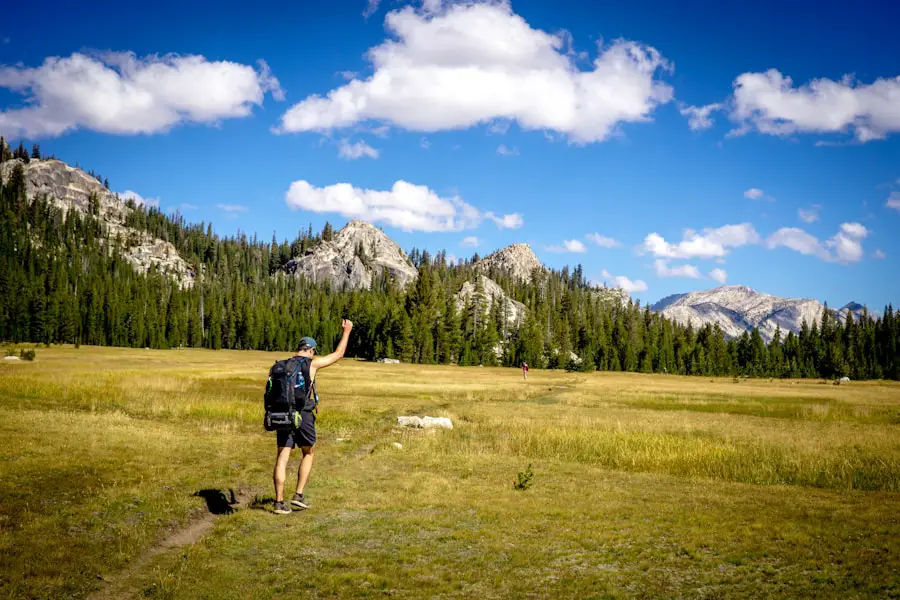
Physical activity can reduce short-term feelings of anxiety and improve sleep quality, both of which can make everyday stress easier to manage. Hiking may add another layer because the activity takes place outdoors, often away from traffic, work demands, and constant digital stimulation.
Evidence on nature-based activity is promising but should not be overstated. A systematic review and meta-analysis of nature-based outdoor activities found improvements in several mental health outcomes, including depressive mood and anxiety, although the included studies varied in design and quality.
Hiking with a friend or group can also reduce isolation and give people a chance to talk without the pressure of a formal setting. For some hikers, the routine of planning a route, moving steadily, and focusing on the trail can also provide a useful mental reset.
Connection with Nature
Time in natural settings may provide benefits beyond exercise alone. The National Park Service notes that hiking can support both physical and mental well-being, and research has linked nature exposure with lower stress and improved mood. The strongest evidence supports stress reduction and attention restoration rather than sweeping claims that nature automatically improves every aspect of mental performance.
One often-cited 2008 study in Psychological Science found that walking in nature or viewing nature images improved directed-attention performance compared with urban conditions. That finding supports the idea that natural settings can feel mentally restorative, but it is more specific than saying nature universally boosts creativity or problem-solving.
Social Benefits
Hiking can be a social activity as well as a workout. Going with friends, relatives, clubs, or community groups creates time for conversation and shared goals. The National Park Service includes relational health among the benefits of hiking, noting that shared trail experiences can strengthen bonds.
A hiking partner can also add practical value. Partners can help with navigation, pace, decision-making, and emergencies. Group hiking does not guarantee better health or stronger relationships, but it can make activity more enjoyable and easier to repeat consistently.
Hiking is therefore more than a generic workout. It blends movement, changing terrain, outdoor exposure, and often social interaction in one activity. For people who enjoy trails, that combination can make regular physical activity feel less like a chore and more like a repeatable habit.
How Intense Is Hiking?
Hiking can range from light to vigorous exercise. The 2024 Compendium of Physical Activities lists slow hiking through fields and hillsides without a load at 3.8 METs, normal-pace hiking through fields and hillsides at 5.3 METs, and cross-country hiking at 6.0 METs. In general, 3.0 to 5.9 METs is moderate intensity and 6.0 METs or more is vigorous intensity.
You do not need to calculate METs on the trail. Use the talk test instead. At moderate intensity, you can talk but not sing. At vigorous intensity, you can only say a few words before pausing for breath. Steeper grades, faster speeds, high altitude, and heavier packs can raise the effort quickly.
How to Start Hiking for Health
- Start with an easy trail. Choose a short route with modest elevation gain and a clear turnaround point.
- Build gradually. Add distance or elevation only after your current route feels manageable.
- Use a sustainable pace. Most health-focused hikes do not need to feel like a race. A pace that lets you talk in sentences is a useful starting point.
- Add strength work. Two weekly strength sessions can prepare the legs, hips, core, and upper body for steeper terrain and pack carrying.
- Recover between hard outings. Soreness, sleep, heat exposure, altitude, and prior activity all affect how quickly you are ready for another difficult hike.
Pro Tip: Keep the first few hikes easier than you think you need. Finishing with energy left makes it easier to build a consistent routine without turning every outing into a recovery problem.
Hiking Safety and Injury Prevention
The health benefits of hiking depend on getting home safely. The National Park Service recommends matching the trail to your abilities, checking weather and park alerts, leaving a trip plan, carrying the Ten Essentials, and bringing enough water and food. Footwear should fit well and match the terrain, and clothing should be suitable for changing conditions.
- Check the route and weather: Know distance, elevation gain, trail conditions, daylight, closures, and forecast hazards before leaving.
- Carry essential gear: Navigation, sun protection, insulation, light, first aid, fire, repair tools, food, water, and emergency shelter are the core Ten Essentials categories.
- Prevent heat illness: In hot weather, slow the pace, take cooling breaks, and drink water regularly. The CDC advises stopping activity and moving to a cool place if you feel faint or weak.
- Protect against ticks where relevant: In grassy, brushy, or wooded areas, use an appropriate repellent, avoid brush when possible, and check your body and clothing after the hike.
- Turn around when needed: Fatigue, worsening weather, unexpected trail conditions, injury, dizziness, or unusual shortness of breath are reasons to reassess the plan rather than push for the summit.
Warning: Hiking can be strenuous. If you have a chronic medical condition, are returning after a long period of inactivity, or plan a much harder hike than usual, consider discussing the plan with a health care professional. Stop and seek appropriate medical help for severe or concerning symptoms such as chest pain, fainting, or severe breathing difficulty.
Frequently Asked Questions
What are the health benefits of hiking?
Hiking can improve cardiovascular fitness, muscular endurance, balance, bone health, mood, sleep, and overall physical activity levels. It can also support weight management and provide the mental benefits of spending time outdoors.
How does hiking improve mental health?
Hiking combines exercise with outdoor exposure. Physical activity can reduce short-term anxiety, improve sleep, and lower long-term risk of depression, while natural settings may help reduce stress and restore attention.
What are the physical benefits of hiking?
Hiking works the heart and lungs and challenges the legs, hips, core, balance, and coordination. Because it is weight-bearing, it can also help support bone health as part of an active lifestyle.
How does hiking contribute to weight management?
Hiking burns calories and increases total physical activity. Weight change still depends on overall energy intake and expenditure, so hiking works best alongside sustainable eating and recovery habits rather than as a stand-alone weight-loss guarantee.
What are the social benefits of hiking?
Hiking with friends, family, clubs, or community groups can create shared experiences, conversation, accountability, and practical support on the trail.
How does hiking improve overall well-being?
Hiking can combine exercise, time outdoors, goal-setting, stress relief, and social contact in one activity. For people who enjoy it, that combination can make regular movement easier to maintain.
What are the safety considerations for hiking?
Choose a trail that matches your ability, check weather and trail conditions, tell someone your plan, carry the Ten Essentials, bring enough food and water, wear appropriate footwear and layers, and turn back when conditions become unsafe.
How often should I hike for health benefits?
There is no required number of hikes. Count moderate- or vigorous-intensity hiking toward your weekly aerobic activity goal. Adults can work toward 150 to 300 minutes of moderate activity per week and add muscle-strengthening activity on at least two days.
Sources
- CDC — Health Benefits of Physical Activity for Adults — immediate and long-term physical and mental health benefits.
- U.S. Office of Disease Prevention and Health Promotion — Physical Activity Guidelines Q&A — current adult aerobic and muscle-strengthening recommendations.
- National Park Service — Benefits of Hiking — hiking-specific physical, mental, and relational benefits.
- National Park Service — Hike Smart — trail planning, limits, weather, food, water, and essential gear.
- CDC — Physical Activity and Your Weight and Health — calorie use, weight management, and activity intensity.
- JAMA Psychiatry — Physical Activity and Risk of Depression — systematic review and meta-analysis of physical activity and incident depression.

