
Last Updated on September 11, 2026 by Logan Reeves
A .40 S&W bullet can travel far beyond normal handgun target distances, but there is no single maximum distance that applies to every firearm and cartridge. Many general estimates place unobstructed, elevated travel in the mile-scale range. However, the exact result changes with the load, bullet design, barrel, launch angle, elevation, weather, and terrain. Never use an estimated mileage figure as a safety boundary.
Quick Answer
A .40 S&W bullet may travel roughly a mile under elevated, unobstructed conditions, but no universal maximum applies. Practical handgun shooting distances are far shorter. Treat every round as capable of leaving the target area, ricocheting, or penetrating the target unless a verified backstop safely contains it.
Key Takeaways
- There is no official universal maximum range for every .40 S&W load and firearm.
- Maximum travel is not the same as practical or effective shooting distance.
- A longer barrel may increase velocity, but it does not create a fixed rifle-range figure.
- Elevated fire, ricochets, and missed targets can send a bullet far outside the intended area.
- Only shoot where a verified backstop and established range rules contain every round.
Warning: Never fire into the air, over a hill, across water, or toward uncontrolled land. Do not assume that acreage, trees, a fence, or an estimated bullet range will keep other people or property safe.
Disclosure: As an Amazon Associate I earn from qualifying purchases. Some links on this page are affiliate links, at no extra cost to you.
How Far Can a .40 S&W Bullet Travel?
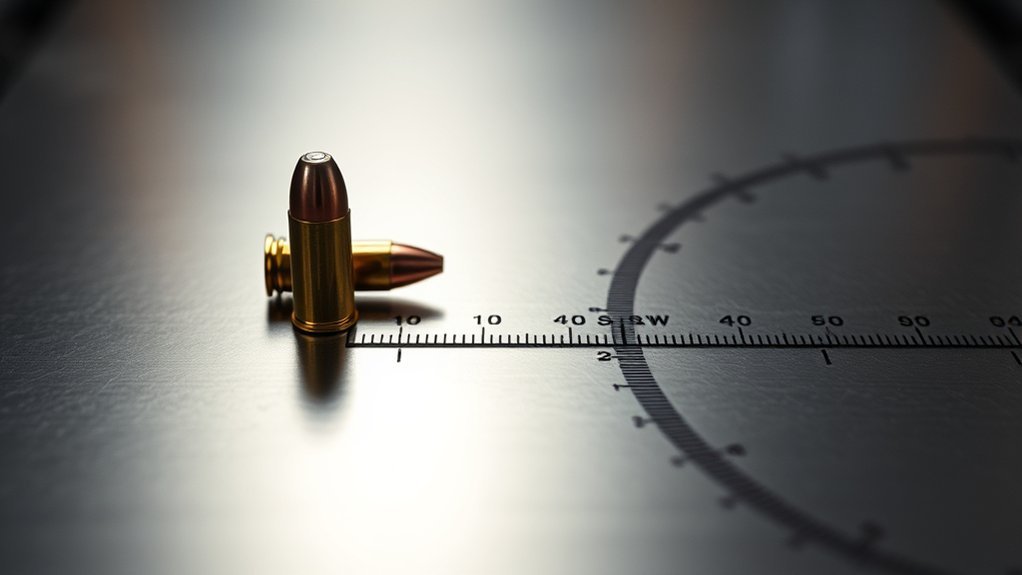
You will often see a figure near 1,500 yards, or about 0.85 miles, quoted as the maximum travel distance for a .40 S&W handgun bullet. Treat that number only as a rough, load-dependent estimate. It is not a Sporting Arms and Ammunition Manufacturers’ Institute standard, and it is not reliable enough to define a safe shooting area.
SAAMI explains that exterior-ballistics information such as trajectory and downrange velocity should be obtained for the specific ammunition load. Two cartridges labeled .40 S&W can use different bullet weights, shapes, materials, and velocities. They may therefore follow different flight paths and stop at different distances.
A pistol-caliber carbine may produce more velocity than a short handgun with some loads because its barrel is longer. That does not mean every .40 S&W carbine bullet travels exactly 2,000 yards. The result still depends on the ammunition, firearm, angle, terrain, and atmosphere.
Maximum travel is a hazard estimate, not a usable target distance and never a substitute for safe bullet containment.
.40 S&W Range in Yards and Miles
A single yards-or-miles figure can create false confidence. The safer approach is to separate four different ideas: estimated maximum travel, manufacturer-tested trajectory, practical shooting distance, and the distance for which a specific range is designed.
| Measure | What It Means |
|---|---|
| Estimated maximum travel | Often described as mile-scale for an elevated, unobstructed shot, but it varies by load and conditions. |
| Manufacturer trajectory data | Load-specific velocity, energy, and bullet path measured under stated test conditions. |
| Practical shooting distance | A much shorter distance determined by the firearm, sights, shooter, target, and purpose. |
| Safe range distance | The distance and direction approved by the facility, backstop design, and range officer. |
The .40 S&W does not have a standardized 1,200-yard “effective range.” Practical handgun performance is measured at far shorter distances, and accuracy decreases as distance, wind effects, aiming error, and bullet drop increase. A bullet may remain hazardous after useful accuracy has disappeared.
Note: A cartridge can be incapable of reliable target accuracy at a given distance while still carrying enough energy to injure someone.
What Affects .40 S&W Bullet Distance?
The distance a .40 S&W bullet travels depends on the complete firing system, not just the caliber name. Important variables include the launch angle, bullet weight and shape, initial velocity, barrel length, air density, wind, elevation, terrain, and any object the bullet strikes.
Barrel Angle Effects
A bullet begins falling under gravity as soon as it leaves the barrel. A level shot does not remain level, and it usually strikes the ground, a target, vegetation, or another object much sooner than an elevated shot traveling through open air.
Raising the muzzle increases the bullet’s time aloft and creates a distant, difficult-to-predict impact area. Forensic high-angle testing with common handgun calibers, including .40 S&W, has also shown that measured flight can differ from ballistic-software predictions. That is one reason you should never try to calculate a “safe” upward firing angle.
Ammunition and Environment
Bullet weight alone does not determine distance. A lighter bullet may start faster, while a heavier or more streamlined bullet may retain velocity differently. Jacket design, hollow-point shape, ballistic coefficient, and manufacturing tolerances also affect drag.
Barrel length can change muzzle velocity because the bullet may accelerate for a different amount of time before leaving the firearm. The effect is not identical for every load. Check the firearm manual and the ammunition manufacturer’s data rather than applying one handgun or carbine figure to all .40 S&W ammunition.
Wind changes the bullet’s horizontal path. Temperature, elevation, humidity, and air pressure affect air density and drag. Terrain often matters even more because a bullet may strike soil, a rock, water, pavement, a tree, a building, or another surface before reaching its theoretical maximum distance.
How Barrel Angle Changes Bullet Range
In a vacuum, a projectile’s maximum horizontal range occurs near 45 degrees, but firearm bullets travel through air and experience substantial drag. Bullet shape, stability, speed loss, and changing atmospheric conditions mean real results do not follow the simple classroom formula exactly.
For firearm safety, the exact maximum-range angle is not useful. The important point is that an elevated muzzle gives the bullet more time to travel and may place the impact point outside the shooter’s view and control.
- Never fire a bullet into open sky.
- Never shoot over a hill or ridge when the far side is not visible and controlled.
- Do not treat trees, brush, fences, or buildings as dependable backstops.
- Avoid shots toward water, rocks, pavement, and other surfaces that may cause ricochets.
- Use only targets and steel systems approved for the firearm, ammunition, distance, and range.
A safe direction is one in which the bullet is captured by a verified backstop without endangering anyone through a miss, penetration, fragmentation, or ricochet. The NSSF firearm-safety rules emphasize identifying the target, knowing what lies beyond it, and considering where a bullet may go if it misses or changes direction.
.40 S&W vs. 9mm: Which Travels Farther?
You cannot determine maximum travel from the caliber names alone. Many common 9mm loads start faster than heavy .40 S&W loads, but projectile shape, ballistic coefficient, bullet weight, barrel length, and launch conditions all affect the final result.
Travel Distance Comparison
A representative comparison shows why named loads are more useful than broad caliber claims. Speer lists a 124-grain 9mm Gold Dot load at 1,150 feet per second from a four-inch test barrel. Its 180-grain .40 S&W Gold Dot load is listed at 1,025 feet per second from a four-inch test barrel.
That example shows the selected 9mm starting faster, but it does not prove that every 9mm bullet travels farther than every .40 S&W bullet. Different loads within each caliber can overlap in velocity and use projectiles with different drag characteristics.
Velocity and Range
| Representative Load | Test Barrel | Muzzle Velocity | Velocity at 100 Yards |
|---|---|---|---|
| Speer .40 S&W, 180-grain Gold Dot | 4 inches | 1,025 fps | 902 fps |
| Speer 9mm, 124-grain Gold Dot | 4 inches | 1,150 fps | 963 fps |
These figures come from Speer’s .40 S&W data and Speer’s 9mm data. They are examples for two specific products, not universal specifications for either caliber.
Safety at Long Range
Both calibers can travel far beyond the intended target if a shot misses, penetrates, or ricochets. A faster bullet is not the only hazard. A slower projectile can still cause serious injury, and its final direction may be difficult to predict after hitting a hard or angled surface.
- Confirm the target and the entire area behind it.
- Use a backstop approved for the ammunition and shooting position.
- Do not fire when people, roads, homes, livestock, or trails may be in or beyond the impact area.
- Stop immediately if visibility, range conditions, or target placement changes.
- Follow every command from the range officer.
How Fast a .40 S&W Bullet Travels
Common .40 S&W loads often leave handgun-length test barrels at approximately 950 to 1,150 feet per second, although ammunition outside that range exists. The exact speed depends on bullet weight, cartridge design, pressure, barrel length, and test conditions.
For example, Speer lists its 180-grain Gold Dot load at 1,025 fps and its 165-grain Gold Dot load at 1,150 fps, both from four-inch test barrels. This variation within one manufacturer’s product family shows why “the speed of a .40 S&W bullet” cannot be reduced to one number.
Velocity decreases after the bullet leaves the muzzle because of aerodynamic drag. The rate of loss depends heavily on the projectile and atmosphere. A downrange speed or energy figure is meaningful only when it identifies the exact ammunition and the assumptions used in the calculation or test.
Why a Backstop Is Essential
A backstop is the structure or natural feature intended to stop bullets that pass through or miss the target. It must control the expected ammunition, shooting direction, target placement, fragmentation, ricochet risk, and volume of fire.
A random dirt pile is not automatically a safe berm. Soil composition, height, depth, slope, erosion, embedded rocks, vegetation, nearby property, and the direction of fire all matter. Trees, stacked lumber, household walls, scrap metal, and unverified steel plates are not dependable general-purpose bullet containment.
The safest choice is an established shooting range whose impact area and backstop were designed, inspected, and maintained for the firearms being used. Range owners developing or modifying bullet containment should use qualified professionals and recognized range-design resources, such as the NRA Range Services program.
Pro Tip: Before loading the firearm, stand at the firing point and identify where every bullet should stop. If you cannot clearly confirm a suitable target, impact area, and backstop, do not shoot.
How to Shoot Safely at Long Range
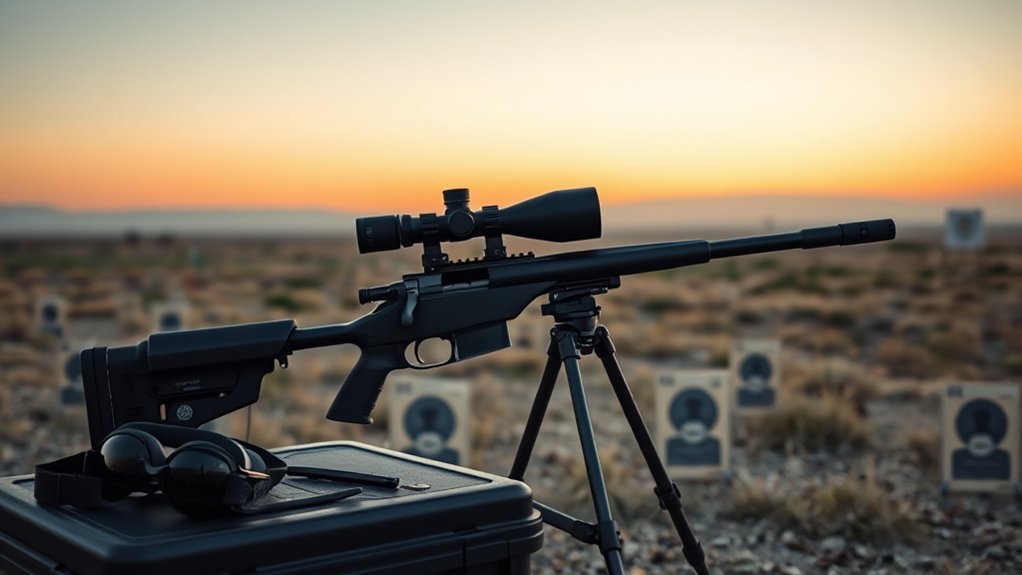
The .40 S&W is primarily a handgun cartridge, not a long-range precision cartridge. Only shoot at distances and targets supported by the firearm, sights, ammunition, range design, local laws, and your verified skill level.
- Use an established range. Follow posted caliber, target, firing-line, and ammunition restrictions.
- Listen to the range officer. Stop immediately when a cease-fire is called or an unsafe condition appears.
- Keep the muzzle in a safe direction. Never point it above the backstop or toward an uncontrolled area.
- Identify the target and what is beyond it. Account for misses, penetration, fragmentation, and ricochets.
- Use eye and hearing protection. Firearm impulse noise can damage hearing, and fragments or escaping gases can injure the eyes.
- Use the correct ammunition. Match the exact cartridge designation printed on the firearm and ammunition packaging.
- Control lead exposure. Do not eat, drink, smoke, or touch your face on the firing line. Wash your hands and exposed skin after shooting.
- Inspect the firearm. Follow the manufacturer’s instructions and stop if the firearm, ammunition, or target system behaves abnormally.
- Store the firearm safely afterward. Unload it before leaving the shooting activity and secure it against unauthorized access.
The CDC and NIOSH firing-range guidance addresses noise and airborne lead exposure. At ranges with high impulse noise, properly fitted earplugs and earmuffs may be appropriate, especially for instructors and frequent shooters. Follow the facility’s protection requirements and obtain professional advice when needed.
Note: Firearm laws, discharge ordinances, hunting rules, and range requirements vary by location. Compliance with distance estimates does not make a shot legal or safe.
Frequently Asked Questions
How far can a .40 S&W bullet travel?
General estimates often place elevated, unobstructed travel near the mile scale, but there is no universal maximum for every .40 S&W load and firearm. The exact distance depends on ammunition, barrel length, angle, atmosphere, elevation, and terrain.
What is the effective range of a .40 S&W?
There is no single standardized effective range. Practical accuracy depends on the firearm, sights, ammunition, shooter, target size, and purpose. It is far shorter than the bullet’s possible maximum travel distance.
Does a .40 S&W carbine shoot farther than a handgun?
A longer carbine barrel may produce more velocity with some loads, which can change trajectory and potential travel. The increase varies by ammunition, so it does not create a universal 2,000-yard maximum.
Does 9mm always travel farther than .40 S&W?
No. Many common 9mm loads start faster than heavy .40 S&W loads, but maximum travel also depends on bullet weight, shape, ballistic coefficient, barrel, and launch conditions. Compare specific manufacturer loads rather than caliber names alone.
Is .40 S&W the same as a 40 mm projectile?
No. The .40 in .40 S&W refers to a bullet approximately four-tenths of an inch in diameter. A 40 mm projectile is about 1.57 inches in diameter and belongs to a completely different class of ammunition.
What are the disadvantages of .40 S&W?
Compared with many 9mm handguns, .40 S&W may produce sharper recoil, reduce magazine capacity in similarly sized firearms, increase ammunition cost, and make fast follow-up shots harder for some shooters. The experience varies with the firearm, load, grip, and shooter.
Can a .40 S&W bullet still be dangerous after traveling a long distance?
Yes. A bullet loses velocity during flight but may still have enough energy to penetrate skin or cause serious injury. Its final direction may also change after a ricochet or impact with another object.
Conclusion
A .40 S&W bullet can travel far beyond normal handgun target distances, but a fixed number such as 1,500 or 2,000 yards cannot describe every load, firearm, angle, and environment. Maximum travel also has little to do with practical accuracy.
The dependable rule is simpler: treat every round as capable of leaving the intended area unless a verified backstop contains it. Use an established range, keep the muzzle within the approved impact area, identify the target and everything beyond it, and stop whenever conditions are uncertain.
Sources
- Sporting Arms and Ammunition Manufacturers’ Institute FAQ — explains why exterior-ballistics data must be tied to a specific ammunition load.
- Speer .40 S&W 180-Grain Gold Dot Ballistics — supports the representative .40 S&W velocity and 100-yard data.
- Speer 9mm 124-Grain Gold Dot Ballistics — supports the representative 9mm comparison data.
- NSSF Rules of Safe Gun Handling — supports target identification, safe muzzle direction, and awareness of what lies beyond the target.
- CDC/NIOSH Control of Lead and Noise in Indoor Firing Ranges — supports hearing protection and range-exposure precautions.
- INTERPOL Review of Forensic Firearm Examination 2016–2019 — summarizes high-angle firearm testing and the limitations of calculated range predictions.

