

Last Updated on September 11, 2026 by Daniel Globe
Yes, you may be able to see your therapist while you are in another country, but international therapy is not automatically legal just because the session happens online. Licensing rules can depend on where you are physically located during the session, where your therapist is located, the therapist’s profession, and the laws of both jurisdictions. Privacy, insurance, professional-liability coverage, and emergency planning may also affect whether care can continue.
Quick Answer
You may be able to continue therapy while you are in another country, but there is no universal rule. Your therapist should check the laws and licensing requirements that apply where you are physically located and where they are practicing. Privacy, malpractice coverage, emergency planning, and insurance may also affect whether sessions can continue.
Key Takeaways
- Your physical location during each session usually matters more than your citizenship or permanent address.
- The therapist may need permission to practice where you are located, and rules where the therapist is physically located can matter too.
- Temporary travel and a permanent international move can produce different licensing, insurance, and continuity-of-care issues.
- PSYPACT can help eligible psychologists practice across participating U.S. jurisdictions, but it does not provide authority to practice in foreign countries.
- Confirm privacy, emergency procedures, professional-liability coverage, insurance, payment, and local crisis resources before beginning or continuing international sessions.
Note: This article provides general educational information, not legal or medical advice. Cross-border telehealth rules vary by country, state, province, profession, and individual circumstances. Therapists should confirm current requirements with the relevant licensing authority or qualified legal counsel before providing care.
Disclosure: As an Amazon Associate I earn from qualifying purchases. Some links on this page are affiliate links, at no extra cost to you.
Is Therapy Abroad Legal?
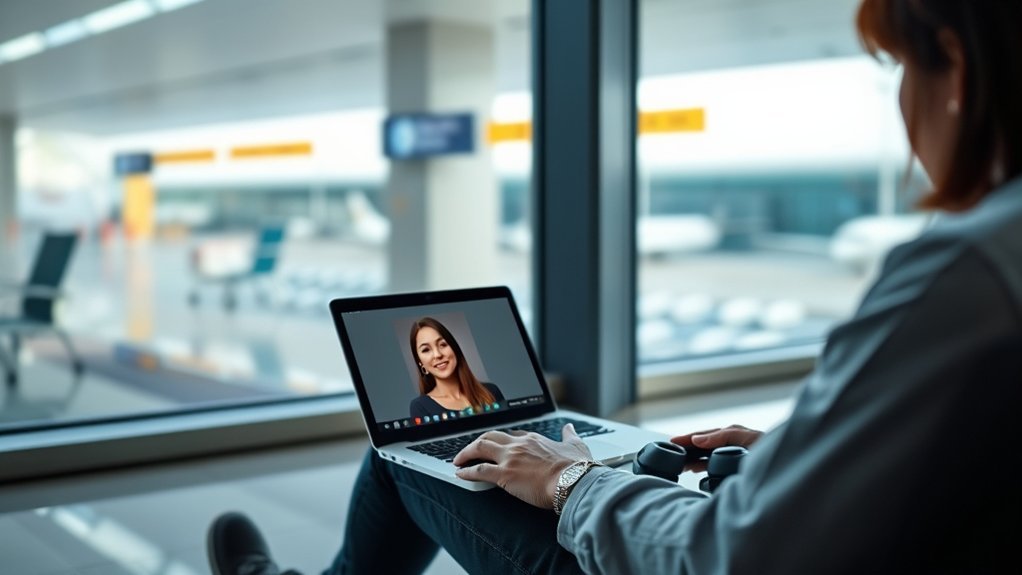
Therapy across international borders can be legal in some situations, but there is no worldwide license or single rule that makes it automatically permitted. A therapist who is properly licensed at home may still need to satisfy rules in the country, state, or province where the client is physically located.
The American Psychological Association’s international practice guidance describes international teletherapy as a jurisdiction-specific issue. Depending on the destination, a country may require local registration or recognition, permit limited services, regulate only certain professional titles, or provide little specific guidance on foreign telehealth.
The therapist must also consider the laws that apply where they are physically practicing. A clinician who normally works from the United States but conducts sessions while spending a month overseas may create a second set of regulatory questions even if every client remains at home.
Warning: Do not assume that a short vacation creates an automatic exception. One teletherapy session can still count as professional practice in a jurisdiction whose licensing rules apply to the client, therapist, or both.
What Laws Apply Where You’re Located?
For teletherapy, your location is not simply the country on your passport or your permanent home address. Regulators often care about your physical location at the moment the service is delivered.
Where You’re Physically Located
In the United States, federal telehealth guidance explains that health professionals generally need to meet requirements where they practice and be licensed or otherwise legally permitted to provide care where the patient is located. The guidance also recommends verifying the patient’s location before an appointment. See Telehealth.HHS.gov’s licensing guidance.
That means a client who normally lives in New York but joins a session while vacationing in another state or country may create a different licensing situation for that session.
A therapist should normally document information needed for legal and clinical compliance, such as:
- The client’s physical location during the session
- The therapist’s own physical location
- How to contact the client if the video or phone connection fails
- An appropriate local emergency contact or crisis resource
- Any consent required for telehealth
- Changes in location when the client travels
The client does not need to create a separate personal legal record of every session unless there is a specific reason to do so. Clinical documentation is primarily the provider’s responsibility.
Local Rules And Licensure
Different professions and countries regulate remote mental-health services differently. A psychologist, licensed professional counselor, clinical social worker, marriage and family therapist, or psychiatrist should not assume that a license issued in one place automatically carries into another jurisdiction.
Even countries with regulated pathways should not be described simply as allowing or banning all foreign therapists. For example, Italy has formal procedures through its Ministry of Health for recognizing foreign psychologist qualifications. Whether a specific therapist can legally provide a particular service still depends on the profession, qualification, service, and applicable Italian rules.
If a destination’s law is unclear, the safest approach is for the therapist to contact the relevant national or regional licensing authority before providing the session rather than interpreting silence as permission.
Does PSYPACT Cover International Therapy?
No. PSYPACT is an interstate compact within participating U.S. jurisdictions; it is not an international psychology license.
Eligible psychologists who meet PSYPACT requirements may obtain authority to provide telepsychology across participating jurisdictions, but the psychologist must follow PSYPACT’s rules and applicable state requirements. Current requirements are available from the PSYPACT Commission.
If a client travels from a PSYPACT state to France, Japan, Italy, Mexico, or another foreign country, PSYPACT by itself does not authorize therapy in that country. The foreign jurisdiction must be checked separately.
What Licenses Do Therapists Need Abroad?
There is no single “international therapist license.” The required authorization depends on the therapist’s profession and the laws of the places involved.
- Psychologists: may be regulated through psychology boards, professional registers, recognition procedures, or national health-profession laws.
- Counselors and psychotherapists: may be separately licensed in some jurisdictions and less formally regulated in others.
- Clinical social workers: must consider social-work licensing rules as well as telehealth rules.
- Marriage and family therapists: are subject to their own professional licensing framework where that profession is regulated.
- Psychiatrists: must consider medical licensing and potentially separate prescribing rules.
A therapist should verify at least four things before providing international care:
- Whether their home license permits the proposed practice.
- Whether the client’s physical location permits a foreign provider to deliver the service.
- Whether the therapist’s own physical location imposes additional requirements.
- Whether their professional-liability insurance covers the service in both locations.
Pro Tip: Ask the licensing authority a precise question: “May a clinician licensed in [jurisdiction] provide ongoing teletherapy to an existing client who will be physically located in [destination]?” A specific question is more useful than simply asking whether telehealth is legal.
Can You Start Telehealth With an Out-of-Country Client?
You may be able to start telehealth with a client in another country, but you should not rely only on your existing U.S. or other home-country license. Starting a new cross-border professional relationship can raise licensing, informed-consent, privacy, payment, and emergency-response issues from the first session.
Starting Care Legally
Before the first session, the clinician should determine whether the service is permitted in every jurisdiction that applies. A practical pre-treatment review includes:
- Confirm the client’s physical location.
- Confirm the therapist’s physical location.
- Check the therapist’s home licensing rules.
- Check the regulator or law where the client is located.
- Confirm professional-liability coverage.
- Review telehealth consent requirements.
- Confirm a secure communication method.
- Establish local emergency and crisis procedures.
- Explain fees, currency, cancellation terms, and insurance limitations.
If the legal status cannot be confirmed, the clinician should obtain appropriate regulatory or legal guidance before starting routine treatment.
Jurisdiction And Consent
Informed consent for international teletherapy should explain more than the normal goals and risks of treatment. Depending on applicable law and professional standards, it may also address:
- The therapist’s license and where it is issued
- Possible limits on cross-border practice
- Technology and confidentiality risks
- How records are stored and transmitted
- What happens if the connection fails
- Emergency procedures in the client’s location
- Insurance and self-pay responsibilities
- What happens if travel or relocation makes continued treatment impermissible
Consent does not override licensing law. A client cannot make an otherwise prohibited professional service legal simply by agreeing to receive it.
Emergency and Crisis Planning
International therapy needs a stronger emergency plan because the therapist may not know the local health system, emergency number, crisis services, or nearby hospitals.
Before treatment continues, the therapist should know the client’s current location, how to contact an appropriate local emergency service, and whether there is a trusted local emergency contact when clinically appropriate. The APA specifically highlights crisis response as an important consideration when a client is in another country.
Warning: Cross-border teletherapy is not a substitute for local emergency care. If someone is in immediate danger or experiencing a psychiatric emergency, use the emergency or crisis services available in the place where that person is physically located.
What Changes If a Client Moves Abroad?
A permanent move can change much more than a short vacation. A therapist who could legally provide a limited session while a client was temporarily traveling may not necessarily be allowed to provide ongoing treatment after the client becomes resident abroad.
A move can affect:
- Licensing and professional-registration requirements
- Professional-liability insurance
- Health-insurance eligibility and reimbursement
- Privacy and data-protection obligations
- Emergency and crisis planning
- Payment methods and currency
- Prescribing and medication management
- Whether a local clinician should take over treatment
Before the move, the therapist and client should discuss whether treatment can continue legally, whether only short-term transition sessions are appropriate, or whether care should be transferred to a qualified professional in the destination country.
If medication is involved, the prescribing clinician should separately review medical-licensing, prescribing, pharmacy, and medication-import rules. Permission to provide psychotherapy does not automatically mean the clinician may prescribe across the same border.
What If the Therapist Travels Abroad?
Cross-border issues also arise when the therapist travels and the client stays home. A clinician should not assume that a laptop and an existing home license allow them to work from any country.
Before providing sessions while overseas, the therapist should check:
- Whether their licensing board permits practice while the clinician is physically abroad
- Whether the destination country considers the remote session professional practice within its territory
- Whether their malpractice or professional-liability policy covers work performed there
- Whether local immigration or work rules create separate restrictions
- Whether the telehealth platform and record system can lawfully and securely be accessed from that location
The same principle applies to domestic travel. A therapist who travels to another U.S. state may need to consider that state’s laws even if every client remains in the therapist’s original state.
How Do Privacy and Data Protection Work Across Borders?
Cross-border therapy involves highly sensitive health information, so clinicians should review the privacy laws that actually apply rather than relying on HIPAA alone.
For example, when the European Union’s General Data Protection Regulation applies, health information receives special protection and transfers of personal data outside the European Economic Area can require additional safeguards. The European Data Protection Board explains that protections for personal data must continue when covered data is transferred internationally.
Practical privacy checks include:
- Using an appropriately secure telehealth platform
- Confirming where data is stored
- Reviewing whether data crosses national borders
- Using strong authentication and access controls
- Explaining relevant technology risks to the client
- Limiting access to records to authorized people
- Following applicable retention and breach-notification requirements
HIPAA, GDPR, and other privacy laws have different scopes. A clinician should apply the laws relevant to the actual practice rather than listing every privacy law as though all of them automatically apply.
How Do Insurance and Payments Work Abroad?

Insurance coverage for therapy abroad is plan-specific. Do not assume that a session remains covered simply because the same therapist and billing code were covered while you were at home.
Ask the insurer:
- Does my plan cover teletherapy while I am physically outside my home state or country?
- Must both the patient and provider be located in a covered service area?
- Does the provider need to remain in network during international travel?
- Will the insurer accept a claim when the patient is abroad?
- Is prior authorization required?
- Will I need to pay the therapist directly and seek reimbursement?
For one clear U.S. example, Medicare generally does not cover health care received outside the United States except in limited situations. Private plans, employer plans, international health plans, and travel policies can use different rules, so clients should obtain plan-specific confirmation.
If insurance will not cover the session but therapy is otherwise legally permitted, self-pay may be an option. The therapist and client should agree in advance on the fee, currency, payment method, transaction costs, cancellation policy, and documentation that will be provided.
What Risks Come With International Telehealth?
International telehealth can improve continuity of care, but it creates risks that are easier to manage when they are addressed before the session.
- Licensing risk: the therapist may lack permission to practice in a relevant jurisdiction.
- Professional-liability risk: malpractice coverage may not extend to the country where services are provided or received.
- Privacy risk: records or video communications may cross borders subject to different data-protection rules.
- Emergency-response risk: the therapist may not know how to activate local crisis care.
- Insurance risk: the session may be lawful but not reimbursable.
- Continuity risk: treatment may need to stop if the client moves somewhere where the therapist cannot legally practice.
- Cultural and language risk: the therapist may lack familiarity with local systems, terminology, resources, or cultural context.
These risks do not automatically make international therapy inappropriate. They mean the clinician needs a documented, jurisdiction-specific plan rather than relying on assumptions.
How Do You Check the Rules Before Starting?
Use this process before beginning cross-border therapy and repeat it whenever either person changes location:
- Identify both physical locations. Record where the client and therapist will actually be during the session.
- Identify the therapist’s profession. Psychology, counseling, social work, marriage and family therapy, and psychiatry can have different regulators.
- Check the home regulator. Confirm that the therapist’s licensing authority allows the proposed practice.
- Check the client-location regulator. Determine whether a foreign or out-of-jurisdiction clinician may provide the service there.
- Check the therapist-location rules. This is especially important if the therapist is traveling.
- Confirm malpractice coverage. Ask the insurer whether the policy covers the exact jurisdictions involved.
- Review privacy requirements. Check platform security, record storage, and international data transfers.
- Create an emergency plan. Know the client’s location, local crisis options, and emergency contact procedure.
- Verify insurance separately. Legal permission to provide therapy does not guarantee reimbursement.
- Update informed consent. Explain cross-border limitations and what will happen if either person changes location.
If an official regulator cannot answer the question clearly, the therapist should consider obtaining advice from a lawyer experienced in professional licensing or health-care regulation before providing routine services.
Frequently Asked Questions
Can I See Therapy Clients While Out of the Country?
Possibly, but your normal license does not automatically authorize you to practice from every country. Check the laws where you are physically located, the laws where each client is physically located, your licensing board’s rules, professional-liability coverage, privacy obligations, and emergency procedures before providing sessions.
What Is the 2 Year Rule for Therapists?
There is no universal two-year rule that allows therapists to work internationally. Some licensing, reciprocity, supervised-experience, or credentialing pathways use two-year requirements, but those rules are specific to particular professions and jurisdictions. They should not be treated as general permission to provide therapy abroad.
Can My Therapist See Me in a Different Country?
Your therapist may be able to continue seeing you, but they should first confirm that the service is permitted where you are physically located and where they are practicing. They should also check professional-liability coverage, privacy requirements, emergency planning, and insurance.
Can You Provide Teletherapy Internationally?
International teletherapy is possible in some situations, but there is no worldwide authorization to provide it. The clinician must determine which licensing, privacy, professional, and health-care rules apply in the therapist’s location and the client’s location before treatment begins or continues.
Does PSYPACT Let My Psychologist Treat Me Outside the United States?
No. PSYPACT creates a pathway for eligible psychologists to practice telepsychology across participating U.S. jurisdictions. It does not itself authorize practice in foreign countries. If you travel internationally, your psychologist must check the rules of the country where you are physically located.
Can I Use My U.S. Health Insurance for Therapy While Abroad?
Maybe, but coverage varies by plan. Ask your insurer specifically whether teletherapy is covered while you are physically outside the United States and whether the provider must meet location or network requirements. Medicare generally provides very limited coverage for health care received outside the United States.
What Happens If the Local Teletherapy Law Is Unclear?
Do not assume that the absence of an obvious rule means the service is permitted. The therapist can contact the relevant licensing authority, national professional regulator, or qualified health-care attorney for guidance before providing routine treatment.
Do I Need an Emergency Plan for Therapy While Traveling?
Yes. Your therapist should know where you are located and how to reach appropriate local emergency or crisis services if necessary. This is especially important because a therapist in another country may not automatically know your local emergency number, hospital system, or crisis-response resources.
Conclusion
You can sometimes continue therapy when you or your therapist is in another country, but cross-border teletherapy requires more than a working video connection. Check where both people will physically be, determine which licensing rules apply, confirm professional-liability coverage, review privacy and insurance requirements, and create a local emergency plan.
The most important rule is simple: never assume that a license issued in one jurisdiction automatically permits therapy everywhere else. If the answer is unclear, verify it with the relevant licensing authority or qualified legal counsel before routine treatment continues.
Sources
- American Psychological Association — Psychology Outside the U.S. — international teletherapy, jurisdiction, malpractice, and crisis-planning considerations.
- Telehealth.HHS.gov — Licensing Across State Lines — patient location, consent, licensure, temporary practice, registration, and interstate pathways.
- PSYPACT Commission — Practicing Telepsychology — requirements and limits of interstate telepsychology authority for eligible psychologists.
- Italian Ministry of Health — Recognition of Foreign Psychologist Qualifications — Italy’s formal recognition pathway for certain foreign psychology qualifications.
- European Data Protection Board — International Data Transfers — GDPR safeguards for covered personal-data transfers outside the EEA.
- Medicare — Travel Outside the U.S. — limits on Medicare coverage for health care received outside the United States.
