
Last Updated on July 28, 2026 by Mason Reed
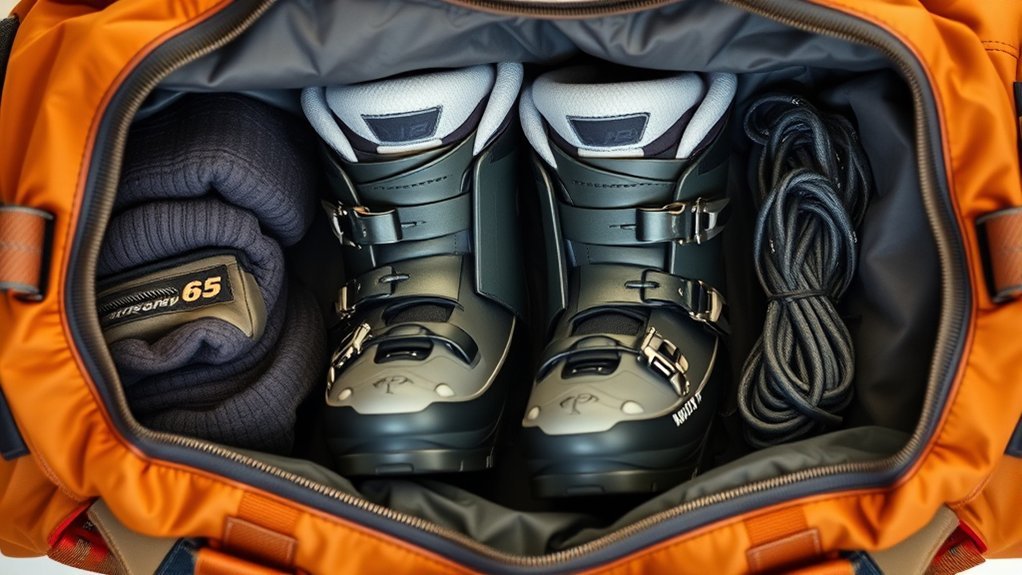
Yes, you can pack ski boots in a 65L duffel bag, and it usually leaves enough room for boots, socks, gloves, and other small gear alongside several days of clothing. Place the boots at the base or diagonally, make sure they’re completely dry first, light-buckle the shells to maintain their shape, and pad them with soft clothing to protect them during transit. You can also stash small items inside the boots to maximize every cubic inch. Just note that a bag this size is almost always a checked bag, not a carry-on — check your airline’s size and weight rules first, and follow these smart ways to make the packing process smooth and efficient.
Quick Answer
A 65L duffel comfortably fits one pair of ski boots plus several days of clothing, gloves, and accessories. Pack boots at the base of the bag, lightly buckle the shells, stuff socks and small items inside them, and layer soft clothing around them for cushioning. Expect to check this bag — at roughly 24 inches long, it exceeds standard airline carry-on limits.
At a Glance
| Time Required | 10–15 minutes |
| Difficulty | Beginner-friendly |
| Tools Needed | 65L Duffel Bag, Ski Boots, Thermal Clothes, Luggage Scale |
| Cost | $0 (using existing travel gear) |
Key Takeaways
- A 65L duffel is a checked bag for air travel, not a carry-on or personal item — plan to check it.
- Dry boots fully and lightly latch buckles before packing to prevent odor and shell deformation.
- Use the hollow shell of each boot to store socks, gloves, or small essentials.
- Pack heavier items (boots, helmet) at the base and softer items (layers) around and above them.
- Remove lithium-ion battery packs for heated boots and carry them in hand luggage to comply with TSA rules.
- Weigh the packed bag before you leave — checked-bag limits are commonly around 50 lbs (23 kg).
Disclosure: As an Amazon Associate I earn from qualifying purchases. Some links on this page are affiliate links, at no extra cost to you.
How Ski Boots Fit in a 65L Duffel
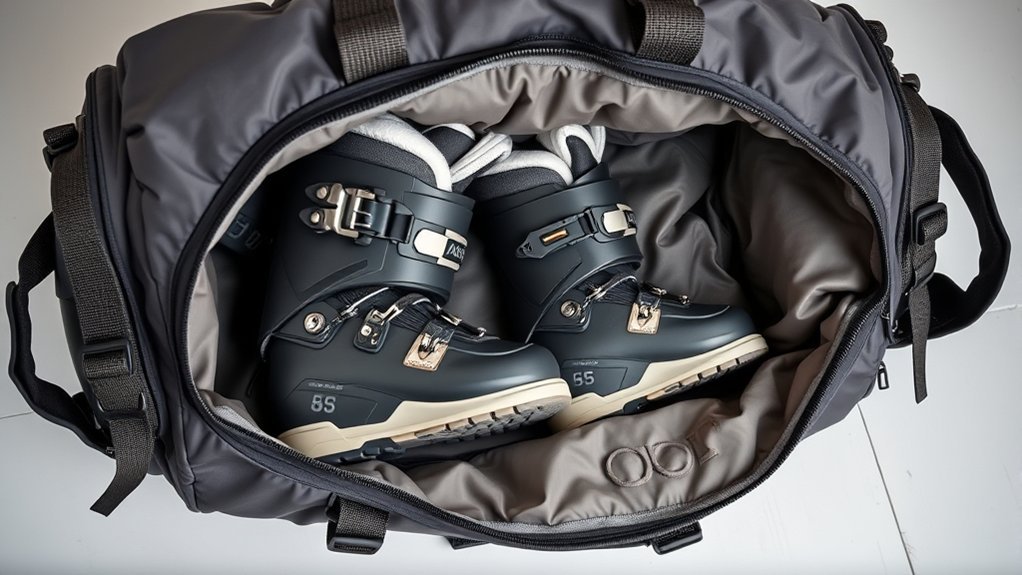
A 65L duffel gives you enough volume to pack alpine ski boots comfortably, along with extras like ski socks, gloves, and mid-layers. Travelers using bags like the Osprey Transporter Duffel 65 report easily fitting ski boots plus four to five days of cold-weather clothing and outerwear in the main compartment.
Place each boot diagonally or heel-to-toe near the bottom to free up usable length above them and prevent the stiff plastic shells from squeezing out of shape. Position the boots in separate sections along the base so the bag stays balanced when carried by its handles or backpack straps. Add softer items, like folded fleece or insulated ski pants, around the boots to cushion them during transit. Because a quality 65L duffel typically weighs only 2–3 lbs empty, you retain almost all of your airline’s checked weight allowance for gear rather than the bag itself.
How to Pack Ski Boots Step by Step
- Air-dry completely: Wipe out any lingering snow or condensation. Remove liners if removable so the boot interiors dry thoroughly before packing.
- Latch the buckles: Lightly fasten all buckles and power straps on the boot shell. This helps the plastic cuff maintain its original shape when compressed under luggage.
- Stuff the hollow shells: Fill each boot interior with rolled socks, neck gaiters, gloves, or baselayers to maximize empty interior volume.
- Position at the base: Place both boots heel-to-toe or diagonally along the bottom floor of the duffel bag to establish a low center of gravity.
- Layer protective clothing: Surround the boots with soft, bulky items like snow pants, fleece jackets, and thermal layers to create a protective buffer against baggage handling impacts.
- Nest helmets and fragile gear: Place your helmet near the boots for stability, using the helmet’s interior cavity to hold gloves or beanies. Nest goggles inside a protective microfiber bag inside a boot or helmet.
- Check bag weight: Zip the duffel and lift it with a handheld luggage scale to ensure it sits under your carrier’s 50 lb checked limit.
Pro Tip: Nest your ski goggles inside the hollow cavity of your helmet or a ski boot, wrapped in a plush sock or microfiber bag. This shields fragile lenses from being crushed by heavy boot shells or zipper pressure.
What to Pack Inside Your Ski Boots
Use your ski boots as rigid storage vaults by packing small, soft items directly inside them. You’ll reclaim valuable cubic inches in your duffel while keeping vital accessories organized:
- Ski socks & gloves: Slip 2–3 pairs of heavy wool socks and winter gloves into the toe boxes.
- Base layers: Roll lightweight thermal shirts or leggings and push them down into the ankles.
- Small accessories: Tuck hand warmers, lip balm, and spare goggle lenses safely inside the shaft.
- Custom footbeds: Leave custom insoles inside the boots so they don’t get bent or misplaced during travel.
How to Protect Ski Boots in Transit
Before zipping your duffel, double-check that your boots are completely dry and padded. Trapped moisture sealed inside a heavy duffel creates mold and stubborn liner odors. For structured protection, wrapping each boot shell in a fleece jacket or heavy ski pants prevents plastic buckles from snagging or scratching nearby technical fabrics.
Warning: If your ski boots use heated liners or heated socks powered by rechargeable lithium-ion battery packs, do not check the batteries. According to TSA security rules and FAA regulations, spare or uninstalled lithium-ion batteries must be detached and carried in your carry-on luggage to prevent fire hazards in the cargo hold.
Packing Ski Boots With the Rest of Your Gear
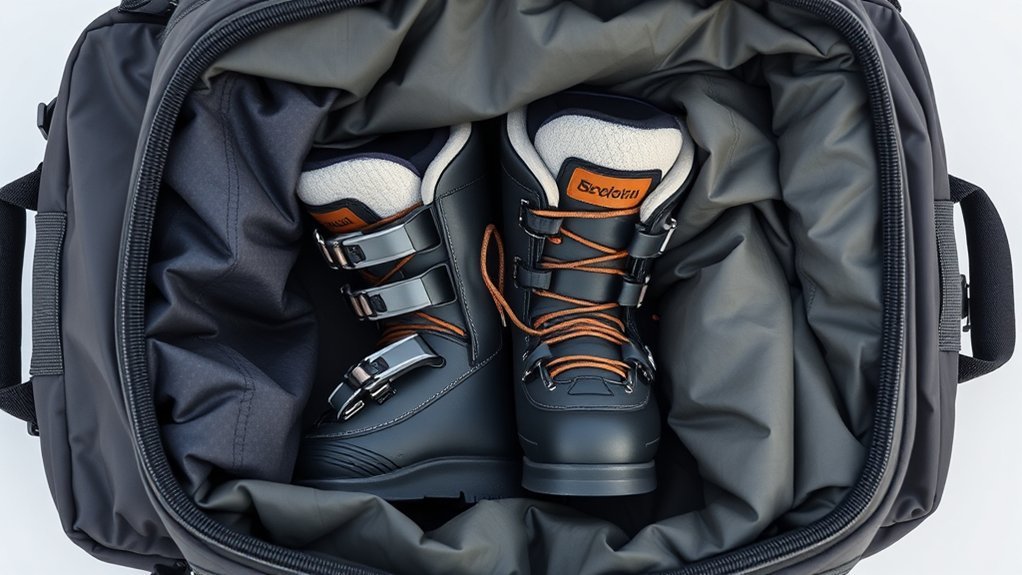
A 65L duffel provides ample capacity to organize your ski boots alongside outerwear, mid-layers, street clothes, and toilet kits. Utilizing internal mesh pockets or external zip compartments helps isolate smaller essentials so you don’t have to rummage through heavy gear at your destination.
A water-resistant duffel material (such as TPU-laminated nylon) protects gear from parking lot slush and wet tarmac handling. Because soft-sided duffels weigh significantly less than hard-shell suitcases, you preserve maximum payload allowance for heavy winter items.
Can a 65L Duffel Count as Carry-On?
No — a fully packed 65L duffel is built for checked baggage, not carry-on overhead bins. As an example, Osprey states plainly that its Transporter Duffel 65, measuring approximately 24.4 x 13.8 x 15.7 inches, exceeds carry-on dimensions and must be checked at the airport gate or ticket counter.
Carry-On Size Limits
Most major US carriers (Delta, United, American) cap carry-on dimensions around 22 x 14 x 9 inches. A stuffed 65L duffel exceeds length and depth allowances, meaning gate agents will require you to check it.
Checked Baggage Basics
| Factor | Typical Range | Why It Matters |
|---|---|---|
| Weight limit | 50 lbs (23 kg) standard | Exceeding 50 lbs incurs steep overweight baggage fees ($100+) |
| Bag dimensions | 62 linear inches (L + W + H) | A 65L duffel (~54 linear inches) easily complies with standard size limits |
| Sports gear rules | Varies by carrier | Many airlines treat a ski bag + boot bag as a single checked item if under 50 lbs |
What Else Fits in a 65L Duffel With Ski Boots
Packing efficiently allows you to fit a complete multi-day winter outfit around your boots without straining zippers.
Packing Clothes Around Boots
| Item | Placement | Benefit |
|---|---|---|
| Ski Socks | Inside boot toe box | Saves main compartment space |
| Ski Gloves | Inside boot ankle shaft | Fills empty boot volume |
| Thermal Layers | Around boot sides | Adds impact protection |
| Fleece Jackets | Over boot cuffs | Prevents shell buckles from snagging gear |
| Ski Pants | Along duffel walls | Creates structured side padding |
Gear That Still Fits
In addition to clothing, a 65L duffel easily accommodates a certified ski helmet, goggles in a protective pouch, a lightweight insulated jacket, street shoes, and a compact boot dryer.
When a Duffel Beats a Dedicated Ski Bag
A 65L duffel is often superior to a single-purpose ski boot bag when traveling multi-modal (plane to rental car to hotel). Instead of managing three separate pieces of luggage (ski bag, boot bag, clothes suitcase), consolidating boots and apparel into one 65L duffel leaves you with only two items to check: your ski sleeve and your duffel. Soft duffels also collapse easily when empty, making them ideal for tight hotel rooms or compact rental car trunks.
How to Travel Light With Ski Gear
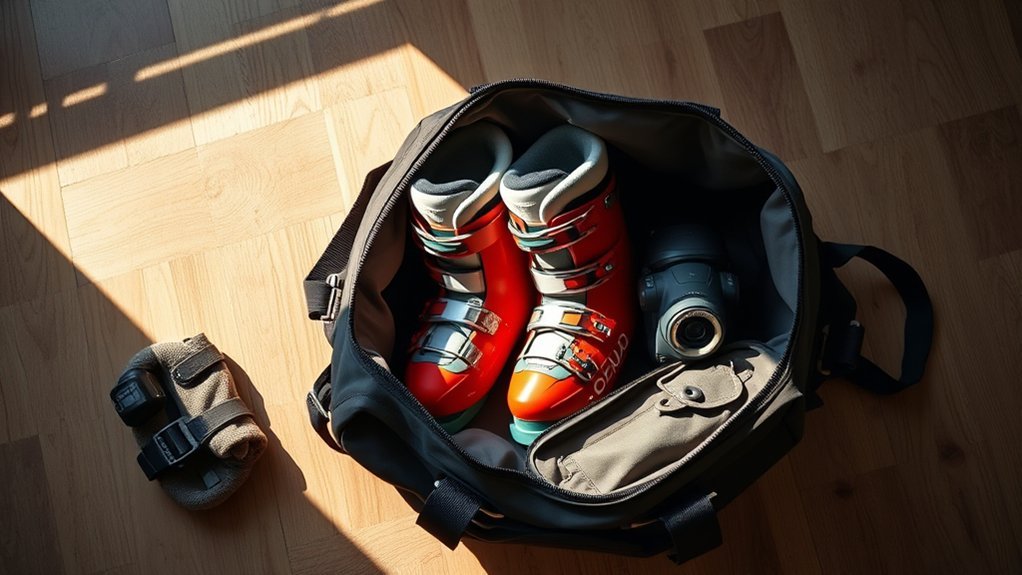
To streamline winter travel, consolidate gear and eliminate redundant bags:
- Put ski boots at the base of your 65L duffel for weight distribution.
- Stuff hollow boot interiors with socks, neck gaiters, and gloves.
- Wear your heaviest outerwear jacket and winter boots on the plane to cut luggage bulk.
- Verify total weight using a digital luggage scale to avoid overweight baggage fees at check-in.
Frequently Asked Questions
Should you pack boots in a dedicated ski bag instead?
Not necessarily. Unless you are packing boots inside a double ski wheelie bag alongside your skis, a durable 65L duffel protects boots just as effectively while giving you room for multi-day clothing, helping you avoid extra checked-bag fees.
Can you check heated ski boot battery packs in a duffel bag?
No. Federal Aviation Administration (FAA) and TSA regulations require all uninstalled lithium-ion battery packs for heated socks or boot liners to be packed in your carry-on bag to eliminate cargo hold fire risks.
Should ski boot buckles be latched when packed?
Yes. Lightly latching all buckles and power straps ensures the stiff plastic lower shell and cuff retain their structural shape when compressed under luggage during transit.
What is ski boot syndrome?
Ski boot syndrome refers to pain, numbness, tingling, or cramping caused by boots that fit too tightly or pinch the nerve pathways on top of the foot (dorsal cutaneous nerve). Proper boot fitting and unbuckling during rests resolves the issue.
How should you store ski boots in a bag?
Store boots completely dry, with buckles loosely latched, in a cool environment. Stuff the interiors with paper or soft socks to hold liner geometry and keep them isolated from sharp gear.
Are ski boots allowed through TSA security checkpoints?
Yes, ski boots are allowed through TSA security checkpoints as either carry-on items or checked luggage, though airport security agents may conduct additional physical inspections.
Conclusion
In a 65L duffel, your ski boots ride as protected core cargo rather than loose obstructions. Dry them thoroughly, latch the buckles loosely to maintain shell shape, fill empty boot interiors with socks and accessories, and cushion the boot shells with soft fleece or thermal layers. Remember that a 65L duffel functions as a checked bag for air travel, and ensure any lithium-ion battery packs for heated liners stay in your carry-on bag. With a little strategic packing, a single 65L duffel will reliably carry your entire winter setup from baggage claim to mountain lodge.
Sources
- Osprey — Transporter Duffel 65 Specifications — confirms 65L duffel dimensions and checked-bag-only travel classification
- REI — Osprey Transporter Duffel 65L Guide — real-world capacity benchmarks for ski boot and multi-day winter gear packing
- TSA — Security Screening & Hazardous Materials — official rules for footwear screening and lithium-ion battery carry-on mandates
- FAA PackSafe — Lithium Ion Batteries — federal guidelines governing rechargeable battery travel limits in checked baggage
