
Last Updated on July 27, 2026 by Daniel Globe
Eco-friendly hiking gear is not simply gear made from recycled fabric or marketed as “green.” A better approach looks at the whole life of a product: whether you need to buy it, how long it lasts, how it was made, whether it can be repaired, and what happens when you no longer use it. For hikers, the goal is to reduce unnecessary consumption without giving up the fit, weather protection, comfort, or safety needed on the trail.
Quick Answer
The most sustainable hiking gear is often gear you already own, repair, borrow, rent, or buy used. When buying new, prioritize durability, proper fit, repairability, clearly stated recycled or certified material content, and credible third-party standards. Match every purchase to your actual trail needs rather than choosing a product based on a vague “eco-friendly” label.
Key Takeaways
- Keeping, repairing, borrowing, renting, or buying used gear can avoid the impact of producing a replacement.
- Do not judge a product by one “green” material. Check durability, repairability, chemical treatments, manufacturing information, and end-of-life options too.
- Look for specific claims such as “70% recycled polyester” rather than vague terms such as “eco,” “planet friendly,” or “sustainable.”
- Third-party standards can help, but each certification covers different issues. GOTS, bluepass/bluesign, Fair Trade Certified, RDS/RWS, GRS/RCS, and FSC are not interchangeable.
- Choose hiking footwear and protective equipment for fit and trail performance first. Gear that causes injury, fails early, or needs rapid replacement is not a sustainable choice.
- Responsible hiking also means reducing waste on the trail, packing out what you bring, and keeping soaps and wash water away from natural water sources.
For hiking gear, the lowest-waste purchase is often no new purchase at all: reduce, reuse, repair, and then recycle when practical.
Disclosure: As an Amazon Associate I earn from qualifying purchases. Some links on this page are affiliate links, at no extra cost to you.
Start With the Most Sustainable Option: Buy Less
Before comparing fabrics or certifications, ask whether you need another piece of gear. The U.S. Environmental Protection Agency places source reduction and reuse above recycling in its waste-management hierarchy. That makes keeping existing gear, repairing it, sharing equipment, renting rarely used items, and buying suitable used gear important parts of a lower-waste hiking setup.
Start with the gear closet you already have. A functional backpack does not become environmentally obsolete because a newer model contains recycled fabric. Likewise, a jacket that can be patched and used for several more seasons may be a better choice than replacing it solely to gain a sustainability label.
When you need something for only one trip, consider borrowing or renting it. Snowshoes, large expedition packs, bear-resistant containers, specialty tents, and other occasional-use equipment are good examples. Used gear can also work well when its condition is easy to inspect.
Pro Tip: Before buying new, use this order: keep what works, repair what is damaged, borrow or rent occasional-use equipment, consider a safe used option, and then compare new products.
Choosing Sustainable Materials for Hiking Gear
Material choice matters, but there is no single fabric that is automatically best for every environmental measure and every hiking use. A useful comparison looks at raw materials, processing, durability, performance, maintenance, and what can realistically happen to the product at the end of its life.
Recycled Polyester and Nylon
Recycled polyester and nylon can reduce demand for some virgin raw materials and give existing material another use. When shopping, look for an exact percentage rather than a vague statement that a product “contains recycled materials.” The Federal Trade Commission’s environmental-claims guidance recommends checking how much of a product or package actually contains recycled content.
Recycled synthetic fibers still have trade-offs. They remain plastic-based materials, and synthetic textiles can release microfibers during use and washing. Recycled content therefore does not make a garment impact-free.
Organic Cotton and Hemp
Organic cotton can be useful in casual hiking clothing, camp wear, and other applications where cotton’s slower drying time is acceptable. Certified organic production restricts specified agricultural inputs, but it is too simplistic to claim that organic cotton always uses less water than conventional cotton. Water use and other impacts vary with climate, irrigation, farming practices, yields, and location.
Hemp can be durable and comfortable, particularly in blended fabrics, but the finished garment still needs to be evaluated for dyeing, processing, durability, and any synthetic fibers or coatings added to it.
Lyocell and TENCEL
Lyocell is a regenerated cellulosic fiber typically made from wood pulp. TENCEL is Lenzing’s brand of lyocell and related fibers. Lenzing reports that its current lyocell process uses a closed-loop system that recovers 99.8% of the NMMO solvent. That is a useful production attribute, but shoppers should still verify the fiber source and the construction of the finished product rather than assuming every wood-based textile has the same process.
Wool and Down
Merino wool is valued for temperature regulation and odor management, which can allow some hikers to wear a garment several times between washes. For wool, the Responsible Wool Standard (RWS) addresses animal welfare, land management, and supply-chain requirements. For down insulation, the Responsible Down Standard (RDS) addresses animal welfare and chain of custody.
How to Spot Greenwashing in Outdoor Gear
Terms such as “eco-friendly,” “green,” “responsible,” “natural,” and “planet friendly” are not useful by themselves. A stronger environmental claim explains exactly what is different about the product.
Before buying, check for details such as:
- The percentage and type of recycled content.
- Whether recycled content is pre-consumer or post-consumer when that distinction is provided.
- A recognizable third-party certification and what it actually certifies.
- Named factories, traceability information, or a detailed supply-chain policy.
- A repair service, replaceable components, spare parts, or a useful warranty.
- A take-back, resale, donation, or recycling program.
- Product-specific climate data when a company makes a carbon-footprint claim.
Warning: Do not assume that a leaf icon, earth-tone packaging, the word “natural,” or one recycled component proves that an entire product has a low environmental impact. Look for specific, verifiable claims.
Eco-Friendly Hiking Apparel: What to Look For
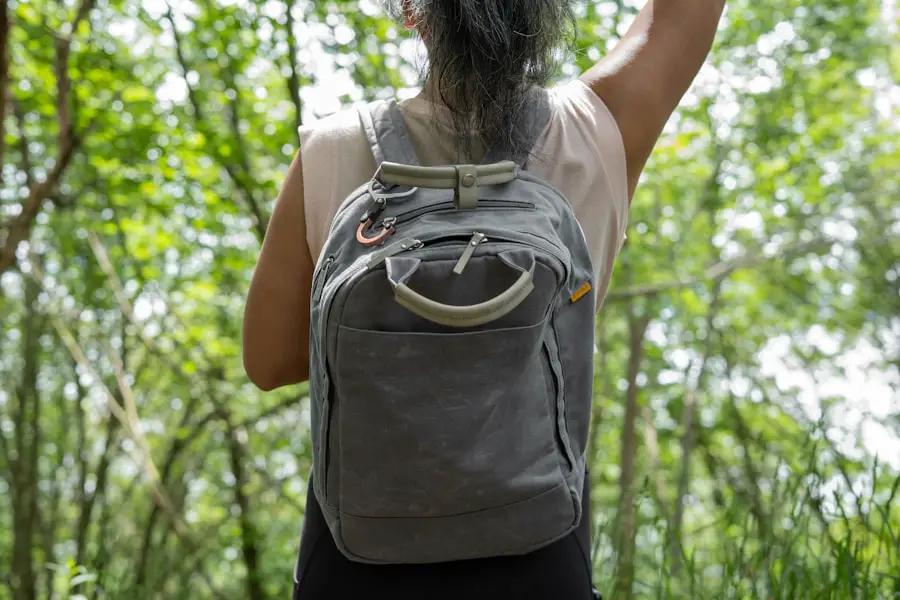
For hiking apparel, durability and suitability should come before marketing language. A shirt or jacket that fits your climate, survives repeated use, and can be repaired may stay in service longer than a poorly matched product made with a fashionable sustainable material.
Choose moisture management for the conditions you expect. Synthetic fabrics and wool are commonly used for active hiking because they manage moisture differently from conventional cotton. For warm-weather casual hikes, cotton or hemp blends may still be appropriate when getting wet or staying wet is not a safety concern.
For environmental information about land stewardship and recreation, the National Park Service sustainability resources provide useful background on reducing impacts while enjoying public lands.
Check Chemical and Processing Claims
Dyes, finishes, water repellents, and other chemical treatments are part of a garment’s footprint too. The bluesign system evaluates chemical inputs and textile manufacturing processes. In 2026, bluesign began transitioning its older bluesign APPROVED and bluesign PRODUCT designations toward the unified bluepass system, so shoppers may encounter both types of terminology during the transition.
For organic textiles, the Global Organic Textile Standard (GOTS) combines requirements for certified organic fiber inputs with environmental and social criteria for textile processing. GOTS Version 8.0 was released in March 2026 and enters its mandatory effective period in March 2027 after a transition year.
Sustainable Footwear for Hiking
| What to Check | Better Evidence | Why It Matters | Avoid Relying On |
|---|---|---|---|
| Recycled materials | Exact percentages for the upper, lining, laces, midsole, or outsole | Shows what part of the shoe actually contains recycled material | A brand-wide “made with recycled materials” claim |
| Durability | Replaceable insoles, durable outsoles, repair support, and a useful warranty | Longer service life can delay replacement | Choosing a shoe only because it uses one “green” material |
| Carbon claims | A product-specific footprint with a stated methodology and boundaries | Makes comparisons more meaningful | Undefined labels such as “low carbon” |
| Fit and performance | Correct fit, traction, support, weather protection, and terrain suitability | A shoe that performs safely and lasts is less likely to need early replacement | Buying solely on sustainability marketing |
Footwear is one of the hardest outdoor products to judge with a single sustainability metric because a hiking shoe may combine rubber, foam, textile, adhesives, waterproof membranes, hardware, and several types of plastic.
Recycled rubber, recycled textile uppers, natural rubber, bio-based foam components, and other lower-virgin-material options may be worthwhile features. However, percentages should be checked on the individual shoe instead of applying one number to an entire footwear brand.
Ethical manufacturing information also matters. Fair Trade Certified factories, for example, are evaluated under social, economic, and environmental requirements. Supply-chain transparency is more useful when a brand explains which factories or products fall under a particular program.
Repairability deserves extra weight. Some hiking footwear can be resoled or professionally repaired, while highly bonded lightweight footwear may be difficult to fix. Consider expected service life before purchasing.
Note: Sustainability should not override safety. Choose footwear with the traction, fit, support, and protection required for your terrain. A poorly suited shoe that causes problems or fails early is a poor long-term purchase regardless of its material claims.
Eco-Friendly Hiking Accessories
Backpacks, hydration equipment, trekking poles, headlamps, and small accessories also offer opportunities to reduce waste. As with clothing, start with products you already have before replacing them.
Backpacks
When buying a backpack, compare durability, fit, repairability, fabric specifications, and recycled-content percentages. A replaceable buckle or hip belt can be more useful over the pack’s lifetime than a broad sustainability slogan.
For water-resistant textiles, look for transparent information about coatings and chemical treatments rather than unsupported claims that a coating is simply “non-toxic.” Current third-party systems such as bluepass can provide additional information about textile processing and chemical management.
Water Bottles and Hydration Systems
A reusable bottle or reservoir can replace repeated purchases of single-use bottles when you continue using it over time. Stainless steel and durable reusable plastics are both practical options. An insulated bottle can keep drinks hot or cold longer; being stainless steel or BPA-free alone does not guarantee insulation.
Collapsible containers can make sense when low packed volume matters. Before buying one, check whether replacement caps, bite valves, or other high-wear components are available.
Trekking Poles
Aluminum, carbon fiber, wood, and bamboo poles all involve different manufacturing and durability trade-offs. Instead of assuming one material is always greener, look for a pole that suits your terrain and has replaceable tips, baskets, locks, or straps.
For bamboo, natural rubber, wood, and other forest-derived materials, an FSC certification can provide third-party assurance about qualifying forest sources and chain of custody.
Eco-Friendly Camping Gear

Sustainable Camping Gear
Tents, sleeping bags, pads, and shelters should be evaluated first for the conditions they must handle. Recycled fabrics and verified lower-impact materials can be useful features, but durability, weather resistance, repairability, and correct sizing often determine how long the gear remains useful.
Avoid assuming that a tent described as “biodegradable” can safely be discarded in nature. Outdoor equipment commonly combines different fabrics, coatings, poles, zippers, and hardware, and disposal claims should be verified for the complete product.
For sleeping bags and insulated jackets that use down, the Responsible Down Standard can help verify animal-welfare and chain-of-custody requirements. Recycled insulation is another option where suitable for the product.
Eco-Friendly Camping Cookware
Titanium, stainless steel, and aluminum cookware can last for years when cared for properly. Instead of replacing a functioning cookset to obtain a different material, continue using what works. Reusable utensils, cups, food containers, and refillable bottles can also reduce disposable waste.
Biodegradable soap still needs careful handling. National Park Service Leave No Trace guidance recommends carrying wash water away from lakes and streams and using only small amounts of biodegradable soap. A commonly used guideline is about 200 feet from water, although rules can vary by location.
Warning: “Biodegradable” does not mean a soap belongs in a lake, river, or stream. Carry water away from the source, use a small amount of soap, and follow the rules for the park or wilderness area you are visiting.
Energy-Efficient Solutions
Rechargeable headlamps, power banks, and solar chargers can reduce dependence on disposable batteries in suitable situations. A solar charger is most useful when it replaces energy or batteries you would otherwise consume and when you expect to use it repeatedly. Avoid buying extra electronic gear simply because it is marketed as sustainable.
Certifications and Labels Worth Understanding
Certifications can make product claims easier to evaluate, but each standard answers a different question.
- GOTS: Applies to textiles using certified organic fibers and adds environmental and social criteria across textile processing. GOTS Version 8.0 was released in March 2026, with a transition before it becomes mandatory in March 2027.
- bluepass / bluesign: Addresses textile and chemical production processes, resource use, environmental protection, worker considerations, and product stewardship. bluesign began moving older bluesign APPROVED and bluesign PRODUCT terminology to bluepass in 2026.
- Global Recycled Standard (GRS) and Recycled Claim Standard (RCS): Help verify recycled inputs and chain of custody. Check the exact claim on the product.
- Responsible Wool Standard (RWS): Addresses sheep welfare, land management, social requirements, and chain of custody.
- Responsible Down Standard (RDS): Addresses welfare requirements for ducks and geese and tracks certified material through the supply chain.
- Fair Trade Certified: Can provide third-party verification of qualifying factory labor, economic, social, and environmental requirements.
- FSC: Applies to qualifying forest-derived materials and supply chains, including wood and potentially bamboo, natural rubber, and some forest-based textile inputs.
No single certification proves that a product is environmentally superior in every way. Use labels as evidence for specific attributes, not as a substitute for evaluating the complete product.
Natural vs. Synthetic Materials: Know the Trade-Offs
Natural fibers are not automatically sustainable, and synthetic fibers are not automatically unsustainable. Natural materials can involve land, water, livestock, processing, dyes, and transportation. Synthetic materials rely heavily on industrial feedstocks and can contribute to microfiber pollution, but they can also provide durable, lightweight, quick-drying performance that is important in some outdoor conditions.
The EPA notes that clothing contributes to microfiber pollution. For synthetic hiking clothes, wash only when needed, follow the care label, keep garments in service as long as practical, and consider microfiber-capture options when appropriate.
The best material depends on the job. A highly durable synthetic rain shell used for years may make more sense than a less durable alternative that cannot provide the required weather protection.
Tips for Maintaining and Repairing Eco-Friendly Hiking Gear
Maintenance can be one of the most effective ways to reduce the amount of hiking equipment you replace. The EPA includes repair alongside reducing and reusing as an important waste-reduction action.
Follow the Product’s Care Instructions
Avoid a one-size-fits-all rule such as always washing outdoor clothing in cold water. Different membranes, insulation types, durable water-repellent finishes, and detergents may require different care. Follow the manufacturer’s label and wash only as often as needed.
Use an appropriate detergent, rinse thoroughly when required, and avoid unnecessary fabric softeners or chemicals that can interfere with technical fabrics. Some waterproof garments require specific washing and drying procedures to restore water-repellent performance.
Repair Small Damage Early
Patch small tent holes before they grow. Repair loose seams, replace broken zipper pulls, swap worn trekking-pole tips, and replace backpack buckles when possible. Many outdoor brands and independent repair businesses can handle jobs that are difficult to complete at home.
Store gear dry and clean enough to prevent mold, corrosion, odor buildup, or coating damage. Loosen compression systems during long-term storage when the manufacturer recommends it, especially for insulation.
Plan for the End of the Gear’s Life
When an item no longer works for you, consider whether it can be repaired for someone else, resold, donated, repurposed, returned through a brand take-back program, or recycled through a suitable local program. Recycling should not be assumed simply because a product contains recyclable materials; mixed-material outdoor products can be difficult for municipal recycling systems to process.
Embracing a Sustainable Hiking Lifestyle
A sustainable hiking lifestyle is broader than buying products with recycled fabric. It includes buying less, keeping equipment in service longer, choosing durable products, repairing damage, avoiding unnecessary disposable items, and respecting the places where you hike.
On the trail, stay on durable surfaces where required, pack out your waste, follow local fire and camping rules, protect wildlife, and keep soaps and food waste away from natural water. The National Park Service Leave No Trace guidance provides practical recommendations for reducing recreation impacts.
When a new purchase really is necessary, compare the entire product rather than chasing a perfect material. A well-fitting, durable, repairable item with clear supply-chain information and credible certifications is generally a stronger choice than a product built around vague green marketing.
If you are also comparing outdoor and travel clothing, this 2025 travel-skirt roundup provides an additional apparel-focused example. Because it was published for spring 2025, verify current product specifications and availability before purchasing.
Frequently Asked Questions
What is eco-friendly hiking gear?
Eco-friendly hiking gear is equipment chosen to reduce avoidable environmental and social impacts over its useful life. Useful factors include durability, repairability, recycled or certified inputs, responsible manufacturing, reduced waste, and realistic end-of-life options. No hiking product is completely impact-free.
Why is it important to use eco-friendly hiking gear?
Thoughtful gear choices can reduce unnecessary consumption, extend product life, reduce demand for some virgin resources, and support better manufacturing practices. The biggest opportunity is often keeping usable gear longer instead of replacing it prematurely.
What are some examples of eco-friendly hiking gear?
Examples include a repaired backpack, a used tent in safe condition, clothing with verified recycled or certified fibers, a durable reusable water bottle, repairable trekking poles, rechargeable lighting, and hiking shoes with transparent material and manufacturing information.
How can I find eco-friendly hiking gear?
Start by checking whether you can use, repair, borrow, rent, or buy an appropriate item used. When buying new, look for exact material percentages, third-party certifications, durability information, repair services, replacement parts, transparent supply-chain information, and specific environmental claims rather than vague “green” wording.
What sustainable materials are used in hiking gear?
Common options include recycled polyester and nylon, certified organic cotton, hemp, responsibly sourced wool and down, lyocell, recycled rubber, natural rubber, and recycled metals. Each material has trade-offs, so evaluate the finished product rather than assuming one fiber is automatically sustainable.
Which certifications should I look for?
Useful standards include GOTS for qualifying organic textiles, bluepass or legacy bluesign designations for textile and chemical processing, GRS/RCS for recycled-content chains of custody, RWS for wool, RDS for down, Fair Trade Certified for qualifying factories, and FSC for qualifying forest-derived materials. Check what part of the product each certification covers.
Is recycled polyester always better than virgin polyester?
Not in every possible environmental measure. Recycled polyester can reduce demand for virgin feedstock and use existing material, but it remains a synthetic fiber and can still shed microfibers. Durability, manufacturing, transport, care, and how long you use the garment also matter.
Is biodegradable soap safe to use in streams?
No. Biodegradable soap should not be added directly to lakes, rivers, or streams. Carry washing water away from the natural water source, use only a small amount of soap, and follow local rules. National Park Service guidance commonly recommends washing about 200 feet from water where conditions and local regulations allow.
Sources
- U.S. Environmental Protection Agency — Sustainable Materials Management Hierarchy — supports reducing, reusing, repairing, and recycling priorities.
- Federal Trade Commission — Eco-Friendly and Green Marketing Claims — explains recycled-content, biodegradable, certification, and other environmental marketing claims.
- Global Organic Textile Standard — official information about GOTS requirements and the current Version 8.0 transition.
- bluesign — bluepass Certification — explains current bluepass terminology and textile-production criteria.
- National Park Service — Leave No Trace — supports waste, washing, soap, and low-impact recreation guidance.
- Forest Stewardship Council — Certification — explains certification and chain of custody for qualifying forest-derived materials.

