
Last Updated on July 27, 2026 by Daniel Globe
Hiking shoes do not need to look new to remain safe and comfortable, but they do need usable tread, dependable cushioning, a secure fit, and sound construction. Frayed fabric or scuffs may be cosmetic, while flattened lugs, separating soles, persistent leaks, uneven cushioning, or a sudden change in comfort can signal that repair or replacement is due.
Quick Answer
Replace hiking shoes when worn tread, damaged soles, collapsed cushioning, structural tears, persistent leakage, or a changed fit prevents them from performing as intended. Do not rely on mileage alone. Trail runners may wear out near 500 miles, while heavier hiking footwear can last shorter or longer depending on terrain, construction, load, care, and repairability.
Key Takeaways
- Check the outsole first. Flattened, smooth, torn, or unevenly worn lugs can reduce useful traction on the trail.
- Pay attention to cushioning and stability. A shoe that suddenly feels harsh, unstable, or uneven may have a worn midsole or damaged support structure.
- Cracks, deep tears, sole separation, exposed internal material, and damaged eyelets are more important than ordinary scuffs.
- Persistent odor should first be addressed with cleaning and thorough drying; smell alone does not prove a shoe is worn out.
- A shoe that becomes unusually loose, causes heel movement, pinches the toes, or creates new hot spots may no longer fit properly.
- Persistent new foot pain is a reason to reassess your footwear, but it should not be self-diagnosed as a shoe-caused condition.
- Loss of water beading can often be treated by restoring the durable water-repellent finish instead of replacing the footwear.
- Some hiking boots can be resoled or rebuilt, so check the manufacturer’s repair options before throwing away otherwise sound footwear.
At a Glance
| Time Required | About 5–10 minutes for a basic inspection |
| Difficulty | Easy |
| Tools Needed | Good lighting, your hands, and the socks you normally hike in |
| Cost | $0 for inspection; repair or replacement cost depends on the footwear |
Disclosure: As an Amazon Associate I earn from qualifying purchases. Some links on this page are affiliate links, at no extra cost to you.
How to Inspect Hiking Shoes Before a Hike
A quick inspection before a long or technical hike can reveal problems that are easy to miss when the shoes are sitting in a closet. The National Park Service recommends checking equipment before heading out and choosing sturdy footwear appropriate for the route. NPS hiking-safety guidance also emphasizes suitable footwear for trail conditions.
- Clean off mud and debris. Dirt can hide cracks, worn lugs, loose seams, or separation between the upper and sole.
- Inspect the outsole. Compare the left and right shoes. Look for smooth patches, missing pieces of rubber, heavily rounded lugs, or uneven wear.
- Check the midsole. Look for deep compression lines, cracks, obvious leaning, or a noticeable difference in firmness between the shoes.
- Inspect the upper and sole bond. Look around the toe, heel, flex points, eyelets, and the entire edge where the upper meets the sole.
- Check the interior. Feel for torn lining, folded material, displaced cushioning, worn heel fabric, or an insole that no longer sits flat.
- Try the shoes on with hiking socks. Lace them normally and check heel hold, toe room, pressure points, and whether one shoe feels different from the other.
- Test them safely. Walk on a dry, familiar surface and use stairs or a gentle incline before trusting questionable footwear on wet rock, loose gravel, or a remote trail.
Pro Tip: Inspect both shoes side by side. Uneven heel wear, a shoe that leans more than its mate, or noticeably different cushioning can be easier to spot when the pair is compared directly.
Mileage Is a Benchmark, Not a Replacement Rule
There is no single mileage number that tells every hiker when footwear is finished. Lightweight trail-running shoes, hiking shoes, traditional leather boots, and backpacking boots use different materials and construction methods. Terrain, body weight, pack weight, walking style, moisture, storage, and care also affect wear.
REI’s 2026 hiking-footwear guide notes that trail-running shoes typically break down after roughly 500 miles. That figure should not be treated as a universal expiration date for every hiking shoe or boot.
Mileage can tell you when to inspect more carefully, but tread, cushioning, structure, fit, and real trail performance should decide whether hiking footwear is still serviceable.
Note: Cosmetic wear does not automatically mean a shoe is finished. Faded fabric, ordinary scuffs, and superficial scratches matter far less than worn tread, sole separation, structural tears, unstable cushioning, or a fit that no longer works.
Loss of Traction
Traction is one of the most important performance checks for hiking footwear. Outsoles use rubber and shaped lugs to help manage dirt, rock, mud, loose material, and other trail surfaces. REI notes that lug depth, shape, spacing, and orientation affect how hiking footwear grips different terrain.
Inspect the parts of the outsole that receive the most wear, especially beneath the heel, ball of the foot, and outside edges. Lugs that once had distinct edges may become rounded or nearly smooth. Pieces of outsole rubber can also tear away.
A noticeable increase in slipping on familiar terrain is another warning sign, but test footwear only in a safe setting. Wet stone, mud, ice, loose gravel, and steep descents are poor places to discover that your tread is no longer dependable.
Warning: Do not take hiking shoes with severely worn tread, a loose outsole, major sole separation, or other structural damage onto technical, steep, wet, or remote terrain. Repair or replace them before the trip.
Decreased Comfort and Support
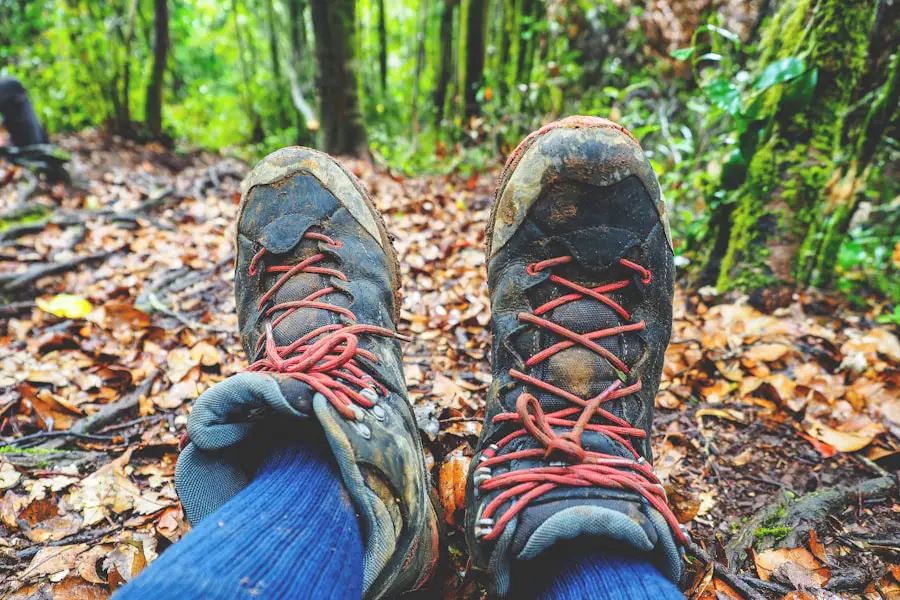
The midsole sits between the foot and outsole and plays a major role in cushioning and the overall feel of hiking footwear. REI’s hiking-footwear guide explains that midsoles help buffer the foot from impact and influence the stiffness and stability of a hiking shoe or boot.
With enough use, a shoe may begin to feel noticeably harsher or less stable than it did before. You may also see deep compression lines, cracking, uneven deformation, or a shoe that sits at an unusual angle on a flat surface.
Do not judge cushioning only by appearance. A shoe can look relatively clean while feeling noticeably different underfoot. Compare the pair during a short walk. If one shoe feels much softer, harder, or less stable than the other, inspect it carefully for damage.
Removable insoles can also wear or flatten. Replacing an insole may improve fit or comfort when the rest of the shoe remains sound, but a new insole will not repair a damaged midsole, separated sole, or worn-out outsole.
Visible Damage
| Area to Inspect | Damage That Deserves Attention |
| Outsole | Missing rubber, smooth tread, torn lugs, deep cracks, or major uneven wear |
| Sole Bond | Gaps, peeling, or separation between the upper, midsole, and outsole |
| Upper | Deep tears, holes at flex points, failed seams, or damaged lace anchors |
| Interior | Torn lining, exposed hard material, damaged heel fabric, or cushioning that has shifted out of place |
Visible damage is one of the easiest ways to identify hiking footwear that needs attention. Fraying laces or superficial scuffs are usually repairable or cosmetic. Deep cracks, large tears, damaged lace hardware, or separation between the sole and upper are more serious because they can affect how the shoe holds the foot or contacts the trail.
Inspect high-flex areas near the forefoot as well as the heel and toe. A small surface mark may remain harmless for months, while a tear that keeps spreading or a sole that has begun peeling away can deteriorate quickly.
Internal damage also matters. Torn heel lining can create friction and blisters, while exposed or displaced internal components can create pressure points. If the shoe cannot be made smooth and secure again, replacement may be safer than continuing to use it.
Unpleasant Smells
Hiking footwear is exposed to sweat, mud, rain, stream crossings, and long periods of warmth. These conditions can leave shoes smelling unpleasant, but odor by itself is not proof that the footwear has reached the end of its useful life.
The CDC notes that fungi associated with athlete’s foot thrive in warm, dark, moist environments and recommends keeping feet clean and dry and changing socks regularly. See the CDC’s foot-hygiene guidance.
After a wet or sweaty hike, remove the insoles when practical, loosen the footwear, clean it according to the manufacturer’s directions, and let it dry thoroughly. Avoid storing damp shoes in a closed bag or vehicle.
Persistent odor becomes more concerning when it accompanies material that stays damp, damaged lining, visible contamination, or footwear that can no longer be cleaned and dried effectively. In that situation, replacement may be reasonable.
Changes in Fit
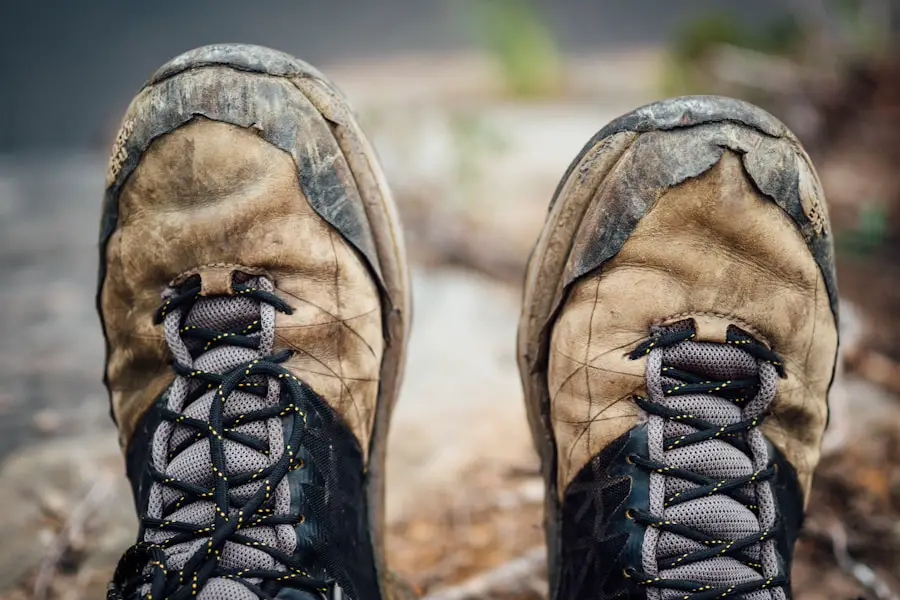
Hiking shoes should hold the heel and midfoot securely without painfully squeezing the foot. REI recommends footwear that feels snug but not tight and leaves room for the toes to move. Its current fitting guidance also suggests roughly a thumb’s width between the longest toe and the end of the insole.
Wear can alter that fit. A stretched upper, worn heel lining, compressed insole, broken lace hardware, or damaged structure may allow the foot to slide more than it did when the shoes were newer.
Watch for heel lift that cannot be corrected with normal lacing, toes striking the front on descents, new side-to-side movement, persistent rubbing, or pressure points that were not previously present.
Heat can also damage footwear materials. For GORE-TEX footwear, the manufacturer specifically advises drying naturally at moderate temperatures and avoiding direct heat. Excessive heat from a dryer, heater, or hot vehicle can be hard on adhesives, leather, foams, and other components.
Persistent Foot Pain
New or persistent foot discomfort deserves attention. Research has found an association between incorrectly fitted footwear and foot pain, although pain can have many causes and should not automatically be blamed on a worn shoe. A peer-reviewed review indexed by the U.S. National Library of Medicine’s PubMed database found that poorly fitting footwear was associated with foot pain and several foot problems in studied populations.
Start by checking whether the shoe still fits correctly and whether the tread, midsole, insole, or internal lining has changed. Compare the shoe with the other side and think about whether the pain appears only in this pair or across different footwear.
If pain, numbness, swelling, recurring blisters, or other symptoms continue, stop relying on the shoe as the only explanation and consider evaluation by a qualified healthcare professional, such as a podiatrist or physician.
Reduced Waterproofing
Waterproof hiking footwear requires a more careful diagnosis than simply checking whether water beads on the outside. Many waterproof models combine a waterproof/breathable membrane with an outer durable water-repellent treatment, commonly called DWR.
When the outer material stops beading water, the DWR may need restoration even though the waterproof membrane is still functioning. GORE-TEX footwear-care guidance specifically recommends reapplying a water-based DWR treatment once water no longer beads and runs off.
Before replacing waterproof footwear, clean it according to the manufacturer’s instructions, dry it naturally away from direct heat, and restore the recommended water-repellent treatment where appropriate.
Replacement or professional repair becomes more reasonable when water repeatedly enters through a torn upper, separated sole, damaged seam, puncture, or failed liner after proper cleaning and treatment. Also make sure water is not simply entering over the collar during rain or stream crossings.
Note: A wet-looking outer fabric and a leaking waterproof membrane are not the same problem. Restore the recommended DWR before assuming waterproof footwear has failed internally.
Repair or Replace Hiking Shoes?
Not every worn component requires a new pair. Laces, removable insoles, minor stitching problems, and some small areas of adhesive failure may be repairable. Traditional or specially designed boots may also be resoleable.
For example, Danner’s recrafting program can replace worn outsoles and restore other components on eligible models. The company also notes that not every boot qualifies for recrafting, especially when critical leather areas are badly cracked or damaged.
Check the manufacturer before attempting a major repair because construction differs widely among hiking shoes and boots.
Repair May Make Sense When
- The upper remains structurally sound.
- The problem is limited to laces, removable insoles, minor stitching, or another replaceable component.
- The manufacturer identifies the boot as resoleable or repairable.
- The repair can restore the original structure without creating a new pressure point or weak area.
Replacement Is Usually Safer When
- The outsole is badly worn and cannot be replaced.
- The sole is separating extensively.
- The midsole is cracked, unstable, or noticeably deformed.
- The upper has major holes or tears in load-bearing areas.
- Fit has changed enough to cause uncontrolled heel movement, toe impact, or persistent rubbing.
- Waterproof footwear has structural leakage that cannot be repaired.
- The shoes continue to cause significant discomfort despite correct sizing, lacing, socks, and replaceable-insoles being addressed.
How to Make Hiking Shoes Last Longer
Regular care cannot prevent normal wear, but it can slow avoidable deterioration and make problems easier to spot.
- Clean off mud and grit. Dirt trapped in flex points, seams, and tread can make inspection difficult and may accelerate abrasion.
- Dry footwear after wet hikes. Remove insoles when appropriate and allow the shoes to dry in a ventilated area.
- Avoid direct heat. GORE-TEX recommends natural drying at moderate temperatures rather than direct heat.
- Follow material-specific care instructions. Leather, suede, synthetic mesh, and waterproof footwear can require different products.
- Restore DWR when appropriate. A compatible water-based treatment can restore surface water repellency on footwear designed for it.
- Replace worn laces and insoles early. Small service items are cheaper and easier to address before they affect fit.
- Store shoes clean and dry. Avoid leaving wet footwear compressed in a pack, plastic container, or hot vehicle.
- Inspect before major trips. Do not save the first test of questionable footwear for a remote or technical hike.
Footwear is only one part of preparing for a trip. You can also review how to choose the best travel guidebook, plan what equipment you may need such as universal travel adapters, and organize smaller essentials such as a travel toothbrush before leaving home.
Frequently Asked Questions
What are the signs that indicate it is time to replace hiking shoes?
Major warning signs include flattened or damaged tread, extensive sole separation, cracked or deformed midsoles, structural tears, a fit that no longer holds the foot securely, persistent leakage that cannot be restored or repaired, and a clear loss of comfort or stability. Cosmetic scuffs alone usually do not require replacement.
How often should hiking shoes be replaced?
There is no universal replacement interval. REI notes that trail-running shoes typically break down after roughly 500 miles, but hiking shoes and heavier boots can wear at very different rates. Terrain, materials, load, care, gait, and construction all matter. Use mileage as a reminder to inspect the footwear rather than as an automatic expiration date.
Can hiking shoes be repaired instead of replaced?
Sometimes. Laces, removable insoles, and certain minor defects may be repairable. Some boots are specifically built to be resoled or rebuilt. Check the manufacturer’s instructions because many lightweight hiking shoes are not designed for major reconstruction.
What are the consequences of not replacing hiking shoes when needed?
Continuing to use severely worn footwear can mean poorer traction, less predictable cushioning, unstable fit, more rubbing, or failure of a damaged sole or upper. These problems matter most on steep, wet, loose, or remote terrain where dependable footwear is part of basic hiking preparation.
How can I prolong the lifespan of my hiking shoes?
Clean off mud and debris, dry wet shoes at moderate temperatures away from direct heat, follow the manufacturer’s material-specific care instructions, replace small service items such as laces when needed, restore DWR on compatible waterproof footwear, and store the shoes clean and dry.
Does bad odor mean hiking shoes need to be replaced?
Not necessarily. Clean and dry the footwear first and address sweaty or damp socks. Replacement is more reasonable when persistent odor occurs with damaged lining, material that will not dry properly, visible contamination, or other signs that the shoe can no longer be maintained hygienically.
Do waterproof hiking shoes need replacing when water stops beading?
No. Loss of surface beading often means the durable water-repellent treatment needs restoration. Clean the footwear and follow the manufacturer’s DWR instructions first. Persistent water entry through torn material, damaged seams, sole separation, or a failed liner may require professional repair or replacement.
Sources
- National Park Service — Hike Smart — footwear, equipment checks, and general hiking-safety guidance.
- REI Co-op — How to Choose Hiking Boots and Shoes — outsole lugs, midsoles, fit, footwear types, and the roughly 500-mile trail-running benchmark.
- GORE-TEX — Footwear Care Instructions — cleaning, drying, and restoring durable water repellency.
- Centers for Disease Control and Prevention — Foot Hygiene — moisture, fungal risk, clean feet, and dry footwear practices.
- Danner — Boot Recrafting — resoling, rebuilding, repair eligibility, and structural-damage limitations.
- PubMed — Incorrectly Fitted Footwear, Foot Pain and Foot Disorders — evidence on associations between footwear fit and foot pain.

