

Last Updated on July 28, 2026 by Caleb Warren
Choosing between a roll top (also called top-loading) and a clamshell backpack comes down to how you pack and how often you need to grab something mid-trip. Roll tops offer a minimalist, weather-sealed single compartment built for the outdoors and variable gear loads. Clamshells open flat like a suitcase with multiple compartments for organized, quick-access packing. Here is how each style fits different travel and daily routines.
Quick Answer
Roll top backpacks seal out rain and offer flexible volume expansion, making them best for hiking, camping, and unpredictable weather. Clamshell backpacks unzip flat 180 degrees like a suitcase with dedicated pockets, making them superior for travel, urban commuting, and fast airport security checks.
Key Takeaways
- Weather Sealing: Roll tops rely on compressed fabric folds with fewer seams and zippers, offering superior water resistance and long-term durability.
- Visibility & Speed: Clamshells open flat 180 degrees, allowing instant access to all gear without digging or unpacking from the top.
- Weight vs. Organization: Roll tops have a lighter base weight and single main compartment; clamshells weigh slightly more due to internal dividers, lining, and heavy-duty zippers.
- Capacity Flexibility: Unrolling a roll top’s collar expands carrying capacity by 5–10 liters, while clamshells have fixed outer dimensions.
Disclosure: As an Amazon Associate I earn from qualifying purchases. Some links on this page are affiliate links, at no extra cost to you.
Design and Opening Mechanisms

Roll top (top-loading) backpacks close by rolling down the top fabric collar and securing it with side or top buckles, giving you adjustable volume and enhanced weather sealing. This minimalist design centers on a single large main compartment, favoring simplicity, structural strength, and lightweight performance over complex internal organization.
Clamshell backpacks zip open along three sides to provide full front-panel 180-degree access. By opening completely flat like a suitcase, clamshells enable structured packing with dedicated sleeves for laptops, cables, and clothing—making them a favorite choice for business travelers and urban commuters.
Because roll tops eliminate long continuous zipper tracks, they eliminate the primary failure point found on standard travel bags. According to Timbuk2 waterproof bag patent filings, rolling and compressing fabric creates a watertight seal far more reliably and affordably than stitched zipper tracks. Clamshells trade some of that natural weather sealing for rapid organization. Because a clamshell’s perimeter zipper carries outward tension when the bag is stuffed, manufacturers must reinforce these bags with heavy-duty zipper tracks, continuous lining, and foam padding, which adds 0.5 to 1.5 pounds of base weight compared to a roll top of similar capacity.
Packing and Organization
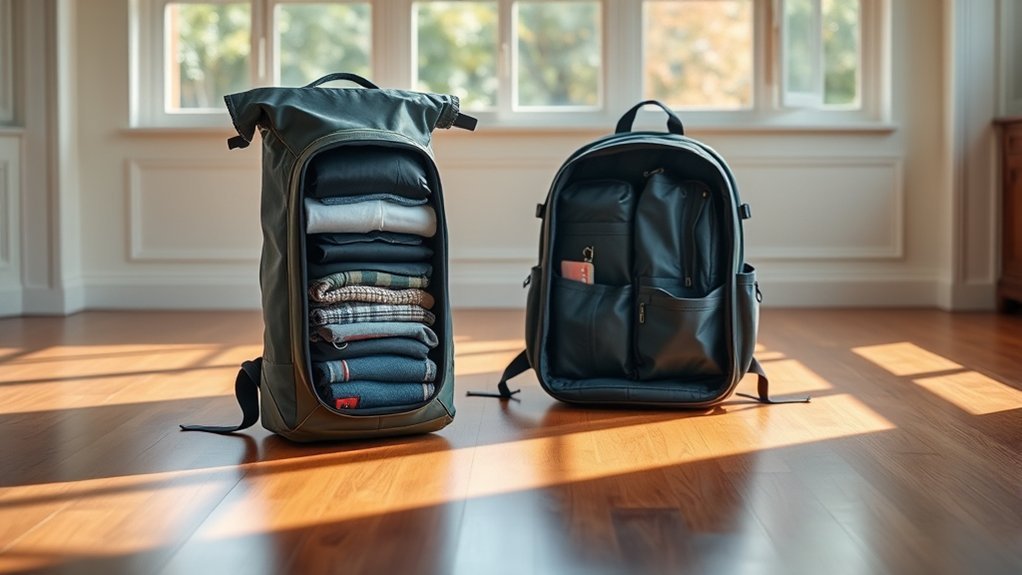
Clamshell backpacks give you immediate visibility into all your gear at once, making them ideal for modular packing cubes. Roll top backpacks compress varying loads efficiently, but operate on a “Last In, First Out” (LIFO) order that requires digging or unpacking to reach items buried at the bottom.
Access and Visibility
Both styles serve as capable carry-on options, but they differ fundamentally in how you access your belongings throughout the day. With a roll top, items must be stacked vertically. Clamshells lay flat on a bed or hotel luggage rack, letting you retrieve specific garments or accessories without disrupting the rest of your layout.
| Feature | Roll Top Backpack | Clamshell Backpack |
|---|---|---|
| Opening Style | Top collar roll & buckle closure | 3-side 180-degree suitcase zipper |
| Access & Visibility | Vertical bucket access (limited bottom visibility) | Full panel access (100% gear visibility) |
| Internal Organization | Minimalist single main compartment | Multiple zippered pockets & tech sleeves |
| Capacity Flexibility | Highly expandable (+5L to +10L) | Fixed internal volume |
| Base Weight | Lighter (fewer zippers & dividers) | Slightly heavier (heavy zippers & padding) |
| Ideal Use Case | Hiking, camping, cycling, foul weather | Air travel, business commuting, daily tech use |
Compartmentalization and Efficiency
Clamshell backpacks are designed around modular packing. Standard rectangular packing cubes fit side-by-side perfectly, preventing clothes from shifting. Dedicated padded laptop sleeves, mesh cable organizers, and passport quick-pockets mean every piece of electronics stays isolated and protected from rough handling.
Roll top backpacks prioritize a single spacious cavity. This open bucket layout easily accommodates bulky, awkward outdoor equipment like sleeping bags, extra jacket layers, or climbing harnesses that won’t fit neatly into structured zippered pockets. However, organizing small tech accessories requires separate pouches or dry bags.
Note: Some modern travel packs feature hybrid designs—combining a weatherproof roll-top main compartment with a side zipper or separate front clamshell panel for rapid laptop access without unrolling the main top closure.
Accessibility and User Experience
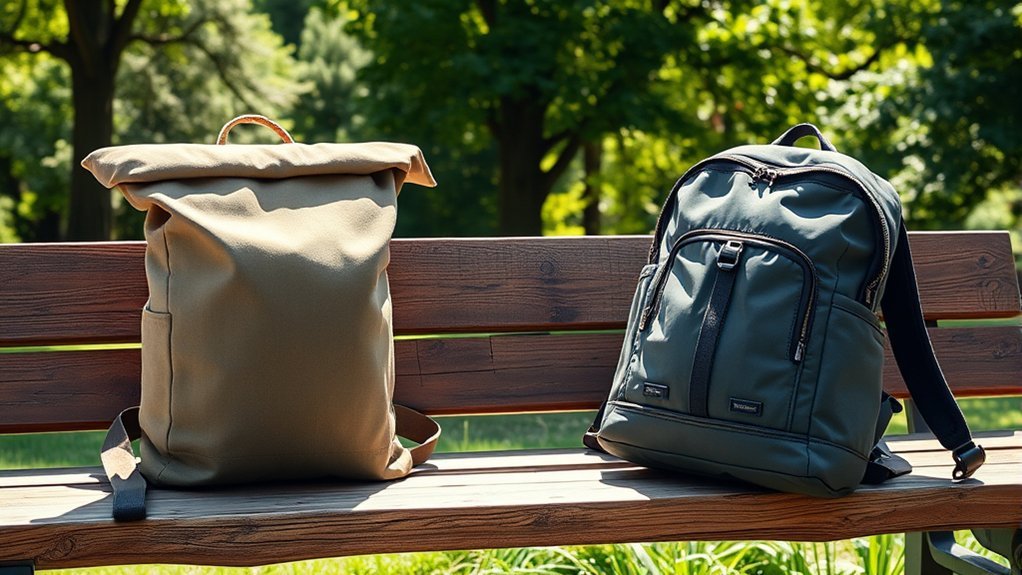
With a pure roll top bag, retrieving small gear requires unbuckling, unrolling, and reaching down into the bag—a minor hassle when standing on a crowded subway or passing through airport security. Clamshell backpacks let you pull your laptop, tablet, or toiletry kit directly out of dedicated compartments in seconds.
For air travel, clamshell bags speed up TSA security lines significantly. Many TSA-compliant clamshell models lay completely flat on the security conveyor belt, allowing x-ray machines to scan your laptop without requiring you to remove it from the bag.
Durability and Weather Resistance
Roll-top backpacks consistently outperform panel-loading bags in heavy rain and rough wilderness environments. By folding the top fabric over itself two or three times, a roll top creates a barrier that prevents water from pooling or seeping through, even in torrential downpours.
Clamshell backpacks rely heavily on perimeter zippers, which are naturally vulnerable to water penetration under prolonged exposure. To combat this, premium outdoor brands use coated fabrics and water-resistant zipper tape. According to extensive gear testing by Backpackies, choosing clamshell packs equipped with YKK AquaGuard zippers closes much of the weather-protection gap, though roll closures remain superior for extreme conditions.
Warning: Overpacking a clamshell backpack places continuous outward pressure on its perimeter zipper track. If a zipper teeth slider fails or blows out while traveling, the main compartment can burst open completely—unlike a roll top, which uses heavy-duty compression straps and field-replaceable buckles.
Pro Tip: If you prefer a clamshell backpack for its organization but commute in wet climates, verify that the pack uses heat-sealed seams and rubberized YKK AquaGuard zipper tape rather than standard exposed nylon teeth.
Ideal Use Cases for Each Style
Matching your backpack style to your primary environment ensures you get the right blend of weather protection, volume flexibility, and access speed.
Outdoor Adventure Suitability
Roll top backpacks shine on hiking trails, long trekking trips, kayak outings, and bicycle commutes. Real-world testing from Tom’s Guide highlights how roll tops easily adjust from a compact 20-liter daily commuter bag to an expanded 30-liter weekend pack simply by adjusting the top roll folds. When exposed to mud, dust, or snow, the minimalist exterior leaves fewer crevices and zipper teeth to clog or jam.
Urban Commuter Preference
For daily office commutes, business trips, and weekend flights, clamshell backpacks offer unmatched convenience across three key areas:
- Instant Tech Access: Padded, suspended laptop compartments keep sensitive electronics safe and easily accessible during security checks or meetings.
- Suitcase-Style Packing: Clothes lay flat and stay wrinkle-free when organized inside clamshell compartments alongside standard packing cubes.
- Structured Ergonomics: Internal dividers keep heavy items from shifting to the bottom of the bag, maintaining an even center of gravity against your back.
Making the Right Choice for Your Needs
If your travel involves unpredictable outdoor weather, heavy physical activity, or carrying varying gear volumes, a roll top backpack delivers the durability, light weight, and water sealing you need. If your routine focuses on air travel, city commuting, hotel stays, and managing multiple electronic devices, a clamshell backpack provides the organization and rapid access that makes travel seamless.
Evaluated against real-world travel demands documented by Nomads Nation, travelers who prioritize packing speed and visibility choose clamshells, while those who value weatherproofing, capacity flexibility, and long-term durability lean toward roll tops.
Frequently Asked Questions
Can roll top backpacks fit larger, oddly-shaped items easily?
Yes. Roll top backpacks feature an unconstrained vertical collar that expands upwards, allowing bulky equipment like sleeping pads, climbing gear, or tall groceries to fit without zipper restrictions.
Are clamshell backpacks suitable for air travel carry-on?
Yes. Clamshell backpacks are widely considered the best choice for air travel because they open 180 degrees like a suitcase, fit standard packing cubes, and allow fast laptop removal at airport security checkpoints.
How do I clean and maintain a roll top backpack?
Shake out interior debris, spot clean the exterior fabric using lukewarm water and mild non-detergent soap, inspect the closure buckles, and hang dry completely away from direct heat before storage.
What materials make clamshell backpacks water-resistant?
High-quality clamshell backpacks utilize high-denier Cordura or Ballistic nylon, TPU/polyurethane exterior coatings, and sealed YKK AquaGuard zipper tape to prevent water infiltration through stitching and zipper tracks.
Do roll top backpacks have quick-access external pockets?
Yes, modern roll top designs frequently include external side water bottle pockets, zippered front stash pockets, or vertical side-access laptop zips so you can reach essentials without unrolling the main compartment.
Conclusion
Choosing between a roll top and a clamshell backpack comes down to your primary activities and packing style. Roll tops excel in outdoor, weather-exposed environments where long-term durability, simplicity, and sealed weather resistance are paramount. Clamshells dominate urban commutes and air travel where structured organization, quick TSA access, and suitcase-style packing outweigh compression and extreme weather protection. Aligning your backpack selection with how you move and pack ensures long-term comfort and efficiency on every trip.
Sources
- Timbuk2 Designs, Inc. Patent Filing (US9609938B2) — Validates waterproof roll-top bag construction and seam-sealing principles.
- Backpackies Clamshell Backpack Testing Guide — Supports findings on YKK AquaGuard zipper performance and internal tech organization.
- Nomads Nation: Top-Loading vs. Clamshell Backpack Comparison — Backs claims on access patterns, packing efficiency, and structural durability.
- Tom’s Guide Roll-Top Backpack Review — Validates real-world roll-top volume expansion and weatherproofing performance.

