
Last Updated on September 11, 2026 by Mason Reed
You rely on portable power stations to keep essential devices running when the grid is down or when you are far from outlets. Choosing the right unit saves you weight, ensures your CPAP or fridge keeps running, and gives you reliable charging for phones, lights, and laptops. Focus on capacity, continuous output, recharge speed, weight and durability so the unit matches your camping style and emergency needs.
Disclosure: As an Amazon Associate I earn from qualifying purchases. Some links on this page are affiliate links, at no extra cost to you.
Top Picks
|
Category |
Product |
Score |
|---|---|---|
|
🔰 Best for CPAP |
88/100 |
|
|
🚀 Best Fast Charging |
96/100 |
|
|
💼 Best for Marine Use |
84/100 |
|
|
🏆 Best Home Backup |
95/100 |
|
|
💰 Best Budget |
76/100 |
|
|
⚡ Best Rapid Recharge |
92/100 |
|
|
🔌 Best Expandable System |
90/100 |
|
|
⭐ Best Long-Life Battery |
91/100 |
Selection Criteria
You need a power station that matches the devices you plan to run, so we prioritized usable watt‑hours and sustained output to estimate real runtime. Recharge speed and supported input methods matter when you are on the road, so fast AC and solar charging scored highly.
Weight and form factor influence packability for camping, while build quality, ingress protection, and warranty determine long‑term reliability. Finally, we considered port variety and real‑world user feedback to judge usability and manufacturer support.
Yeti 700

You want a dependable battery that travels well and handles real-world needs, and the Yeti 700 is built for exactly that. It pairs a 677 watt‑hour LiFePO4 battery with a rugged, weather‑resistant case so you can use it at camp, tailgate, or as a compact home backup.
It’s heavy enough to feel solid but still manageable to carry in a vehicle, and the output is well suited to run lights, laptops, phones and sleep‑critical devices like CPAP machines. If you value a long‑life chemistry and a device that charges quickly from household outlets or solar, this is a practical pick that balances durability, portable capacity and quiet operation.
What People Say
Customers commonly praise the Yeti 700 for charging multiple devices overnight and for powering sensitive gear like CPAP machines while camping. Many users note fast AC charging, a solid build, and dependable battery retention.
A few reports mention weight and occasional service issues, but follow‑up support has resolved those for several buyers.
Overall Sentiment: Positive

Energy Efficiency
The LiFePO4 cell chemistry gives you efficient charge/discharge cycles and a longer lifespan compared with standard lithium‑ion packs. You’ll see good retention of capacity over many cycles and competitive recharge times when using AC or solar inputs, making it efficient for repeated weekend trips or intermittent home outages.
Solves These Problems
This unit addresses common camping and emergency pain points: it keeps small appliances and medical devices running, provides quiet overnight power, and resists the elements so you don’t worry about dew or dust. It won’t replace a whole‑house generator, but for personal gear, phone and laptop uptime, and short‑term fridge use it reliably closes the gap between convenience and necessity.
Key Benefits
- Reliable LiFePO4 chemistry for long cycle life
- Water resistant and dustproof build for outdoor use
- Good balance of capacity and portability for camping
- Quiet operation suitable for overnight use with CPAP
Rating: 4.5 (total: 36+)
BLUETTI AC180

You want a power station that behaves like a dependable workhorse, and the BLUETTI AC180 is built around that idea. With a 1152 Wh LiFePO4 pack and 1,800W continuous output (2,700W peak) it can run coffeemakers, small fridges, power tools and multiple devices at once while still fitting in a mobile setup. The headline feature is the recharge speed: going from empty to about 80% in under an hour changes how you plan trips and outage recovery.
It’s heavier than ultra‑compact units but feels robust, offers a wide selection of ports, and carries a long warranty that gives you confidence for daily use and emergency readiness. If you need high sustained power plus practical fast recharging, this is a smart option to consider.
What People Say
Users frequently highlight the AC180’s rapid recharge and dependable power delivery, noting it handles several devices or small appliances simultaneously. Many mention the sturdy construction and long battery life provided by LiFePO4 chemistry.
Some buyers point out a notable idle draw with the inverter on and advise planning around that for extended storage or light loads.
Overall Sentiment: Positive

Energy Efficiency
The LiFePO4 chemistry gives you efficient, long‑lasting cycles and stable performance over time, and the fast recharge reduces downtime between uses. Be aware that when the inverter is active the unit can draw a nontrivial standby load, so efficiency in long idle periods depends on how you manage the on/off state.
Solves
This station solves the need for rapid, reliable power in short windows: you can top up quickly between drives or during daylight and still run fridges, coffee makers, medical gear and work devices when you need them. It’s not a whole‑house solution, but for camping, RV setups and emergency essentials it closes the gap between portability and real usable power.
Key Benefits
- Very fast AC/solar recharge (0–80% in ~45 minutes)
- High continuous output with strong surge capacity
- 1152 Wh LiFePO4 battery for long cycle life
- Multiple outlets and solid build for varied use cases
Rating: 4.7 (total: 1707+)
Dakota Power Box
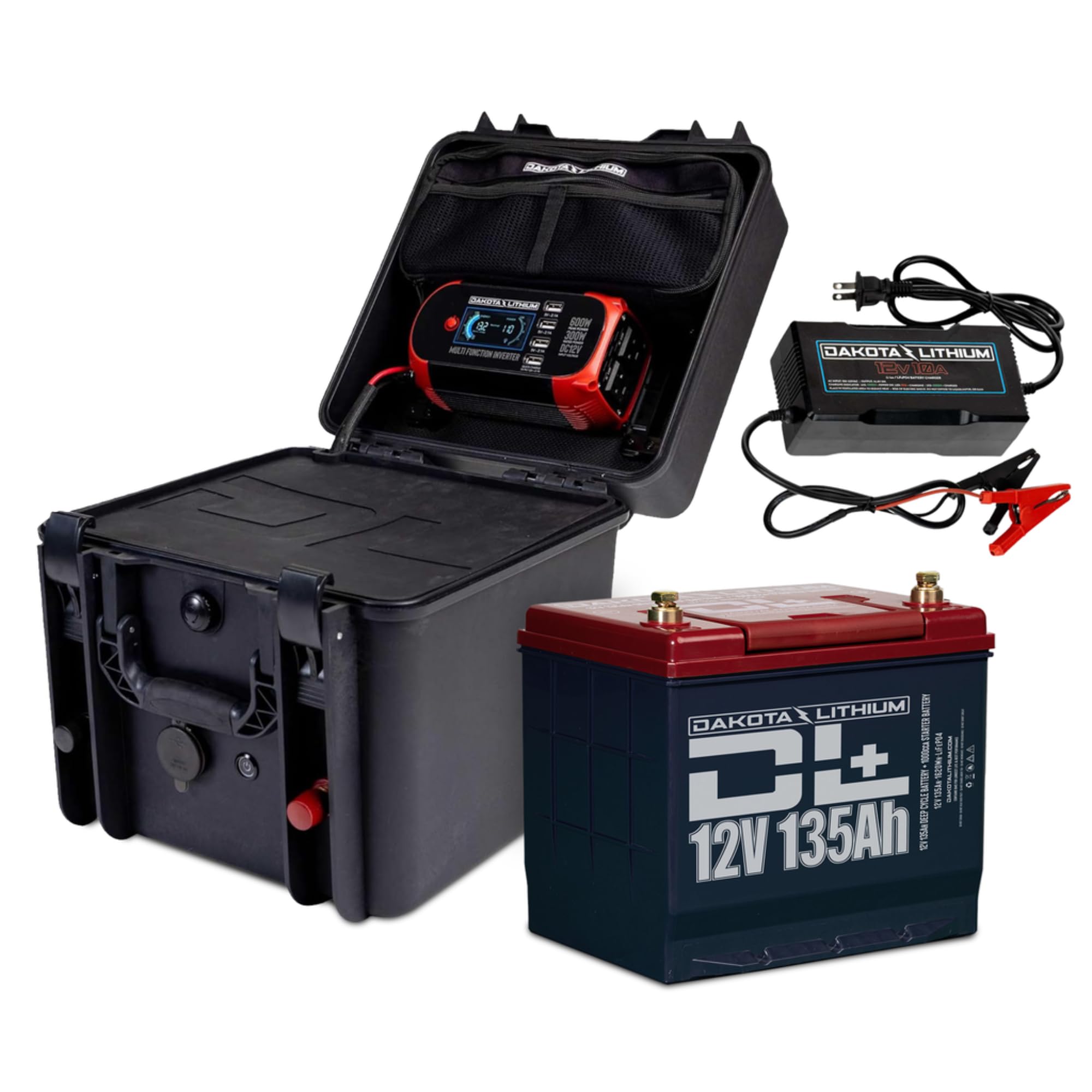
You’re looking for a rugged, vehicle‑ready power source that stays reliable on the water or at basecamp, and the Dakota Power Box is aimed squarely at that need. It pairs a 12V 135Ah LiFePO4 battery with a protective steel/aluminum enclosure and integrated inverter and USB outputs so you can run 12V accessories, charge devices, and support small AC loads from the same box.
Its deep‑cycle design and long warranty make it a practical choice when you need a dependable, installable unit for fishing trips, marine use, or long stays off grid. If your priority is durability and long runtime for 12V systems rather than backpack portability, this is a solid option to consider.
What People Say
Owners tend to praise the build quality and the long‑life LiFePO4 battery for predictable performance on boats and at remote camps. Many appreciate the convenient DC and USB outputs for running accessories and charging devices, while a number of users mention the unit’s weight and bulk as tradeoffs for its durability.
Overall Sentiment: Neutral

Energy Efficiency
Using LiFePO4 cells gives you efficient charge/discharge behavior and strong cycle life, so the box holds up well to repeated deep cycles. That chemistry also helps with stable voltage under load, which is useful for 12V electronics and longer trips.
Solves
This box solves the need for a durable, installable 12V power source that can run trolling electronics, charge phones and run small inverters for lights or fridges during day trips. It’s not aimed at lightweight backpacking but is effective for boating, fishing, RV staging and any situation where rugged, long‑duration 12V power matters.
Key Benefits
- Large 12V 135Ah LiFePO4 capacity for extended runtime
- Rugged steel/aluminum case built for marine and outdoor use
- Integrated DC inverter and USB ports for versatile outputs
- Deep‑cycle design with long expected service life
Rating: (total: +)
EcoFlow Delta 3

You want a portable power station that behaves more like a reliable appliance than a gadget, and the EcoFlow Delta 3 fits that role. It pairs a 1,024 Wh LiFePO4 battery with strong continuous output and a generous selection of ports so you can run kitchen gadgets, power tools, laptops and USB‑C devices without juggling adapters. The unit is light enough to move around at 27 pounds, quiet in operation, and integrates with an app that gives you control and monitoring on the go. Whether you’re smoothing a short outage, keeping an RV powered, or setting up basecamp, this model balances runtime, output and modern charging conveniences in a way that makes it easy to rely on day to day.
What People Say
Buyers frequently praise the Delta 3 for delivering dependable, appliance‑style power with fast recharge and strong USB‑C performance. Many reviewers highlight the long battery life afforded by LiFePO4 cells and the convenience of app controls.
A number of users mention its portability compared with larger systems and appreciate its quiet operation.
Overall Sentiment: Positive

Energy Efficiency
LiFePO4 chemistry means efficient charge/discharge cycles and a longer usable life compared with conventional lithium packs. The fast recharge capability also reduces downtime between uses, making it practical for frequent trips or rapid recovery during outages.
Solves
This unit addresses common needs like keeping essential home devices running during short outages, powering RV setups, and supporting campground kitchens and electronics. It won’t replace whole‑house backup for extended outages, but for reliable, mobile power across a range of everyday and emergency situations it fills the gap well.
Key Benefits
- Robust 1,024 Wh LiFePO4 battery for long cycle life
- 1,800W continuous output and ample surge capacity
- Fast charging and USB‑C support for modern devices
- App integration and versatile port selection
Rating: 4.7 (total: 616+)
GRECELL EB1000
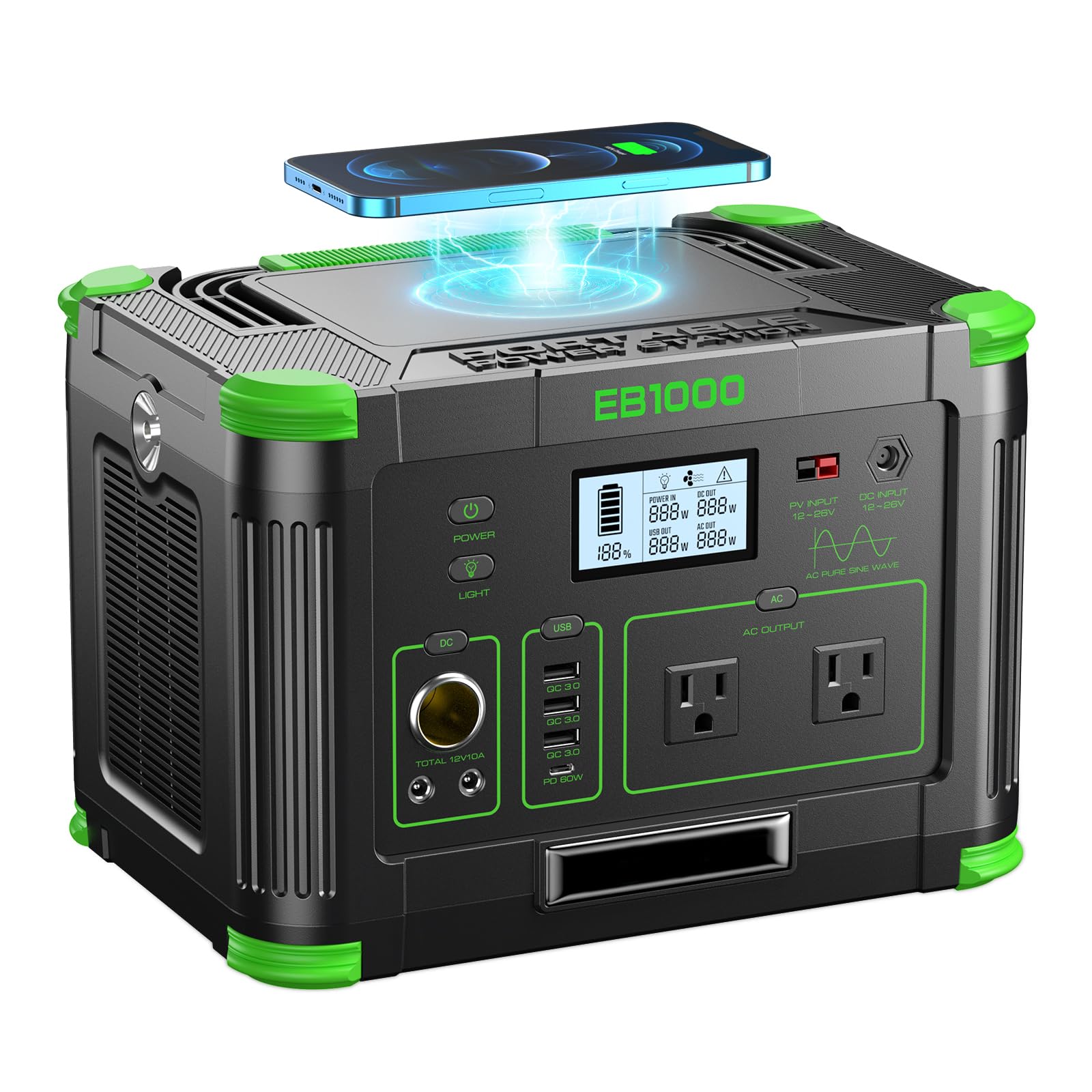
You want a compact power station that slips into your vehicle and handles the essentials, and the GRECELL EB1000 targets exactly that use. With roughly 999 Wh of capacity and a 1,000W continuous inverter, it’s sized to charge phones, laptops, run lights and small appliances while you’re camping or riding out a short outage.
The square form factor and light weight make packing and stowing simple, and the variety of ports including PD fast charge covers modern devices without hunting for adapters. It’s a practical pick if portability and port variety are priorities, though plan for occasional reliability checks if you rely on it for critical long‑term backup.
What People Say
Customers often praise the unit’s compact size, clear controls and range of outputs that make it easy to pack and use for road trips or short outages. Many note good initial performance and convenience for charging multiple devices.
Recurring concerns center on intermittent charging errors and some units failing after limited use, so buyers recommend testing units early and keeping warranty steps in mind.
Overall Sentiment: Neutral

Energy Efficiency
The lithium cell chemistry gives reasonable charge/discharge efficiency for weekend trips, and PD fast charging reduces downtime for device top‑ups. However, intermittent faults reported by some users can affect real‑world efficiency if the unit requires service or replacement.
Solves
This station solves the need for a lightweight, multi‑port power source when you’re camping, traveling in a van, or need short‑term emergency power. It’s great for phones, laptops, lights and small fridges, but it’s not ideal as a long‑term or mission‑critical backup unless you’re comfortable with potential reliability tradeoffs.
Key Benefits
- High usable capacity in a compact footprint
- 1,000W continuous output for everyday devices
- PD 60W fast charging for laptops and phones
- Multiple AC and USB ports for flexible use
Rating: 4.3 (total: 345+)
VTOMAN FlashSpeed
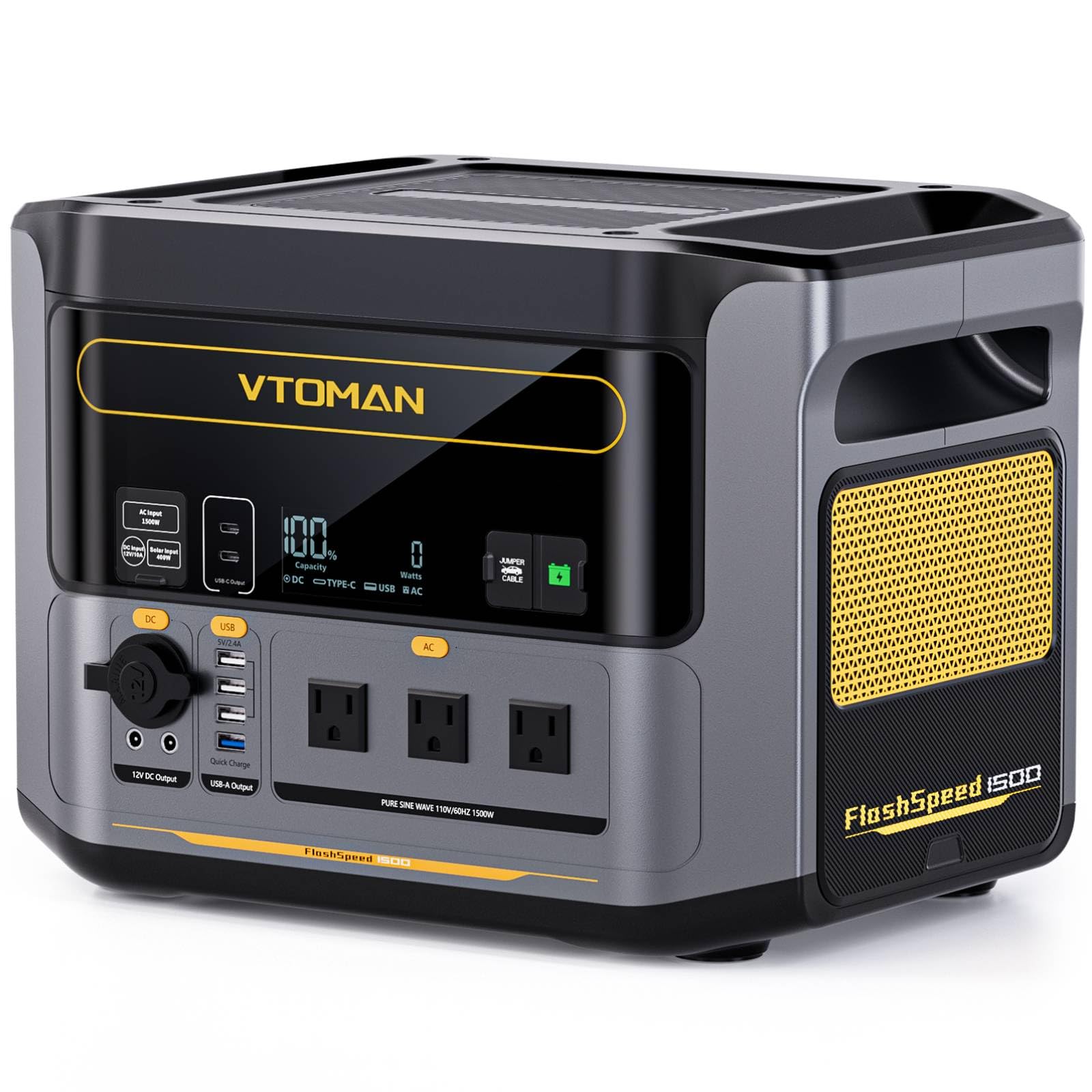
You want a portable station that gets back to full power quickly and handles real loads, and the FlashSpeed is built around that idea. With large usable capacity, high continuous output and a one‑hour recharge window, it lets you top up between drives and run fridges, fryers, laptops and lights without long downtime. The unit supports UPS behavior so sensitive gear stays online while you swap power, and the generous port selection makes it easy to power modern devices. It’s heavier than backpack models, so this is a choice when fast turnaround and sustained power matter more than ultralight packability.
What People Say
Many users appreciate the FlashSpeed’s ability to recharge quickly and handle demanding loads like small kitchen appliances or a fridge. Owners frequently note reliable day‑to‑day performance and useful monitoring features, while others mention that the inverter can draw power when active and that some auto‑shutdown behaviors require attention during light loads.
Overall Sentiment: Positive

Energy Efficiency
LiFePO4 chemistry provides stable voltage and good cycle life, and the fast recharge cuts the hours the unit sits depleted. That said, leaving the inverter on without a load can create steady standby consumption, which affects net efficiency during long idle periods.
Solves
This station solves the need for near‑instant reuse and sustained power for camping, RVs and short outages: you can recharge between driving legs, run essential appliances for extended periods, and rely on UPS features for sensitive equipment. It’s not ideal if you need a lightweight carry option, but it closes the gap between portability and true usable power.
Key Benefits
- True one‑hour full recharge for rapid turnaround
- High continuous output and strong surge capacity
- Large 1,548 Wh LiFePO4 pack for extended runtime
- UPS support and versatile port selection
Rating: 4.4 (total: 188+)
OUPES Mega 1
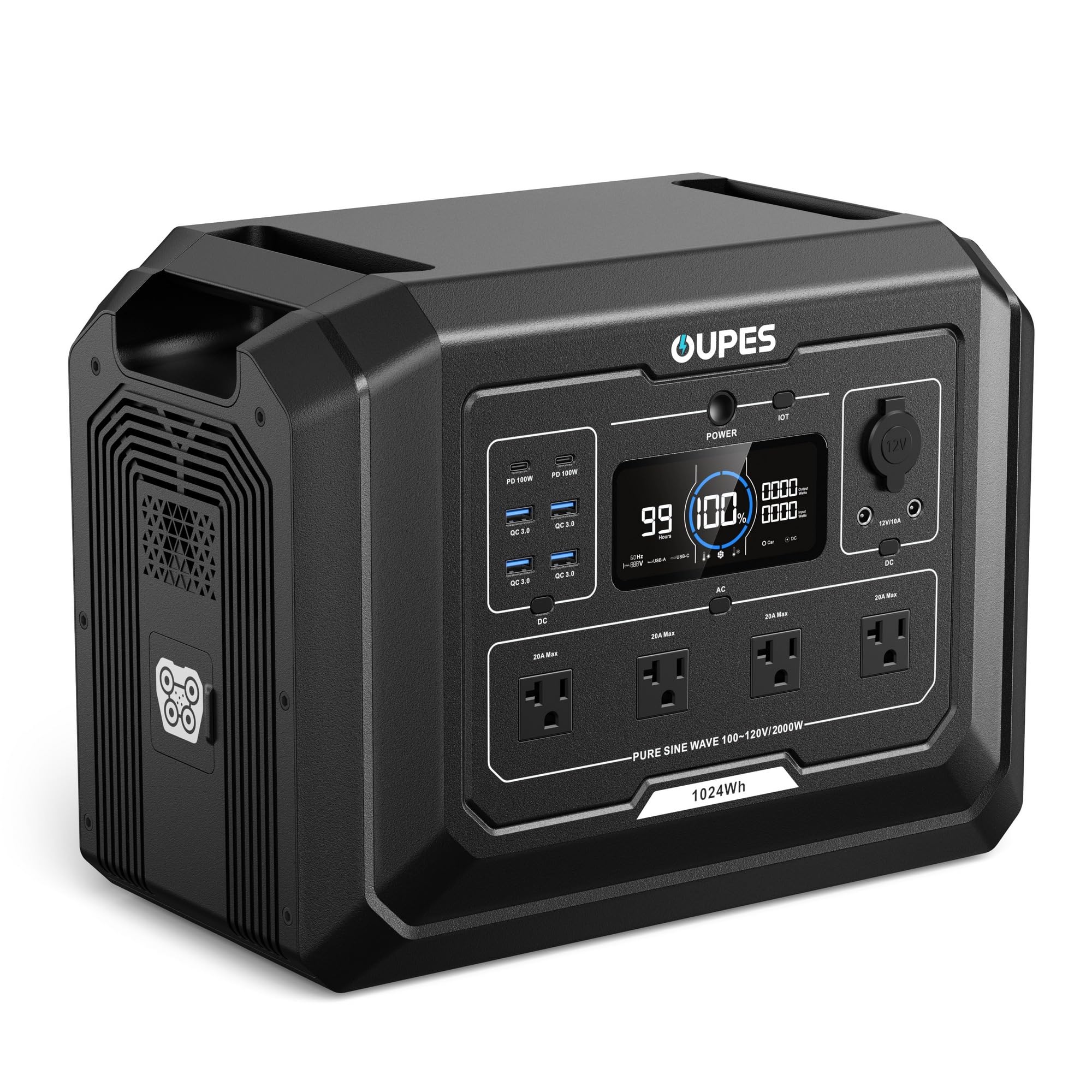
You want a power station that can cover everything from campsite cooking to short home outages, and the Mega 1 is designed for that middle ground. It pairs a 1,024 Wh LiFePO4 pack with a 2,000W inverter so you can run kitchen appliances, power tools and multiple devices at once.
The expandable architecture is useful if you later decide to add capacity for longer outages, and built‑in UPS functionality keeps sensitive gear running during transitions. It’s not ultralight, but if you value a robust, flexible unit that scales with your needs, this one makes sense.
What People Say
Users commonly appreciate the Mega 1’s combination of usable output and expandability, noting that it handles heavier loads than many compact stations. Many reviewers highlight the UPS feature and the ability to add extra battery capacity later. A few customers mention weight and size as tradeoffs for its power and modular design.
Overall Sentiment: Positive

Energy Efficiency
LiFePO4 cells give you stable voltage under load and strong cycle durability, which translates into efficient long‑term performance. The option to add more battery capacity allows you to optimize runtime vs weight for different trips or backup scenarios.
Solves
This model addresses the need for a scalable, reliable source of power when you want both portability and real usable watts: it keeps fridges, pumps and tools running at camp or covers critical circuits during short outages at home. If you plan to expand capacity over time, it’s a practical platform that grows with your requirements.
Key Benefits
- Expandable storage up to 5 kWh for longer outages
- 2,000W continuous output with high surge capacity
- LiFePO4 battery chemistry for long cycle life
- Built‑in UPS and multiple outlet options for versatility
Rating: 4.6 (total: 1036+)
Jackery HomePower
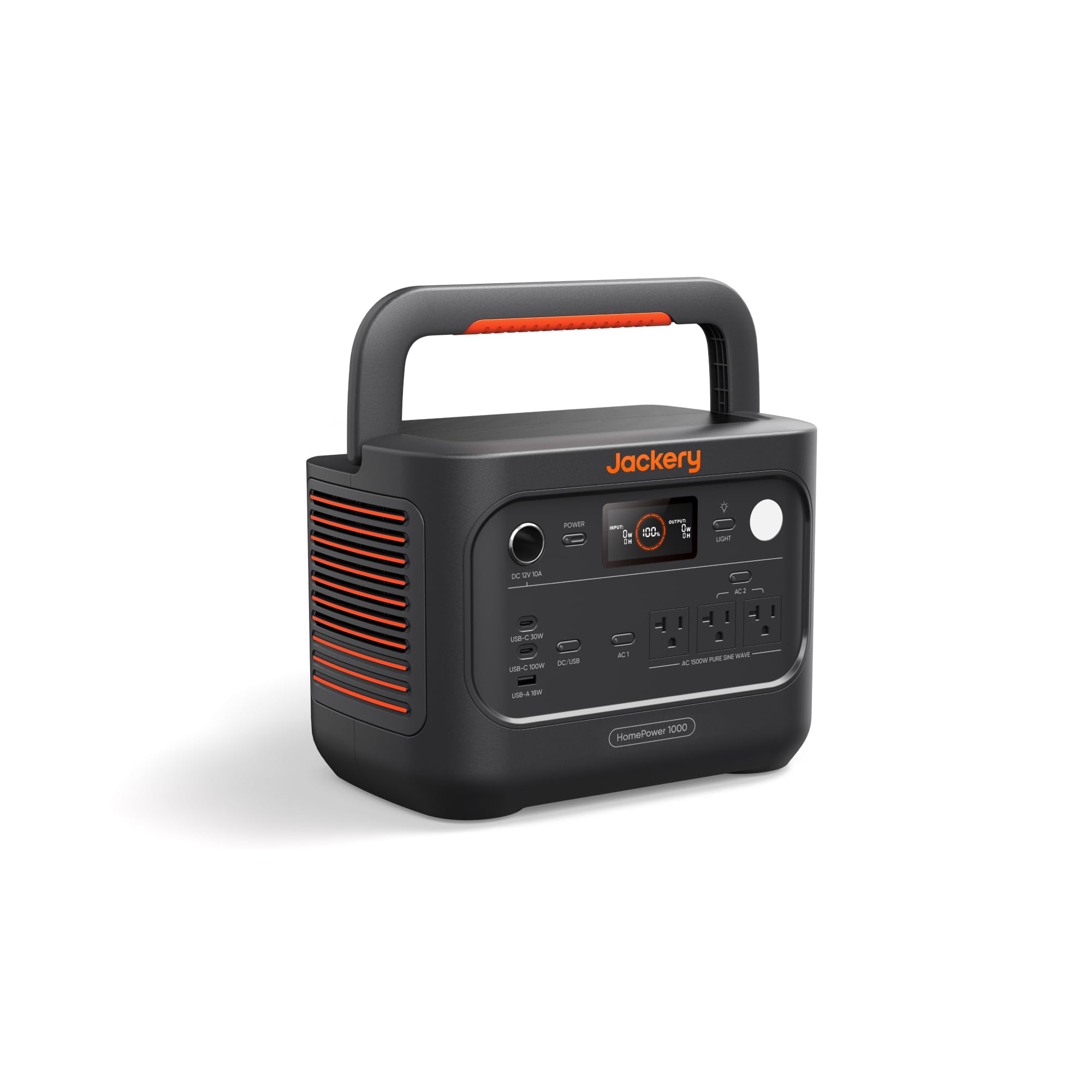
You want a versatile, dependable unit that feels more like a household appliance than a gadget, and the Jackery HomePower 1000 v2 aims for that middle ground. It combines a 1,024 Wh LiFePO4 battery with 1,500W continuous output, UPS capability and a rapid charge profile so you can keep laptops, medical devices, small kitchen appliances and RV essentials running. The design is compact enough to move around the house or toss in a vehicle at 23.4 pounds, and the long cycle promise makes it suited to regular use rather than occasional emergency-only duty.
If you need a balance of portability, modern ports and a proven chemistry for longevity, this is a practical pick to consider.
What People Say
Users frequently call out the HomePower’s dependable output and the peace of mind that comes from its UPS feature and long‑life battery chemistry. Many appreciate the fast charge and the variety of ports that cover laptops, phones and small appliances without juggling adapters.
A handful of reviewers note the unit’s weight and point out it isn’t a whole‑house solution, but most find it well suited for home backup, RVs and camping.
Overall Sentiment: Positive

Energy Efficiency
LiFePO4 chemistry gives you efficient charge/discharge cycles and a longer usable lifespan, which reduces the cost per cycle over years of use. Fast recharge capability also cuts the time the unit is offline, making it more practical for repeated short outages or frequent trips.
Solves
This model covers common pain points like keeping essential circuits, medical devices and communication gear powered during short outages, providing UPS protection for sensitive electronics, and supplying convenient portable power for RVs and campsites. It won’t replace permanent whole‑house backup, but it reliably bridges the gap for most day‑to‑day and emergency needs.
Key Benefits
- Robust 1,024 Wh LiFePO4 battery with long cycle life
- 1,500W continuous output and UPS support for sensitive gear
- Fast recharge capability to minimize downtime
- Multiple AC and USB ports including USB‑C for modern devices
Rating: 4.5 (total: 132+)
FAQ
How Much Power Do I Need?
You want to match the station’s watt‑hours to the devices you plan to run and ensure the unit’s continuous watt rating can handle those loads. Estimate the watt draw of each device, multiply by the hours you expect to run them, and add a margin so you don’t run the battery flat; also check the surge rating if you’ll power motors or compressors. If you rely on a CPAP, small fridge or power tools, prioritize higher continuous output and usable capacity rather than just peak numbers.
How Do I Recharge The Station?
You can recharge from a wall outlet, a car, or solar panels depending on the model’s inputs, and recharge speed varies widely between units. Some modern LiFePO4 stations support very fast AC or combined solar charging that gets you to 80% in under an hour, while solar recharging depends on panel wattage and sun conditions.
Plan a charging strategy for your trips by checking input specs, bringing compatible cables or panels, and using AC top‑ups when you need a quick turnaround.
Can I Use It For Medical Devices?
Yes, many portable stations can run medical devices but you must confirm the continuous output, waveform (pure sine is best) and runtime for your specific device. A CPAP with a humidifier draws more power than a basic machine, so test the setup at home to measure run time and ensure the battery meets your overnight needs. If uninterrupted operation matters, look for a unit with UPS capability and make sure you understand the startup surge and whether the station can sustain the load without frequent recharging.
Preferred Features
You prioritize usable capacity and sustained output above flashy specs, so you pick the BLUETTI AC180 when fast recharge and high continuous watts matter, the Yeti 700 when you need a quiet, portable LiFePO4 unit that’s reliable for overnight CPAP and device charging, and the Dakota Power Box when rugged 12V marine or installable long‑run power is the goal. Weight and packability for camping, port types and UPS support for sensitive gear, and warranty/support round out what most people consider when choosing between these options.
Wrapping Up
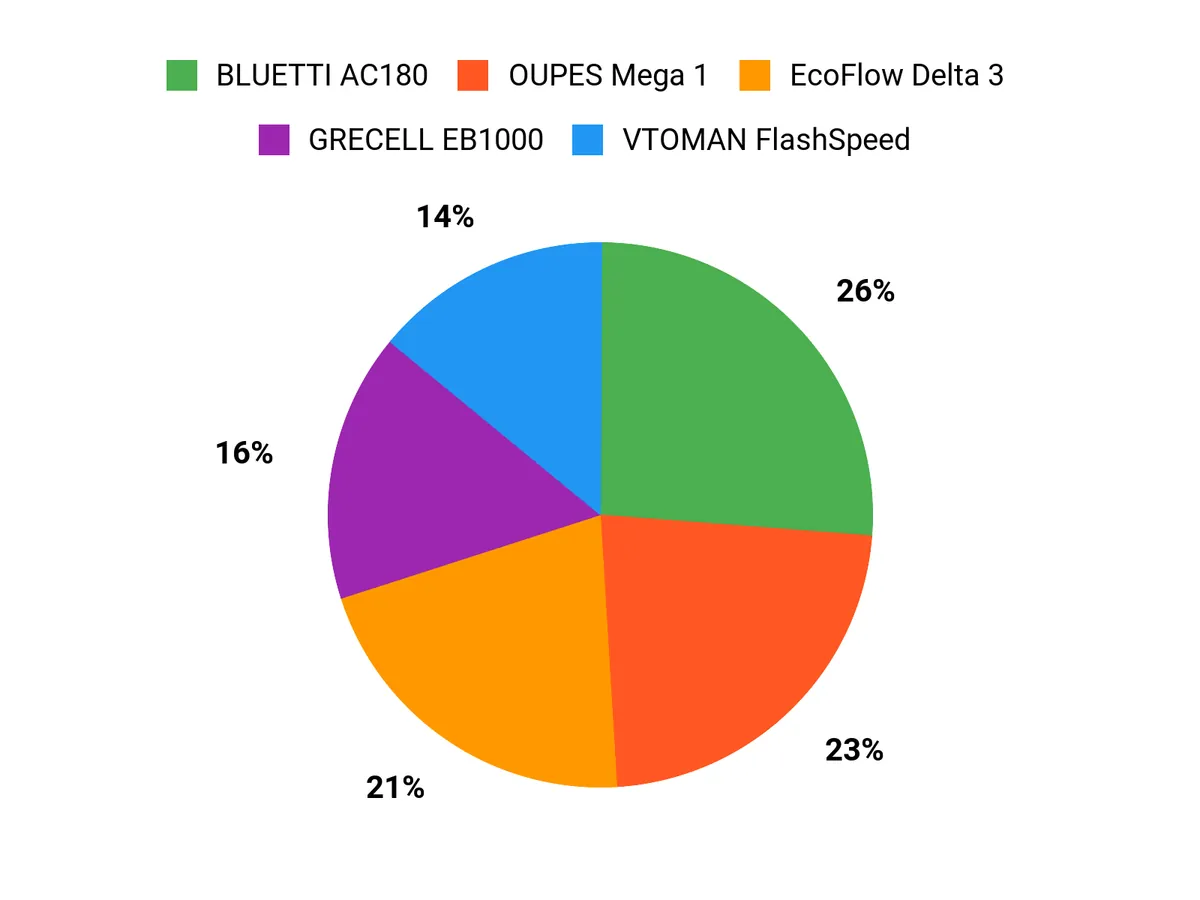
When you pick a portable power station, match the unit to the devices you must run and how you recharge it. If you need reliable medical support like a CPAP and rugged outdoor resistance, choose the Goal Zero Yeti 700.
If recharge speed and high continuous output are top priorities, the BLUETTI AC180 and VTOMAN FlashSpeed deliver exceptional fast‑charge performance. For home backup that integrates into daily use, the EcoFlow Delta 3 Plus offers broad output and smart features.
If budget, expandability, marine readiness, or long battery life are your chief concerns, the GRECELL, OUPES, Dakota Power Box, and Jackery models give clear tradeoffs. Use the shortlist above to focus on capacity, sustained watts, weight, and recharge options so you get dependable power where and when you need it most.
| Product Name | Image | Rating | Power Capacity (Wh) | Output Wattage (W) | Runtime |
|---|---|---|---|---|---|
| Goal Zero Yeti Portable Power Station 700 |
|
4.5/5 (36 reviews) | 677 Wh | 677 W | 1 hour |
| BLUETTI Portable Power Station AC180 |
|
4.7/5 (1,707 reviews) | 1152 Wh | 1800 W | 16 hours |
| Dakota Lithium Power Box with 12V 135Ah Battery |
|
N/A | 600 Wh | 600 W | 7 hours 30 minutes |
| EF ECOFLOW Portable Power Station DELTA 3 Plus |
|
4.7/5 (616 reviews) | 1024 Wh | 1800 W | 56 minutes |
| GRECELL Portable Power Station 999Wh |
|
4.3/5 (345 reviews) | 999 Wh | 1000 W | 48 minutes |
| VTOMAN FlashSpeed 1500 Portable Power Station |
|
4.4/5 (188 reviews) | 1548 Wh | 1500 W | 50 hours |
| OUPES Mega 1 Portable Power Station |
|
4.6/5 (1,036 reviews) | 1024 Wh | 2000 W | 1 hour |
| Jackery HomePower 1000 v2 Portable Power Station |
|
4.5/5 (132 reviews) | 1024 Wh | 1500 W | 1 hour and 40 minutes |
This Roundup is reader-supported. When you click through links we may earn a referral commission on qualifying purchases.
