
Last Updated on July 28, 2026 by Daniel Globe
Italy’s most beautiful waterfalls range from warm thermal pools to roaring alpine drops, so you can match each stop to your travel style. You can soak at Cascate del Mulino and Bagni San Filippo in Tuscany, then chase dramatic scenery at Cascate di Nardis, Acquafraggia, Serio Falls, and the Waterfall of Liri Isle. Add hidden gems like Rio Verde and Parcines for quieter views, alongside Umbria’s iconic Marmore Falls, and you’ll find an astonishing variety of natural cascades across the peninsula.
Quick Answer
Italy’s most beautiful waterfalls include the free thermal cascades of Cascate del Mulino and Bagni San Filippo in Tuscany, the towering 315-meter Serio Falls in Lombardy, the 130-meter Cascate di Nardis in Trentino, and Umbria’s Roman-engineered Marmore Falls, one of the tallest man-influenced waterfalls in Europe.
Key Takeaways
- Cascate del Mulino and Bagni San Filippo offer free, year-round thermal soaking in Tuscany.
- Serio Falls is Italy’s tallest waterfall at 315 meters, flowing on five scheduled release dates each year.
- Cascate di Nardis, Acquafraggia, and Cascata del Rio Verde reward hikers with dramatic alpine drops and quieter crowds.
- Marmore Falls in Umbria combines ancient Roman engineering with one of Europe’s most striking cascades.
- Spring and early summer bring the fullest flow to most natural cascades due to Alpine snowmelt and rainfall.
Disclosure: As an Amazon Associate I earn from qualifying purchases. Some links on this page are affiliate links, at no extra cost to you.
Why Italy’s Best Waterfalls Stand Out
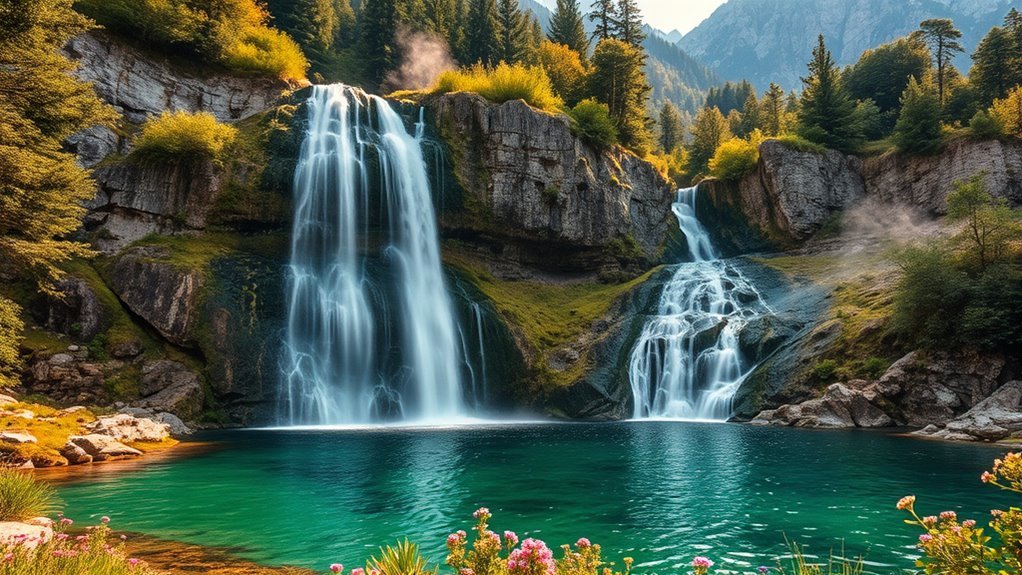
Italy’s best waterfalls stand out because each one offers something strikingly different: at Cascata del Mulino in Tuscany, thermal springs feed tiered cascades and warm travertine pools; in Trentino-Alto Adige, the Cascate di Nardis drops 130 meters in a dramatic double flow; and in Abruzzo, the roughly 200-meter Cascata del Rio Verde falls through a lush, quiet landscape that feels almost untouched. You can chase mist, listen to thunder, and feel your pace reset.
Some falls reward you with cultural significance, like Marmore Falls in Umbria, where ancient Roman engineering still shapes the water’s power. Others invite adventure activities, especially southern Italy’s Marmarico Waterfall, where hiking trails lead you to wild, panoramic views. Each site gives you a different way to break the routine: soak, wander, climb, or simply stand still and take in the water. Together, they show Italy’s waterfalls aren’t just scenic—they’re varied, layered, and worth planning a trip around.
Marmore Falls in Umbria
Marmore Falls (Cascata delle Marmore) near Terni is Italy’s most famous waterfall and one of the tallest in Europe, with a total drop of around 165 meters across three tiers. What sets it apart is its origin story: Roman engineers built the original channel in 271 BC to divert the Velino River away from marshland, creating an enduring hydraulic masterpiece.
Because the flow is regulated for hydroelectric power generation, the full volume of water is released on a published schedule rather than continuously. Visitors can access two main viewing areas: the Belvedere Inferiore (Lower Belvedere) for full-frame views from below, and the Belvedere Superiore (Upper Belvedere) to look directly over the first drop. An entrance ticket is required, granting access to the marked trail network connecting both viewpoints.
Pro Tip: Both Marmore and Serio Falls run on scheduled water releases. Check the official release calendar for your visit date before traveling, as arriving during off-peak hours means seeing a reduced trickling stream rather than a roaring torrent.
Cascate Del Mulino in Tuscany
At Cascate del Mulino in Tuscany, you’ll find warm thermal water spilling over stone ledges into natural travertine pools that invite you to sink in and relax. As you move from one tier to another, the cascade changes in feel and temperature, giving you a soothing, layered soak. Best of all, you can enjoy this striking experience for free, right in the heart of a serene Tuscan landscape.
Natural Travertine Pools
Nestled in Tuscany near Saturnia, Cascate del Mulino invites you into a series of natural travertine pools where mineral-rich thermal water flows in multi-tiered cascades. You step into this free sanctuary and feel the water hold you at a constant 37.5°C thermal temperature, easing tension instantly. The pools are framed by pale limestone walls, lush countryside, and open skies. As the sulfur- and calcium-rich waters carve each basin over centuries, they leave behind a sculpted elegance that makes this one of the most famous hot springs in Southern Europe.
Thermal Cascade Features
Cascate del Mulino unfolds as a tiered thermal cascade, where warm spring water spills over creamy travertine ledges into natural soaking pools. You feel each level shift slightly in warmth and current intensity as you explore between them.
| Level | Sensation |
|---|---|
| Upper | Crisp, lively flow near the stream intake |
| Middle | Silk-warm embrace in wide basin pools |
| Lower | Deep, soothing heat with gentle currents |
Surrounded by rolling hills, you’re free to relax at a gentler rhythm. The cascade’s natural terraces and steamy blue pools create a setting that feels both wild and welcoming year-round.
Free Soaking Experience
If you’re after a waterfall experience that feels both restorative and effortless, Cascate del Mulino delivers exceptional value. The site is open 24/7 with zero admission cost. Arriving early in the morning or late in the evening helps you avoid daytime tour crowds and enjoy the ambient steam under open skies. Bring water shoes, as the natural travertine floor can be uneven and slick with mineral sediment.
Bagni San Filippo Hot Springs in Tuscany
In the heart of Tuscany’s Val d’Orcia, Bagni San Filippo welcomes visitors with steaming thermal waterfalls, forest pools, and natural mineral mud. The thermal waters emerge from the earth at approximately 48°C and cool gradually as they flow downstream through the Fosso Bianco stream, allowing you to select a pool with your preferred temperature.
The central highlight is the *Balena Bianca* (“White Whale”), a monumental calcium formation that resembles a frozen white wave towering over the forest floor.
| What You Feel | What You See | What You Gain |
|---|---|---|
| Warm mineral water | White travertine cliffs | Physical ease |
| Therapeutic thermal mud | Lush Tuscan forest | Natural renewal |
| Fresh mountain air | Tiered forest basins | Unhurried tranquility |
Note: Climbing on the Balena Bianca formation is strictly prohibited to protect the delicate calcium deposits. Stick to designated wooden footpaths and established stream pools.
Cascata Di Parcines in South Tyrol
Cascata di Parcines (Partschinser Wasserfall) drops through South Tyrol with impressive alpine power. Its 98-meter cascade sends cool spray into the mountain air above a valley lined with classic Alpine architecture and vibrant meadows.
Well-marked hiking trails lead visitors to a secure viewing platform situated right at the edge of the drop, where the thunder of the water is matched by panoramic views of the Texel Group Nature Park. The surrounding network includes over 200 kilometers of trails, accommodating casual strolls as well as challenging high-altitude treks.
Cascate Di Nardis in Trentino-Alto Adige
Located in the Val Genova within the Adamello Brenta Nature Park, Cascate di Nardis plunges 130 meters in a dramatic double cascade. Fed by the Presanella glacier, the waterfall roars directly into the Sarca river, surrounded by granite cliffs and dense evergreen forest.
Nardis Waterfall Access
Visiting Cascate di Nardis is straightforward and low-barrier:
- Best Flow: Visit May through July during maximum glacial snowmelt.
- Vehicle Access: Drive into Val Genova via the designated access road to designated parking areas near the falls.
- Photography: Early morning light provides clear reflections along the Sarca riverbed.
- Trails: The flat *Sentiero delle Cascate* trail lets you explore additional nearby waterfalls in the valley.
Scenic Valley Views
Framed by the steep canyon walls of Val Genova, Cascate di Nardis provides a striking balance of scale and accessibility. The misty air near the base creates brilliant rainbows on sunny days, making it one of Trentino’s most photographed natural landmarks.
Cascata Del Rio Verde in Abruzzo
Located within a natural reserve in Borrello, Cascata del Rio Verde is the highest natural waterfall in the Apennines, boasting a dramatic triple drop of roughly 200 meters into the Sangro River valley.
At a Glance
| Time Required | 1–2 hours round trip on well-maintained wooden boardwalks |
| Difficulty | Easy to moderate (includes stairs leading to upper platforms) |
| Tools Needed | Sturdy walking shoes, water, camera |
| Cost | Nominal reserve entrance fee (~2 Euros) |
Acquafraggia Falls in Valchiavenna
Located in Borgonuovo di Piuro in Lombardy, Acquafraggia Falls features a double cascade plunging 170 meters down a shear granite face. The site carries historic prestige: Leonardo da Vinci recorded the falls in his Codex Atlanticus around the year 1500 while surveying the region for the Duke of Milan, marveling at their power and beauty.
A paved park at the base provides open picnic lawn access, while an equipped staircase trail allows energetic hikers to ascend alongside the water drops for panoramic views of the Chiavenna Valley.
Serio Falls in Val Seriana
Serio Falls (Cascate del Serio) in Lombardy is Italy’s tallest recorded waterfall, cascading a magnificent 315 meters across three distinct steps (166m, 74m, and 75m).
Italy’s Highest Waterfall
Fed by Alpine lakes high above Valbondione, the natural flow of the Serio River was dammed in 1931 for power generation. Today, the full cascade is restored during periodic opening events, releasing up to 10,000 cubic meters of water per second and drawing spectators to the natural amphitheater below.
Summer Flow Schedule
For the 2026 season, official dam releases occur on five scheduled dates: June 13, July 11 (night opening), August 16, September 13, and October 11. During these events, water rushes over the falls for approximately 30 minutes (typically 11:00 AM to 11:30 AM; nighttime opening lighting varies).
Warning: Serio Falls only flows during these official release windows. Outside scheduled release times, the cliff face remains dry or reduced to a minimal trickle.
Waterfall of Liri Isle in Frosinone
The *Cascata Grande* at Isola del Liri offers a rare sight: a 27-meter waterfall plunging directly inside a historical town center. Located roughly 100 kilometers southeast of Rome, the Liri River splits around an island, sending water cascading right beside historic municipal buildings and the medieval Castello Boncompagni Viscogliosi.
Visitors can enjoy cafe seating overlooking the cascade, capture photographs of the water framed by historical architecture, or explore the riverfront walkways.
How to Plan an Italy Waterfalls Trip
Planning an itinerary around Italy’s waterfalls requires matching regional routes to the season:
- Timing: Alpine cascades (Nardis, Parcines, Acquafraggia) peak from May to July with snowmelt. Tuscan thermal waterfalls (Saturnia, San Filippo) are best enjoyed during spring, autumn, or winter when cooler air contrasts pleasantly with the warm water.
- Footwear: Always pack rubber-soled water shoes for thermal travertine pools and sturdy, water-resistant trail shoes for mountain ascents.
- Schedule Verification: Always confirm water release calendars online for controlled sites like Marmore and Serio Falls before finalizing travel logistics.
Frequently Asked Questions
What is the famous waterfall in Italy?
Marmore Falls in Umbria is Italy’s most famous waterfall. It’s known for its Roman-engineered origins, its three-tiered drop of around 165 meters, and its dramatic scheduled water releases near Terni.
What are the top 5 waterfalls in Italy?
A strong top five includes Cascate del Mulino, Bagni San Filippo, Cascate di Nardis, Cascata di Parcines, and Cascata del Rio Verde—a mix of thermal soaks, alpine drops, and quieter hidden gems.
What are the top 3 waterfall destinations in Italy?
Marmore Falls, Cascata del Rio Verde, and Cascate del Mulino stand out as top destinations, ranging from thunderous Roman-engineered drops to soothing thermal waters.
What is the most beautiful waterfall in Europe?
Marmore Falls is frequently named one of Europe’s most beautiful waterfalls: a towering, three-tiered cascade in Umbria shaped by ancient Roman engineering and still dramatic today.
Conclusion
Italy’s waterfalls give you more than pretty views—they drop you into a landscape shaped by Alpine snowmelt, limestone cliffs, and ancient thermal waters. If you’re choosing just one fun fact to remember, Italy has thousands of natural waterfalls, but only a handful are as iconic and easy to visit as the ones on this list. So pack your camera, check the seasonal opening dates where they apply, and plan your route around the roar, mist, and beauty that make these places unforgettable.
Sources
- Wikipedia: Cascate del Serio — height, drop structure, and status as Italy’s tallest waterfall
- Italia.it: Cascate del Serio — official release schedule and visitor information
- Visit Tuscany: Cascate del Mulino — water temperature and site details
- Valtellina.it: Acquafraggia Waterfalls — height, source elevation, and Leonardo da Vinci reference
- Visit Bergamo: Serio Waterfalls — flow volume and regional context
