

Last Updated on September 10, 2026 by Daniel Globe
If your memory foam travel pillow smells like harsh chemicals upon opening, it is almost certainly experiencing off-gassing — the release of volatile organic compounds (VOCs) trapped inside the foam during manufacturing and vacuum-sealed packaging. While unpleasant, this odor is temporary. Airing out the pillow in a well-ventilated space combined with a targeted baking soda treatment will absorb lingering smells and restore your pillow to fresh, ready-to-travel condition.
Quick Answer
Memory foam travel pillow odors are usually caused by VOC off-gassing trapped during shipping. Unpack the pillow and let it air out in a well-ventilated room out of direct sunlight for 24–72 hours. To pull out stubborn smells, sprinkle baking soda generously over the foam, allow it to sit for 4–6 hours (or overnight), and vacuum it off thoroughly using an upholstery attachment.
Key Takeaways
- Off-gassing is a normal chemical release from new foam and typically dissipates within 1 to 3 days of opening.
- Baking soda acts as a natural odor absorber by drawing out moisture and neutralizing trapped volatile compounds.
- Never submerge or machine-wash memory foam inserts — water breaks down the open-cell structure and invites mold growth.
- Selecting CertiPUR-US certified pillows ensures low-VOC emissions (under 0.5 parts per million) right out of the package.
- If odors persist alongside visible sagging, lumps, or permanent staining, replace your travel pillow (typically every 1–2 years).
Disclosure: As an Amazon Associate I earn from qualifying purchases. Some links on this page are affiliate links, at no extra cost to you.
Why Does Your Memory Foam Travel Pillow Smell?
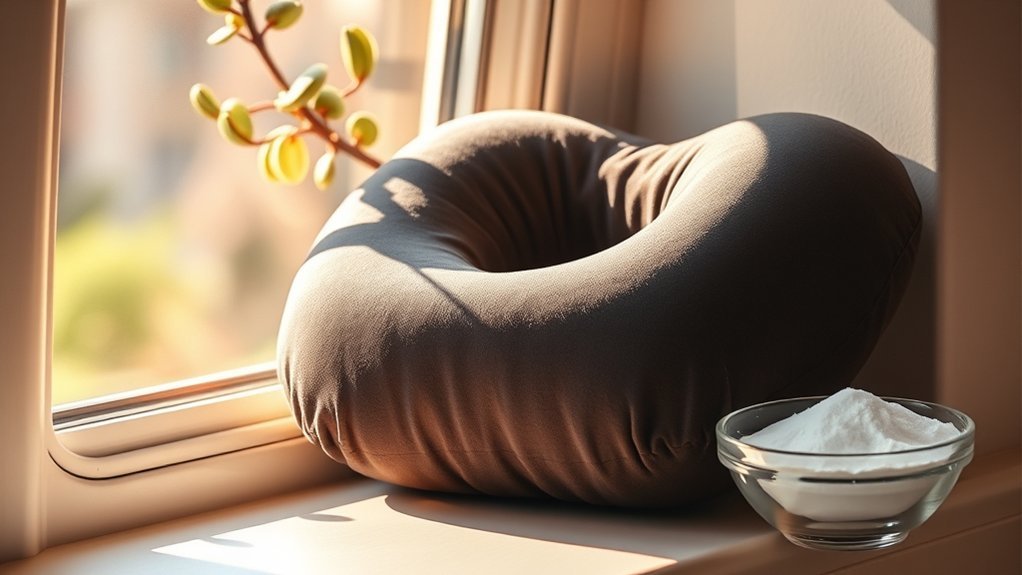
When viscoelastic memory foam is manufactured, liquid polyurethane compounds undergo a chemical reaction to create the foam’s open-cell structure. Microscopic traces of these volatile organic compounds (VOCs) remain inside the material. When manufacturers vacuum-seal travel pillows to compress them for shipping, those VOCs become concentrated in the packaging. Unboxing releases these trapped gasses all at once, creating a distinct chemical scent.
“Off-gassing is an inherent property of newly manufactured synthetic foams. Higher-density viscoelastic materials hold onto trapped gases longer, taking up to 7 days to fully equalize.”
It is crucial to distinguish between chemical off-gassing and moisture-based odors. Fresh off-gassing smells distinctly like plastic, paint, or new car interior. Conversely, a sour, musty, or mildewy scent indicates that sweat or ambient moisture has seeped into the foam matrix, creating a breeding ground for bacteria.
Warning: Never machine wash or fully submerge a memory foam pillow insert in water. Soaking viscoelastic foam ruptures its internal cell walls, destroys its supportive contouring, and traps moisture deep inside that cannot easily dry, leading to internal mold growth.
How to Remove Odors From Memory Foam (Step-by-Step)
Eliminating odors requires a combination of adequate airflow, dry odor absorption, and gentle surface spot cleaning. Follow this step-by-step process to refresh your travel pillow safely.
At a Glance
| Time Required | 24 to 72 hours total (4–6 hours active treatment) |
| Difficulty | Easy |
| Tools Needed | Baking soda, vacuum with upholstery brush, microfiber cloth, mild detergent |
| Estimated Cost | Under $5 |
- Remove and wash the cover: Unzip the outer fabric cover and wash it separately in cold water on a gentle cycle using mild laundry detergent. Line dry or tumble dry on low heat.
- Air out the bare foam insert: Place the exposed memory foam insert in a room with strong cross-ventilation or near an open window. Allow it to sit undisturbed for 24 to 72 hours. Keep the foam out of direct sunlight, as UV rays break down polyurethane.
- Apply a baking soda treatment: Lay the pillow flat and sprinkle an even layer of pure baking soda over all exposed foam surfaces. Baking soda acts as an amphoteric compound, neutralizing both acidic and basic organic odor molecules while drawing out trapped moisture.
- Let it sit undisturbed: Allow the baking soda to sit on the foam for at least 4 to 6 hours (overnight yields the best results for dense foam).
- Vacuum thoroughly: Using a clean upholstery attachment on low suction, vacuum away all baking soda particles. Ensure no powder remains embedded in the foam’s surface pores.
- Spot clean surface stains (if needed): Mix a few drops of mild dish soap in warm water. Dampen a microfiber cloth, wring it out completely until it is barely damp, and gently blot any stained areas. Never rub roughly or saturate the foam.
Pro Tip: Ensure the pillow is completely dry before zipping the cover back on or packing it into a tight travel bag. Storing even slightly damp foam in an airtight sack guarantees mold growth and sour odors.
Preventing Future Odors and Maintaining Freshness
Preventing smells from returning requires protecting the foam core from body oils, sweat, and environmental moisture during travel:
- Use a protective inner liner: Place a breathable, water-resistant protector over the foam insert beneath the main fabric cover to block perspiration and hair oils.
- Avoid airtight plastic bags: Store your travel pillow in a breathable mesh bag between trips rather than compressing it inside sealed plastic, which traps residual moisture and causes stale odors.
- Keep away from direct heat: Never dry memory foam with a hairdryer, radiator, or clothes dryer. Excessive heat warps viscoelastic properties and permanently hardens the material.
- Use activated charcoal pouches: Tuck a small activated charcoal deodorizer pouch inside your travel luggage alongside your pillow to absorb ambient odors on long journeys.
Note: Always inspect manufacturer care tags before applying liquid spot treatments, as certain specialized gel-infused or shredded memory foam inserts have distinct moisture limits.
When to Replace Your Memory Foam Travel Pillow
Even with consistent maintenance, memory foam degrades over time. Consider replacing your travel pillow if you observe any of these red flags:
- Persistent sour odors: Smells that remain after a 72-hour air-out and baking soda treatment indicate deep-seated bacterial contamination.
- Loss of resilience: If the foam remains flattened, develops permanent indents, or takes several minutes to spring back, its supportive structure is compromised.
- Flaking or crumbling: Aging polyurethane foam breaks down internally, resulting in yellowing, cracking, or crumbling inside the cover.
- Allergic reactions: Unexplained sneezing, nasal congestion, or skin irritation when using the pillow indicates an accumulation of dust mites or micro-allergens within the foam.
Most high-use memory foam travel pillows should be replaced every 1 to 2 years to maintain proper spinal support and hygienic sleeping conditions.
Choosing Odor-Free Memory Foam Products
Look For CertiPUR-US Certification
When purchasing a replacement, select a travel pillow made with CertiPUR-US certified foam. Certified materials are independently analyzed in accredited labs to confirm they are manufactured without formaldehyde, heavy metals, or phthalates, and emit low VOC emissions (less than 0.5 parts per million), drastically reducing initial off-gassing scent.
Opt For Natural Materials
If you are sensitive to chemical smells, consider travel pillows constructed from organic Dunlop or Talalay natural latex, or foam infused with natural charcoal or green tea extract. These natural alternatives inhibit microbial growth and naturally minimize synthetic chemical off-gassing.
Frequently Asked Questions
Can I machine wash my memory foam travel pillow?
No. Machine washing saturates the open-cell structure of memory foam, tearing the material and creating trapped moisture that leads to mold. Only spot clean the foam insert with a damp cloth, and machine wash the removable cover on a gentle cycle.
How long does it take for memory foam off-gassing to disappear?
Most off-gassing chemical smells dissipate within 24 to 72 hours in a well-ventilated space. High-density viscoelastic foam can take up to 7 days to completely lose its initial odor.
Are there specific smells that indicate a problem?
A sharp chemical smell right out of the box is normal VOC off-gassing. However, a sour, damp, or mildew-like smell indicates trapped moisture or bacteria growth, which requires spot cleaning or pillow replacement.
Will essential oils help eliminate memory foam odors?
Essential oils can mask light odors, but they do not eliminate underlying VOCs or moisture. Apply a few drops to a cotton pad placed inside the outer cover rather than applying oil directly onto the bare foam.
Can pets contribute to odors in my travel pillow?
Yes. Pet dander, oils, and saliva easily transfer onto pillow covers and seep into porous foam. Regular cover washing and vacuuming the foam insert prevents organic odor buildup.
Conclusion
A smelly memory foam travel pillow is almost always caused by routine VOC off-gassing or trapped moisture, both of which are easily fixed. Airing out the unmasked foam in a ventilated room, neutralizing odors with baking soda, and maintaining a clean outer cover will keep your travel pillow fresh and comfortable for years of travel.
Sources
- CertiPUR-US, “What Is Certified Foam?” — Official testing standards and VOC emission criteria (<0.5 ppm).
- U.S. Environmental Protection Agency (EPA) — Technical standards regarding Volatile Organic Compounds (VOCs) and indoor airflow.
- CertiPUR-US Technical FAQ — Guidelines on certified polyurethane foam durability and off-gassing timelines.

