

Last Updated on September 10, 2026 by Daniel Globe
Keeping your memory foam travel pillow clean ensures optimal neck support, hygiene, and comfort during long flights and road trips. Because viscoelastic foam reacts poorly to excess moisture and high heat, traditional machine washing or soaking can destroy its structural integrity. The safest way to clean a memory foam travel pillow is by washing the removable outer cover separately, vacuuming surface debris from the core, and spot-cleaning stains with a mild detergent solution.
Quick Answer
To clean a memory foam travel pillow safely, remove and wash the outer cover. For the foam core, vacuum surface dust, then spot-clean stains using a cloth dampened with lukewarm water and mild detergent. Never soak or machine-wash the foam. Air dry completely on a flat surface away from direct heat.
Key Takeaways
- Never Soak Memory Foam: Full immersion damages the foam’s cell structure, leading to crumbling, loss of shape, and mold growth.
- Wash Covers Separately: Most travel pillows feature a removable zippered cover that is safe for machine washing in cold water.
- Spot-Clean Only: Tackle drool, sweat, or makeup stains using a damp microfiber cloth and mild soap.
- Deodorize with Baking Soda: Sprinkle baking soda on the bare foam to absorb moisture and stale travel odors without liquid.
- Air Dry Thoroughly: Allow at least 24 hours of air drying in a well-ventilated area before packing or using.
At a Glance
| Time Required | 20 minutes active cleaning + 24 hours drying time |
| Difficulty | Beginner / Easy |
| Tools Needed | Microfiber cloths, vacuum cleaner with brush attachment, sponge, small bowl |
| Materials Required | Mild liquid detergent or wool wash, baking soda, diluted 3% hydrogen peroxide (optional) |
Disclosure: As an Amazon Associate I earn from qualifying purchases. Some links on this page are affiliate links, at no extra cost to you.
Get to Know Your Memory Foam Travel Pillow
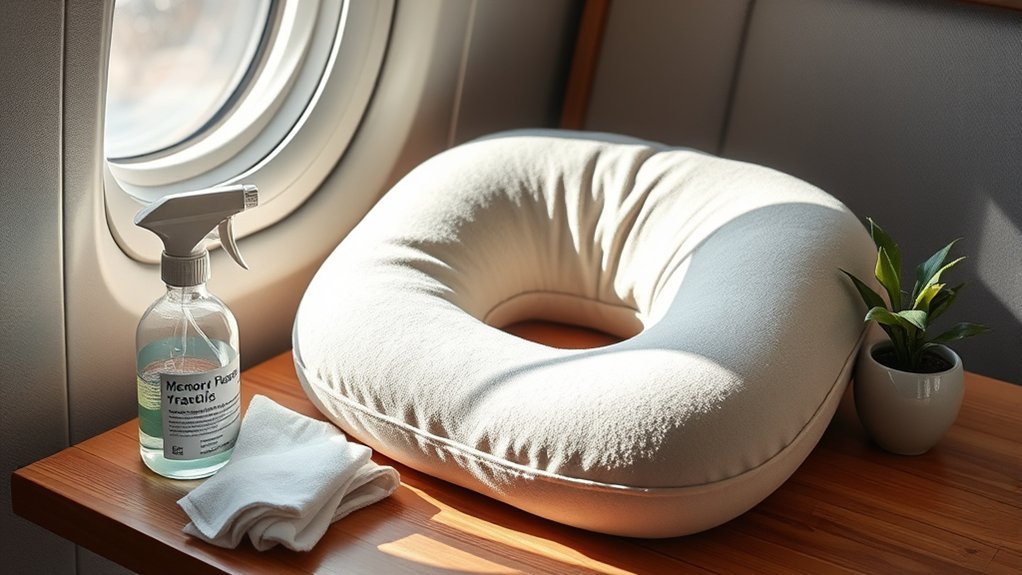
A memory foam travel pillow is an essential companion for ergonomic support on long journeys. Formulated from viscoelastic polyurethane, memory foam softens in response to heat and pressure, conforming around your neck to align the spine and prevent strain. Travel pillows typically come in two core designs:
- Solid Molded Foam: Offers firmer, structured support that holds its shape under weight.
- Shredded Foam: Consists of dense foam clusters, offering greater compressibility and adjustable airflow.
According to safety standards established by CertiPUR-US, high-quality polyurethane foam should be maintained without harsh chemical exposure to protect its open-cell structure. Most modern travel pillows feature removable, machine-washable outer covers, making routine maintenance straightforward while protecting the delicate foam core inside.
Why Soaking Your Pillow Is a Bad Idea
Immersion cleaning or running a memory foam pillow through a washing machine cycle is a major cleaning mistake. Viscoelastic foam acts like a dense sponge, absorbing massive amounts of water that are nearly impossible to extract without damaging the material.
Warning: Never submerge memory foam in water or put it in an automatic washing machine or clothes dryer. Machine agitation tears the foam core, while saturated moisture leads to internal mold and bacterial growth within 48 hours.
When exposed to complete saturation, memory foam suffers severe structural breakdown:
| Soaking Consequence | Impact on Pillow | Recommended Alternative |
|---|---|---|
| Foam Deterioration | Water weight breaks down internal cell walls, causing sagging. | Damp spot-cleaning with microfiber. |
| Mold & Mildew Growth | Trapped core moisture breeds fungal spores and foul odors. | Baking soda treatment & thorough air drying. |
| Loss of Shape | Spinning or wringing distorts the ergonomic neck contour permanently. | Gentle blotting with a dry towel. |
Step-by-Step Spot-Cleaning Techniques for Memory Foam
Spot cleaning allows you to remove localized spots, sweat lines, drool, or makeup marks without saturating the inner core. Follow these steps for safe, effective cleaning:
1. Wash the Outer Cover Separately
Unzip and remove the fabric cover. Check the care label; most polyester, velour, or cotton travel pillow covers can be machine washed on a gentle cycle with cold water. Hang the cover to air dry or tumble dry on low heat.
2. Vacuum Dust and Surface Allergens
Before applying liquid, use a vacuum cleaner fitted with a soft upholstery brush attachment to sweep over the bare foam core. This removes lint, dead skin cells, and loose surface debris trapped in the foam’s surface cells.
3. Apply a Mild Cleaning Solution
Mix 1 teaspoon of mild liquid dish soap or delicate laundry detergent into 2 cups of lukewarm water. Dip a soft sponge or microfiber cloth into the liquid, squeezing out all excess water until the cloth is merely damp.
Pro Tip: Work in light, circular blotting motions from the outside of the stain inward. Pressing down hard pushes moisture deeper into the foam core where it becomes difficult to dry.
4. Treat Tough Stains Safely
For stubborn biological stains like sweat or drool, dilute 1 tablespoon of 3% hydrogen peroxide into 1 cup of water. Gently dab the stained area with a damp cloth dipped in the solution. Rinse the cloth with clear water and dab again to remove remaining residue.
“Using aggressive chemicals like bleach or full-strength solvents on polyurethane foam strips its elasticity and releases harsh chemical fumes. Always opt for diluted, pH-neutral cleaners.”
How to Properly Air Dry Your Memory Foam Pillow
Proper drying is just as critical as the cleaning process. Even minor residual dampness deep inside foam can trigger mildew formation.
Optimal Drying Location
Place the spot-cleaned pillow flat on a clean towel in a well-ventilated indoor space or a shaded outdoor spot. Ideal drying setups include a wire drying rack or a slated surface that permits 360-degree airflow around the pillow.
Airflow Enhancement Techniques
To speed up drying time safely:
- Position a standing floor fan to blow air continuously across the pillow.
- Flip the pillow over every 3 to 4 hours to ensure balanced moisture evaporation from both sides.
- Press a dry, clean white towel firmly into spot-cleaned areas to absorb moisture from the surface layers.
Note: Avoid exposing memory foam to direct sunlight for extended periods. UV rays accelerate the oxidation of polyurethane, turning foam yellow and brittle.
Drying Time Considerations
Allow the pillow to dry for at least 24 hours before reassembling the cover or packing it into a travel pouch. Pinch the spot-cleaned area firmly to check for cold or damp spots beneath the surface before storing.
Keeping Your Pillow Fresh Between Deep Cleans
Maintaining travel hygiene between trips reduces the need for frequent spot cleaning:
- Baking Soda Deodorizing: Generously sprinkle baking soda over the bare memory foam surface. Let it sit for 30 minutes to absorb stale odors and ambient humidity, then vacuum thoroughly with a brush attachment.
- Fabric Refreshes: Mist the outer cover lightly with a mixture of equal parts distilled water and white vinegar. Let it air completely before packing.
- Regular Airing: After returning from a trip, remove the cover and let the foam core air out in a well-ventilated room for a day to disperse trapped body heat and moisture.
Best Practices for Storing Your Memory Foam Travel Pillow
How you store your travel pillow between trips impacts its long-term comfort and resilience:
- Avoid Extended Compression: While snap-straps and compression bags compress pillows for compact packing during transit, uncompress your pillow immediately upon arriving home. Storing memory foam tightly compressed for weeks can permanently impair its ability to bounce back.
- Use Breathable Storage Covers: Store the pillow inside a breathable cotton bag rather than airtight plastic bins to prevent moisture entrapment.
- Store in a Climate-Controlled Area: Keep your pillow in a dry closet away from extreme temperature swings or damp environments like basements and attics.
How to Maintain Your Memory Foam Travel Pillow for Longevity
Consistently following proper pillow care guidelines extends the usable life of memory foam significantly. Guidelines from the Sleep Foundation suggest replacing standard bed pillows every 1 to 2 years, but a well-maintained travel pillow with a protective cover can last 3 to 5 years.
Inspect your pillow periodically for signs of foam breakdown, such as cracking, permanent indentation, or persistent odors that do not dissipate after baking soda treatments. Replacing damaged travel pillows ensures you continue to receive adequate spinal support during travel.
Frequently Asked Questions
Can I use bleach to clean my memory foam travel pillow?
No, bleach should never be used on memory foam. Bleach breaks down the polyurethane polymers, causing the foam to crumble, discolor, and lose its supportive qualities. Stick to mild soap or diluted baking soda mixtures for safe stain and odor removal.
How often should I clean my memory foam travel pillow?
Wash the removable outer cover after every trip. The inner memory foam core should be vacuumed and spot-cleaned every 2 to 3 months, or immediately if spills and sweat penetrate the cover.
Is it safe to machine wash memory foam travel pillows?
It is not safe to machine wash the foam core. Machine agitation tears the delicate cellular structure of memory foam, and high-spin cycles distort its shape beyond repair. Only machine-wash the outer fabric cover if specified on the care label.
What can I do about persistent travel odors?
To neutralize deep odors, sprinkle generous amounts of dry baking soda across the bare foam. Let it rest for 1 to 2 hours to pull trapped smells and moisture out, then vacuum thoroughly using a soft brush attachment.
Can I use essential oils on my memory foam travel pillow?
Never apply essential oils directly to raw memory foam, as concentrated oils can stain and react with the synthetic foam materials. Instead, apply 1–2 drops to a tissue placed inside the pillow cover or mist the outer fabric cover lightly before slipping it back onto the foam.
Conclusion
Maintaining a clean memory foam travel pillow requires gentle handling rather than heavy soaking. By routinely washing the outer fabric cover, vacuuming surface dust, spot-treating stains with a mild detergent, and allowing sufficient air drying time, you can protect the integrity of the foam core. Proper care guarantees your travel neck pillow remains hygienic, fresh, and supportive for all your upcoming journeys.
Sources
- Sleep Foundation — Comprehensive Memory Foam Care & Washing Standards
- CertiPUR-US — Polyurethane Foam Material Safety & Durability Guidelines
- American Cleaning Institute — Spot Cleaning and Fabric Stain Removal Protocols

