
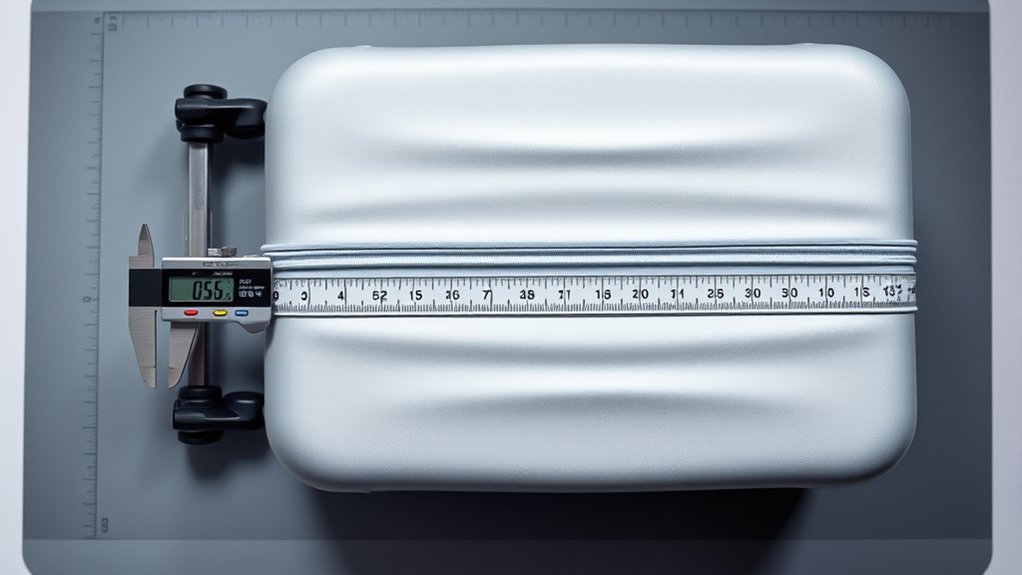
Last Updated on September 11, 2026 by Daniel Globe
Airlines do not use one worldwide luggage standard, so the safest way to avoid a baggage fee is to check the rules for every flight, measure the bag as the airline measures it, and weigh it after packing. The key details are your bag type, outside dimensions, total weight, fare, cabin, route, and operating airline.
Quick Answer
Check the baggage rules for every airline operating your trip. Measure the packed bag at its widest points, including wheels, fixed handles, pockets, and bulges. Add length, width, and height for linear inches, then weigh the bag. Leave a small margin because the airport sizer and scale make the final decision.
Key Takeaways
- Use the rules of the airline operating each flight, not a general packing chart.
- Measure all outside parts, including wheels, handles, pockets, and soft-sided bulges.
- For checked luggage, calculate linear inches by adding length + width + height.
- Weigh the bag fully packed and leave a small buffer below the limit.
- Check separate rules for liquids, batteries, medical equipment, instruments, and sports gear.
At a Glance
| Time Required | 5–10 minutes per bag |
| Difficulty | Easy |
| Tools Needed | Tape measure and luggage scale; bathroom scale as a backup |
| Cost | $0 with tools you own; about $10–$20 for a basic luggage scale |
Disclosure: As an Amazon Associate I earn from qualifying purchases. Some links on this page are affiliate links, at no extra cost to you.
Know Your Airline’s Bag Rules
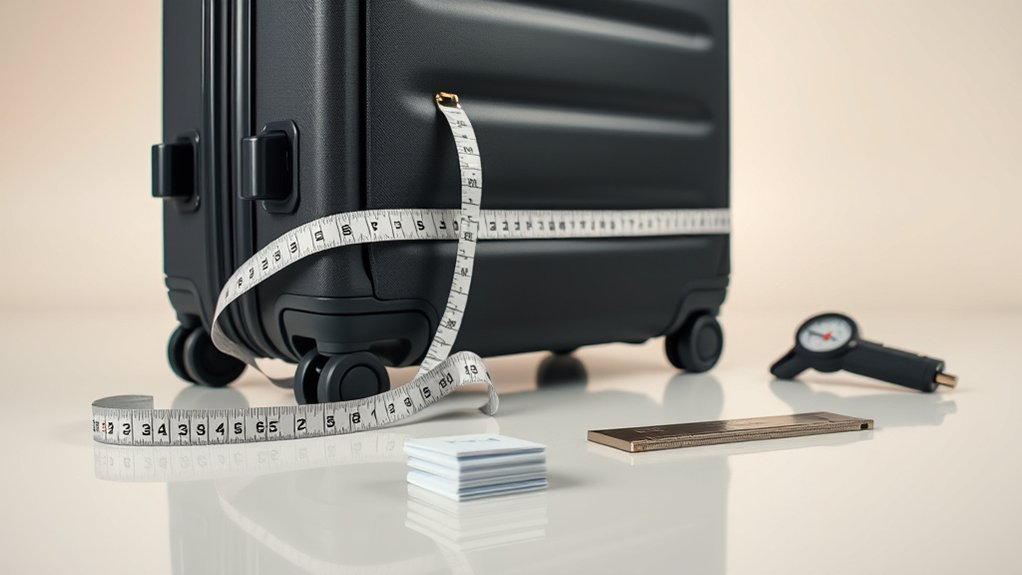
Before you pack, open the baggage page for the airline that will operate your flight. Match each item to the correct category: personal item, carry-on, checked bag, or special item. A personal item must fit under the seat, while a carry-on must fit in the overhead bin or the airline’s airport sizer.
A common U.S. carry-on limit is 22 × 14 × 9 inches, including wheels and handles. For example, Delta publishes that limit, and United uses the same outside measurements in a different order. However, it is not a universal standard. British Airways lists different cabin-bag dimensions, and budget airlines may charge for a carry-on or use a smaller allowance.
For many economy tickets on U.S. airlines, a standard checked bag is limited to 62 linear inches and 50 pounds (23 kg). Cabin, status, destination, and fare can change that allowance. Some international airlines use separate maximum dimensions instead of a 62-inch total.
Note: Check the operating carrier for every flight segment. A ticket sold by one airline may include a codeshare flight operated by another airline with different baggage rules.
Check the Details That Change Your Allowance
- Bag type: personal item, carry-on, checked bag, or special equipment
- Fare and cabin: basic economy, standard economy, premium economy, business, or first
- Route: domestic and international limits may differ
- Operating airline: especially important on codeshares and partner flights
- Status or card benefit: these may change free-bag count or weight allowance
- Aircraft or airport restriction: small aircraft and certain destinations may have tighter limits
Save the airline’s current baggage page or check your reservation shortly before departure. Fees and policies can change, and the rule tied to your booked itinerary is the one that matters.
The airline’s published outside dimensions—not the size printed on the suitcase label—determine whether the bag fits.
Measure Your Luggage the Right Way
Pack the bag first, close every zipper, and place it upright on a flat floor. Soft-sided bags can expand, and an overfilled pocket can change the final measurement. Use a tape measure and record the longest outside measurement in each direction.
- Measure height: from the floor to the highest point, including wheels and fixed handles.
- Measure width: across the widest side, including side handles or pockets.
- Measure depth: from front to back at the deepest point, including bulges and expansion panels.
- Repeat once: confirm the numbers before comparing them with the airline’s limit.
Keep a retractable pull handle lowered, but include its housing and any part that still sticks out. Do not measure only the fabric or hard-shell body. Airlines generally use the bag’s complete outside dimensions.
| Measurement Check | Why It Matters |
|---|---|
| Bag fully packed and zipped | Shows the size you will actually bring |
| Wheels and fixed handles included | Matches outside-dimension rules |
| Pull handle lowered | Measures the bag in travel position |
| Airline rule checked | Confirms the final pass-or-fail limit |
Calculate Linear Inches
Airlines calculate checked-bag size by adding the three outside dimensions:
Length + width + height = total linear inches
For example, a bag measuring 28 × 20 × 12 inches is 60 linear inches because 28 + 20 + 12 = 60. It fits a 62-linear-inch rule, provided it also meets any single-side limit and weight limit. The order of the three measurements does not change the total.
Pro Tip: Leave about 1 inch of size margin when possible. A flexible pocket, compression strap, or uneven bulge can make a borderline bag fail an airport sizer.
How Airlines Check Luggage at the Airport
Carry-ons may be placed in a metal sizer at the ticket counter or gate. The bag normally must fit without force. Checked bags go on an airline scale, and an agent may measure a large item with a tape. The airport equipment and airline staff make the final decision, so a small home-measurement buffer is useful.
Weigh Your Bag Before You Fly
Weigh every bag after you finish packing. Toiletries, shoes, chargers, and souvenirs can add more weight than expected. Compare the reading with the allowance for your exact fare and flight—not with a generic 50-pound chart.
Why Weight Matters
A common standard-economy checked-bag limit is 50 pounds (23 kg), while premium cabins may allow more. Carry-on weight rules vary widely: some airlines publish a limit, while several major U.S. airlines focus mainly on size and whether you can safely place the bag in the overhead bin.
| Weight Check | Likely Result |
|---|---|
| Below your allowance | No overweight charge |
| At the exact limit | Little room for scale differences |
| Over the limit | Repack, pay a fee, or use another bag |
| Special item | Separate size, weight, or packaging rules may apply |
Use a Luggage Scale
Attach a handheld luggage scale to the main handle, lift the bag clear of the floor, and hold it still until the reading settles. Weigh it two or three times. If the results vary, use the highest reading. A luggage scale is also useful for the return trip after you add purchases.
If you do not own one, use a bathroom scale:
- Weigh yourself without the bag.
- Weigh yourself while holding the packed bag.
- Subtract your first weight from the second.
This method is less precise with a small or light bag, but it can show whether you are safely below the limit.
Avoid Extra Fees
Do not rely on a fixed claim that every overweight bag costs $100 or every oversized bag costs $200. Fees vary by airline, route, fare, date of purchase, and how far the bag exceeds the limit. Some airlines also refuse bags above a maximum size or weight.
Leave a buffer of about 1–2 pounds (0.5–1 kg) for a checked bag when possible. If the bag is over, move dense items such as shoes or books to another permitted bag, remove nonessential items, or compare the overweight charge with the price of checking a second bag. Review the airline’s fee calculator before leaving home.
Warning: Never assume paying a fee guarantees acceptance. Airlines may reject bags that exceed their maximum transport limits, and certain aircraft or destinations may have stricter restrictions.
Avoid Oversized Bag Fees
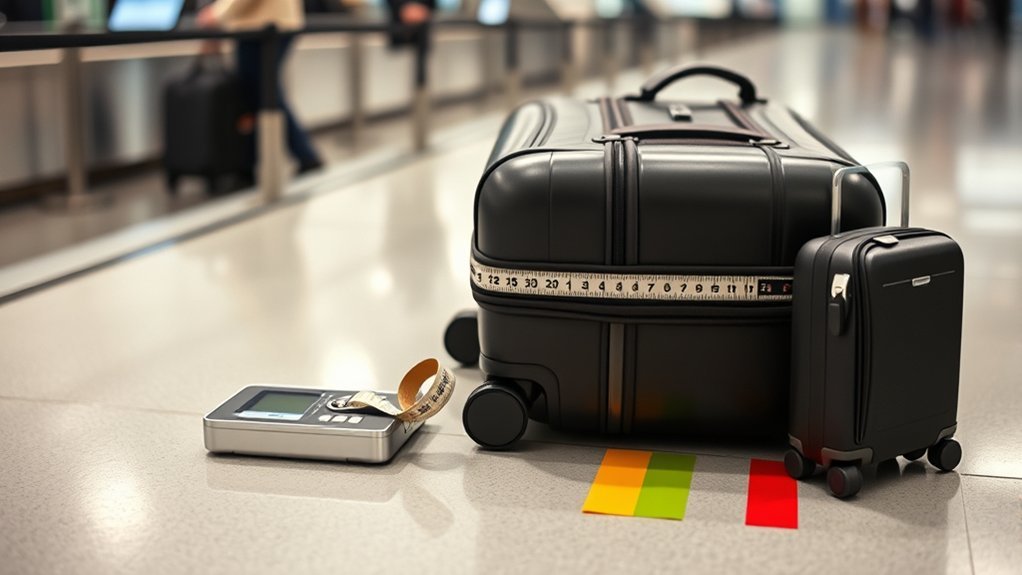
Measure each bag before departure and compare the result with the rule for that specific airline and flight. The figures below are useful benchmarks, not universal allowances.
| Luggage Type | Common Benchmark | Important Qualification |
|---|---|---|
| Checked bag | 62 linear inches; 50 pounds (23 kg) | Common on U.S. economy fares, but not worldwide |
| Carry-on | 22 × 14 × 9 inches | Common among major U.S. airlines; carrier rules vary |
| Personal item | Must fit under the seat | Published dimensions differ by airline and aircraft |
| Budget-airline bag | Often smaller or separately priced | Check the fare’s included allowance before booking |
A suitcase advertised as “32-inch” is not automatically accepted or rejected. Measure all three outside dimensions. A 32 × 18 × 11-inch bag totals 61 linear inches, while a 32 × 20 × 12-inch bag totals 64. The first may fit a 62-inch rule; the second does not.
Pack to Stay Within Limits
Choose the lightest bag that safely protects your belongings. A heavy empty suitcase uses part of the weight allowance before you add anything. Pack dense items near the wheels, use packing cubes for organization, and avoid filling expansion zippers unless the expanded bag still meets the size limit.
- Wear the heaviest shoes and outer layer when practical.
- Place small heavy items in a permitted personal item, but keep it within that bag’s limit.
- Use travel-size toiletries and avoid duplicate products.
- Share chargers or common items with companions when sensible.
- Keep medication, documents, valuables, and essential electronics in your personal item.
- Recheck size and weight after adding last-minute items.
Do not compress a soft bag so tightly that it springs outside the sizer when released. The bag should fit in its normal closed condition without force.
What to Do if Your Bag Is Over the Limit
- Confirm that you used the correct allowance for the operating airline and fare.
- Remove or redistribute the heaviest items.
- Close expansion panels and empty outside pockets.
- Compare the price of an overweight fee, an extra checked bag, and a smaller replacement bag.
- Pay online in advance when the airline offers a lower prepayment price.
- Measure and weigh the bag again before leaving.
Check Special Item Requirements
Musical instruments, sports gear, medical equipment, mobility devices, child equipment, fragile items, and battery-powered luggage may follow separate rules. Some items count as a standard bag, some carry a special charge, and some need advance notice or special packaging.
Musical Instruments and Sports Equipment
A small instrument may travel as a carry-on if it fits safely in approved cabin storage. A large instrument may need to be checked or placed in a purchased seat, depending on the airline and aircraft. Golf clubs, skis, surfboards, bicycles, and similar gear may have sport-specific size, weight, and fee rules. Check the carrier’s special-items page before packing.
Medical Equipment and Assistive Devices
Under U.S. disability rules, airlines must allow qualifying assistive devices in the cabin free of charge when they meet safety requirements, and those devices do not count against the normal carry-on limit. The U.S. Department of Transportation explains these rights. Contact the airline early for powered wheelchairs, oxygen-related equipment, or any device that needs battery handling or special assistance.
Liquids, Toiletries, and Batteries
For U.S. security screening, most carry-on liquids, aerosols, gels, creams, and pastes must be in containers of 3.4 ounces (100 ml) or less and fit in one quart-size bag. Larger containers normally belong in checked baggage, although exceptions apply to medically necessary liquids and certain infant or child items. Review the TSA liquids rule and the TSA “What Can I Bring?” list for the exact product.
Spare lithium batteries and power banks must stay in carry-on baggage, with terminals protected from short circuit. If your carry-on is checked at the gate, remove them first. The FAA PackSafe lithium-battery guide explains the current limits.
Warning: Do not place a power bank or spare lithium battery in checked baggage. Damaged, recalled, or oversized batteries may be prohibited from passenger aircraft.
Frequently Asked Questions
What is the 45-minute rule?
The 45-minute rule is usually an airline’s minimum check-in or checked-bag cutoff at many U.S. airports—not a recommendation to arrive only 45 minutes before takeoff. For example, American Airlines lists a 45-minute cutoff for many domestic flights and 60 minutes for most international flights. Arrive early enough for parking, check-in, security, and walking to the gate; check your airline and airport for the exact recommended time.
Is a 32-inch suitcase too big for checked luggage?
Not always. “32-inch” usually describes only the bag’s height. Add the full outside length, width, and height, including wheels and handles. If the total exceeds your airline’s checked-bag limit—often 62 linear inches on U.S. economy tickets—the bag may be oversized.
What toiletries are not allowed on a plane?
The answer depends on the product and whether it is in carry-on or checked baggage. Most carry-on liquids and gels must be in containers of 3.4 ounces (100 ml) or less inside one quart-size bag. Larger ordinary toiletries can often go in checked baggage, subject to FAA quantity limits. Some hazardous, flammable, corrosive, or pressurized products are prohibited. Nail-polish remover is not automatically banned; TSA allows it in carry-on containers of 3.4 ounces or less and in checked baggage within applicable limits.
What if my carry-on is 2 inches too big?
The airline may ask you to repack it, place it in a sizer, check it, or pay the applicable bag fee. The result depends on the airline, fare, airport, aircraft, and how the bag exceeds the limit. Do not count on a soft bag being accepted just because it can be squeezed; use a compliant bag before you leave.
Do airlines include wheels and handles when measuring luggage?
Yes, airlines generally publish outside dimensions that include wheels and handles. Keep a retractable handle lowered, but include its housing and every fixed part of the bag.
How much margin should I leave below the weight limit?
A practical target is 1–2 pounds (0.5–1 kg) below the limit. This is not an airline rule, but it reduces the chance that small differences between your home scale and the airport scale will create a problem.
Conclusion
To keep your luggage within airline limits, verify the operating carrier’s rules, measure every outside part of the packed bag, add the three dimensions for linear inches, and weigh it before leaving home. Recheck special-item and security rules, leave a small margin, and avoid relying on one-size-fits-all limits or fixed fee claims. A few minutes of checking can prevent repacking, gate checks, rejected bags, and avoidable charges.
Sources
- Delta Air Lines — Carry-On Baggage — outside carry-on dimensions and inclusion of wheels and handles
- American Airlines — Checked Bag Policy — standard checked-bag size and weight benchmarks
- British Airways — Baggage Essentials — example of airline-specific cabin and checked-bag limits
- Transportation Security Administration — Liquids, Aerosols, and Gels Rule — U.S. carry-on liquid rules
- Federal Aviation Administration — PackSafe Lithium Batteries — power-bank and spare-battery packing rules
- U.S. Department of Transportation — Airline Passengers with Disabilities Bill of Rights — assistive-device carriage rights

