
Last Updated on July 28, 2026 by Daniel Globe
Starting an airline is a complex business project that combines aviation regulation, large financial commitments, aircraft and airport planning, safety systems, technology, and customer service. The exact path depends on where the airline will be based and whether it will operate scheduled passenger flights, charter services, cargo flights, or another model.
Quick Answer
To start an airline, first validate the market and business model, secure enough capital for certification and operations, obtain the required economic and safety approvals, arrange aircraft and maintenance support, hire and train qualified staff, build safety and operating systems, secure airport access, and complete regulator-required demonstrations before selling and operating flights.
At a Glance
| Time Required | Many months to more than a year in many cases. The UK CAA says its AOC process typically takes 6–12 months in practice; a complete airline launch may take longer. |
| Difficulty | Very high — regulatory, financial, technical, operational, and safety work must progress together. |
| Tools Needed | Experienced aviation management, regulatory and legal support, detailed financial models, aircraft and maintenance arrangements, operating manuals, safety and security programs, trained staff, airport agreements, and airline IT systems. |
| Cost | There is no universal minimum. Capital needs depend on fleet size, lease deposits, certification work, staffing, training, insurance, airport costs, maintenance, technology, fuel, marketing, and the cash reserve needed before operations generate reliable revenue. |
Key Takeaways
- Start with a specific airline model, target market, route network, and realistic demand study.
- Do not rely on a generic startup-cost figure; build a bottom-up capital plan and cash runway for your exact operation.
- Certification is a major project involving manuals, management systems, training, aircraft, demonstrations, and regulator review.
- In the United States, economic authority from the Department of Transportation is separate from FAA safety certification.
- Leasing can reduce the initial aircraft purchase burden, but the airline still has substantial operational, maintenance, insurance, and lease obligations.
- Airport access, ground handling, maintenance, reservations, payments, security, and disruption management must be ready before launch.
- Do not announce a firm launch date until certification, aircraft readiness, staffing, airport arrangements, and proving requirements are sufficiently advanced.
Note: This guide is a planning overview, not legal, investment, or certification advice. Aviation requirements differ by country, aircraft, operating model, and route structure. Work directly with the aviation and economic authorities responsible for your proposed operation and use qualified aviation legal, financial, safety, and technical professionals.
Disclosure: As an Amazon Associate I earn from qualifying purchases. Some links on this page are affiliate links, at no extra cost to you.
Step 1: Define Your Airline Model and Research the Market
Before raising money or choosing an aircraft, define exactly what kind of airline you plan to build. A scheduled passenger carrier, regional airline, charter operator, cargo airline, and low-cost carrier can have very different certification, staffing, airport, fleet, and distribution requirements.
Choose the operating model
Write down the proposed network, aircraft size, target passenger, service level, base airport, expected flight frequency, and whether the airline will focus on point-to-point routes or connecting traffic. This decision shapes almost every later choice, including which aircraft are practical.
Validate route demand
Market research should combine passenger-demand data with competitor schedules, fares, seasonality, airport capacity, local economic activity, tourism patterns, connecting opportunities, and alternative transportation. A market can appear underserved while still being too small to support the aircraft size or frequency you plan to operate.
Evaluate each proposed airport as an operating station, not merely a dot on a route map. Check runway and aircraft suitability, gate access, operating hours, curfews, passenger facilities, ground-handling availability, fuel supply, maintenance support, weather, deicing requirements where relevant, and whether the airport is slot-coordinated.
Build route-level economics
A detailed feasibility model should include aircraft lease or ownership costs, fuel, crew, maintenance, airport and navigation charges, ground handling, insurance, distribution costs, payment fees, customer-service costs, disruption costs, overhead, and marketing.
Airlines commonly track cost per available seat mile (CASM) and revenue per available seat mile (RASM). Comparing unit revenue with unit cost helps show whether the network can work at the expected load factor and fare. Calculate the break-even load factor for individual routes instead of assuming that a high average aircraft load automatically means profitability.
Stress-test the model as well. Run lower-demand, higher-fuel-cost, delayed-aircraft, higher-lease-rate, weaker-currency, and slower-certification scenarios. An airline that works only under its best-case forecast is not ready to raise capital.
Step 2: Secure Funding and Build a Cash Runway
Starting an airline requires substantial capital, but there is no single reliable startup figure that applies to every carrier. A small operation using a limited leased fleet has a different capital structure from a scheduled airline launching several new narrowbody aircraft.
Build the capital requirement from the bottom up. Include aircraft deposits and lease reserves, certification and professional costs, employee recruitment, payroll before launch, training and simulators, insurance, maintenance arrangements, airport deposits, ground handling, technology, fuel, sales and marketing, and working capital for the period before operations stabilize.
Entrepreneurs may explore founder capital, strategic investors, private equity, institutional investors, bank facilities, aircraft-backed financing, and leasing. Crowdfunding or other public fundraising structures may be available in some jurisdictions, but securities laws apply and these methods are unlikely to replace the institutional funding required for a meaningful commercial airline operation.
Airlines operate on thin margins. IATA’s June 2026 industry outlook projected a 2.0% global airline net margin for 2026, showing why a new carrier needs conservative forecasts and a meaningful liquidity buffer.
Historical launches illustrate the wide variation in funding. JetBlue raised roughly $130 million in venture capital before its 2000 launch. Breeze Airways had raised more than $100 million before starting flights in May 2021 and completed another $200 million funding round after launch. Virgin America also depended on substantial outside financing, but public figures for airline startups often mix equity, aircraft financing, later funding rounds, and operating capital, so they should not be treated as universal startup-cost benchmarks.
Pro Tip: Model liquidity month by month, not just total startup spending. Certification delays can push payroll, lease, training, insurance, and professional costs forward while revenue remains at zero.
A credible investor presentation should explain the airline’s value proposition, competitive advantage, route economics, fleet strategy, regulatory path, management experience, capital requirements, downside scenarios, milestones, and future financing needs. Investors will also want to know what happens if certification, aircraft delivery, or demand arrives later than expected.
Step 3: Obtain Airline Licenses, Certificates, and Operating Authority
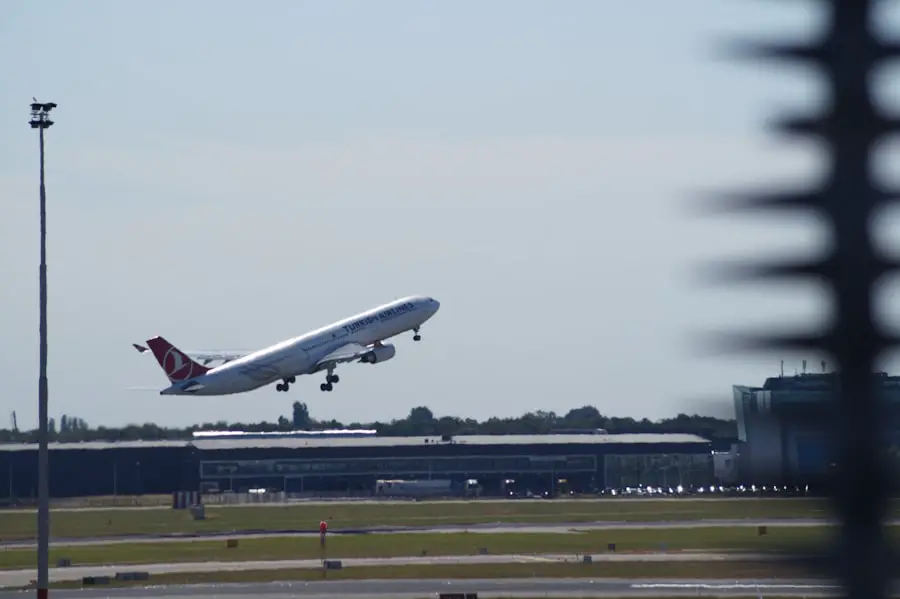
Regulatory approval is one of the largest workstreams in an airline launch. An Air Operator Certificate (AOC) is the internationally recognized form of authorization showing that an operator has the professional ability and organization needed to conduct the approved commercial air transport operations. Exact certificate names and procedures vary by country.
United States
In the United States, a prospective airline generally needs two separate forms of authority. The U.S. Department of Transportation handles economic authority, while the Federal Aviation Administration handles safety certification and issues the applicable Air Carrier Certificate and Operations Specifications.
DOT evaluates whether an applicant is fit, willing, and able to conduct the proposed service. Its review includes management competence, financial resources, operating plans, compliance history, and applicable U.S.-citizenship requirements.
For a new Part 121 carrier, the FAA uses a five-phase certification process:
- Pre-application: Define the proposed operation, prepare the required preliminary material, and establish that the project is mature enough to enter certification.
- Formal Application: Submit the formal package, schedules, management information, manuals, programs, and supporting material required for the proposed operation.
- Design Assessment: The FAA evaluates whether the proposed operating systems, manuals, Safety Management System, training, and other processes are designed to comply with regulatory and safety requirements.
- Performance Assessment: The applicant demonstrates that its systems work in practice. This phase includes operational demonstrations and applicable proving tests.
- Administrative Functions: After deficiencies are resolved and requirements are met, the FAA issues the certificate and approved Operations Specifications.
United Kingdom and European Union
In the United Kingdom, the UK Civil Aviation Authority says it typically takes 6–12 months in practice for an operator to complete the required steps and demonstrate compliance for an AOC. It also states that an application may be rejected when insufficient progress has been made after 12 months.
Within the European framework, commercial air transport operators require an AOC issued by the competent authority. The European Union Aviation Safety Agency (EASA) sets the relevant framework, while national authorities normally perform certification unless responsibility has been transferred to EASA under applicable EU rules.
Note: There is no universal “$1–3 million AOC cost.” Your certification budget may include application or oversight fees, aviation counsel, specialist consultants, management salaries, manual development, training, aircraft and simulator availability, proving flights, facilities, IT systems, and months of pre-revenue payroll.
International operations add another layer. Depending on the route, an airline may need foreign operating permits, traffic rights under bilateral or multilateral agreements, customs and border arrangements, security approvals, and airport permissions. Obtaining an AOC does not automatically grant the right to operate every desired international route.
Step 4: Purchase or Lease the Right Aircraft
Purchase vs. Lease Comparison
| Metric | Purchasing | Leasing |
| Initial Capital Commitment | Usually high, although financing may spread the purchase cost. | Usually lower than an outright purchase, but deposits, rent, maintenance reserves, guarantees, and transition costs may still be substantial. |
| Ownership | Airline or financing entity owns the aircraft, subject to financing arrangements. | The airline normally receives a contractual right to use the aircraft; it does not gain partial ownership merely by leasing it. |
| Fleet Flexibility | Lower if the airline needs to sell or refinance aircraft to change fleet strategy. | Potentially higher, although lease term, return conditions, early termination rights, and market availability can limit flexibility. |
| Maintenance and Airworthiness | The operator must meet applicable maintenance and airworthiness requirements and bears the economic exposure associated with ownership. | The operator remains responsible for applicable regulatory compliance; the lease contract determines how maintenance costs, reserves, records, and return conditions are allocated. |
The fleet decision should follow the route network rather than precede it. Compare seating capacity, range, runway performance, fuel burn, crew requirements, maintenance network, reliability, spare-parts access, airport compatibility, cargo capability, and commonality with any other aircraft in the fleet.
Purchasing provides asset ownership and potential long-term control but requires a large capital commitment and exposes the airline to financing and residual-value risk. Actual aircraft transaction prices vary by model, age, condition, delivery slot, financing package, customer relationship, and market conditions, so published list-price ranges are a poor substitute for real acquisition quotations.
Leasing is widespread across commercial aviation and can reduce the initial capital required for aircraft acquisition. However, a startup still needs to budget for deposits, monthly rent, maintenance reserves where applicable, insurance, aircraft transitions, records, return conditions, and possible letters of credit or guarantees.
Dry lease vs. wet lease
A dry lease generally provides the aircraft without crew, while the airline operates it under its own applicable authority and operating structure. A wet or ACMI lease generally includes the aircraft, crew, maintenance, and insurance from the supplying operator, with the commercial responsibilities divided by contract and applicable regulation.
Wet leasing can provide short-term capacity or bridge an aircraft shortage, but it is not a shortcut around regulatory approval. Authorities may need to approve the arrangement, and the operating responsibilities must be clear.
Step 5: Hire Management, Staff, and Crew
An airline cannot be certificated or operated by a business plan alone. It needs qualified managers and enough trained personnel to perform its proposed operation safely and reliably.
Recruitment normally spans executive and accountable management, flight operations, pilots, cabin crew where applicable, maintenance and engineering, safety, quality/compliance, dispatch or operational control, training, ground operations, finance, revenue management, customer service, IT, security, and commercial functions.
Required management positions and qualifications depend on the country and operating rules. For U.S. certification, the FAA reviews management qualifications as part of the application process.
Individual pilot qualification and aircraft-type training may take weeks to months depending on prior experience, aircraft, simulator availability, operator curriculum, checking requirements, and regulator scheduling. The broader staffing program can take much longer because the airline must recruit enough people, complete training in sequence, build instructor and check-airman capacity where required, and ensure crews are ready before proving and revenue operations.
Training should be planned backward from the certification schedule. Hiring hundreds of employees too early burns cash; hiring them too late can stop the certification project because required demonstrations cannot be completed.
Step 6: Develop the Business Plan and Commercial Strategy
The business plan should connect the commercial idea to the operating reality. Include the airline’s mission, operating model, ownership structure, target passengers, market analysis, route network, fleet plan, airport strategy, certification schedule, staffing plan, distribution strategy, financial forecasts, capital requirements, and risk scenarios.
Model revenue beyond the base fare
Pricing should be built around demand, competition, schedule quality, seasonality, customer segment, and the airline’s cost structure. Revenue-management systems can adjust inventory and fares as demand changes rather than relying on a single static ticket price.
Ancillary income can also matter. According to IATA’s June 2026 airline-industry outlook, ancillary and other revenues were projected at $165 billion out of $1.165 trillion in total 2026 industry revenue, or roughly 14%. For an individual airline, however, the share varies greatly by business model.
Potential ancillary products include checked baggage, advance seat assignment, priority services, onboard sales, bundles, upgrades, and other optional products where permitted. The customer should be able to understand the total price and conditions clearly.
Stress-test the plan
Do not publish only a base case. Investors and managers need downside cases covering weaker demand, lower fares, fuel spikes, unfavorable exchange rates, higher maintenance expense, aircraft delivery delays, certification delays, and operational disruption. Track how much extra cash each scenario requires.
Step 7: Create a Clear Airline Brand
A strong airline brand makes the product easier to recognize, but branding should follow the operating strategy. A low-cost point-to-point carrier, premium regional airline, and long-haul network airline should not automatically use the same brand promise.
Choose a name that is legally available, easy to pronounce, easy to remember, and suitable across the markets you plan to serve. Check relevant company, trademark, domain, and aviation naming requirements before investing heavily in design.
The logo and visual system must work on aircraft livery, airport signs, boarding passes, websites, mobile screens, uniforms, advertising, and operational documents. Consistency is more important than visual complexity.
Brand promises should also match operations. Advertising “effortless” travel is unlikely to build loyalty if the airline has weak disruption communication, confusing fees, or unreliable customer support.
Step 8: Set Up Reservations, Ticketing, Payments, and Distribution
An airline needs much more than a consumer booking page. Its passenger-service and retailing systems must manage schedules, availability, fares, bookings, payments, ticketing or orders, seats, check-in, passenger records, changes, refunds, disruption servicing, and reporting.
The exact architecture depends on the airline. Some carriers rely heavily on direct website and app sales, while others distribute through travel agencies, online travel agencies, corporate booking tools, Global Distribution Systems such as Amadeus, Sabre, or Travelport, or modern API connections.
IATA’s New Distribution Capability (NDC) is an airline-distribution data standard designed to support richer shopping, offers, orders, payments, servicing, and related communication between airlines and sellers. It is not itself a reservation system.
IATA’s Billing and Settlement Plan (BSP) simplifies settlement between participating airlines and accredited travel agents. Participation is open to qualifying IATA-member and non-member airlines serving the relevant market, so a startup should decide whether BSP participation fits its agency-distribution model rather than assuming it is mandatory for every airline.
Note: Reservations, payment processing, accounting, departure control, customer communications, and disruption tools should be tested together. A booking system that sells seats successfully but cannot handle cancellations or schedule changes will create serious problems after launch.
Step 9: Secure Airports, Partners, and Traffic Rights
Airline partnerships can expand reach, but different agreements serve different purposes. Interline and codeshare arrangements may help customers travel across multiple networks, while separate loyalty, lounge, ground-handling, maintenance, hotel, rental-car, or distribution agreements support other parts of the operation.
A codeshare does not automatically grant lounge access, frequent-flyer benefits, or unrestricted route rights. Those benefits and permissions depend on the commercial contracts and regulatory approvals involved.
Airport slots and facilities
At capacity-constrained coordinated airports, a new airline may need airport slots before it can operate its desired schedule. The Worldwide Airport Slot Guidelines (WASG), jointly developed through the global industry slot-coordination framework, provide the widely used principles for allocating scarce airport capacity.
Not every airport requires slots. Even where formal slot coordination does not apply, the airline still needs the appropriate gates or stands, check-in facilities, baggage arrangements, ground handling, operating agreements, security access, and other airport services.
International route rights
International service may depend on traffic rights negotiated between governments as well as permits from the destination country. Airport slots and international traffic rights are separate issues: having one does not necessarily provide the other.
Step 10: Build Ground Operations, Maintenance, and Operational Control
Before the first passenger arrives, the airline needs a functioning operational network behind the scenes. That includes processes for flight planning, operational control, crew scheduling, aircraft routing, maintenance control, weather and airport information, fueling, catering where offered, baggage, ground handling, passenger assistance, and irregular operations.
Decide which functions will be performed in-house and which will be contracted. Outsourcing can reduce the number of employees and facilities a startup must build itself, but it does not eliminate the airline’s responsibility to select qualified providers, define standards, oversee performance, and meet regulatory requirements.
Maintenance planning should cover scheduled work, unscheduled defects, spare parts, technical records, engine and component support, line maintenance at outstations, recovery after an aircraft-on-ground event, and access to replacement capacity. A low headline lease rate can be expensive if the aircraft type has poor parts or maintenance support at the airline’s airports.
Ground contracts should establish service levels for check-in, boarding, baggage, towing, cleaning, water and lavatory service, deicing where necessary, passenger assistance, and disruption support. Station readiness should be tested before launch rather than discovered during the inaugural flight.
Step 11: Implement Safety, Security, and Compliance Systems
Safety must be built into the airline’s management system before revenue service begins. Airlines operate under national regulations that reflect applicable international aviation standards, including standards developed through the International Civil Aviation Organization (ICAO).
In the United States, Part 121 operators are required to implement a Safety Management System under 14 CFR Part 5. An SMS provides a structured way to identify hazards, assess risk, implement controls, monitor performance, and improve the system over time.
Certification work may also include operations manuals, maintenance programs, training programs, emergency procedures, dangerous-goods programs, security programs, drug and alcohol testing programs where applicable, Minimum Equipment List processes, recordkeeping, quality or compliance monitoring, and other programs required for the proposed operation.
U.S. Part 121 carriers are also required to have an FAA-approved hazardous-materials program. The exact program differs depending on whether the carrier accepts and transports dangerous goods.
Security responsibilities must be coordinated with the applicable government security authority, airports, and contractors. Airlines should not improvise or publicly disclose security-sensitive procedures; they must follow the approved programs and regulatory requirements applicable to their operation.
Warning: Required insurance and regulatory compliance are not optional startup expenses. In the United States, DOT rules require applicable aircraft accident liability coverage under 14 CFR Part 205, and failure to maintain the required insurance can make an air carrier’s operating authority ineffective.
Step 12: Complete Demonstrations and Launch-Readiness Testing
Receiving approval requires more than submitting documents. Regulators must be satisfied that the airline can actually perform the processes described in its manuals and programs.
In the FAA Part 121 process, the performance-assessment phase includes demonstrations and applicable proving tests before the project can move to final administrative certification. Aircraft, trained personnel, manuals, systems, facilities, and contracted services therefore need to come together in the correct sequence.
Before public launch, run operational rehearsals that test booking, check-in, dispatch or operational control, aircraft servicing, boarding, baggage, crew communications, maintenance response, customer notifications, delays, cancellations, refunds, and emergency escalation. Test abnormal days as well as normal ones.
Pro Tip: Treat launch readiness as a series of gates. Certification, aircraft availability, trained crews, airport readiness, insurance, technology, maintenance support, and operational-control capability should each have a clear owner and evidence of completion.
Step 13: Launch and Promote the Airline
The public launch should come after the regulatory and operational plan is credible enough to support the advertised schedule. Selling too aggressively before aircraft, certification, crew, or airport arrangements are secure can create expensive rebooking and reputation problems if the launch slips.
A launch campaign can combine public relations, introductory fares, digital advertising, airport and tourism partnerships, social media, travel-agent outreach, and inaugural events. Promotions should support routes where the airline genuinely needs demand rather than filling planes at fares that cannot cover the network’s costs.
After launch, monitor route contribution, RASM, CASM, load factor, yield, aircraft utilization, completion factor, on-time performance, customer complaints, refunds, baggage performance, maintenance reliability, and cash. A route with strong passenger numbers can still destroy value if fares are too low or operational costs are too high.
Newer entrants such as Breeze Airways and Akasa Air also illustrate an important point: launch is not the end of the business plan. Network, aircraft, pricing, staffing, distribution, and customer strategy continue to change as the airline learns which markets perform and as operating conditions shift.
Customer-experience planning should also account for specific passenger needs. Families, for example, may travel with car seats and strollers, so baggage policies, gate-check processes, staff training, and website instructions should explain how those items are handled. Consumer resources such as this guide to the best double stroller for travel illustrate the practical issues family travelers consider when moving through airports and boarding flights.
Frequently Asked Questions
What are the basic steps to start an airline?
Define the airline model, research routes, build a financial plan, raise capital, obtain economic and safety authority, secure aircraft, hire and train qualified personnel, build operating and safety systems, arrange airport and maintenance support, complete required demonstrations, and then launch revenue service.
What are the legal requirements to start an airline?
Requirements depend on the country and operation. They commonly include safety certification or an Air Operator Certificate, applicable economic or operating authority, approved manuals and programs, qualified management, aircraft and maintenance arrangements, insurance, safety and security compliance, and any route, airport, or international permits required for the proposed service.
How much does it cost to start an airline?
There is no reliable universal startup figure. The amount depends on aircraft, fleet size, lease or purchase structure, certification expenses, staffing, training, insurance, airport and handling costs, maintenance, technology, marketing, and the cash reserve needed before the airline produces stable revenue. Build a bottom-up budget for the exact operation rather than relying on a generic range.
How long does it take to start an airline?
Expect a process measured in many months rather than weeks. The UK CAA says an AOC typically takes 6–12 months in practice, while other regulators and operating models use different processes. A complete launch can take longer when aircraft, funding, manuals, training, airport access, or demonstrations are delayed.
Do you have to buy airplanes to start an airline?
No. Airlines can purchase, finance, or lease aircraft. Dry leases are common for aircraft operated by the airline under its own authority, while approved wet or ACMI arrangements can provide aircraft with crew, maintenance, and insurance under a different operating structure. The regulator must accept the arrangement used for the proposed service.
What are the major challenges in starting an airline?
The hardest problems are usually raising enough capital, completing certification, building an experienced management and safety organization, finding suitable aircraft, training staff, securing airport access, controlling operating costs, preparing for disruptions, and maintaining enough liquidity if the launch schedule slips.
What are the key financial metrics for a new airline?
Key measures include RASM, CASM, break-even load factor, yield, aircraft utilization, route contribution, cash burn, liquidity, completion factor, and revenue by passenger. These metrics should be modeled by route and tested under both expected and downside scenarios.
Sources
- International Civil Aviation Organization (ICAO) — Air Operator Certificate framework and international operating-safety context.
- Federal Aviation Administration (FAA) — current U.S. Part 121 air-carrier certification process, including the five certification phases.
- U.S. Department of Transportation — U.S. airline economic authority, financial fitness, ownership, and insurance filing requirements.
- UK Civil Aviation Authority — AOC application process and the UK CAA’s typical 6–12 month certification timeframe.
- European Union Aviation Safety Agency (EASA) — European AOC framework and competent-authority responsibilities.
- International Air Transport Association (IATA) — Worldwide Airport Slot Guidelines; IATA 2026 industry outlook — airport-slot coordination and current airline revenue, cost, and profitability context.
