Last Updated on July 22, 2026 by Tyler Morgan
Flying JAL and want to avoid a surprise fee at check-in? Here’s the short version: you get two carry-on items (10 kg combined), one or two free checked bags depending on your cabin and route, and a firm 160Wh ceiling on lithium batteries. The details below cover exactly what counts, what it costs if you go over, and which items JAL won’t let you pack at all.
Quick Answer
JAL allows one carry-on bag plus one personal item, capped at 10 kg combined. Checked baggage is typically one 23 kg bag in Economy/Premium Economy and two 32 kg bags in Business/First, though many US–Japan routes include a second free Economy bag. Extra bags run about JPY 10,000 (Asia routes) to JPY 20,000 (long-haul routes).
Disclosure: As an Amazon Associate I earn from qualifying purchases. Some links on this page are affiliate links, at no extra cost to you.
JAL Baggage Rules at a Glance
At a Glance
| Carry-on | 1 bag + 1 personal item, 10 kg combined, all cabins |
| Checked (Economy/Premium Economy) | 1 x 23 kg on most routes; 2 x 23 kg on many US–Japan routes |
| Checked (Business/First) | 2 x 32 kg (up to 3 bags on some US routes) |
| Extra bag fee | ~JPY 10,000 (intra-Asia) to ~JPY 20,000 (long-haul) |
| Lithium battery cap | 160Wh max; 100–160Wh limited to 2 spares |
These are general figures — JAL’s actual free allowance depends on your route and fare, so always check the specifics tied to your ticket before you pack.
JAL Carry-On Baggage Rules
On any JAL flight, you can bring two carry-on items: one personal item (a handbag or laptop bag) and one larger carry-on bag. Together, both items must not exceed 10 kg (22 lbs), and this weight cap applies across Economy, Premium Economy, Business, and First. CPAP machines are allowed as carry-on items and don’t count toward this weight limit.
Carry-On Size Limits
On aircraft with 100 or more seats, your carry-on bag must fit within 55 x 40 x 25 cm; on smaller aircraft with fewer than 100 seats, the limit shrinks to 45 x 35 x 20 cm. Unlike some airlines that give premium cabins a larger cabin allowance, JAL applies the same 10 kg combined weight limit to every cabin class on international flights.
Warning: JAL is stricter about carry-on weight than many US and European carriers, and staff commonly weigh bags at both the check-in counter and the boarding gate. An overweight carry-on will be checked on the spot, sometimes triggering an excess baggage fee.
Personal Item Rules
Your personal item — a handbag, laptop bag, or small backpack — needs to fit under the seat in front of you. Choose something manageable, since it counts toward the same 10 kg combined limit as your main carry-on. If you travel with a CPAP machine, it’s treated as medical equipment and can be packed alongside your carry-on setup.
Weight and Exceptions
The 10 kg combined weight and 115 cm total-dimension rule for the second bag apply regardless of cabin class. JAL makes an exception for CPAP machines, which don’t count against your carry-on allowance. Because rules can shift slightly by route or connecting flight, it’s worth checking JAL’s current policy before you fly, especially on routes involving smaller regional aircraft.
JAL Checked Baggage Allowance
Your checked bag allowance depends on both cabin class and route. On routes between the US and Japan or Asia, Economy and Premium Economy typically include two free checked bags at 23 kg each, while Business and First include three bags at 32 kg each — more generous than the single-bag Economy allowance found on many other international routes. Each checked bag can measure up to 203 cm in total dimensions (length + width + height).
Checked Bag Limits
As a general rule, Economy and Premium Economy include one 23 kg bag and Business/First include two 32 kg bags on most international routes — but confirm your specific allowance at booking, since US-departure routes commonly include an extra free bag. If a single bag weighs more than 32 kg, it generally won’t be accepted as standard checked luggage and must be shipped as cargo instead.
Fare-Based Allowance
JAL ties your free checked allowance to cabin class rather than to a paid add-on bundle, so every Economy fare includes at least one checked bag with no separate “basic economy” tier that strips it away. Domestic flights within Japan work differently: passengers get up to 20 kg free of charge across any number of bags (up to 45 kg for First Class), with dimensions capped at 50 x 60 x 120 cm.
Excess Baggage Fees
An extra checked bag costs roughly JPY 10,000 on intra-Asia routes and about JPY 20,000 to or from North America, Europe, or Oceania. If your bag is over your free weight allowance but still under 32 kg, expect a fee somewhere between JPY 6,000 and JPY 20,000 depending on the route. Fees are usually charged per category, so a bag that’s both overweight and oversized can incur two separate charges.
Pro Tip: If you’re close to the weight limit on one suitcase, it’s often cheaper to split the load across a second checked bag than to pay the overweight fee on a single heavy one.
JAL Excess Baggage Fees
JAL charges based on how you exceed the limit — by piece count, weight, or size. An extra bag costs about JPY 10,000 on intra-Asia routes or JPY 20,000 on routes to North America, Europe, or Oceania. Bags over 203 cm in total dimensions typically add a separate oversize fee. Sports equipment such as skis or golf bags usually counts as one piece of your standard allowance, so you only pay if it pushes you over your free piece count or size limit — surfboards and windsurfing gear are the exception and carry their own fee regardless of your remaining allowance. JAL generally collects these charges at the airport counter rather than through online prepayment, and JAL Mileage Bank members can sometimes pay with miles instead of cash.
JAL Liquids and Toiletry Rules
For carry-on liquids and toiletries, keep individual items to 0.5 kg or 0.5 L, and make sure aerosols have protective caps to prevent leaks in transit. Antiseptics and antiseptic aerosols count toward this same limit — don’t assume medical liquids are exempt. In checked baggage, you can pack up to 2 kg or 2 L of toiletries and medicines combined. Keep medicine labels visible and confirm your medication doesn’t contain radioactive materials, since JAL follows standard aviation hazmat rules on this.
JAL Battery and Electronics Rules
Lithium-ion batteries rated above 160Wh are prohibited in both carry-on and checked baggage. Below that threshold, the rules get more specific, so it’s worth checking your device’s rating before you fly.
Lithium Battery Limits
Batteries rated 100Wh or less can travel in carry-on with no quantity limit, while batteries between 100Wh and 160Wh are capped at two units per person, combined with any other spare batteries or power banks you’re carrying. Spare lithium batteries, including power banks and portable chargers, must be carried on — they can’t go in checked baggage. If you can’t confirm a battery’s watt-hour rating, JAL may refuse to transport it, so check the label in advance.
Spare Battery Protection
Protect each spare battery individually — store it in its original retail packaging, a dedicated case, or insulate the terminals with tape so it can’t short-circuit against other items in your bag. This applies to all spare batteries and power banks, not just larger ones.
Medical Device Transport
Medical devices and mobility aids generally travel fine on JAL, but battery rules still apply. Keep any lithium or lithium-ion battery within the 160Wh cap and protected against short circuits. CPAP machines can ride in your carry-on without a battery-size restriction. If you use an electric wheelchair with wet-cell batteries, or an AED with a built-in lithium battery, confirm the specific transport requirements with JAL before departure, since these devices sometimes need extra handling arrangements.
JAL Lighters and Matches Rules
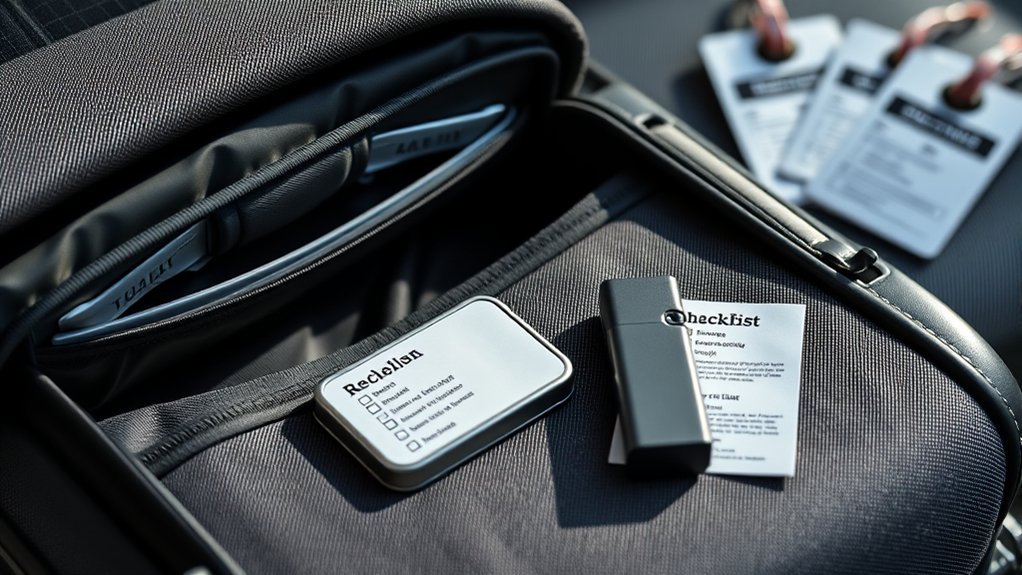
You can carry one small cigarette lighter and one small box of safety matches in your carry-on baggage. Strike-anywhere matches aren’t allowed at all. Oil lighters without absorbent cotton are banned from both carry-on and checked baggage, and cigar lighters that produce a strong blue flame are also prohibited. Checking these details before departure can save you a delay at the security line.
JAL Prohibited Items for Packing
Some items simply aren’t allowed in JAL luggage at all. Fireworks are banned from both carry-on and checked bags. Thermal lunch boxes are also restricted, since they can conceal items that trigger hazmat screening. Ammunition needs to stay under 5 kg gross weight including packaging, or it can’t travel. Experimental drugs require proper documentation and can’t contain radioactive materials. Dry ice is allowed only in limited amounts for refrigeration in checked baggage, capped at 2.5 kg.
If you’re unsure whether something qualifies as a restricted or prohibited item, it’s worth checking JAL’s dangerous goods list directly or contacting JAL ahead of your flight.
JAL Rules for Sports Gear
Checked sports gear generally follows the same weight limits as regular baggage — 23 kg for Economy and Premium Economy, 32 kg for Business and First — and usually counts as one piece of your standard allowance. You’ll only pay extra if the item exceeds your free piece count, needs special handling, or falls into a separately-charged category like surfboards. Small instruments such as violins or flutes can travel in the cabin if they meet carry-on size limits; larger instruments like guitars or cellos need to be checked in a hard case, or you can book an extra seat to keep them with you. Since handling varies by item, it’s worth contacting JAL directly to confirm the exact policy for your equipment before you travel.
JAL Customs and Entry Rules
Once your baggage is sorted, make sure your travel documents are in order too. You’ll show ID during security screening, and international itineraries require a customs pass on arrival — domestic trips within Japan skip this step. Check your passport validity well before departure, since some countries require at least six months of validity beyond your entry date. Entry requirements shift by destination, so review current customs rules for food, alcohol, and cash declarations rather than relying on general guidance.
Frequently Asked Questions
Can I bring a CPAP machine on board?
Yes. Pack it in your carry-on along with the power cord and mask. It doesn’t count toward your carry-on weight limit, but let staff know if you need to keep it accessible during the flight.
Are large umbrellas allowed in the cabin?
Generally no — oversized umbrellas should go in checked luggage. A compact umbrella that fits your personal item is fine; check current size guidance if you’re unsure.
Does JAL weigh personal items like backpacks?
Not always, but if your backpack looks bulky or heavy, staff may check its size or weight at the gate. Keep it light and easy to stow to avoid a spot check.
Can I carry medical supplies in my hand luggage?
Yes. Keep medications in their original packaging, bring prescriptions if you have them, and mention any essential medical items to the crew so you’re prepared during the flight.
Do luggage rules change on domestic JAL flights?
Yes — domestic flights use a 20 kg weight-based allowance across any number of bags rather than the international per-bag rules, so check the domestic policy separately before you fly.
Conclusion
JAL’s baggage rules are generous compared to many carriers, but the details shift by cabin, route, and even aircraft size — so a five-minute check against your specific itinerary is worth it. Keep your carry-on within 10 kg, confirm whether your route includes a second free checked bag, and double-check any batteries, liquids, or sports gear against the limits above. A little preparation before you head to the airport means one less thing to worry about on travel day.
Sources
- JAL — Carry-on baggage (international) — carry-on size, weight, and personal item rules
- JAL — Restricted items (international) — lithium battery watt-hour limits and quantity rules
- JAL — Restricted articles detail (international) — spare battery protection and lithium content limits
- JAL — Domestic excess baggage charge — 20 kg domestic free allowance and excess fee structure
- FAA — Airline Passengers and Batteries — federal watt-hour classification for spare lithium batteries