
Last Updated on July 22, 2026 by Daniel Globe
Vox’s status has been one of the most-searched questions since Hazbin Hotel’s second season landed on Prime Video, and the answer has changed since earlier fan theories circulated. Here’s exactly what happened to him, based on the confirmed Season 2 finale.
Quick Answer
Vox is not dead. In the Hazbin Hotel Season 2 finale, his attempt to seize control of Heaven and Hell collapses after Alastor manipulates him and Charlie’s side stops the weapon he was using. Vox survives but loses his body, left as a face on a screen back at V Tower — and creator Vivienne Medrano has confirmed his story continues into Season 3.
Is Vox Dead in Hazbin Hotel?
No, Vox is not dead — he remains an active antagonist even though his power has been badly damaged. In the Season 2 finale, his bid to take over both Heaven and Hell falls apart, and Alastor manipulates him into losing the leverage he had over his deal with Rosie. He’s defeated, but the show stops short of killing him off. Vox, also known as Vincent Whittman before his death, still relies on his technopathy and manipulative instincts, and his TV-headed demon form dates back to his original death as a human.
Vox’s influence has shrunk, not vanished. He keeps pursuing power, keeps his rivalry with Alastor alive, and by the end of Season 2 he’s been reduced to a disembodied face on a screen, taken back to V Tower while Valentino steps up as the public face of the Vees. Vivienne Medrano has confirmed Vox will remain an important character going forward, with Season 3 focused on him grappling with no longer holding the power he once did.
What Happened to Vox in the Season 2 Finale?
By the end of Hazbin Hotel Season 2, Vox loses nearly everything he built his identity around. His plan to seize control of both Heaven and Hell — powered by a weapon built using a trapped Lucifer — collapses in the finale’s battles and last-minute reversals. Alastor, free of his own deal with Rosie, plays a direct role in undoing him. Once the dust settles, Vox is left without a body, existing only as a face on a screen back at V Tower, while Valentino takes over as the figurehead of the Vees.
This defeat doesn’t remove Vox from the story — it changes his role in it. His rivalry with Alastor remains a live thread, and his obsession with Alastor (which the show has played for both comedy and tension) gives Season 3 an obvious direction. Vox is left disgraced and physically diminished, but still capable of scheming.
How Vox Became a Sinner Demon
Vox’s backstory starts with the end of his life as Vincent Whittman, a weatherman turned serial killer who died in a brutal, on-brand way: a television monitor crushed his head. Hell remade him into Vox, giving him a TV-shaped head that reflects the image-obsessed persona he built in life. The transformation ties his identity directly to broadcast power and control.
As a sinner demon, Vox gained technopathy — the ability to command machines and technology — which he’s used to build authority in Hell and clash with rivals like Alastor.
Products Worth Considering

YOUTOOZ VOX VINYL FIGURE – Stylized collectible figure featuring Vox from Hazbin Hotel
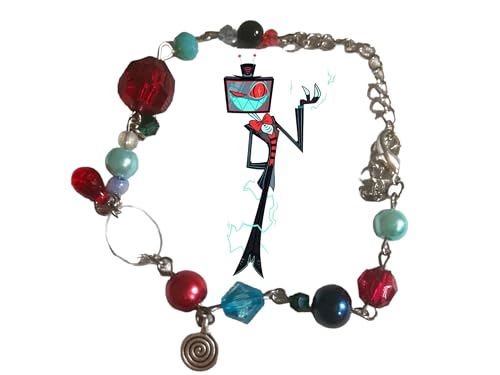
Premium Materials: Made with glass pearl, beads and charm for a high-quality finish

upcycled, repurposed, blue, lightweight, television, wooden
How Vox’s TV Head Transformation Works
The show hasn’t spelled out the exact mechanics, but Vox’s TV head reads as a symbolic fusion of punishment, identity, and technology. His flat-screen face turns his media obsession into a permanent physical feature, while his red sclera and cyan pupils keep him recognizably demonic. Fans have compared the change to a kind of forced software overwrite, which fits the show’s layered approach to its sinner designs.
Vox’s TV head fuses media obsession, punishment, and identity into one design.
- A TV-shaped head encodes his manipulation of audiences.
- The design links him to advanced tech within V Tower.
- The result frames his identity as fused, not erased — which is why he can survive as a screen-only face after the Season 2 finale.
Products Worth Considering

Bandai Spirits Banpresto is proud to announce their newest release Hazbin Hotel Alastor FIGURE~RADIO DEMON~

YOUTOOZ CHARACTER-INSPIRED DISPLAY SET - Features Angel Dust and Husk in a stylized Monitor Buddiez design inspired by their appearances in Hazbin Hotel.

Package Include: 1 VOX hat keychain. Perfect for VOX fans.
Vox’s Technopathy, Powers, and Weaknesses
Vox’s technopathy is his defining strength: he can control technology and machines, extending his reach across digital systems and devices in Hell. He also uses hypnotic effects through his eyes to push influence and intimidation onto others. But his power isn’t absolute — it depends on the systems he commands, which is part of why losing his body in the Season 2 finale is such a significant blow. Even reduced to a screen, he remains resilient and still scheming.
Pro Tip: If you’re rewatching Season 2, pay attention to Vox’s scenes with Alastor — the tension there sets up much of what Medrano says will drive his Season 3 arc.
Products Worth Considering

This officially licensed Hazbin Hotel statue features Charlie Morningstar in a fun stylised design created by Numskull.
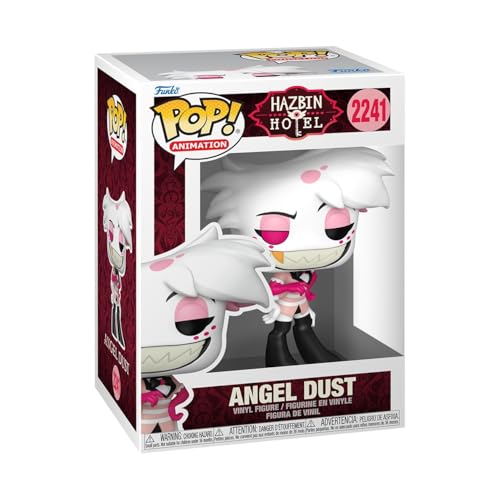
IDEAL COLLECTIBLE SIZE - At approximately 3.75 inches (9.5 cm) tall, this vinyl mini figurine complements other collectable merchandise and fits perfectly in your display case or on your desk.

Made of Durable Acrylic
Will Vox Return in Future Episodes?
Vox will return — this one’s confirmed rather than speculative. Creator Vivienne Medrano told Collider that Vox’s story continues into Season 3, with the next season focused on him coming to terms with no longer having the power he once wielded. Hazbin Hotel was renewed for Seasons 3 and 4 at San Diego Comic-Con in 2024, and in April 2026 it was confirmed that Season 5 will close out the series, meaning there’s substantial runway left for his arc.
What Season 3 Is Expected to Cover
- Vox adjusting to life with diminished power and status
- His fractured position within the Vees, now that Valentino is their public face
- The unresolved tension between Vox and Alastor
Clues About His Return
Vox’s reduction to a screen-only face doesn’t close the door on him physically returning to a fuller form — his technopathy is exactly the kind of power that could let him rebuild. His fixation on Alastor also gives the story an obvious reason to keep bringing the two into conflict, and Medrano’s own comments confirm the writers intend to keep developing him rather than write him out.
Frequently Asked Questions
Is Vox dead in Hazbin Hotel?
No. After the Season 2 finale, Vox survives but loses his body, existing only as a face on a screen at V Tower. Creator Vivienne Medrano has confirmed his story continues into Season 3.
Who has the saddest story in Hazbin Hotel?
Opinions vary among fans — some point to Charlie’s backstory, others to Vox’s fall from a media-obsessed human to a disembodied screen. Hazbin Hotel’s arcs consistently center on power, betrayal, and longing.
Who does Vox have a crush on in Hazbin Hotel?
Vox has a long-running fixation on Alastor, shown through jealousy, attention-seeking, and a bitter rivalry that intensifies after Alastor rejects working with him.
Has Alastor ever cried in Hazbin Hotel?
No — Alastor keeps his emotions tightly controlled on screen, and moments of real vulnerability are rare, even as the show hints at deeper pain beneath his composure.
Conclusion
So, is Vox dead? No. He’s lost his body, his standing, and his grip on the Vees, but the Season 2 finale stops short of killing him off, and Vivienne Medrano has confirmed his story continues into Season 3. Downfall isn’t an ending for Vox — it’s a setup for whatever comes next.
Sources
- Screen Rant — Vivienne Medrano on Vox’s Season 3 story — confirms Vox survives the Season 2 finale and continues into Season 3
- Screen Rant — Hazbin Hotel Has 3 Seasons to Redeem Its Best Villain — details Vox’s reduced state after the finale and confirmed Season 5 as the series finale
- Azat TV — Hazbin Hotel Season 3 Renewal Confirmed — confirms Season 2 finale events and the Season 3/4 renewal
