
Last Updated on September 27, 2026 by Caleb Warren
You do not need compulsory basic training (CBT) to ride an approved rental electric scooter in the UK. However, you still need the correct driving licence, and you must follow the rules of the authorised rental scheme. Private e-scooters are treated differently, and completing CBT does not make them legal to ride on public roads. Here is what the law allows, what licence you need, and how to avoid common mistakes.
Quick Answer
No, CBT is not required for an approved rental e-scooter in the UK. You need a valid provisional or full driving licence with the appropriate entitlement. Rental scooters can be used only under authorised trial rules. Privately owned e-scooters cannot generally be ridden in public, even if you hold a licence or CBT certificate.
Last checked: 28 September 2026. Dates and figures were verified against official sources.
Disclosure: As an Amazon Associate I earn from qualifying purchases. Some links on this page are affiliate links, at no extra cost to you.
What Counts as an E-Scooter in the UK?
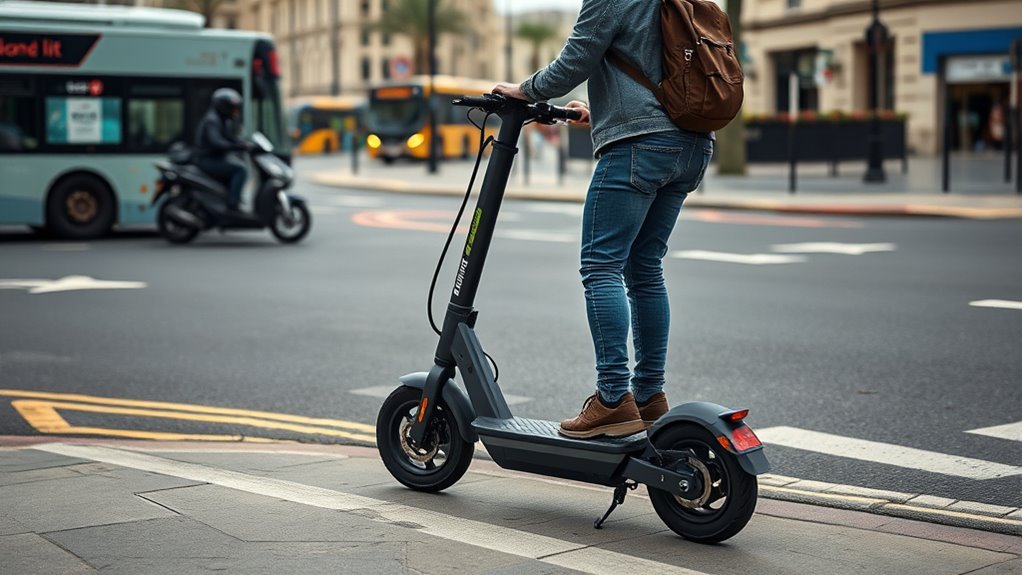
An electric scooter, or e-scooter, is a small motor-powered vehicle, usually with two wheels, handlebars and a standing platform. Under UK road traffic law, it is generally treated as a motor vehicle rather than an ordinary bicycle.
This classification matters because motor vehicles normally need appropriate approval, licensing and insurance before they can be used on public roads.
The Department for Transport has created a specific framework for approved rental scooters taking part in government trials.
Under the Department for Transport’s trial vehicle requirements, an approved e-scooter generally has:
- An electric motor with a maximum continuous power rating of 500W.
- A maximum design speed of 15.5 mph.
- Two wheels, one at the front and one at the rear.
- A maximum vehicle mass of 55 kg, including the battery but excluding the rider.
- Handlebars and hand-operated speed controls.
- A design intended to carry no more than one person.
Approved trial vehicles must also meet the relevant authorisation requirements.
Do not confuse these limits with electric bike rules. The familiar 250W motor limit applies to qualifying electrically assisted pedal cycles, not the standard definition of a rental e-scooter.
Buying a scooter advertised as 250W or limited to 15.5 mph does not automatically make it road-legal. Its approval and how it is used matter just as much as its specifications.
Do You Need CBT to Ride an Electric Scooter?
No. You do not need CBT to ride an authorised rental e-scooter under the UK trial rules.
CBT stands for compulsory basic training. It is a training course normally required before certain riders can use a moped or motorcycle on public roads.
The government’s official CBT guidance specifically exempts riders of trial e-scooters from this requirement.
The distinction is straightforward:
- Approved rental e-scooter: No CBT is required, but you need a valid driving licence and must follow the trial rules.
- Privately owned e-scooter: CBT does not make ordinary public-road riding legal.
- Moped or motorcycle: CBT may be required, depending on the vehicle and your existing licence entitlement.
A more powerful private scooter does not automatically become a legal moped simply because you complete CBT.
A vehicle intended for road use would need to meet the applicable vehicle approval, registration, insurance and licensing requirements. Its classification depends on its actual design and approval, not simply whether its motor exceeds 250W.
For ordinary rental e-scooters, the answer remains the same: you need the correct driving licence, not a CBT certificate.
Rental E-Scooters vs Private E-Scooters
Approved rental e-scooters and privately owned e-scooters have different legal permissions. The rental trial framework allows certain scooters to operate on public roads, while ordinary privately owned models do not benefit from that exemption.
The government’s electric scooter rules explain this distinction.
| Requirement | Approved rental e-scooter | Private e-scooter |
|---|---|---|
| CBT | Not required | Does not make public-road riding legal |
| Driving licence | Required | A licence alone does not authorise public use |
| Insurance | Third-party cover provided by the operator | No ordinary rental-trial insurance exemption |
| Public roads | Permitted within authorised trial rules | Generally prohibited |
| Pavements | Prohibited | Prohibited |
| Private land | Subject to applicable permissions | Permitted with the landowner’s permission |
You can legally buy and own a private electric scooter. Ownership itself is not the offence; unlawful use is the problem.
For private riding, use land that is genuinely private and not accessible to the public without permission.
Warning: A privately owned car park or shopping area is not automatically a legal place to ride. Public access can affect which road traffic laws apply. Obtain permission and confirm that the land is suitable before using a private e-scooter.
What Licence Do You Need to Ride an E-Scooter?
You need a valid provisional or full driving licence with the appropriate category Q entitlement to ride an approved rental e-scooter.
Category Q covers certain low-speed vehicles without pedals, including authorised trial e-scooters. A UK licence permitting categories AM, A or B also provides the relevant entitlement.
According to the Department for Transport’s rental e-scooter guidance, provisional licence holders do not need to display L plates.
| Requirement | What you need |
|---|---|
| Licence | Valid provisional or full licence with appropriate entitlement |
| Minimum trial age | 16 years |
| CBT | Not required and not a substitute for a valid licence |
| L plates | Not required for provisional licence holders |
| Insurance | Provided by the rental operator |
Can You Use a Foreign Driving Licence?
Some overseas full driving licences can be used for rental e-scooters. However, an overseas provisional licence or learner permit is not accepted.
The government permits eligible full licences from EU and EEA countries, provided they do not prohibit the relevant low-speed vehicle entitlement.
Other qualifying overseas full licences may be accepted during the first 12 months after entering the UK. Additional residency and licence-exchange rules apply after that period.
Rental apps may require you to upload your licence before your first journey. Complete the verification using your own valid documents.
Where Can You Ride an E-Scooter?
You can ride an approved rental e-scooter on permitted roads and cycle lanes within an authorised trial area. Motorways and pavements are prohibited.
Some designated cycle routes also allow rental e-scooters, provided no separate sign prohibits them.
Approved rental scooters can use permitted roads and cycle routes, but not pavements or motorways.
Follow these location rules:
- Use roads within the authorised trial area, excluding motorways.
- Use cycle lanes and permitted cycle routes where local restrictions allow.
- Never ride on pavements.
- Follow the rental app’s operating boundaries, slow zones and parking rules.
- Keep privately owned e-scooters off public roads, cycle lanes and other prohibited public spaces.
A cycle lane does not automatically permit every type of electric scooter. The rental-trial exemption applies to approved vehicles, not ordinary privately owned models.
Some rental schemes also use GPS-based geofencing. This can limit your speed or prevent you from riding outside the permitted area.
What Age Rules Apply to E-Scooter Riders?
The minimum age for government rental e-scooter trials is 16, but individual operators may require riders to be older.
Do not apply that rental age limit automatically to privately owned scooters used on private land. The rules are different.
Minimum Riding Age
You must be old enough to hold the required driving licence and satisfy the rental scheme’s conditions.
The national trial framework allows eligible riders from age 16. However, this does not mean every operator accepts 16-year-olds.
Private land use is not governed by the same rental-trial age requirement. The commonly quoted age of 14 comes from electric bicycle rules and should not be presented as a universal private e-scooter age limit.
For children using a scooter on suitable private land, follow the manufacturer’s stated age and weight restrictions and provide appropriate adult supervision.
Licence Age Limits
A licence is mandatory for authorised rental e-scooter use. Being old enough to ride does not remove this requirement.
A CBT certificate alone is not sufficient. It does not replace the driving licence needed by the rental scheme.
Likewise, owning a private e-scooter and holding a full driving licence do not make ordinary public-road riding lawful.
Operator Age Rules
Rental operators can set stricter age requirements than the national minimum.
For example, Oxfordshire County Council’s rental trial guidance requires riders to be at least 18.
The Oxford scheme also requires a valid driving licence and imposes specific operating and parking restrictions.
Before renting, complete these checks:
- Confirm that you meet the operator’s minimum age.
- Verify your own driving licence in the rental app.
- Read the local riding and parking rules.
- Do not allow someone else to use your account or licence.
Parental permission does not override a rental operator’s age or licence requirements.
Helmet, Insurance and Safety Rules
A helmet is recommended for rental e-scooter riders, although it is not a general legal requirement under the government trial rules.
Rental operators must provide third-party motor insurance. This protects against covered third-party liabilities, but it does not automatically provide personal accident cover for your own injuries.
| Rule | What you should do |
|---|---|
| Helmet | Wear a correctly fitted cycle helmet |
| Insurance coverage | Use the operator’s required third-party motor insurance |
| Alcohol or drugs | Never ride while intoxicated |
| Phones and riding | Set navigation before moving and avoid handheld phone use |
| Passengers | One rider only |
| Towing | Do not tow anything |
Rental scooters have a maximum permitted speed of 15.5 mph, but individual schemes can impose lower limits.
Wear visible clothing, keep both hands available for steering, and avoid carrying bags that interfere with the handlebars.
Careless or dangerous riding can result in prosecution. The fact that an e-scooter is small does not exempt you from applicable road traffic offences.
What Happens If You Ride Illegally?
Illegal e-scooter use can lead to fines, penalty points, seizure and prosecution.
The consequences depend on the actual offence. Riding without insurance, riding without the correct licence and riding on a pavement are separate matters.
Police forces may also use different enforcement approaches.
Fines and Penalty Points
The Metropolitan Police’s e-scooter guidance gives the following examples of possible penalties.
| Offence | Possible penalty |
|---|---|
| No insurance | £300 and six penalty points |
| Incorrect driving licence | £100 and three to six penalty points |
| Riding on a pavement | Possible £50 fixed penalty |
| Using a handheld mobile phone | £200 and six penalty points |
| Running a red light | Possible £100 fixed penalty and penalty points |
These are examples of enforcement outcomes, not a single automatic penalty for every illegal scooter journey.
Drink driving, dangerous driving and repeated offences can lead to more serious court proceedings, driving disqualification or other penalties.
Seizure and Prosecution
Police can seize an unlawfully used e-scooter in circumstances covered by the relevant legislation, including certain no-insurance offences.
Seizure is not limited to riders who lack CBT. The central issue is whether the scooter and its use comply with road traffic law.
A court may impose additional penalties depending on the offence and circumstances.
If you are considering using an unfamiliar or modified electric vehicle on public roads, do not assume its advertised specifications establish its legal classification.
Note: If a scooter has been modified or approved as a different vehicle class, seek advice from the relevant vehicle approval authority or a qualified legal adviser before using it on public roads.
How Do E-Scooter Trial Areas Work?
Government rental trials allow approved operators to provide e-scooters in designated areas under specific conditions.
The trials began in July 2020 and are currently scheduled to continue until 31 May 2028.
They are intended to collect evidence about safety, usage and the wider effects of e-scooters before longer-term regulatory decisions are made.
The Department for Transport’s July 2026 guidance lists trial locations including London, Oxford, Leeds, Liverpool, Brighton and Hove, and several other areas in England.
The approved trial list is not permission to ride anywhere within an entire city or county. Individual operators define their actual operating areas.
To use a trial scooter:
- Identify an authorised rental scheme in your area.
- Register with the operator and verify your driving licence.
- Check the permitted riding area on the app’s map.
- Use the scooter only on authorised roads and cycle routes.
- Finish your journey in a permitted parking location.
Some schemes impose stricter limits than the national maximum speed.
Oxford, for example, limits its rental scooters to 12.5 mph and uses additional slow-ride zones.
These local restrictions explain why two approved rental schemes may operate differently despite following the same national framework.
The current official trial list concerns schemes in England. Do not assume that the availability of rental scooters in an English city establishes permission to ride elsewhere in the UK.
How Do You Stay Legal on an E-Scooter?
The simplest way to ride legally on public roads is to use an approved rental scooter within its authorised operating area.
Before every journey, confirm that you have the correct licence and meet the operator’s conditions.
Use this checklist:
- Choose an approved rental scooter rather than an ordinary private model for public-road travel.
- Hold a valid provisional or full driving licence with the relevant entitlement.
- Meet the operator’s minimum age requirement.
- Stay within the approved trial area.
- Follow local speed limits and traffic signs.
- Ride alone and do not carry passengers.
- Keep off pavements and motorways.
- Use the operator’s designated parking areas.
- Wear a suitable helmet and ride without distractions.
If you want an electric vehicle for everyday public-road travel without a driving licence, a compliant electric bicycle may be an alternative.
Under the UK electric bike rules, an electrically assisted pedal cycle must have usable pedals, a motor rated at no more than 250W continuous power, and assistance that cuts off at 15.5 mph.
Riders must be at least 14, but qualifying electric bicycles do not require a driving licence, vehicle registration, road tax or compulsory motor insurance.
Those rules do not extend automatically to throttle-powered electric scooters without pedals.
Frequently Asked Questions
Can You Legally Ride an E-Scooter in the UK?
Yes, you can legally ride an approved rental e-scooter under an authorised trial scheme. You need the correct driving licence and must follow local restrictions. Ordinary privately owned e-scooters are generally restricted to suitable private land with the landowner’s permission.
Why Are Electric Scooters Illegal in the UK but Not Electric Bikes?
Electric scooters and qualifying electric bicycles belong to different legal categories. Ordinary e-scooters are treated as motor vehicles, while compliant electrically assisted pedal cycles have a specific exemption. Qualifying e-bikes can therefore use public roads without the motor vehicle licensing and insurance requirements that generally apply to e-scooters.
What Happens if You Get Caught With an E-Scooter in the UK?
Simply owning an e-scooter is not generally an offence. However, using one unlawfully in public can lead to fines, penalty points and seizure. The exact outcome depends on the offence, such as riding without insurance, lacking the correct licence or using a prohibited location.
What Scooter Can I Drive Without a Licence in the UK?
You can use a conventional kick scooter without a driving licence, subject to the rules governing where you ride. A qualifying electric bicycle also requires no driving licence for riders aged 14 or over. Private electric scooters may be used on suitable private land with permission, but a licence alone does not make them road-legal.
Conclusion
You do not need CBT to ride an approved rental electric scooter in the UK, but you do need the correct driving licence and must follow the authorised trial rules.
Completing CBT does not make an ordinary private e-scooter legal for public-road use. If you want to ride in public, choose an authorised rental scheme and confirm its age, licence and operating requirements before setting off.
Sources
- GOV.UK — Riding an Electric Scooter: The Rules: Legal distinction between privately owned and approved rental e-scooters.
- Department for Transport — Rental E-Scooter Trials: Vehicle classification, 500W motor limit, licensing, CBT exemption and trial extension.
- Department for Transport — Using a Rental E-Scooter: Driving licence requirements, permitted riding areas, insurance, speed limits and safety rules.
- GOV.UK — CBT Motorcycle and Moped Training: CBT requirements and the exemption for trial e-scooters.
- Oxfordshire County Council — E-Scooter Trial: Local age requirements, speed restrictions, operating zones and parking rules.
- Metropolitan Police — Advice on E-Scooter Usage: Enforcement, fines, penalty points and vehicle seizure.
- GOV.UK — Riding an Electric Bike: The Rules: Electrically assisted pedal cycle classification, age limits and licence exemptions.
- Department for Transport — Powered Transporters: Motor vehicle classification, public-space restrictions and private land permissions.

