
Last Updated on September 10, 2026 by Daniel Globe
Yes—riding an electric scooter is good light exercise. You stand, balance, and make constant small adjustments that engage your calves, quadriceps, hamstrings, core, arms, and shoulders. It typically costs about 2.14 METs, which is more active than driving but less than walking, and it can burn roughly 150-300 calories per hour depending on pace and terrain. It can also improve coordination, posture, and mood, and there’s more to note about maximizing those benefits.
Disclosure: As an Amazon Associate I earn from qualifying purchases. Some links on this page are affiliate links, at no extra cost to you.
Is Riding an E-Scooter Exercise?
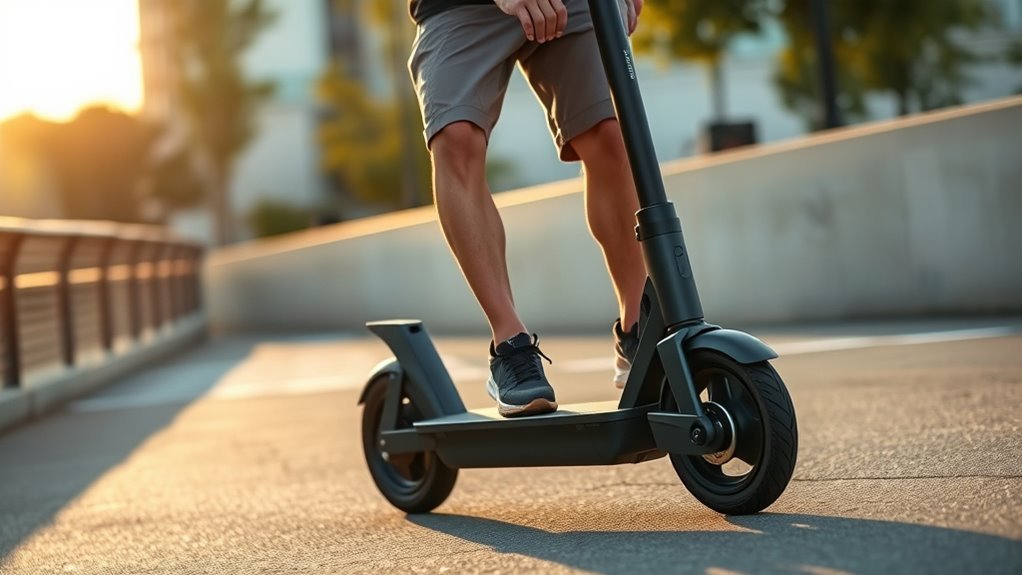
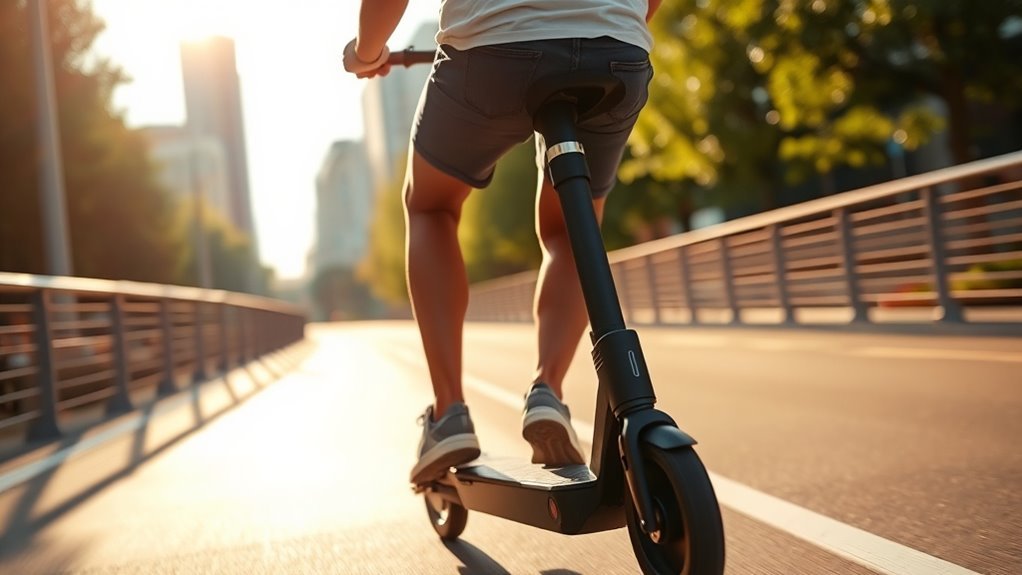
Yes—riding an electric scooter does count as light exercise. You’re doing more than sitting: you stand, balance, and engage your core and lower body to stay stable. Research places e-scooter riding at about 2.14 METs, which is above driving’s 1.42 METs, though below walking’s 3.12 METs. That means you get measurable physical activity without high impact. During relaxed rides, you may burn about 150-200 calories per hour, but the bigger value is movement woven into daily life. These e scooter benefits include better balance, improved coordination, and a modest cardiovascular stimulus as your heart rate rises and circulation increases. If you use it for commuting, you’re replacing idle transport with practical motion, which can help resist sedentary routines. For many people, electric scooter workouts won’t replace a gym session, but they can still support overall fitness and free, active mobility.
How Many Calories Do E-Scooters Burn?
How many calories you burn on an electric scooter depends on how long, how fast, and how intensely you ride. Evidence suggests leisurely riding usually burns about 150-200 calories per hour, while stronger riding can reach 300-500. Your riding intensity matters because e-scooter travel averages roughly 2.14 METs: it’s light activity, but still more demanding than driving. For calorie tracking, use duration and pace as your main inputs.
| Ride style | Calories/hour | METs |
|---|---|---|
| Easy cruising | 150-200 | ~2.14 |
| Brisk commuting | 200-300 | ~2.14 |
| Aggressive riding | 300-500 | ~2.14 |
| Short trip | 25-80 | ~2.14 |
| Long trip | 150-500 | ~2.14 |
Because you stand while riding, your body expends more energy than in a seated vehicle. That makes e-scooters a practical tool for accessible movement and weight management, especially when you want liberation from all-or-nothing fitness rules.
Which Muscles Work on an E-Scooter?
When you ride an electric scooter, your calves, quadriceps, hamstrings, and core work to maintain posture, absorb bumps, and stabilize your body. Your abdominals and back help control balance, while your arms and shoulders stay lightly engaged through steering and braking. Because you don’t need much kicking or pedaling, the effort mainly comes from coordination and steady muscle activation rather than high exertion.
Legs And Core Engagement
Riding an electric scooter primarily engages your legs and core. You use calf, quadriceps, and hamstring contractions to hold posture, absorb vibration, and keep leg strength active. Your abdominal and back muscles work continuously to maintain core stability, especially when you turn or cross uneven pavement. This standing workload can raise energy use; relaxed scooting may burn about 150-200 calories per hour, which supports fitness and weight control.
| Muscle group | Primary role |
|---|---|
| Calves, quadriceps, hamstrings | Posture and shock absorption |
| Abdominals, back muscles | Stability and balance |
| Total body effort | Coordination and calorie expenditure |
Because you must adjust your center of mass while riding, you also train proprioception. That improved body awareness can help you stay steady and move with more freedom.
Arms, Shoulders, And Balance
While your legs and core do most of the steady work on an e-scooter, your arms and shoulders also stay active as you steer and stabilize the handlebars. You use light upper-body force to guide direction, correct small shifts, and keep the scooter upright, so your arm strength contributes to control. Your shoulders assist with that stabilizing effort, and repeated steering can support shoulder mobility over time. This activity doesn’t load the upper body like resistance training, but it does recruit muscle fibers enough to improve coordination and balance. Because you remain in motion while constantly adjusting posture, you train your body to share load across multiple regions. That distributed effort supports efficient movement and makes riding a practical, low-exertion form of full-body activity.
How E-Scooters Improve Balance
E-scooter riding improves balance by forcing you to make continuous micro-adjustments as you steer, accelerate, and brake. You recruit your legs and core to keep the deck level, and that repeated control sharpens proprioception. When you lean into turns, cross uneven pavement, or climb hills, you practice balance techniques that demand fast feedback from your nervous system. Over time, those corrections can improve coordination and reduce instability during movement. Because the scooter moves under you, you can’t rely on passive support; you must actively stabilize yourself, much like in targeted stability exercises. This kind of dynamic practice can benefit riders of all ages, since it encourages safe mobility while building control. The result is better equilibrium in daily movement, fewer missteps, and a stronger sense of bodily freedom.
Why E-Scooters Strengthen Your Core
When you ride an e-scooter, you actively engage your core to keep your body stable and upright. Your abdominal, back, and other trunk muscles contract continuously as you balance, steer, and adjust to turns or inclines. Evidence also suggests that this standing, dynamic posture increases muscle activation and supports stronger core stability over time.
Core Balance and Stability
How does an electric scooter help your core? You keep your torso steady while you balance, so your abdomen and back work continuously. This core engagement acts like stability training, because each turn, stop, and incline forces small adjustments that improve posture and proprioception. Unlike sitting in a car, standing on an e-scooter activates your trunk muscles and raises activity to about 2.14 METs, which is light-intensity exercise. Over time, that repeated control can lower strain on your back and strengthen the muscles that support upright movement. If you want mobility that doesn’t trap you in passivity, riding can give you a practical, evidence-based way to build core strength while moving through your day.
Muscle Engagement While Riding
That steady balance work does more than keep you upright—it also recruits several muscle groups at once. When you ride, your core fires continuously to maintain core stability, while your abdominal and back muscles resist sway. Steering and shifting weight add demand, so your shoulders, arms, and legs join the effort.
- Micro-adjustments train muscle coordination.
- Standing boosts calorie use versus sitting.
- Proprioception improves with repeated balance control.
- Low-impact motion supports cardiovascular health.
- Regular rides can complement exercise.
This active pattern doesn’t replace full workouts, but it can strengthen your trunk and improve movement efficiency. For you, that means more freedom in motion with less joint stress. Over time, these repeated stabilizing contractions can enhance endurance, posture, and functional control during daily activity.
How E-Scooters Affect Posture
Riding an electric scooter can support better posture because it encourages an upright standing position rather than the slouched seating common in many other forms of travel. You gain postural benefits from this stance, since it helps you keep your spine in a more neutral line and reduces the tendency to round your shoulders. That improved spinal alignment can lower strain linked to back pain and tension headaches. As you balance, you also activate core muscles, which stabilize your trunk and reinforce posture over time. E-scooter riding asks you to adjust continuously to terrain and obstacles, so you build hand-eye coordination, body awareness, and proprioception. These adaptations can make it easier to notice when you’re leaning, twisting, or collapsing into poor alignment. In practical terms, regular riding can train your body to hold itself with more control, supporting a freer, more efficient way of moving through space.
How E-Scooters Can Improve Mood
Even short scooter rides can support emotional well-being by triggering endorphin release, which may help reduce stress and anxiety. You may also notice mood enhancement from the scooter’s rhythmic motion, which can lower cortisol and promote relaxation. When you ride outdoors, sunlight exposure can increase vitamin D, and that can support a steadier mood. The need to steer, balance, and scan your surroundings demands attention, so you’re less likely to dwell on daily worries. Over time, regular use can build confidence as you master skills and navigate new routes, reinforcing a sense of capability and autonomy.
- Endorphins support positive affect.
- Lower cortisol can ease tension.
- Sunlight exposure can aid vitamin D status.
- Focus can encourage mindfulness.
- Skill mastery can strengthen confidence.
This combination makes e-scooters a practical, evidence-based option for outdoor enjoyment and psychological relief.
How to Burn More Calories on an E-Scooter
To increase calorie burn on an e-scooter, choose routes with hills or uneven terrain, since added resistance raises effort and energy expenditure. This terrain selection is one of the most effective calorie strategies because it forces your legs and stabilizers to work harder than on flat pavement. You can increase demand further by standing with an engaged core and avoiding excess weight on the handlebars, which helps activate trunk muscles. Longer rides also matter: sustained sessions can burn roughly 300-500 calories per hour, depending on speed, body mass, and route profile. For another evidence-based boost, use intervals—alternate brisk riding with easier cruising to raise heart rate without losing control. When you push off more forcefully, you recruit your calves and quadriceps more strongly, which increases total work. Together, these methods let you turn mobility into disciplined movement with measurable metabolic cost.
Frequently Asked Questions
Can Riding an Electric Scooter Help You Lose Weight?
Yes, you can lose weight if you use an electric scooter regularly enough to raise your caloric burn. You’ll get modest fitness benefits, but you’ll still need diet control and more activity for significant fat loss.
Is Riding a Scooter Better Than Walking?
No, you’ll usually get more exercise from walking. In a walking comparison, walking burns more calories and trains more muscles, though scooter benefits include easier transport and some core stabilization.
What Are the Negatives of E-Scooters?
E-scooters can be a double-edged key: they raise safety concerns, have environmental impact from charging and disposal, need maintenance issues, and face legal regulations. You may also replace healthier movement with less active travel.
What Happens if You Don’t Move Your Electric Scooter for 3 Months?
If you don’t move your electric scooter for 3 months, you’ll likely face battery discharge, tire flat spots, and possible corrosion. You should prioritize battery maintenance and tire care to preserve performance, safety, and autonomy.
Conclusion
So, is riding an electric scooter good exercise? Not exactly like a run or a bike ride, but it can still engage your legs, core, and balance system, especially when you ride with good posture and over varied terrain. You may burn modest calories while also supporting coordination and mood. Think of it as a light, active glide—not a workout that turns you into Hercules, but one that can still move your body and sharpen it.
