
Last Updated on August 21, 2026 by Caleb Warren
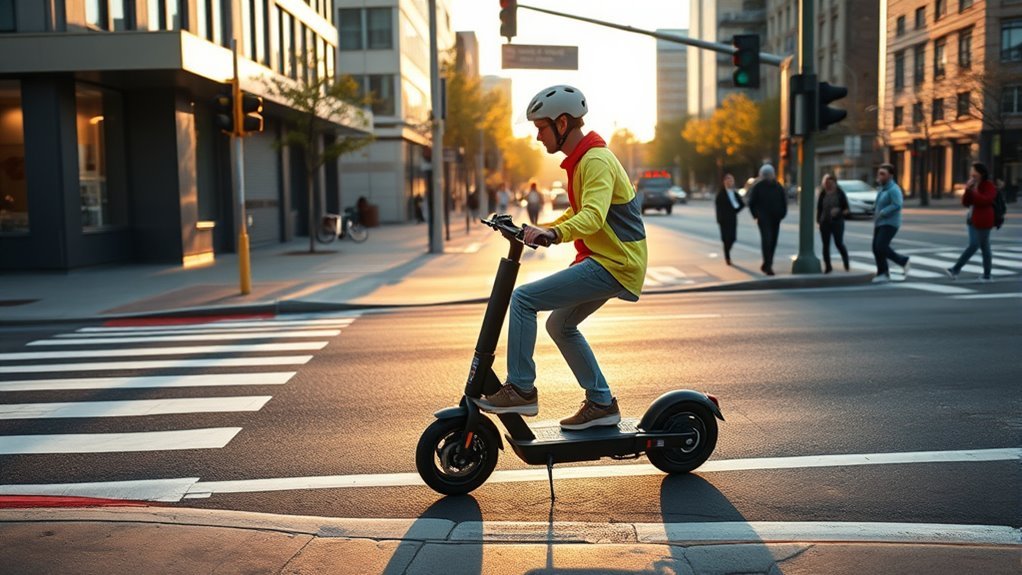
California treats electric scooters as motorized vehicles under the California Vehicle Code (CVC), so riding one legally means meeting real age, license, and helmet requirements — not just hopping on and going. Here’s exactly what the law requires before you ride, where you’re allowed to go, and how to avoid the roughly $200 tickets that come with getting it wrong.
Quick Answer
Yes, California requires a valid driver’s license or learner’s permit to ride an electric scooter, and riders must be at least 16. Helmets are mandatory under 18 only. Scooters are capped at 15 mph, are banned from sidewalks, and don’t need DMV registration or insurance. Local cities can add stricter rules on top of these statewide requirements.
Key Takeaways
- You must be at least 16 and hold a valid driver’s license or learner’s permit — there’s no lower age exception under state law.
- Helmets are legally required only for riders under 18, though they’re recommended for everyone.
- Scooters are capped at 15 mph and can only be ridden on roads posted 25 mph or under, or in a Class II bike lane.
- Sidewalk riding is banned statewide, including riding through crosswalks at intersections — the only legal exception is entering or leaving adjacent property.
- No DMV registration or insurance is required for standard scooters, but you’re still personally liable if you cause an accident.
Disclosure: As an Amazon Associate I earn from qualifying purchases. Some links on this page are affiliate links, at no extra cost to you.
Do You Need a License to Ride an Electric Scooter?
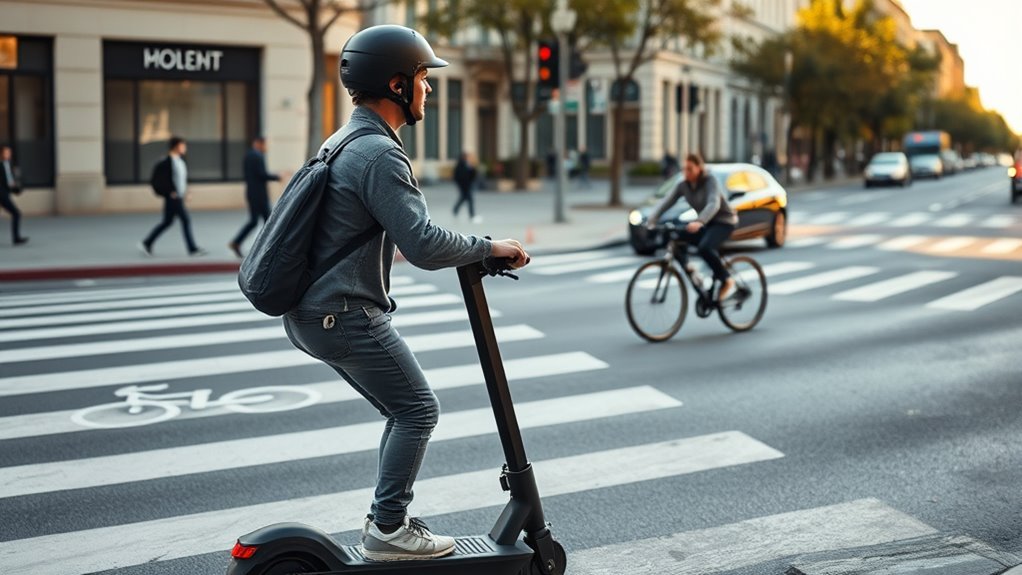
Yes — if you plan to ride an electric scooter in California, you need a valid driver’s license or learner’s permit, and you must be at least 16 years old to operate one legally. This applies under California Vehicle Code §21235(d), which prohibits operating a motorized scooter without a valid license or instruction permit — even on a privately owned scooter. Any standard class of driver’s license qualifies; you don’t need a motorcycle endorsement. Local ordinances can add requirements on top of this, so verify municipal rules before riding in a specific city. California doesn’t require registration or insurance for standard electric scooters through the DMV, which cuts down on paperwork. However, operating without a valid license is illegal and can trigger a citation. If you use a scooter-share service like Lime or Bird, confirm its age policy too — many providers set 18 as their own minimum, stricter than state law.
Note: Scooters capable of exceeding 20 mph don’t qualify as “motorized scooters” under CVC §407.5. They’re regulated differently and may require DMV registration and an M1 motorcycle license — check your model’s top speed before assuming standard scooter rules apply.
What Age and Helmet Rules Apply?
Once you’ve confirmed you’re legally authorized to ride, check the age and helmet rules that apply to you. In California, you must be at least 16 to operate an electric scooter, and this floor is set by the license/permit requirement rather than a standalone age rule — we found no California city or state provision that lowers it to 14, so treat 16 as a hard minimum regardless of what you may have heard elsewhere. If you’re under 18, you must wear a properly fitted, fastened bicycle helmet every time you ride, under CVC §21235(c). If you’re 18 or older, helmet use isn’t mandated statewide — California repealed the adult helmet requirement in 2018 — but it’s still strongly recommended by traffic safety authorities. Your helmet should meet the bicycle-helmet standard referenced in CVC §21212, which in practice means a CPSC-certified helmet. Rental companies often set an 18-plus minimum even where state law allows 16- and 17-year-olds to ride, and you still need a valid license or permit at any age.
What Equipment and Safety Requirements Apply?
Beyond age and licensing, your scooter itself has to meet minimum equipment standards under CVC §21221. It must have a brake capable of skidding a braked wheel on dry, level pavement. For night riding, you need a white front light visible from 300 feet, a red rear reflector visible from 500 feet, and side reflectors visible from 200 feet. You also can’t ride with your handlebars raised above shoulder height, since that limits your control in a way the law specifically prohibits.
Warning: Riding a motorized scooter while impaired by alcohol or drugs carries the same DUI penalties as driving a car, including possible license suspension. Standard DUI law applies to scooters just as it does to any other vehicle on the road.
Where Can You Ride an Electric Scooter?
You can ride an electric scooter on roads with speed limits of 25 mph or less, and when a Class II bike lane is available on a faster road, you must use it — this is set out in CVC §21235(b). You can’t ride on sidewalks at all, with one narrow exception: entering or leaving adjacent property to park or retrieve the scooter. Because a crosswalk at an intersection is legally classified as a sidewalk under CVC §275, riding through a crosswalk is still a violation, not a permitted “brief crossing.” If you need to make a left turn, you must stop, dismount as close as practicable to the right-hand curb, and complete the turn on foot as a pedestrian, per CVC §21228. Keep your scooter’s speed at or below 15 mph — that cap is set by CVC §22411 and applies regardless of what your scooter is mechanically capable of. Scan for signage, pavement hazards, and lane markings before entering a new route, hold a straight line, and avoid abrupt movements. Local authorities may add further limits on where you can operate, so check municipal rules before you ride.
What Road Rules Apply to E-Scooters?
Road access is only part of the rule set — e-scooter operation also falls under general California traffic law. You must obey traffic signals, yield to pedestrians, and treat your scooter as a roadway vehicle for the purposes of rider responsibility. Stay off sidewalks except for the adjacent-property exception above, and ride in bike lanes or on streets posted at 25 mph or less. You can’t ride tandem, since the law requires you to carry only yourself. If you’re under 18, wear a helmet; if you’re an adult, wearing one anyway is a meaningful safety measure given how exposed scooter riders are in a crash. Don’t text, call, or use headphones while riding — distraction weakens control and can compound liability if you’re involved in a collision.
Can You Carry Passengers or Items?
Carrying a passenger on an electric scooter is prohibited under CVC §21235(e), and riding tandem sharply raises the risk of losing control or colliding with something. You must ride solo to preserve stability, braking response, and steering precision. If you carry items, CVC §21235(f) prohibits holding anything that prevents you from keeping at least one hand on the handlebars at all times. Use a backpack or another secure hands-free carrier instead. Extra load can also reduce acceleration, lengthen stopping distance, and affect handling on uneven surfaces, so keep cargo light. Check local rules before you ride, since some jurisdictions impose stricter passenger or cargo restrictions on top of state law.
Do You Need Insurance or Registration?
In California, electric scooter riders don’t need to carry insurance, register their scooters with the DMV, or display a license plate for a standard sub-15-mph scooter. That said, liability coverage can matter: if you injure someone or damage property while riding, you can still be held personally liable even though the state doesn’t require a policy. Review your homeowner’s, renter’s, or auto policy for scooter coverage, or consider a scooter-specific plan if you want financial protection. Local ordinances can differ, and some cities impose their own conditions, so check your jurisdiction before you ride. The absence of a DMV requirement doesn’t eliminate responsibility — if an accident occurs, you may still face a lawsuit and personal financial exposure.
Where Can You Park an Electric Scooter?
Park your electric scooter in designated bike racks, docking stations, or marked scooter parking areas where local rules allow. You can use sidewalk parking only if you don’t block pedestrian traffic, emergency exits, or access to private property — CVC §21235(i) specifically prohibits leaving a scooter lying on its side on a sidewalk, or parked in any position that blocks an adequate path for pedestrians. If you park improperly, local authorities may issue fines or remove the scooter.
Legal Parking Spots
Park electric scooters only in designated bike racks, docking stations, or marked scooter parking zones to avoid fines or removal. If you park on a sidewalk, keep the scooter clear of pedestrian flow, emergency exits, and private property boundaries, and don’t block ADA access. Where local rules allow street parking, position the scooter straight or angled to the curb, as required by ordinance. You’re responsible for checking your city’s municipal code before you lock up, since requirements vary significantly between cities like Los Angeles, San Francisco, and San Diego.
Places To Avoid
Avoid sidewalks that block pedestrian flow, emergency exits, or private property access, and skip any curbside spot not authorized by local rules.
- Use designated bike racks, docking stations, or signed scooter zones.
- Park on sidewalks only when you don’t obstruct foot traffic or ADA access.
- On permitted streets, park straight or angled to the curb.
These controls limit common violations and reduce the chance that local authorities remove your scooter. Don’t leave it in driveways, storefront entrances, or fire lanes. California cities impose different ordinances on top of state law, so verify local parking rules before you lock up.
Pro Tip: Before your first ride in a new city, check that city’s municipal code or transportation department page — many California cities (like Santa Monica and San Francisco) layer additional permit zones, speed caps, or no-ride areas on top of the statewide rules covered here.
Frequently Asked Questions
What happens if you get caught violating electric scooter laws?
You may face a citation of roughly $200 plus court costs, and officers can impound the scooter. Riding without a valid license, on a sidewalk, or while intoxicated can add further charges, and a DUI on a scooter carries the same penalties as a DUI in a car, including possible license suspension.
What is a street-legal electric scooter?
A street-legal scooter has two wheels, handlebars, a flat floorboard, an electric motor, and a brake that can skid a wheel on dry pavement. To ride it legally you need a valid license or permit, must stay at or under 15 mph, and must follow the same road and sidewalk restrictions as any other motorized scooter.
What are the main rules for riding an electric scooter in California?
You must be at least 16 with a valid license or permit, wear a helmet if you’re under 18, stay at or under 15 mph, ride only on roads posted 25 mph or lower or in a bike lane, avoid sidewalks, carry no passengers, keep one hand free of cargo, and dismount to walk through left turns.
What’s the fastest a scooter can legally go in California?
Standard motorized scooters are capped at 15 mph under CVC §22411, regardless of what the scooter is mechanically able to do. You also need to stay on streets posted 25 mph or lower, or in a bike lane, whenever you’re riding on a public road.
Conclusion
Before you ride, check your local rules — California’s statewide scooter laws are stable, but cities layer their own restrictions on top, and those can change. You need to meet the age, license, and helmet requirements, stay on approved roads or bike lanes, and obey speed and signal rules. If you’re 17 and riding without a helmet, you’re violating CVC §21235(c) and risking a citation. You also can’t assume passenger, parking, or insurance rules are identical from one California city to the next, so confirm locally before you head out.
Sources
- California Vehicle Code §21235 — governs helmet, license, passenger, cargo, and sidewalk rules for motorized scooters
- California DMV — Motorcycles, Mopeds, and Scooters — confirms registration and licensing requirements
- FindLaw — CVC §21235 full text — current statutory language on scooter equipment and conduct rules
- Shouse California Law Group — 8 E-Scooter Laws — background on citation amounts and CVC §21228 left-turn rule

