
Last Updated on September 10, 2026 by Daniel Globe
Whether an electric scooter is legally considered a motorized vehicle depends on whether you are looking at federal product safety standards, state motor vehicle codes, or municipal traffic ordinances. In most jurisdictions, stand-up electric scooters are classified as low-speed micromobility devices or personal mobility devices rather than traditional motor vehicles. This legal distinction generally exempts riders from vehicle registration, license plate requirements, and mandatory auto insurance, provided the scooter stays within specific statutory speed and wattage limits.
Quick Answer
Under federal law and most state statutes, standard stand-up electric scooters are not classified as full motor vehicles. Instead, they are categorized as micromobility devices or electric personal assistive mobility devices. As long as they maintain motor outputs under 500–750 watts and top speeds between 15–20 mph, they generally do not require a driver’s license, title, registration, or license plate.
Key Takeaways
- Distinct Legal Status: Most states treat e-scooters like bicycles or micromobility devices rather than cars or motorcycles.
- Registration Exemptions: Standard electric kick scooters do not have Vehicle Identification Numbers (VINs) and cannot be titled or registered with the DMV.
- Wattage and Speed Thresholds: Exceeding state limits (typically 750W motor power or speeds over 20–30 mph) can reclassify your scooter as a moped, motor-driven cycle, or motorcycle.
- Traffic Laws Apply: Even if your scooter is exempt from vehicle registration, you must still follow standard rules of the road, obey signals, and comply with DUI/DWI laws.
Disclosure: As an Amazon Associate I earn from qualifying purchases. Some links on this page are affiliate links, at no extra cost to you.
What Counts as a Motorized Vehicle?
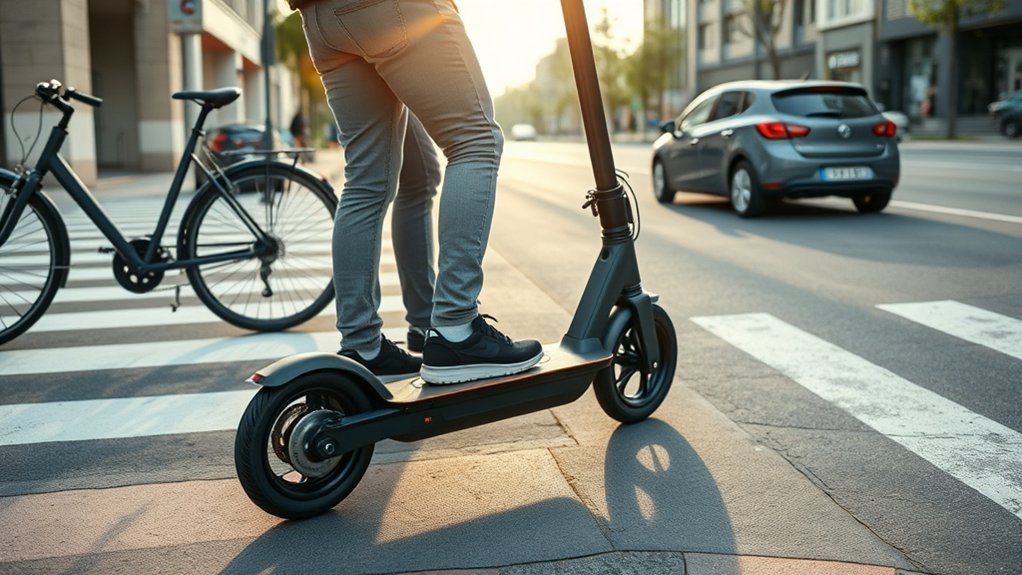
In standard statutory law, a motor vehicle is broadly defined as any self-propelled vehicle designed for operation on public highways to transport persons or property, excluding devices moved exclusively by human power or operated upon stationary rails. Under federal regulatory authority administered by the National Highway Traffic Safety Administration (NHTSA), a vehicle must meet rigorous Federal Motor Vehicle Safety Standards (FMVSS)—including crash testing, brake performance systems, turn indicators, and 17-character VIN assignment—to be designated a highway motor vehicle.
Electric kick scooters occupy a different category. Because they are lightweight, low-speed, and designed for personal short-distance commuting, the federal government regulates them primarily as consumer products under the jurisdiction of the Consumer Product Safety Commission (CPSC). State legislatures then establish traffic codes determining whether these devices inherit the rights of bicycles, low-speed vehicles, or motorized conveyances.
Is an Electric Scooter a Motor Vehicle?
Whether your electric scooter falls under traditional motor vehicle statutes depends primarily on vehicle design, maximum mechanical speed, and motor power ratings.
Legal Vehicle Classification
Under most state vehicle codes, stand-up electric scooters are classified separately from conventional motor vehicles. Statutes generally define an electric scooter using three primary parameters:
- Platform Design: A device weighing under 100 pounds with two or three wheels, handlebars, and a floorboard designed for standing while riding (or an optional compact seat).
- Motor Power: An electric motor rated between 250 watts and 750 watts.
- Governed Speed: A maximum manufacturer-designed speed of 15 to 20 mph on level ground.
| Vehicle Type | Power Source | Max Speed | Driver’s License Needed? | DMV Registration? |
|---|---|---|---|---|
| Electric Kick Scooter | Electric (250W–750W) | 15–20 mph | No (most states) | No |
| Class 1 & 2 E-Bike | Electric (≤750W) | 20 mph | No | No |
| Gas Moped / Scooter (≤50cc) | Gas (≤50cc) or >1000W | 30 mph | Yes (Class E) | Yes (Plate Required) |
| Motorcycle | Gas (>50cc) / High-Volt EV | Highway Capable | Yes (Endorsement) | Yes (Title, Plate, Ins.) |
State and Local Rules
While state statutes outline the legal classification, cities and counties possess home-rule authority to regulate where and how scooters operate. A municipality cannot alter the federal classification of an e-scooter, but it can pass local ordinances that restrict sidewalk operation, establish lower speed zones in pedestrian corridors, or require commercial rental fleets to obtain local operating permits.
Why Electric Scooters Are Classified Differently
Electric scooters are exempted from traditional motor vehicle mandates for several practical and regulatory reasons:
- Infrastructure Impact: Due to their low mass (rarely exceeding 30–50 pounds), e-scooters pose minimal structural wear on road surfaces compared to multi-ton automobiles.
- Kinetic Energy Profile: Traveling at 15 mph creates a fraction of the kinetic force generated by cars, reducing the severity of vehicular collisions.
- Absence of Standard Safety Equipment: E-scooters do not feature seatbelts, airbags, sealed headlight assemblies, or standardized side mirrors required under FMVSS regulations, making it legally impossible to register them as passenger vehicles.
- First-Mile/Last-Mile Transit Goals: State legislatures deliberately enact micromobility exemptions to encourage zero-emission urban transportation and reduce highway traffic congestion.
Pro Tip: If you purchase a high-performance electric scooter capable of exceeding 35–40 mph (such as dual-motor 2000W+ models), many state laws automatically reclassify the vehicle as a motor-driven cycle or moped. Check your state speed ceilings before purchasing.
Florida Electric Scooter Speed and Road Rules
Florida has some of the most comprehensive micromobility laws in the United States. Under Florida legislation enacted to regulate personal mobility, e-scooter riders are granted the same operational rights and legal duties as bicycle operators.
Florida Speed Limits and Statutory Definitions
Under Florida Statute § 316.003(48), a motorized scooter is legally defined as any vehicle or micromobility device powered by a motor with or without a seat, designed to travel on no more than three wheels, and not capable of propelling the vehicle at a speed greater than 30 mph on level ground.
Warning: While Florida statute defines the maximum design threshold of the vehicle class at 30 mph, most municipal jurisdictions (including Miami, Tampa, and Orlando) limit operational road speeds in traffic to 15 mph. Always check local city codes.
Permitted Roadways and Lanes
Florida law specifies where riders may lawfully operate stand-up electric scooters:
- Bicycle Lanes and Paths: Electric scooters are fully permitted in all designated bicycle lanes, multi-use paths, and greenways.
- Public Streets: Permitted on streets with posted speed limits of 35 mph or less when bike lanes are unavailable. You must ride as close to the right curb or edge of the roadway as practicable.
- Sidewalks: Permitted under state statute unless explicitly restricted by local municipal ordinance. When riding on sidewalks, riders must yield right-of-way to pedestrians and provide an audible signal (bell or voice) before passing.
- Highways and Limited-Access Roads: Strictly prohibited on all expressways, interstates, and divided state highways.
When Florida Electric Scooters Need a License or Registration
Riders often confuse electric kick scooters with gas-powered mopeds. The regulatory requirements in Florida are distinct:
- Electric Scooters (Micromobility): Under Florida Statute § 316.2128, an operator of a motorized scooter or micromobility device is not required to possess a driver’s license. You do not need to register the scooter, carry vehicle insurance, or obtain a license plate.
- Minimum Age: A person must be at least 16 years of age to operate a motorized scooter on public rights-of-way in Florida, unless a local government explicitly enacts an ordinance permitting younger operators.
- Gas Scooters & Mopeds (≤50cc): In contrast, gas-powered sit-down mopeds and motor scooters require a valid Class E driver’s license, an annual state registration decal, and a license plate through the Florida Department of Highway Safety and Motor Vehicles (FLHSMV).
Where You Can Ride an Electric Scooter
Right-of-way access varies depending on the specific traffic environment:
- Protected Bike Lanes: The safest and most universally permitted corridor for all e-scooter operation.
- Standard Roadways: Allowed on roads where the speed limit is 25–35 mph. Scooters must travel in the direction of traffic and obey all stop signs, traffic signals, and lane markings.
- Sidewalks: Regulated by local cities. Dense downtown areas often ban sidewalk riding to protect pedestrian traffic, whereas suburban zones frequently allow it.
- Shared Multi-Use Trails: Typically allowed unless trail rules specifically ban motorized equipment. Pedestrians maintain constant right-of-way.
Note: In commercial rental programs (such as Bird or Lime), app software uses GPS geofencing to automatically slow scooter speeds in pedestrian zones or prevent parking in restricted sectors.
Helmet, Age, and Safety Rules
Safety regulations are set through a combination of state traffic statutes and municipal codes:
- Helmet Requirements: In states like Florida and California, helmets are legally mandatory for riders under 16 years of age. Riders aged 16 and older are generally not legally mandated to wear a helmet under state law, though wearing a certified bicycle or CPSC helmet is strongly advised.
- Lighting Equipment: If riding between sunset and sunrise, state statutes require e-scooters to feature a front white light visible from at least 500 feet and a rear red reflector or lamp visible from 600 feet.
- Single-Rider Restriction: Most statutes prohibit carrying passengers unless the scooter is specifically manufactured with secondary seating.
Insurance, Liability, and Crash Claims
Because electric scooters fall outside motor vehicle definitions, standard automobile insurance policies generally do not provide coverage for scooter use:
- Auto Insurance Exclusions: Personal auto insurance rarely covers damage or bodily injury caused while operating a two-wheeled micromobility device.
- Homeowners & Renters Policies: Some personal liability umbrella policies cover third-party property damage or injury caused by non-registered electric devices, though motorized exclusions frequently apply. Review policy endorsements carefully.
- Commercial App Coverage: Shared rental companies provide primary liability coverage during active rental sessions, but policy terms often feature narrow coverage caps and high deductibles.
- Crash Protocol: If involved in a crash, call emergency services, take photographs of vehicular damage and road signage, obtain witness contact details, and file a police report.
“Even when an e-scooter is legally exempt from vehicle registration, an operator involved in an accident can still be held civilly liable for negligence, personal injuries, and property damage.”
State and City Electric Scooter Rules Across the US
State statutory definitions vary across the United States. While the majority of states treat e-scooters as non-motor vehicles, notable differences exist:
- California (CVC § 21235): Requires a valid driver’s license or learner’s permit (any class) to operate an electric scooter; caps maximum road speed at 15 mph.
- New York (VTL § 114-e): Defines electric scooters as standing mobility devices; caps operating speeds at 20 mph; bans operation on sidewalks entirely.
- Texas (Transp. Code § 551.351): Classifies motor-assisted scooters under motor vehicle laws but provides wide statutory exemptions regarding registration and safety inspections for motors under 750W.
Frequently Asked Questions
Are e-scooters considered motorized vehicles?
Under standard vehicle codes, no. Electric scooters with motors under 750 watts and top speeds between 15 and 20 mph are classified as micromobility or personal mobility devices. They are exempt from standard motor vehicle title, registration, and license plate laws, though they must obey general traffic rules.
What happens if you get caught violating electric scooter laws?
Violating local scooter laws can result in moving traffic citations, non-criminal municipal fines (typically $25 to $250), or vehicle impoundment. Operating an e-scooter while under the influence of alcohol or drugs can also result in standard DUI/DWI criminal charges.
Can you ride an electric scooter on the road in Louisiana?
Yes. Under Louisiana Revised Statutes (La. R.S. § 32:300.8), electric low-speed scooters may be operated on sidewalks, bicycle paths, and public highways with a posted speed limit of 25 mph or less (or up to 35 mph where authorized by local parish or municipal ordinance).
Can you go on the highway with an electric scooter?
No. Electric scooters are universally prohibited on interstates, controlled-access freeways, and high-speed highways due to their low operating speeds and lack of structural crash protection.
Can you get a DUI on an electric scooter?
Yes. In most states, driving under the influence statutes apply to any “vehicle” or conveyance operated on public roadways, regardless of whether it requires a driver’s license or motor vehicle registration.
Conclusion
An electric scooter is generally not classified as a motorized vehicle under federal safety regulations or state motor vehicle registration codes. Instead, legislatures treat stand-up e-scooters as micromobility devices with rights and duties similar to bicycles. While you generally do not need a driver’s license, DMV registration, or license plate to ride, you must remain compliant with local speed caps, road access limits, age restrictions, and traffic safety laws to ride legally.
Sources
- National Highway Traffic Safety Administration (NHTSA) — Federal Motor Vehicle Safety Standards (FMVSS) & Vehicle Importation Guidelines.
- Florida Senate / State Legislature — Florida Statute § 316.2128: Operation of motorized scooters and micromobility devices.
- U.S. Consumer Product Safety Commission (CPSC) — Micromobility Safety Standards & Device Regulations.
- Florida Department of Highway Safety and Motor Vehicles (FLHSMV) — Low Speed Vehicles, Mopeds, and Scooter Licensing Information.
Disclaimer: This article provides general educational information regarding state and federal vehicle codes and does not constitute formal legal counsel. Check your local municipal ordinances and state department of transportation codes for current local requirements.
