

Last Updated on July 29, 2026 by Mason Reed
A hot tent can become uncomfortable fast, but you do not have to choose between fresh air and a bug-free sleeping space. The best approach is to create cross-ventilation through intact mesh, reduce direct sun with safe shade or a raised tarp, and use a small fan only as a comfort aid—not as protection from dangerous heat.
Quick Answer
To ventilate a tent in hot weather without inviting bugs, open every mesh door, window, and roof vent while keeping the screens zipped closed. Face a large opening toward a safe breeze, shade the tent with a raised tarp, and place a fan near an intake. Repair mesh holes and monitor everyone for heat illness.
Key Takeaways
- Open solid fabric panels, but keep all mesh screens fully zipped to maintain a bug barrier.
- Create an airflow path with a low intake and a high or opposite-side outlet.
- Use shade safely; inspect overhead branches and avoid low ground that could flood.
- Suspend a tarp above the tent with a clear air gap instead of laying it directly on the rainfly.
- Fans improve air movement but cannot make extreme heat safe.
At a Glance
| Time Required | About 10–20 minutes after pitching the tent |
| Difficulty | Easy |
| Tools Needed | Tent stakes and guylines; optional tarp, poles, battery fan, and mesh repair kit |
| Cost | $0 with existing tent features; optional accessory costs vary |
Disclosure: As an Amazon Associate I earn from qualifying purchases. Some links on this page are affiliate links, at no extra cost to you.
Utilize Mesh Doors and Windows
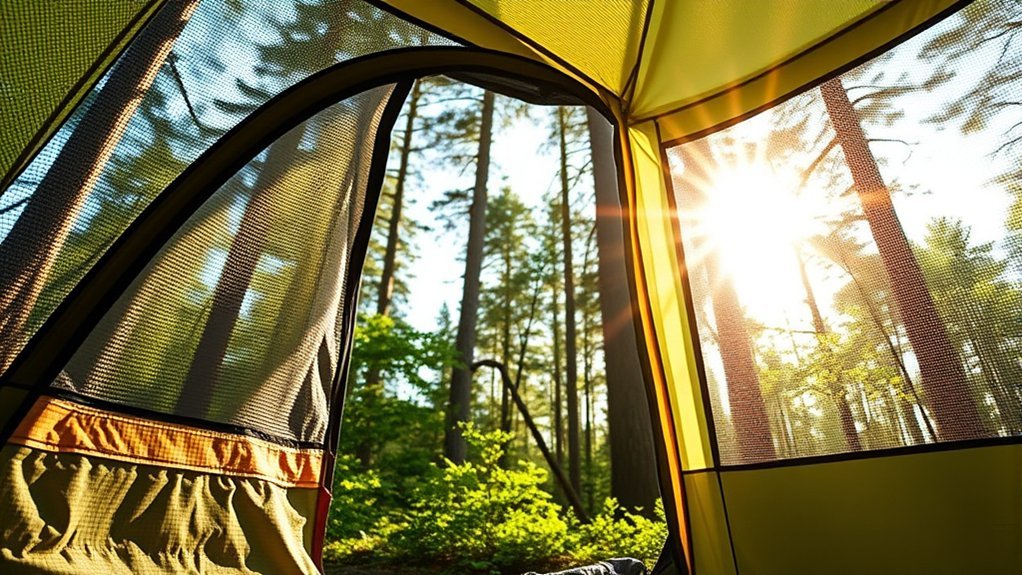
Mesh doors, windows, and roof panels are the main defense against both trapped heat and insects. Unzip or roll back the solid fabric layer, then leave the mesh layer closed. This lets air move through the tent while blocking mosquitoes, flies, and other pests.
For stronger cross-ventilation, open mesh panels on opposite sides of the tent. A low opening can draw in cooler air, while a higher vent gives warm air a path out. Tension the tent and rainfly as directed so fabric does not sag against the mesh or block the vents.
- Check that each zipper closes completely at the corners.
- Inspect fine mesh for pinholes, stretched seams, and tears before the trip.
- Keep sleeping bags, clothing, and gear away from mesh walls so they do not restrict airflow.
- Use no-see-um mesh when tiny biting midges are common.
Pro Tip: Open the solid door from the top as well as the bottom when the zipper design allows it. The upper opening helps warm air escape while the closed mesh still blocks insects.
Position Your Tent in the Shade
Shade reduces the amount of solar heat absorbed by the tent fabric. Before pitching, watch where the sun will travel and choose a site that stays shaded during the hottest part of the afternoon. Natural shade, a campsite shelter, or a separate tarp can all help.
Comfort is not the only concern. The National Park Service campsite guidance recommends checking for flooding, wind, lightning, and dead trees or branches. Use level, well-drained ground and look above the site before camping beneath trees.
- Choose shade that does not place the tent under dead, cracked, broken, or hanging limbs.
- Avoid depressions, dry channels, and other low spots that may collect rainwater.
- Do not block another campsite, trail, drainage route, or emergency access.
- Follow local rules before attaching lines to trees or vegetation.
Warning: Never trade heat relief for a hazardous campsite. If the only shade is beneath damaged trees, unstable rocks, or in a flood-prone hollow, choose the safer open site and create artificial shade instead.
Implement an Overhead Tarp
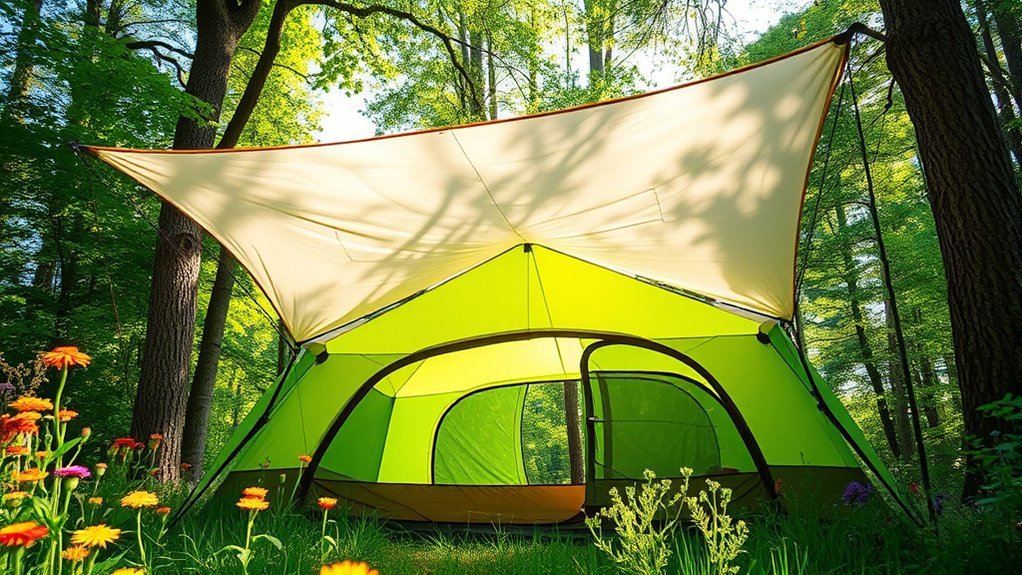
An overhead tarp mainly cools a tent by blocking direct sunlight. It can also support airflow when it is pitched high enough to leave open space above and around the tent. A tarp draped directly over the rainfly can trap warm air, cover vents, rub the tent fabric, and transfer condensation.
Tarp Setup Techniques
- Use a sound waterproof tarp made from nylon, polyester, polyethylene, or another material rated for outdoor use.
- Raise it with tarp poles or safe anchor points so air can move beneath it.
- Leave entrances, roof vents, and low rainfly gaps unobstructed.
- Pitch one edge higher when conditions allow so rising warm air can escape.
- Angle the tarp to shed rain away from the tent entrance and sleeping area.
- Use proper guylines, knots, and stakes; retension them after wind or rain.
Choosing the Right Size
There is no universal tarp size that works best for every tent. The useful size depends on the tent footprint, wall height, sun angle, available anchors, wind exposure, and whether you need rain protection as well as shade. Choose enough coverage to shade the roof and the sun-facing side without closing off the airflow path.
| Tent Type | Tarp Sizing Goal |
|---|---|
| Small backpacking tent | Shade the roof and sun-facing wall while keeping the vestibule and fly vents clear. |
| Medium dome tent | Allow extra width for changing sun angles and a safe air gap on every open side. |
| Large cabin tent | Use a properly supported large tarp or separate shade shelter that does not rest on the tent roof. |
Maximizing Airflow Benefits
The gap between the tarp and tent matters more than whether the tarp fabric is breathable. Keep the tarp high enough for air to enter from the sides, and avoid hanging loose fabric over doors or vents. If the breeze changes, adjust the tarp angle or one edge rather than repitching the entire tent.
Note: A high tarp catches more wind. Lower it, add guylines, or remove it when storms or strong gusts are expected. Follow the tarp and tent manufacturers’ wind guidance.
Maintain Proper Tent Orientation
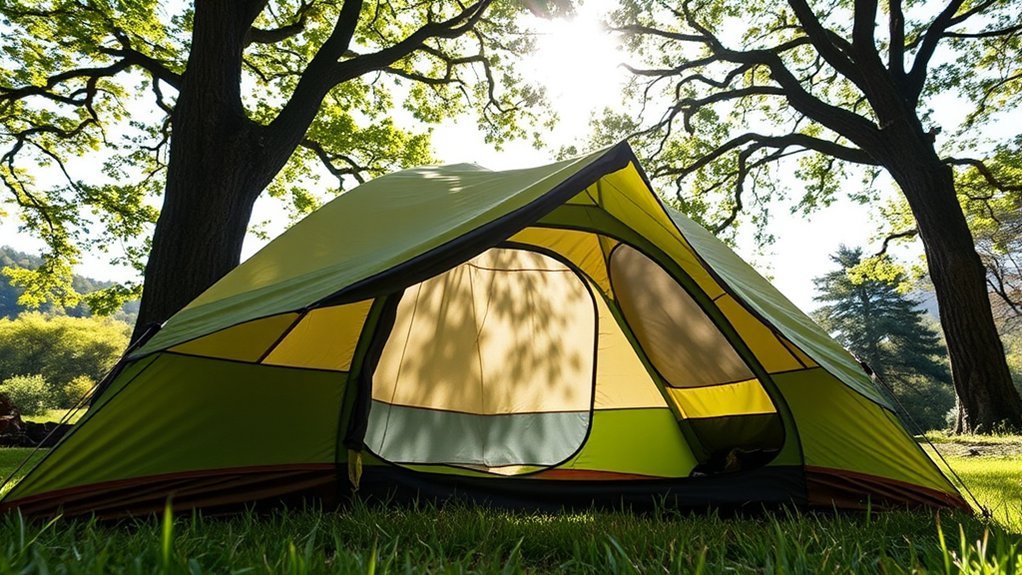
Orientation can improve comfort, but it must also account for rain and wind safety. In settled hot weather, point a large screened door or window toward the breeze and open a screened outlet on the opposite or upper side. In strong wind, follow the tent manual and prioritize the strongest, lowest-profile orientation over maximum ventilation.
Face Cool Breezes
Before staking the tent, stand at the site for a minute and notice which way grass, leaves, or a small ribbon moves. Aim a screened intake toward that breeze. Keep the mesh zipped and open the solid panel behind it. This creates airflow without leaving an open doorway for insects.
- Use opposing mesh openings for a clear cross-breeze.
- Keep tall gear, coolers, and vehicles from blocking the intake side.
- Recheck the forecast because afternoon winds may differ from evening winds.
- Close or shelter windward openings if rain begins blowing inside.
Utilize Natural Shade
Use the sun’s actual path at your campsite instead of relying on fixed rules such as “north side” or “face south.” Those directions vary with latitude, season, terrain, and time of day. The best shaded position is the one that safely blocks peak-afternoon sun while preserving airflow and drainage.
| Natural Feature | Possible Benefit | Safety Check |
|---|---|---|
| Healthy tree canopy | Blocks direct sun while allowing some airflow | Look for dead limbs, cracks, rot, and storm damage overhead. |
| Hill or landform | May provide late-day shade or shelter | Avoid drainage channels, rockfall zones, cliff edges, and lightning-exposed ridges. |
| Rock formation | May cast shade at part of the day | Check for loose rock and remember that sun-warmed rock can radiate heat after sunset. |
Align With Wind Direction
A light breeze is useful; a strong wind can damage the tent. Use cooling orientation only when conditions are mild. If gusts build, secure all required guylines, close exposed panels as needed, and orient the shelter according to its design. Do not repeatedly rotate a fully pitched tent, which can loosen stakes and stress the poles.
Keep Ventilation Open When Possible
Open ventilation early, before the tent becomes heat-soaked. Roll back solid doors and windows, open roof vents, and use every protected rainfly vent. Keep all insect screens closed. When the weather is dry, partially rolling back the rainfly may release more heat, but keep it ready to redeploy if rain, dew, or strong wind arrives.
In rain, stake the fly taut so it stays separated from the inner tent. Open sheltered high vents and any low vents designed to remain open in wet weather. This preserves a low-to-high airflow path while reducing the chance of rain entering.
A bivy sack is not automatically a cooler substitute. It has less interior air volume, and condensation can build inside some models. Use one in hot, buggy weather only if it has an intact no-see-um mesh opening and enough ventilation for the conditions.
The goal is not simply to “open the tent.” It is to open the solid layers while keeping a continuous screened barrier between you and the insects.
Use Battery-Powered Fans
A battery-powered fan can improve air movement and evaporation, but it does not lower the actual air temperature. Place it near a screened intake to pull in outside air, or aim it upward toward a high vent to help move warm air out. A stable clip-on or freestanding model is usually easier to position than a fan that hangs loosely from the ceiling.
- Choose a fan with a guard over the blades and a stable mounting method.
- Use the lowest comfortable speed at night to extend battery life.
- Keep the fan and charging cable dry and away from damp tent walls.
- Charge only with the manufacturer-approved cable or charger on a firm, uncovered surface.
- Do not leave a damaged, swollen, leaking, or unusually hot battery in the tent.
The CDC notes that electric fans may provide comfort but do not prevent heat-related illness when conditions are dangerously hot. If the tent remains oppressive, move to a cooler location rather than relying on the fan.
Keep Bugs Out While Maximizing Airflow
Airflow only stays bug-free when the mesh, seams, and entry routine all work together. Repair damage before dark, when mosquitoes and other insects may become more active.
- Inspect the mesh: Hold it against daylight and look for pinholes or pulled seams.
- Use a compatible repair: Apply a tent-mesh patch or manufacturer-approved repair tape. Household weather stripping and general-purpose silicone can damage coatings, stiffen fabric, or fail to flex with the tent.
- Manage the doorway: Unzip only as far as needed, enter or exit promptly, and close both zipper pulls completely.
- Reduce attraction: Keep food containers closed, wipe spills, and avoid leaving bright lights shining directly through an open doorway.
- Add personal protection: Follow CDC mosquito-bite prevention guidance for skin repellent, protective clothing, and properly treated gear. Permethrin is for clothing and gear according to the label, not for direct application to skin.
Stay Hydrated and Dress Appropriately
There is no single daily water amount that fits every camper, temperature, activity level, body size, and medical condition. The CDC recommends drinking water on hot days and doing outdoor activity during cooler parts of the day when possible. Drink regularly, do not wait until you feel very thirsty, and carry more water than you expect to use.
During long periods of heavy sweating, food and electrolyte-containing drinks can help replace salts as well as fluid. People who have been told to limit fluids or sodium should follow their clinician’s advice. Urine color can be a rough hydration clue, but it should not be the only measure.
| Hot-Weather Habit | Practical Approach |
|---|---|
| Hydration | Take frequent drinks, refill early, and keep water within reach at the campsite. |
| Activity timing | Pitch the tent, hike, and cook during cooler morning or evening periods when practical. |
| Clothing | Wear loose, lightweight, light-colored clothing; moisture-wicking polyester or lightweight merino can help manage sweat. |
| Rest | Take breaks in the coolest available shaded or air-conditioned place. |
Warning: Dizziness, thirst, heavy sweating, nausea, weakness, or muscle cramps can signal heat exhaustion. Move to a cooler place, loosen clothing, cool the person, and give small sips of water if fully conscious. Confusion, collapse, loss of consciousness, or other signs of heat stroke are an emergency—call 911 and cool the person immediately. See the National Weather Service heat-illness guide.
Troubleshoot a Hot or Stuffy Tent
| Problem | Likely Cause | Fix |
|---|---|---|
| Tent is hottest in late afternoon | Direct sun on the roof or west-facing wall | Add raised shade, use a safer shaded site, or spend peak heat outside the tent in a cooler shelter. |
| Air feels still | Only one vent is open, or gear blocks the intake | Open an opposite or higher screened vent, move gear, and place a fan near the intake. |
| Bugs keep getting inside | Mesh hole, zipper gap, or door left open | Patch the mesh, clean and align the zipper, and shorten entry time. |
| Inside feels damp or clammy | High humidity, wet gear, poor fly separation, or closed vents | Move wet gear outside the sleeping area, tension the fly, and open protected low and high vents. |
| Rain enters through an open door | Opening faces wind-driven rain | Use sheltered vents, close the exposed panel, and angle the tarp or fly to shed water away. |
Frequently Asked Questions
What types of tents have the best ventilation features?
For warm, buggy weather, look for a three-season tent with large no-see-um mesh panels, at least two separated openings, closable low and high vents, and a rainfly that can be rolled back or vented without exposing the sleeping area. Dome and cabin shapes can both work; the vent layout matters more than the label.
How can I seal gaps to prevent bugs from entering?
Use a mesh patch, seam repair product, or tent-specific tape that is compatible with the tent fabric and coating. Clean and dry the area first. Avoid household weather stripping or general-purpose silicone unless the tent manufacturer specifically approves it, because these products may damage coatings or interfere with folding.
Are there specific fan types suitable for tents?
A compact clip-on or stable freestanding fan with a blade guard, multiple speeds, and a timer works well. Choose a model that can be aimed at a mesh intake or upper vent. Keep rechargeable batteries dry, use the approved charger, and stop using any battery that swells, leaks, smells unusual, or becomes abnormally hot.
Can I use a portable air conditioner in a tent?
Only use one with a tent designed for an air-conditioner port and a safe, dry, outdoor-rated electrical supply that follows the equipment manual and campground rules. Never run a fuel-burning generator, grill, stove, or similar device inside a tent. The U.S. Consumer Product Safety Commission warns that fuel-burning camping equipment can produce deadly carbon monoxide. A portable AC may also require closing vents and managing condensate, so it is not a simple substitute for ventilation.
What materials are best for overhead tarps?
Nylon and polyester tarps are light and packable, while polyethylene tarps are affordable and waterproof but bulkier. Canvas is durable and quiet but heavy. Choose reinforced tie-outs, suitable weather resistance, and a size that shades the tent without blocking vents. Airflow comes from the open gap beneath the tarp, not from the tarp fabric itself.
How do I ventilate a tent when it is raining?
Pitch the rainfly taut, preserve the gap between the fly and inner tent, and open vents designed to remain protected in rain. Use a low intake and high exhaust when possible. Close any opening that faces wind-driven rain, and angle an overhead tarp so runoff moves away from the entrance.
How do I keep no-see-ums and tiny insects out?
Use a tent labeled with no-see-um mesh, inspect seams and zipper corners closely, and patch even very small holes. Keep the screened door closed as much as possible. Standard coarse mesh may stop mosquitoes but still allow tiny biting midges through.
Conclusion
To keep a tent cooler without inviting bugs, combine intact mesh, cross-ventilation, safe shade, a properly raised tarp, and careful fan placement. Open the solid layers while keeping the screened barrier closed, and adjust vents as wind or rain changes. Most importantly, treat ventilation as a comfort measure—not a cure for extreme heat. Move to a cooler place when conditions or heat-illness symptoms become unsafe.
Sources
- REI Co-op: How to Set Up a Tent — tent orientation, ventilation, and site-selection guidance.
- National Park Service: Finding and Setting Up a Campsite — flood, wind, lightning, and overhead tree hazards.
- CDC: Preventing Mosquito Bites While Traveling — screens, repellents, protective clothing, and treated gear.
- CDC: About Heat and Your Health — hydration, cooler activity times, and heat-risk precautions.
- National Weather Service: Heat Cramps, Exhaustion, and Stroke — symptoms and emergency responses.
- U.S. Consumer Product Safety Commission: Carbon Monoxide Fact Sheet — fuel-burning equipment and tent safety.
