
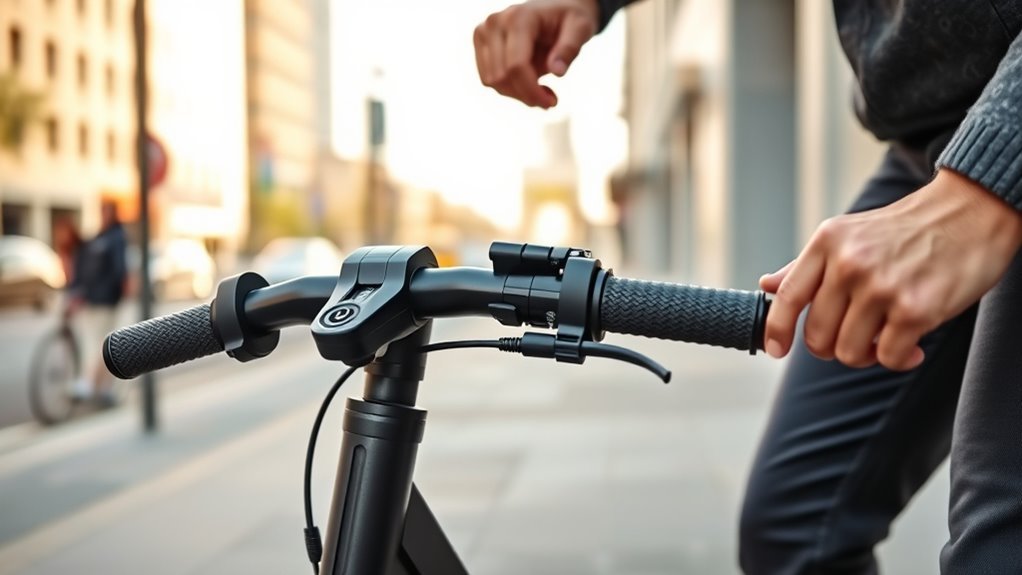
Last Updated on July 23, 2026 by Caleb Warren
Unfolding an electric scooter usually takes less than two minutes, but the exact latch sequence depends on the model. Before you raise the stem, turn the scooter off, release any transport hook, support the frame, and identify the primary folding lever and secondary safety lock. Never force a stuck hinge or ride until every lock is fully seated.
Quick Answer
To unfold an electric scooter, turn it off, release the hook that holds the folded stem, raise the stem into its upright position, close the main folding lever, and engage the secondary safety lock. Check that the hinge sits flush and the stem does not wobble before riding.
Key Takeaways
- Folding systems vary, so check your scooter’s manual before moving an unfamiliar lever, latch, or pedal.
- Keep your fingers away from the hinge and support the stem while it moves.
- The bell or rear hook usually holds the scooter together when folded. It normally does not lock the scooter open.
- Confirm both the primary latch and secondary safety lock before riding.
- Do not ride if the hinge is cracked, bent, loose, recalled, or unable to lock completely.
At a Glance
| Time Required | About 1–2 minutes |
| Difficulty | Easy, once you know the model’s locking sequence |
| Tools Needed | None for normal unfolding |
| Cost | Free |
Disclosure: As an Amazon Associate I earn from qualifying purchases. Some links on this page are affiliate links, at no extra cost to you.
How to Unfold Your Electric Scooter
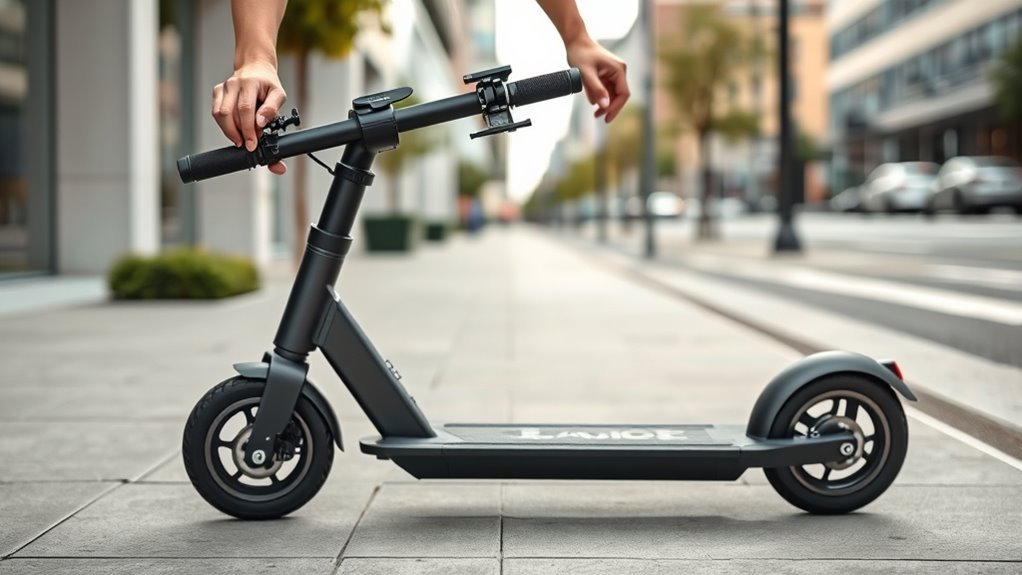
Start on firm, level ground with enough space to raise the stem. Turn the scooter off and disconnect the charger if it is plugged in. Support the deck with the kickstand when your manual recommends it, or hold the frame steady with one hand.
Next, release the bell hook, stem hook, or other catch that holds the scooter in its folded position. Raise the stem slowly, close the primary folding lever in the direction shown in your manual, and engage the secondary safety catch. The lever should sit in its normal closed position without a large gap or excessive force.
Warning: Keep your fingers, clothing, straps, and cables away from the folding hinge. Do not place a foot or hand inside the joint while the stem is moving.
Identify the Folding Mechanism First
Electric scooters do not all unfold in the same way. Some use a hand-operated quick-release lever, some have a lever plus a sliding safety catch, and others use a folding pedal near the bottom of the stem. The direction of movement also varies.
For example, Xiaomi’s instructions for some models tell the rider to release the folded-position hook, raise the stem, lift the folding lock, and push the folding lever inward. Other Xiaomi models use a different quick-release arrangement. Some Segway ES models use a folding pedal instead of the hand-lever sequence described above.
Check the manufacturer’s manual if you cannot immediately identify:
- The catch that holds the scooter folded
- The main folding lever or pedal
- The secondary safety lock
- The fully closed position of each part
Note: Do not copy the lever direction from a different scooter. A lever that pulls outward on one model may push inward or move upward on another.
Release the Folding Lever
Before raising the stem, release the catch that holds it against the deck or rear fender. This may be a bell hook, metal hook, buckle, or separate transport latch. Hold the stem as you release it so it cannot swing upward unexpectedly.
Once the folded-position catch is free, locate the main folding mechanism. Move the secondary lock out of the way only as directed by the manufacturer, then move the primary lever, latch, or pedal to the released position. Use steady hand pressure rather than jerking, prying, kicking, or twisting the mechanism.
If the lever does not move:
- Check whether the stem is placing tension on the latch.
- Gently move the stem a few millimeters to relieve that tension.
- Confirm that the secondary safety catch is fully released.
- Look for dirt, stones, bent metal, or a trapped cable.
- Stop if the part still requires excessive force.
Pro Tip: Take a clear photo of the correctly locked mechanism. You can use it later to compare the lever and safety-catch positions before each ride.
Lift the Handlebars Until They Lock
Hold the stem or handlebars firmly and raise the assembly in one controlled motion. Keep the front wheel pointing forward and avoid twisting the stem while the hinge is moving.
Continue until the stem reaches its upright stop. Depending on the model, you may hear a click or feel the lower hook move into position. Do not rely on the sound alone. Visually confirm that the hinge faces meet correctly and that no cable, dirt, or object is trapped between them.
Close the main folding lever completely. Then move the secondary lock, safety ring, sliding catch, or locking clip into its riding position. The exact order depends on the manufacturer’s design.
If the lever stops before reaching its normal closed position, lower the stem and inspect the hinge again. Do not use your body weight, a hammer, a pry bar, or an extension tool to force it shut.
Make Sure the Scooter Is Locked Open
Once the stem is upright, inspect the parts that prevent it from folding during a ride. The main lever should be fully closed, and the secondary safety catch should be engaged. The hinge should sit evenly without a visible obstruction or unusual gap.
| Check | What You Want | Why It Matters |
|---|---|---|
| Primary folding lever | Fully closed and seated | Holds the stem in its upright position |
| Secondary safety lock | Engaged in the riding position | Helps prevent accidental lever release |
| Hinge | Flush, clean, and properly aligned | Prevents incomplete engagement |
| Stem | No unusual forward, backward, or side-to-side movement | Indicates that the assembly is stable |
| Fasteners and joint | No missing screws, cracks, bending, or corrosion damage | Damaged hardware can allow the stem to move or fold |
| Rear hook or bell catch | Released from the folded-position buckle | This part normally secures the scooter during carrying, not riding |
Stand beside the scooter and hold the handlebars. Without touching the release lever, gently push and pull the stem. Apply only enough pressure to detect looseness. The stem should remain upright without clunking, slipping, or opening at the hinge.
A click is helpful feedback, but a closed lever, engaged safety catch, aligned hinge, and stable stem are the checks that matter.
Fix Common Unfolding Problems
If your scooter will not unfold smoothly, stop applying force and identify where the movement is blocked. Most simple problems involve tension on the latch, a transport hook that is still attached, dirt in the hinge, or a safety catch that has not fully moved.
The Transport Hook Will Not Release
Push the folded stem slightly toward the deck or rear fender to remove tension from the hook. Release the hook while continuing to support the stem. Do not bend the bell striker, rear buckle, or metal hook to create more clearance.
The Stem Will Not Rise
Confirm that the primary folding control is fully released. Inspect the hinge for stones, hardened dirt, rust buildup, or a trapped cable. Clean loose surface dirt with a dry cloth or soft brush. Do not spray oil, penetrating fluid, or cleaner into the hinge unless the manufacturer specifically approves that product and application point.
The Folding Lever Will Not Close
Lower the stem and check the mating surfaces again. A lever may refuse to close when the hinge is not fully upright, the lower hook is misaligned, or debris is preventing the faces from meeting. Do not change an adjustment screw unless the service manual gives a procedure and specification for your exact model.
The Stem Wobbles After Locking
Do not ride with unresolved stem movement. Check for a partially closed lever, an open secondary lock, loose visible hardware, cracks, worn parts, or a gap at the hinge. Some models allow latch adjustment, but an incorrect adjustment can make the lever appear closed without providing enough clamping force. Use an authorized technician when the correct procedure is unclear.
When to Stop Troubleshooting
Stop using the scooter and contact the manufacturer or a qualified repair provider if you find:
- A cracked, bent, or distorted hinge
- A missing, loose, or damaged hinge fastener
- A safety catch that will not engage
- A lever that opens without its normal release action
- Grinding, repeated clunking, or metal fragments
- Stem movement that remains after the lock is closed
- A model or serial number covered by a safety recall
Warning: Do not ride while “testing” a questionable folding lock. A stem that collapses while moving can cause immediate loss of steering control.
You can search current notices on the U.S. Consumer Product Safety Commission recall database. Also check the manufacturer’s support page using the model and serial number printed on your scooter.
Test the Scooter Before You Ride
Leave the folding lever and safety catch fully locked while performing the pre-ride test. Do not pull or loosen either control to check whether it moves smoothly.
- Check the stem: Stand beside the scooter and gently rock the handlebars forward, backward, and side to side. Stop if the hinge shifts or clunks.
- Check the handlebars: Confirm that they are straight, tight, and aligned with the front wheel.
- Check the brakes: Squeeze each brake control and confirm that it operates normally before entering traffic.
- Inspect the tires and frame: Look for low pressure, cuts, loose parts, cracks, and other visible damage.
- Check the throttle and controls: Make sure the throttle returns normally and that cables are not pinched around the folding joint.
- Take a slow test ride: Use a clear, level area away from vehicles and pedestrians. Accelerate gently, steer in both directions, and test the brakes at low speed.
The CPSC recommends checking the handlebars, brakes, throttle, bell, lights, tires, cables, and frame before riding. Wear a properly fitted bicycle helmet and follow local traffic rules.
Frequently Asked Questions
How do you unfold an e-scooter?
Turn the scooter off, release the catch that holds the stem to the deck or rear fender, raise the stem, close the primary folding lever, and engage the secondary safety lock. Check the manufacturer’s manual because the lever direction and locking sequence vary by model.
Are scooters good for autistic kids?
Suitability depends on the child, the type of scooter, balance, coordination, judgment, sensory preferences, and the level of adult supervision. A non-motorized kick scooter may be appropriate for some children with a helmet and close supervision. The American Academy of Pediatrics recommends that children under 16 not operate or ride motorized e-scooters. A pediatrician, physical therapist, or occupational therapist can help assess individual needs.
How do you open up an electric scooter?
First release the folded-position hook or buckle. Support the stem and move the scooter’s main folding control to the released position. Raise the stem fully, close the lever, engage the safety catch, and test the stem for unwanted movement without touching the release controls.
What is the hardest trick to do on a scooter?
There is no universally hardest scooter trick. Difficulty depends on the rider and the type of stunt scooter. Tailwhip combinations, flips, and highly technical aerial tricks are among the most advanced. Do not attempt tricks on a folding commuter electric scooter unless its manufacturer specifically states that it is designed for stunt use.
Why will my electric scooter not unfold?
The transport hook may still be attached, the safety catch may not be fully released, or tension may be pressing against the latch. Dirt, corrosion, a trapped cable, misalignment, bent parts, or damaged hardware can also block the hinge. Stop rather than forcing a mechanism that remains stuck.
How do I know whether the scooter is locked open?
The primary folding lever should be fully seated, the secondary safety catch should be engaged, and the hinge should sit flush. When you gently push and pull the stem without touching the release controls, it should not slip, open, or show unusual movement.
Conclusion
Unfolding an electric scooter safely is less about speed and more about confirming each lock. Release the folded-position hook, raise the stem without twisting it, close the primary lever, and engage the secondary safety catch. Then inspect the hinge and test the stem without operating the release controls.
If the mechanism resists, remains loose, or shows cracks, bending, damaged hardware, or an incomplete lock, do not ride. Check the owner’s manual, search for recalls, and arrange professional service when the cause is uncertain.
Sources
- U.S. Consumer Product Safety Commission Micromobility Information Center — pre-ride inspection, helmet, riding, and manufacturer-guidance recommendations
- Xiaomi Electric Scooter 3 Lite FAQ — example of a hook, folding lock, and inward-moving folding lever
- Xiaomi Electric Scooter Elite Setup Instructions — example of raising the stem and fully closing a quick-release lever
- Segway KickScooter ES1 Series User Manual — example of a pedal-operated folding mechanism
- CPSC Acer AES015 Folding Scooter Recall — folding-tube fall hazard and stop-use guidance
- American Academy of Pediatrics E-Scooter Safety Guidance — helmets, supervision, and guidance for riders under 16
