
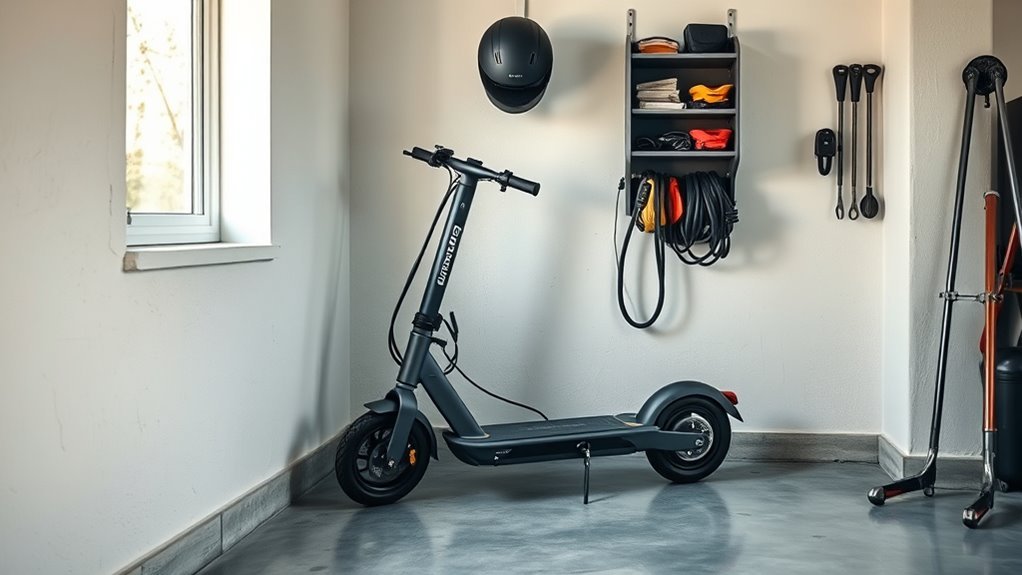
Last Updated on August 21, 2026 by Caleb Warren
To store your electric scooter safely, clean it first, then charge the battery to about 40–60% and switch it off. Keep the scooter indoors in a dry, well-ventilated space between 50°F and 77°F (10–25°C), away from moisture, heat, and direct sun. Check tire pressure against the manufacturer’s recommended PSI, inspect cables and fasteners, and use a breathable cover if needed. Recheck the battery every 1–2 months and top it up to the 40–60% range as required. The details below help you avoid the most common (and most costly) storage mistakes.
Quick Answer
Store an electric scooter indoors in a dry, ventilated space between 50–77°F (10–25°C), with the battery charged to 40–60% and powered off. Inflate tires to the manufacturer’s recommended pressure, lock the scooter to something fixed, and recheck the battery charge every 1–2 months.
Key Takeaways
- Store the battery at 40–60% charge, never fully charged or fully drained.
- Keep the scooter in a dry, ventilated space between roughly 50°F and 77°F (10–25°C).
- Recheck the battery every 1–2 months and top it back up to 40–60% if it drops.
- Never store a swollen, punctured, or damaged battery — stop using it and follow local hazardous-waste disposal rules instead.
- Lock the scooter to a fixed object and keep it out of blind, unmonitored spots to reduce theft risk.
At a Glance
| Time Required | 15–20 minutes to prep; a monthly 5-minute battery check during storage |
| Difficulty | Easy |
| Tools Needed | Soft cloth, mild soap solution, tire pump/pressure gauge, U-lock, breathable cover (optional) |
| Cost | $0–$40 (mainly the cost of a quality lock or cover if you don’t already own one) |
Disclosure: As an Amazon Associate I earn from qualifying purchases. Some links on this page are affiliate links, at no extra cost to you.
Why Proper Scooter Storage Matters
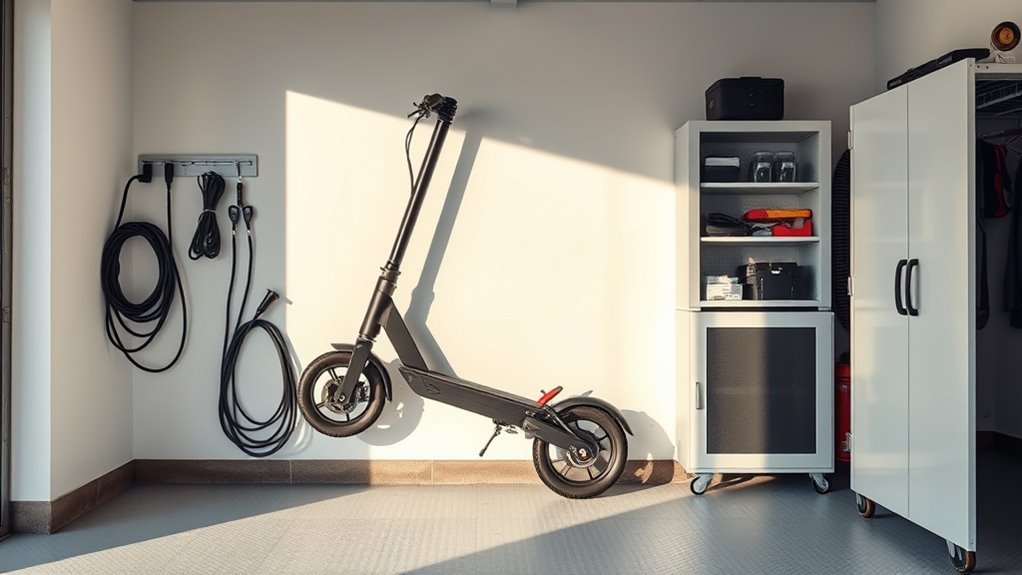
Proper scooter storage matters because it protects the battery, frame, and electronics from avoidable wear. When you park your scooter in a dry, insulated space, you reduce rust, corrosion, and moisture-related faults that can shorten scooter lifespan. Shielding it from rain, snow, and UV exposure also limits premature part failure and the waste that comes with early replacement. You should keep the battery at a moderate charge during storage, because extreme discharge or a full charge held for weeks both accelerate cell wear. Regular inspections let you catch loose fasteners, tire issues, or electrical problems before they grow into expensive repairs. Security also matters: a lock and, optionally, a GPS tracker help protect your investment from theft. Smart storage keeps your scooter ready and reliable for its next ride.
Warning: Never store a battery that is swollen, punctured, leaking, or was involved in a hard fall or water exposure. Damaged lithium-ion cells can overheat and ignite even while sitting unused. Stop using the battery immediately and take it to a local hazardous-waste or battery recycling center — never put it in household trash or curbside recycling.
How to Prep Your Electric Scooter for Storage
Before storage, clean your scooter with a soft cloth and mild solution so you remove dirt and reduce corrosion risk. Charge the battery to about 40–60% capacity, since that range helps preserve battery health during inactivity. Check the tires and inflate them to the pressure your manufacturer recommends to help prevent flat spots while it’s stored.
Clean Before Storing
Start by thoroughly cleaning your electric scooter with a soft cloth and a mild soap solution to remove dirt, grime, and residue that can cause corrosion during storage. Wipe the deck, stem, and wheels, but keep electrical components dry. Don’t spray water directly on connectors, controls, or the battery compartment; instead, dampen the cloth and control moisture carefully. After washing, dry every surface completely to stop rust on metal parts. Check seams, fasteners, tires, and cables for wear or damage while you clean, and fix issues before you store it. If you want extra protection, apply a thin wax layer to the body. This simple step helps preserve performance and keeps your scooter ready for your next ride.
Charge Battery Properly
To prep your electric scooter for storage, charge the battery to about 40–60% so it won’t sit fully drained or fully charged for weeks at a time. Use the original charger, since third-party chargers aren’t calibrated to the pack’s exact voltage limits and can overcharge it. If you’re storing the scooter long term and your model allows it, disconnect or remove the battery to cut passive drain and reduce corrosion risk. Place the battery in a cool, dry location, ideally between 50°F and 77°F (10°C and 25°C) — the same range recommended for lithium-ion batteries generally. Every 1–2 months, check the charge and top it back up to the 40–60% range if it has dropped. This routine keeps your power source stable and ready without sacrificing battery health.
Pro Tip: If your scooter has a “storage mode” or a smart charger with a percentage cutoff, use it — it takes the guesswork out of hitting the 40–60% range and helps you avoid accidentally leaving the battery on the charger for days.
Check Tires And Pressure
Check the tires and pressure before you put your electric scooter away, since correct inflation helps prevent flat spots and suspension stress during storage. Use a pressure gauge to verify each tire meets the pressure listed in your scooter’s manual or on its frame decal — not the maximum number printed on the tire sidewall, which is the tire’s rated limit rather than the manufacturer’s recommended setting. If you’ve got pneumatic tires, inflate to the manufacturer-recommended PSI; if you use solid tires, they generally need no pressure adjustment but should still be inspected. Inspect tread, sidewalls, and valves for cracks, punctures, or leaks, and replace damaged tires before storage. Make tire maintenance part of your prep, then check monthly for air loss or aging.
Where to Store an Electric Scooter
You should store your electric scooter indoors in a clean, dry space such as a hallway, living room, or garage to reduce exposure to moisture and sunlight. Avoid damp areas like basements or mold-prone garages, since humidity can rust parts and damage electrical components. Keep the storage area secure and temperature-controlled, ideally between 50–77°F (10–25°C), to protect the battery and deter theft.
Indoor Storage Options
A clean, dry garage is often the best place to store an electric scooter because it protects against weather, reduces theft risk, and keeps the scooter easy to grab when you need it. If you don’t have garage space, use a living room or hallway. An insulated basement can also work if it stays dry and temperature-stable. For better organization, add storage accessories like wall mounts or vertical racks; they free floor space, prevent accidental knocks, and keep the scooter upright. Whatever space you choose, keep the scooter away from doorways and walkways so it doesn’t block an exit.
Avoid Moisture Exposure
Moisture is one of the fastest ways to damage an electric scooter, so store yours in a dry, insulated space that stays clear of humidity and water intrusion. You’ll protect the frame, wiring, and battery by using moisture barriers and humidity control.
| Risk | Prevention | Result |
|---|---|---|
| Damp air | Dehumidify | Less corrosion |
| Leaks | Inspect walls | Safer storage |
| Outdoor exposure | Waterproof cover | Lower intrusion |
Avoid basements and garages that stay wet. Keep the storage area clean, sealed, and free of mold. If you must park outside, cover the scooter only after wiping it dry; otherwise, you trap moisture against critical parts. Check the space often for leaks, because small failures quickly become expensive repairs.
Secure, Temperature-Controlled Spaces
Store your electric scooter indoors in a dry, well-ventilated, secure space that stays between 50°F and 77°F (10–25°C), because stable, moderate temperatures help protect the battery and electrical components. Prioritize secure storage with locks, good lighting, and, if possible, GPS tracking to reduce theft risk.
- You protect the battery’s usable range.
- You reduce theft risk.
- You avoid costly repairs from heat or cold damage.
Don’t use damp basements or flood-prone garages; moisture can trigger corrosion and electrical failure. If you must park outside, use a breathable cover that sheds dust and lets humidity escape.
How to Care for the Battery in Storage
To keep your scooter battery in good condition during storage, charge it to about 40–60% before putting it away, then place it in a cool, dry location between 50°F and 77°F (10°C to 25°C). This balance protects battery lifespan without overloading the cells. Avoid fully charging or draining it to zero, because both extremes accelerate wear and reduce efficiency. Use the original charger and follow the manufacturer’s maintenance guidance for voltage limits and storage intervals. During long-term storage, check the charge every 1–2 months and top it up only if it drops toward the lower end of the safe range. Keep the battery away from heat, moisture, and freezing conditions, since temperature swings can damage internal chemistry. Consistent care keeps the battery stable and ready when you need it again.
Note: In 2026, the U.S. Consumer Product Safety Commission published a proposed federal safety standard for lithium-ion batteries used in e-scooters, e-bikes, and similar micromobility products, which would add requirements like tamper-resistant enclosures and over-temperature shutoffs. See the proposed rule for details.
How to Protect Your Scooter From Theft
When you store your scooter, lock it to a fixed object with a high-rated U-lock, since lighter locks are easier to defeat. This is your core theft prevention measure. Put the scooter indoors whenever you can, in a well-lit, secure area where access is controlled. Don’t leave it outside unattended, even for a few minutes. Add security gadgets like a GPS tracker so you can locate the scooter if someone takes it. Check your locks, mounts, and alarm features often; worn hardware weakens protection.
- Lock it to something fixed, every time.
- Add a GPS tracker for peace of mind.
- Inspect your locks and hardware regularly.
How to Winterize Your Electric Scooter
Once theft protection is in place, winter storage becomes the next priority: charge the battery to about 40–60% before putting the scooter away for long periods, and keep it in a dry, climate-controlled space between 50°F and 77°F (10–25°C) — avoid unheated garages or sheds where temperatures can drop near or below freezing. For stronger battery maintenance, remove the battery if your model allows it, then store it indoors at a stable temperature separate from the scooter frame. That keeps cells from drifting out of spec and helps you get reliable performance back when warm weather returns. Cover the scooter with a breathable cover to block dust while letting moisture escape, so you don’t trap condensation and invite rust or corrosion. Check the scooter and battery every few weeks during storage; verify charge, inspect for moisture, and confirm the enclosure stays dry.
Common Scooter Storage Mistakes
Even a well-stored scooter can suffer damage if you miss a few basics, and the most common mistakes usually involve cleaning, battery care, storage conditions, tires, and temperature. Before storage, clean off dirt and moisture; trapped grime invites corrosion and hidden wear. Charge the battery to the 40–60% range, not full or empty, because poor charge states reduce capacity and efficiency over time. Keep the scooter in a dry, ventilated space; damp air causes rust and can damage electronics. Check tire pressure, since underinflation creates flat spots and leaks that hurt safety when you ride again.
- Skipping cleaning lets dirt quietly damage parts under a cover.
- Leaving the battery fully charged or fully drained shortens its life.
- Storing in a damp or extreme-temperature space undermines everything else you did right.
Also, don’t park it near heaters, freezing walls, or direct sun. Stable temperatures preserve components, and before your first ride back, do a quick check: charge the battery fully, inspect the tires and brakes, and confirm all fasteners are still tight.
Frequently Asked Questions
How should I store my electric scooter?
Store it indoors, dry, and secure. Clean it first, charge the battery to 40–60%, keep it in a space between 50–77°F (10–25°C), and recheck the battery charge monthly. This protects performance, prevents corrosion, and keeps the scooter ready to ride.
What happens if an electric scooter is not used for a long time?
Left alone without care, the battery can self-discharge to a damaging level, cells can degrade, tires can develop flat spots, and metal parts can rust. Checking the battery every 1–2 months and keeping tires properly inflated prevents most of this.
Are e-scooters safe to store indoors?
Yes, as long as the battery is in good condition (not swollen, punctured, or damaged) and the space is dry, ventilated, and away from direct heat sources. Avoid blocking doorways or exits with the stored scooter.
Can I leave my electric scooter in the garage?
Yes, if the garage stays dry, insulated, and within roughly 50–77°F (10–25°C). Keep the battery at 40–60% charge, use a breathable cover if it’s near a window or door, and lock the scooter to something fixed.
Lithium-ion batteries in e-bikes and e-scooters have been linked to over a thousand fires and dozens of deaths in New York City alone since 2019 — a reminder that how you charge and store these batteries genuinely matters.
Conclusion
Proper storage keeps your electric scooter safer, longer-lasting, and ready to ride. Clean it, charge the battery to about 40–60%, and store it indoors in a dry space between 50–77°F (10–25°C). This matters because rechargeable lithium-ion batteries have caused hundreds of fires and dozens of injuries and deaths in cities like New York alone, and federal regulators are now moving toward mandatory safety standards for these batteries because of that risk. If you skip prep, moisture, theft, and battery damage can shorten service life fast — and a damaged battery can be genuinely dangerous. Follow these steps, and you’ll protect your investment and reduce risk.
Sources
- U.S. Consumer Product Safety Commission, Federal Register Notice of Proposed Rulemaking (2026) — proposed federal safety standards for micromobility lithium-ion batteries
- U.S. Consumer Product Safety Commission — safety guidance and injury/fire data on e-scooters, e-bikes, and hoverboards
- Office of Senator Kirsten Gillibrand, citing FDNY data — lithium-ion battery fire, injury, and fatality statistics in New York City
- Renogy — recommended charge percentage and temperature range for long-term lithium battery storage

