

Last Updated on July 24, 2026 by Ethan Caldwell
Planning a road trip is easier when you divide the work into clear decisions: where you want to go, how far you can safely drive, which stops matter most, what the trip will cost, and what could disrupt the route. A flexible plan gives you room for scenic detours without leaving fuel, lodging, safety, or arrival times to chance.
Quick Answer
To plan a road trip, set your dates and daily driving limit, map your main route, choose overnight stops, calculate fuel and lodging costs, and check weather and road conditions. Reserve high-priority stays or activities, download offline maps, prepare your vehicle, and leave enough flexibility for breaks, delays, and safe route changes.
Key Takeaways
- Build the route around your available days and a driving limit you can handle while fully alert.
- Separate essential stops from optional detours so delays do not ruin the trip.
- Check official weather, construction, closure, and road-condition information before each driving day.
- Estimate fuel with the formula: trip miles divided by MPG, multiplied by the expected fuel price.
- Prepare offline navigation, emergency supplies, important documents, and a breakdown plan.
At a Glance
| Time Required | About 1–3 hours for a simple trip; longer for a multi-week or international route |
| Difficulty | Easy to moderate |
| Tools Needed | Map or navigation app, calendar, calculator or spreadsheet, booking information, and vehicle owner’s manual |
| Cost | Planning can be free; trip costs depend on distance, fuel, lodging, food, tolls, parking, and activities |
Disclosure: As an Amazon Associate I earn from qualifying purchases. Some links on this page are affiliate links, at no extra cost to you.
Set Your Road Trip Goals
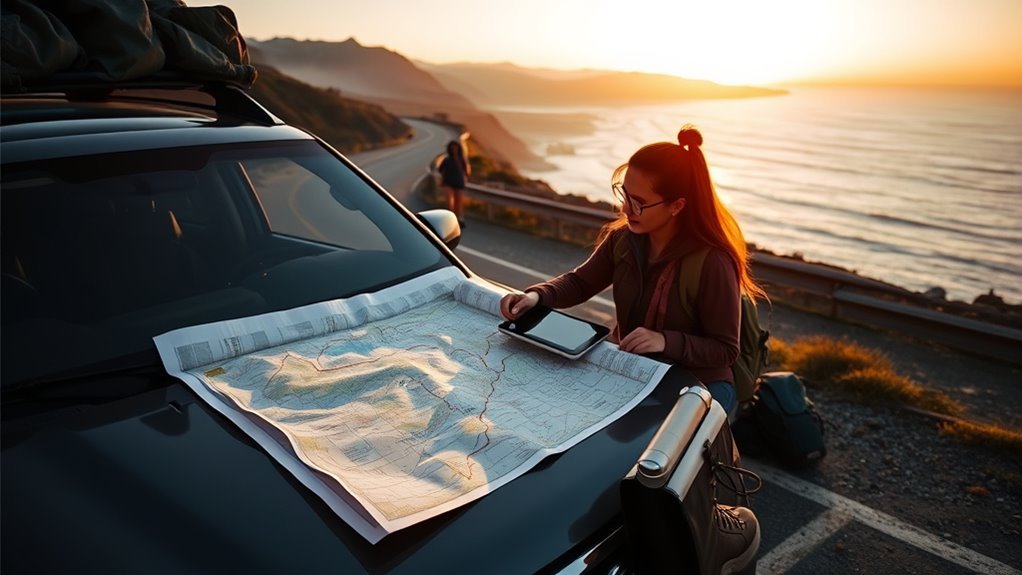
Before you choose roads and hotels, define the purpose of your trip. You might want outdoor adventure, quiet scenery, local food, family time, cultural attractions, or a fast drive to one main destination. Your goal determines how many stops you need and how much time you should leave for each place.
Set clear start and end dates, including the time you must return home. Then decide how much of each day you are willing and able to spend driving. Do not build the schedule around the maximum number of hours you think you can tolerate. Build it around the number you can complete while staying alert and still enjoying the destination.
- Fast destination trip: Fewer stops and more direct roads
- Scenic trip: Shorter driving days and more daylight for viewpoints
- Outdoor trip: Weather buffers, permits, and time for trail access
- Family trip: Frequent restroom, meal, and activity breaks
- Relaxing trip: Later starts, longer stays, and fewer hotel changes
Mark three types of destinations: must-see, would-like-to-see, and optional. This makes it easier to remove a detour when weather, traffic, fatigue, or a late departure changes the day.
Pro Tip: Give every major destination at least one reason for being on the route. If a stop does not support the purpose of the trip, treat it as optional rather than forcing it into the schedule.
Choose Stops That Fit Your Route
Map your main destination and overnight locations first. Add attractions, restaurants, scenic overlooks, and short breaks only after the route works without them. This prevents an interesting list of places from becoming an exhausting driving schedule.
Each stop should match the trip’s goal, fit the available daylight, and provide enough time to park, eat, use restrooms, explore, and return to the route.
Map Key Stopovers
A well-planned route uses stopovers to divide long distances into manageable sections. Start with overnight stops, fuel points in remote areas, and any destination that requires a timed reservation. Then add sightseeing stops that sit close to the route.
Google My Maps can save directions, add extra destinations, and let you drag a route to another road. It is useful for building and sharing a custom itinerary. Create or edit the detailed map on a computer, then use your regular navigation app for live directions while driving.
Instead of assuming that every four- to six-hour section is safe or comfortable, consider the driver, road type, weather, traffic, and number of stops. A winding mountain road can require more energy than the same number of miles on a divided highway.
Match Stops to Your Goals
Narrow your list to stops that serve the purpose of the trip. For cultural experiences, look for museums, historic districts, local markets, or regional food. For outdoor travel, prioritize parks, viewpoints, trailheads, and seasonal access information.
Ask every traveler to name one or two priorities before finalizing the route. This reduces last-minute arguments and makes it easier to balance different interests.
- Match each main stop to the trip’s purpose.
- Check opening days, operating hours, parking, and reservation rules.
- Confirm which attractions are essential and which are optional.
- Estimate the full detour time, not only the extra driving miles.
- Keep at least one flexible period during a multi-day trip.
Balance Driving and Breaks
Schedule regular breaks before fatigue becomes a problem. A useful planning rhythm is to stop about every two hours, but you should stop sooner whenever you feel sleepy, stiff, distracted, or unable to remember the last few miles.
Choose safe, legal stopping places such as rest areas, service plazas, towns, parks, or staffed fuel stations. Do not plan to stop on a highway shoulder unless there is an emergency.
A short break can include walking, drinking water, eating, changing drivers, checking the next section of the route, or adjusting the schedule. Coffee, loud music, or an open window is not a substitute for sleep.
NHTSA reported 644 deaths in drowsy-driving-related crashes in 2024. A schedule is never more important than stopping when you are too tired to drive safely.
Use Google Maps to Plan the Drive
Use Google My Maps to organize the itinerary and Google Maps or another navigation app for current directions, estimated arrival times, and traffic information. These tools serve different purposes, so do not assume that a saved custom map will automatically provide the best live route throughout the trip.
- Add the fixed points: Enter the starting location, final destination, and booked overnight stays.
- Add essential stops: Include reserved attractions, required fuel stops, ferry terminals, or charging stations.
- Compare routes: Review distance, expected drive time, tolls, road type, and elevation.
- Add optional places: Save restaurants, viewpoints, and short detours in a separate layer or list.
- Share the plan: Send the itinerary to your travel companions or a trusted contact.
- Prepare offline access: Download the necessary map areas and save addresses separately.
Organize hotels, restaurants, fuel stops, attractions, and backup locations in separate layers or lists. Label reservations with the date and arrival window so you do not have to search through email while traveling.
Note: Navigation estimates can change because of traffic, construction, crashes, weather, and temporary closures. Recheck the next day’s route each evening instead of relying only on the plan you made weeks earlier.
Find the Best Back Roads
Back roads can provide quieter scenery, small towns, local restaurants, historic sites, and seasonal attractions. They can also have limited fuel, weak cell service, rough pavement, wildlife, sharp curves, low speed limits, or long emergency-response times.
Before selecting an alternate road, check:
- Whether the road is paved and open to your type of vehicle
- Seasonal gates, snow closures, flooding, wildfire activity, or construction
- Bridge heights, weight limits, steep grades, and vehicle-length restrictions
- Available fuel or charging locations
- Expected arrival time before dark
- Cell coverage and offline navigation
- The next safe place to turn around
Fewer stoplights and quieter lanes can improve the experience, but only when the road, weather, vehicle, and driver are suitable for the route.
Mountain routes such as Colorado’s Million Dollar Highway may include steep grades, sharp curves, high elevations, changing weather, and limited roadside protection. Check official transportation information and choose another route when the conditions or road design exceed your comfort level.
Warning: Never enter a closed or flooded road, drive around a barrier, or follow navigation software onto a route that conflicts with posted signs. Turn around and use an official alternate route.
Check Road Conditions, Weather, and Closures
Check conditions when you first build the route, again a few days before departure, and before every driving day. In the United States, state transportation agencies and 511 traveler-information services can provide current traffic, closure, construction, and road-condition information. Available features vary by state.
Review the forecast for the entire route rather than only the destination. A clear destination can still require driving through thunderstorms, fog, snow, high winds, extreme heat, wildfire smoke, or flooding.
- Check the next day’s route the evening before.
- Check again shortly before departure.
- Identify one safer backup route.
- Allow extra time for mountain, winter, coastal, or holiday travel.
- Delay the drive when official agencies advise against travel.
Also check sunrise and sunset times when the route includes wildlife areas, unfamiliar back roads, mountain passes, or places with limited lighting.
Budget for Gas, Lodging, and Food
Build the budget from the route instead of choosing one daily amount for every destination. Include fuel or charging, lodging, meals, tolls, parking, entrance fees, activities, taxes, and an emergency reserve.
Calculate Fuel Cost
For a gasoline vehicle, use this formula:
Estimated fuel cost = total trip miles ÷ expected MPG × average fuel price per gallon
For example, a 1,200-mile trip in a vehicle that averages 30 MPG requires about 40 gallons. At an assumed price of $3.50 per gallon, the estimated fuel cost is $140. Add extra mileage for local driving, detours, idling, mountains, traffic, or weather.
The official FuelEconomy.gov Trip Calculator can estimate route fuel use and cost for selected vehicles. Your real result may differ because of speed, cargo, tire pressure, temperature, terrain, and driving style.
Plan for EV or Plug-In Hybrid Charging
For an electric vehicle, choose chargers that match your vehicle’s connector and charging capability. Check current availability, operating hours, payment requirements, nearby services, and recent reliability information. Do not plan to reach every charger with only a few miles of estimated range remaining.
Save at least one backup charging location for each important stop, especially in remote areas or during extreme temperatures.
Estimate Lodging, Food, and Extra Costs
- Multiply the average nightly lodging rate by the number of paid nights.
- Add lodging taxes, resort fees, campground fees, and parking charges.
- Set separate food amounts for groceries, quick meals, and restaurants.
- Check toll roads, ferries, park passes, permits, and attraction fees.
- Add a reasonable emergency reserve based on the trip’s length and risk.
A reserve of 10–15% can be a useful starting point, but it is a planning preference rather than a universal rule. A remote, international, winter, or multi-week trip may require a larger buffer.
Pick Safe Routes for Solo Travel
Solo road-trip planning should reduce the consequences of a missed turn, breakdown, illness, or lost phone signal. Favor routes with regular fuel, lodging, rest areas, and towns when you are unfamiliar with the region.
Before leaving, share your planned route, vehicle description, overnight locations, and expected check-in times with a trusted person. Agree on what that person should do if you miss a check-in and cannot be reached.
- Download offline maps for areas with weak service.
- Keep a charged power bank and vehicle charger.
- Store emergency contacts outside your phone.
- Avoid posting your exact live location publicly.
- Choose well-reviewed lodging with safe parking and staffed check-in where possible.
- Stop at busy, well-lit locations when traveling after dark.
- Keep enough fuel or charge to reach the next reliable service area.
For solo travel, the best route is not always the shortest or most scenic. It is the route you can drive confidently with access to fuel, communication, rest, and assistance.
Do not continue onto a remote route simply because your navigation app recommends it. Posted signs, official closure information, weather warnings, and your own comfort level take priority.
Plan Your Daily Driving Schedule

Plan each day by working backward from the desired arrival time. Include driving, fuel stops, meals, restroom breaks, sightseeing, parking, check-in requirements, and a delay buffer.
Some rested drivers may be comfortable planning up to six or eight hours behind the wheel, but this should never be treated as a target or a guarantee of safety. Choose a shorter limit when driving solo, using unfamiliar roads, traveling with children, towing, crossing mountains, or dealing with poor weather.
- Start after getting enough sleep.
- Avoid beginning a long drive when already tired.
- Schedule a safe break about every two hours.
- Stop sooner if you yawn repeatedly, drift from your lane, miss signs, or cannot remember recent miles.
- Change drivers when possible.
- End the day before fatigue makes basic decisions difficult.
- Leave time for traffic, road work, charging, and unexpected detours.
NHTSA advises avoiding peak sleepiness periods when possible, particularly midnight to 6 a.m. and the late afternoon. If you become sleepy, pull into a safe designated stopping place. A short nap may help temporarily, but proper sleep is the real solution.
Book Lodging and Activities Early
Reserve the parts of the trip that would be difficult to replace. These may include national park entry, ferries, popular campgrounds, guided tours, special events, or lodging in a small town with limited inventory.
Booking early can improve availability and give you more price and location choices, but it does not always produce the lowest rate. Compare the total price, cancellation policy, parking cost, check-in hours, and payment terms.
Reserve Stays Ahead
- Confirm the full price, including taxes and mandatory fees.
- Read recent reviews with attention to parking, noise, cleanliness, and location.
- Check the final cancellation deadline in the property’s local time.
- Confirm late-arrival procedures.
- Save the address, phone number, and confirmation offline.
- Choose refundable bookings when weather or route changes are likely.
Campground and park booking windows differ by destination. Some release inventory months ahead, while others use lotteries, rolling dates, timed entry, or a second release shortly before arrival. Review the individual facility rather than assuming one booking schedule applies everywhere.
Secure Key Activities
Once your overnight stays are set, reserve the activities that define the trip. Check whether a park entrance fee, timed-entry permit, parking reservation, shuttle ticket, trail permit, or separate tour ticket is required.
| Planning Move | Why It Helps |
|---|---|
| Book high-priority activities | Protects the experiences that motivated the trip |
| Check cancellation policies | Limits losses when weather or routes change |
| Save confirmations offline | Keeps tickets available without cell service |
| Keep optional time open | Allows spontaneous stops without risking reservations |
Recreation.gov notes that many popular campsites can be booked months ahead and may fill quickly, but each location can have a different booking window.
Pack Smart and Prep Your Car
Check the vehicle early enough to repair a problem before departure. Follow the maintenance schedule and instructions in the owner’s manual. If you are unsure about the brakes, tires, battery, cooling system, warning lights, or fluid leaks, have the vehicle inspected by a qualified technician.
NHTSA’s road-trip preparation guidance recommends checking tires, applicable fluids, the battery, lights, cooling system, wipers, and emergency equipment before a long drive.
Vehicle Checklist
- Check tire pressure when the tires are cold and use the pressure listed on the vehicle placard or in the owner’s manual.
- Inspect tire tread and sidewalls, including the spare tire when equipped.
- Confirm that the jack, wheel-lock key, and tire tools are present.
- Check oil, coolant, brake fluid, washer fluid, and other applicable fluids.
- Test headlights, brake lights, turn signals, and hazard lights.
- Inspect wiper blades and fill the washer reservoir.
- Check the battery and charging system when needed.
- Search for unresolved vehicle safety recalls.
- Confirm that registration, insurance, roadside-assistance, and rental documents are current.
Roadside Emergency Kit
- Charged phone, vehicle charger, and power bank
- First aid kit and necessary medications
- Flashlight with spare batteries
- Jumper cables or a suitable jump starter
- Reflective warning equipment where legal and safe to use
- Tire pressure gauge and vehicle-specific tire tools
- Drinking water and nonperishable food
- Blanket, weather-ready clothing, and work gloves
- Paper map or written route information
- Basic tools and emergency contact information
Add seasonal supplies such as an ice scraper, shovel, traction material, sun protection, extra coolant, or additional water when the climate requires them.
What to Do If Your Car Breaks Down
A breakdown plan helps you make safer decisions when you are stressed or stranded.
- Move to a legal place away from moving traffic when the vehicle can be driven safely.
- Turn on the hazard lights.
- Call roadside assistance or emergency services as appropriate.
- Share your exact location, direction of travel, vehicle description, and visible landmarks.
- Follow local official guidance about whether to remain inside or exit the vehicle.
- Keep passengers away from moving traffic.
- Do not attempt a roadside repair when traffic, terrain, weather, or visibility makes it unsafe.
Procedures differ by road and country. On high-speed roads, the safest action may be to leave the vehicle and wait behind a barrier, while in other situations remaining belted inside may be safer. Follow instructions from police, highway authorities, or roadside-assistance operators.
Complete a Final Departure Check
Review the trip one final time during the 24 hours before departure.
- Check weather, closures, construction, traffic, and wildfire or flood alerts.
- Confirm the first night’s lodging and any timed reservations.
- Download maps and save confirmations, addresses, and phone numbers offline.
- Check fuel or charge and confirm the first planned stop.
- Load the vehicle without blocking mirrors or overloading it.
- Secure loose luggage and equipment.
- Confirm that every driver is rested and legally able to drive.
- Share the itinerary and first expected check-in time.
- Place water, medications, documents, and chargers within easy reach.
Keep the plan flexible after departure. Remove an optional stop, change the route, or add an overnight stay when safety, fatigue, weather, or delays require it.
Frequently Asked Questions
What is the 3-3-3 rule for road trips?
The 3-3-3 rule is an informal travel-planning idea, not an official safety standard. Versions differ. A common RV version suggests traveling no more than about 300 miles, arriving by 3 p.m., and staying three nights. Other travelers use three hours instead of 300 miles. Adjust any version for fatigue, weather, traffic, road type, daylight, and your own ability.
Is $5,000 enough for a road trip?
It can be, but the answer depends on the trip. Divide $5,000 by the number of travel days to find your total daily limit. Then subtract fixed costs such as fuel, lodging, tolls, permits, parking, and reserved activities. A 14-day trip would average about $357 per day before any emergency reserve, but the same amount will go much further with camping and cooking than with city hotels and restaurant meals.
What is the most commonly forgotten road-trip item?
There is no authoritative universal answer. Chargers, medications, identification, reservation details, toiletries, sunglasses, reusable water bottles, and vehicle documents are all easy to overlook. Use a written checklist and perform a final review before leaving.
Do people with ADHD like traveling?
ADHD does not determine whether someone likes or dislikes travel. Some people enjoy novelty and changing scenery, while others find scheduling, sensory input, disrupted routines, or long drives difficult. Helpful strategies can include shorter planning steps, alarms, written checklists, planned breaks, quiet time, accessible medication, and fewer tightly timed activities.
How many hours should you drive each day on a road trip?
There is no safe number for every driver. Choose a limit based on sleep, experience, health, road type, weather, traffic, and whether another person can drive. Plan regular breaks and stop immediately if you become sleepy, distracted, or unable to concentrate.
How far in advance should you plan a road trip?
A simple weekend trip may need only a few days of planning. Trips involving popular parks, ferries, festivals, limited lodging, international borders, or timed-entry systems may require planning several weeks or months ahead. Check each destination’s official booking window before choosing your dates.
Conclusion
A strong road-trip plan gives you structure without forcing you to follow an unsafe schedule. Set realistic goals, choose essential stops, verify the route, calculate the major costs, and prepare the vehicle before departure. Keep optional stops flexible, check conditions each day, and change the plan whenever fatigue, weather, closures, or delays make another choice safer.
With offline navigation, confirmed reservations, emergency supplies, and enough time for rest, you can enjoy scenic roads and spontaneous discoveries without losing control of the practical details.
Sources
- Google My Maps Help: Save Directions — supports custom routes, added destinations, and draggable trip paths.
- FuelEconomy.gov Trip Calculator — supports vehicle-based fuel-use and trip-cost estimates.
- Federal Highway Administration: 511 Traveler Information — supports checking current traffic and travel conditions.
- NHTSA: Drowsy Driving — supports fatigue warnings, warning signs, and safe stopping guidance.
- NHTSA: Summer Driving and Road Trip Tips — supports vehicle checks, route preparation, and emergency-kit recommendations.
- Recreation.gov: Campsite Reservation Tips — supports checking destination-specific booking windows and reserving popular locations early.
