
Last Updated on July 28, 2026 by Tyler Morgan
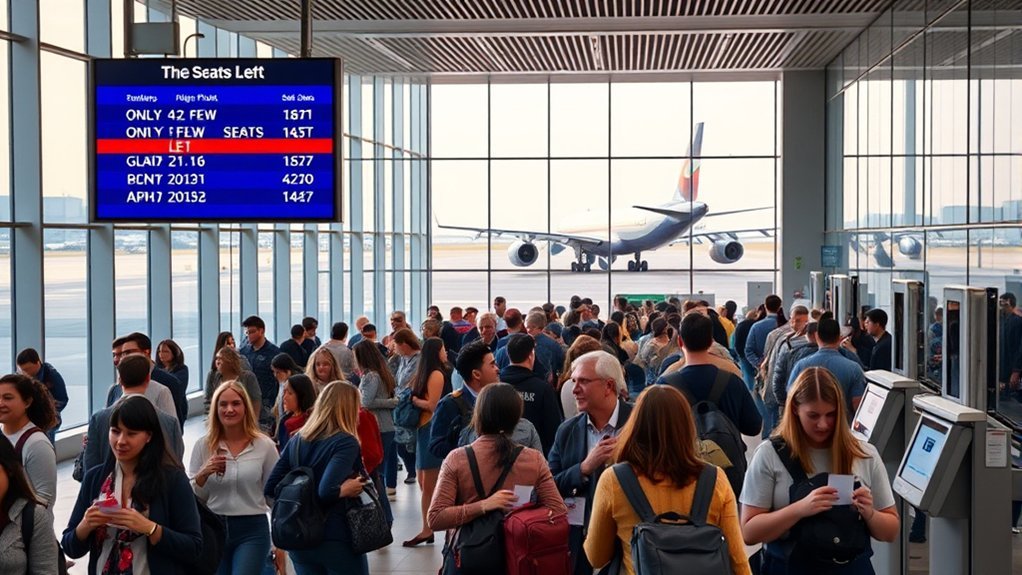
When an airline says only a few seats are left, the warning can be useful — but it does not automatically mean the aircraft is almost full. Depending on the airline and booking system, the message may refer to limited availability at the displayed price, a booking class, or a dynamically generated offer. Knowing the difference helps you decide whether to book without letting a scarcity message make the decision for you.
Quick Answer
“Only a few seats left” often means that only a small amount of inventory remains at the price or offer you are viewing — not necessarily that the airplane has only a few empty seats. Check the exact wording, compare nearby dates and party sizes, and do not use the seat map as a flight-fullness gauge.
Key Takeaways
- A low-seat warning often describes limited inventory for the displayed fare or offer, not the aircraft’s exact number of empty seats.
- Traditional booking classes still matter, but modern airline systems can also create prices dynamically rather than relying only on fixed fare buckets.
- A seat map shows seats available for selection or already assigned; it is not a reliable count of unsold tickets.
- Searching for one traveler and then your full party can reveal a party-size price jump, but splitting reservations can create seating and rebooking problems.
- For qualifying direct airline purchases in the United States, the 24-hour cancellation-or-hold rule can reduce the pressure to make a rushed decision.
- Family-seating protections still depend partly on airline commitments because the broader U.S. federal family-seating proposal has not been finalized as of July 27, 2026.
Disclosure: As an Amazon Associate I earn from qualifying purchases. Some links on this page are affiliate links, at no extra cost to you.
Understanding the Urgency Behind “Only a Few Seats Left”
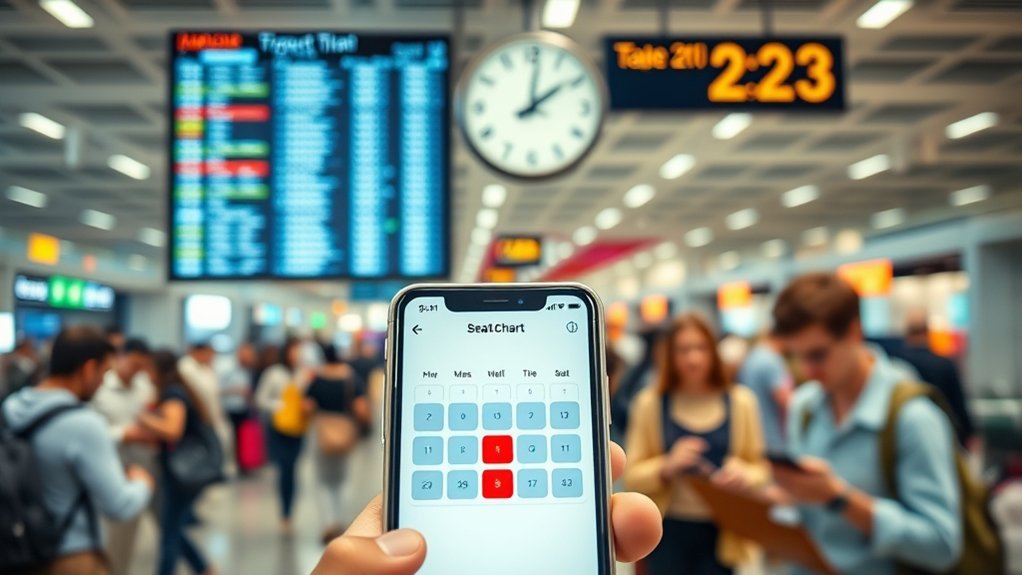
A scarcity message naturally makes a booking feel more urgent. That does not mean every warning is fake or deceptive. The important question is what inventory the message actually describes.
In traditional airline systems, physical aircraft capacity can be divided among booking classes used for pricing and revenue management. The International Air Transport Association explains that these booking classes have historically fed seat availability into pricing engines. At the same time, airlines are moving toward more dynamic retailing systems that can create offers and prices in real time rather than relying entirely on fixed booking classes. IATA’s airline retailing guidance describes both models.
That is why the safest interpretation of “1 seat left” is usually: availability for the offer you are looking at is limited. Unless the website specifically defines the warning as total flight capacity, do not assume it means there is literally one empty seat left on the aircraft.
How Scarcity Messages Affect Booking Decisions
Limited-availability labels can push travelers toward faster decisions because nobody wants to lose a good fare. The message may describe real inventory pressure, but the emotional effect can still make it easy to skip normal comparison shopping.
A seat-availability warning can tell you something about the offer in front of you. It does not, by itself, tell you exactly how full the airplane is.
- Fear of missing out: you may worry that waiting even a few minutes will cost you the fare.
- Perceived scarcity: a small remaining quantity can make an otherwise ordinary price feel unusually valuable.
- Decision pressure: urgency can lead you to ignore baggage fees, seat-selection charges, change restrictions, or inconvenient flight times.
- Real inventory risk: the displayed price genuinely can disappear while you compare options, so waiting is not risk-free either.
The goal is not to ignore scarcity messages. It is to understand what they prove — and what they do not.
Fare Buckets, Dynamic Offers, and Actual Aircraft Seats
Three different ideas often get mixed together during flight shopping: the aircraft’s physical seats, the airline’s sellable ticket inventory, and the price currently being offered to you.
How Traditional Fare Buckets Work
In a traditional revenue-management system, an airline can make different amounts of inventory available in different booking classes. Each class can be associated with particular fares or revenue ranges.
- A cheaper booking class may have only a few units of inventory available.
- When that lower-priced inventory is unavailable, the next offer may be more expensive even though plenty of physical seats remain.
- A cancellation or inventory adjustment can sometimes make a lower-priced option available again.
- Availability can differ by sales channel, itinerary, connecting flight combination, and party size.
This is the basic idea behind the familiar explanation that “1 seat left” may mean one seat is left at that price rather than one seat is left on the airplane.
Why “Fare Bucket” Is No Longer the Whole Story
Airline retailing is evolving. IATA describes modern offer-management systems that can dynamically create prices and bundles rather than depending exclusively on the old model of fixed fares tied to booking classes.
For travelers, the practical lesson is simple: treat a low-availability message as an inventory warning for the displayed offer unless the website clearly says otherwise. The technology behind that offer may be a traditional fare bucket, dynamic pricing, or a combination of both.
Why the Number Can Change or Reappear
Availability is not static. People cancel, fail to complete purchases, change flights, and move between itineraries. Airlines can also adjust how much inventory they make available for sale.
For that reason, seeing “1 left” and later seeing another low-priced ticket does not prove the first message was false. Likewise, seeing the same warning on repeated searches does not prove that the website is suffering from a cache or synchronization problem. From the customer’s side, there usually is not enough information to diagnose the backend reason.
Note: Inventory can disappear and reappear. A repeated “1 left” message is not reliable evidence that the counter is either perfectly real-time or technically stuck.
Why a Seat Map Does Not Show How Full a Flight Is
One of the biggest booking mistakes is treating the seat-selection map as an inventory report. A seat map and ticket availability measure different things.
- A passenger can hold a confirmed ticket without selecting a seat yet.
- An airline may block some seats from advance selection for operational reasons.
- A seat may appear occupied because it has been assigned, not because every other ticket on the flight has been sold.
- A flight can still have tickets for sale even when a seat map looks nearly full.
ExpertFlyer makes the same distinction in its own documentation: its seat-map feature can help you monitor selectable seats, but a full-looking seat map does not mean that the flight is sold out.
The reverse can also happen. A map showing apparently empty seats does not guarantee that all of those seats represent unsold tickets. Some passengers simply have not selected seats yet.
Common Misconceptions About Airline Seat Assignments
- “1 seat left means the aircraft has one empty seat.” Not necessarily. It may describe availability for the displayed fare or offer.
- “An empty-looking seat map means the flight is empty.” No. Many ticketed travelers may not yet have seat assignments.
- “A full-looking seat map means no tickets remain.” Not necessarily. Seat-selection inventory and ticket inventory are different.
- “A confirmed ticket always includes free advance seat choice.” No. Seat-selection rules depend on the airline and fare.
- “Basic economy means I do not have a seat.” Usually it means your seat-selection choices are restricted or your assignment may come later, not that you bought transportation without any seat at all.
- “Families are automatically seated together on every airline.” U.S. protections are not yet governed by one finalized universal family-seating rule.
Effective Strategies to Avoid Overpaying for a Flight

The strongest response to scarcity messaging is not automatically waiting or automatically booking. It is having better comparison information.
Monitor Fare Trends
Google Flights price tracking can monitor a flight, route, or flexible dates and notify you when prices change significantly. Similar fare-monitoring services can help you see whether the current price is unusual instead of judging the fare only from a scarcity label.
- Compare the same itinerary across the airline and reputable flight-search tools.
- Look at the total trip price, including bags and seat-selection charges.
- Check nearby airports when practical.
- Use historical-price guidance as context, not a guarantee of what the fare will do next.
Use Flexible Travel Dates
There is no rule that a specific weekday is always cheapest. Demand differs by route, season, holiday, event, and time of day.
Instead of assuming Tuesday or Wednesday will be cheaper, use a date grid or price graph to compare nearby departures. Moving a trip one or two days can sometimes produce a meaningful price difference, while on other routes it changes almost nothing.
Pro Tip: Compare your preferred dates with at least a few nearby options before reacting to a “seats left” warning. The bigger saving may come from changing the travel date rather than trying to outguess the inventory counter.
Use Loyalty Benefits for the Total Trip Cost
A loyalty program does not guarantee a cheaper cash airfare, but it can change the total value of a booking. Depending on the airline and your status or card benefits, useful perks can include:
- award-ticket options using miles or points;
- complimentary or discounted seat selection;
- checked-bag benefits;
- upgrade eligibility;
- priority services; and
- better flexibility on certain award or elite bookings.
Compare those benefits against the full cash cost instead of assuming the airline with the lowest base fare is automatically cheapest.
What Common “Seats Left” Messages Really Mean
Pay close attention to the exact wording. Different messages can communicate different things.
At a Glance: Red Flags vs. Real Scarcity
| “X seats left at this price” | Strong indication that availability for the displayed price or offer is limited; it does not state total aircraft capacity. |
| “Only X tickets/seats left” | Read the site’s explanation carefully. The wording may refer to the offer being displayed rather than every sellable ticket on the aircraft. |
| Checkout or quote timer | May describe how long a session, quote, or reservation is being held. It does not by itself prove the entire flight is filling at that speed. |
| Price rises between searches | Can result from lower inventory disappearing, dynamic repricing, a different party size, or a newly generated offer. |
| Same “1 left” message later | Does not prove either real-time scarcity or a caching error. Inventory may have remained limited, reopened, or been regenerated. |
| Nearly full seat map | Shows limited selectable seats, not an exact count of unsold tickets. |
Navigating Last-Minute Bookings Without Panic
Last-minute airfare can move quickly, so there is a point where waiting has real risk. Use a simple process instead of repeatedly refreshing the same warning.
- Check the airline’s own price: compare it with reputable search platforms, but also review the airline’s baggage and seat rules.
- Compare nearby flights: an earlier or later departure may have much more inventory.
- Compare nearby dates: even a one-day change can alter demand substantially.
- Check the fare restrictions: understand cancellation, change, baggage, and seat-selection rules before paying.
- Know your 24-hour protection: qualifying U.S. bookings may give you breathing room after purchase.
Use the U.S. 24-Hour Rule When It Applies
For a ticket purchased directly from an airline at least seven days before scheduled departure, the U.S. Department of Transportation’s 24-hour rule requires the airline to provide one of two protections: either a 24-hour penalty-free cancellation with a full refund or a 24-hour reservation hold at the quoted price without payment.
An airline does not have to provide both options, and the federal requirement does not generally apply to tickets purchased through online travel agencies or other third-party agents.
Note: Before using the 24-hour window as a safety net, confirm whether your airline offers cancellation or a hold and whether you are booking directly with the carrier.
Booking Multiple Passengers Without a Price Surprise
A party-size search can sometimes explain why a fare suddenly looks more expensive. Suppose a lower-priced offer has enough availability for one traveler but not for four. A search for the whole party may return a different price than a search for one passenger.
A useful diagnostic is:
- Search the itinerary for one traveler.
- Repeat the same search for the full number of travelers.
- Compare the per-person price and fare conditions.
- If the full-party price is higher, check another flight or fare before considering separate reservations.
This does not mean you should automatically buy every ticket separately. Different reservations can be harder to manage during schedule changes or cancellations, and family-seating commitments may depend on the child and accompanying adult being on the same reservation.
Warning: Do not split a parent and young child onto separate reservations just to chase a lower fare without first checking the airline’s family-seating rules. A separate booking can weaken the protections or automatic processes that help keep them together.
Dealing With Seat Availability Issues on Flights

Ticket Availability vs. Seat Selection
Buying transportation and selecting a specific seat are separate parts of many airline bookings.
- You can have a confirmed ticket without an advance seat assignment.
- A standard seat may be assigned later under the rules of your fare.
- Some seats visible on the map may cost extra because of location or added legroom.
- Some seats may be withheld from advance selection.
- A seat map should not be used to estimate the exact number of tickets still for sale.
Airline Seat Assignment Policies
Policies differ significantly by carrier and fare type. Basic or restricted fares may assign a seat at check-in or closer to departure, while higher fare bundles may include advance selection.
There is no general U.S. rule giving every passenger free advance choice of a specific seat. A confirmed reservation also does not make overbooking impossible. DOT explains that airlines may legally oversell flights and, in some cases, passengers can be involuntarily denied boarding subject to federal rules and compensation requirements. See the DOT guidance on bumping and oversales.
Strategies for Getting the Seats You Need
- Read the fare rules before paying: confirm whether advance selection is included.
- Check the airline’s seat map after ticketing: availability can change as other passengers move or cancel.
- Set a seat alert when useful: services such as ExpertFlyer can monitor particular seat-map openings on supported airlines.
- Ask the airline early about accessibility needs: separate legal protections can apply to passengers with disabilities.
- Keep families on the same reservation: this can be important for fee-free family-seating commitments.
Family Seating Strategies: Keeping Children and Adults Together
The U.S. Department of Transportation Family Seating Dashboard tracks airlines that voluntarily commit to seating a child age 13 or under next to an accompanying adult at no additional cost for all fare types, subject to limited conditions.
As of July 27, 2026, the DOT dashboard lists Alaska, American, Frontier, Hawaiian, and JetBlue as making that commitment. Allegiant, Delta, Southwest, Spirit, and United are not currently shown by DOT as making the dashboard’s specific guarantee. Airline policies can still provide family-seating assistance even when a carrier is not marked as committed on the dashboard, so check the current policy before booking.
For airlines that assign seats, DOT allows the voluntary guarantee to depend on conditions such as:
- the child and accompanying adult being on the same reservation;
- adjacent seats being available when the trip is booked in the selected class of service;
- no later aircraft swap to a smaller plane;
- the adult following the airline’s seat-selection process for the reservation; and
- the aircraft layout physically allowing the family arrangement.
A nationwide federal family-seating rule was proposed in 2024. However, DOT’s current aviation consumer rulemaking list still shows the August 1, 2024 Notice of Proposed Rulemaking and no final family-seating rule as of July 27, 2026.
| Action | Tips | Outcome |
|---|---|---|
| Book Early | Check the airline’s current family-seating policy and available adjacent seats. | More options before the cabin fills. |
| Keep One Reservation | Keep the child and accompanying adult on the same booking whenever possible. | Better alignment with family-seating commitments. |
| Check Assignments | Review seats after booking and again before departure. | Time to correct problems before boarding. |
| Ask for Help Early | Contact the airline or speak with an agent before boarding if the family is separated. | More time for staff to work on adjacent seating. |
Seating models can also change. Southwest, for example, transitioned from open seating to assigned seating for travel beginning January 27, 2026. Always use the airline’s current policy rather than relying on an older description of its boarding process.
Know Your Rights and the Limits of a Seat Assignment
- Advance seat-selection benefits depend on the airline and fare you buy.
- A ticket can be confirmed even when no specific seat has been selected yet.
- A seat map is not proof of total remaining ticket inventory.
- Some U.S. airlines voluntarily guarantee fee-free adjacent seating for a child 13 or under and an accompanying adult under specified conditions.
- The broader federal family-seating proposal has not been finalized as of July 27, 2026.
- Airlines may oversell flights, and separate DOT rules govern involuntary denied boarding when an oversold flight cannot accommodate everyone.
If you believe an airline failed to follow an applicable consumer rule or its published commitment, first contact the carrier. You can also submit an aviation consumer complaint to the U.S. Department of Transportation.
What to Do When You See “1 Seat Left”
Before booking, take about a minute to run through this checklist:
- Read the exact message. Does it say “at this price,” “tickets left,” or simply “seats left”?
- Check your party size. Compare one traveler with the full party to see whether the per-person fare changes.
- Check nearby flights and dates. A small schedule change may offer much more inventory.
- Compare the total trip cost. Include seats, bags, change restrictions, and other extras.
- Ignore the seat map as a fullness gauge. Use it only to judge current seat-selection options.
- Protect family bookings. Do not separate young children from accompanying adults onto different reservations simply to save a small amount.
- Check the 24-hour rule. For an eligible direct U.S. airline booking, you may have a cancellation or hold option that reduces the pressure to decide perfectly on the first try.
If the fare is acceptable, the itinerary works, and the conditions fit your plans, a genuine low-inventory warning is a reasonable reason to book. What you should avoid is treating the warning itself as proof that the entire airplane is about to sell out.
Frequently Asked Questions
What is the 3-seat economy trick?
There is no standard airline-industry rule officially known as the “3-seat economy trick.” The phrase usually describes searching for different party sizes — for example, one traveler versus three — to see whether limited lower-priced inventory is causing a larger party to price higher. It can reveal a pricing difference, but it does not guarantee a cheaper way to book.
When an airline says “4 left,” what does that mean?
Read the surrounding wording carefully. “4 left at this price” clearly refers to limited availability for that price or offer. A less specific “4 seats left” message may still describe the inventory being offered to you rather than the aircraft’s exact number of empty seats. Do not use the warning alone to estimate cabin fullness.
Which U.S. airline gets the most complaints?
There is no permanent answer because complaint totals change by reporting period and airline size matters. DOT publishes Air Travel Consumer Reports regularly; as of July 2026, its report index lists the July 2026 report using May 2026 data. Check the latest report rather than relying on an older fixed ranking, and consider complaint rates or passenger volume when comparing carriers.
How can I check how many seats are actually empty on a flight?
There generally is no public tool that gives you a guaranteed exact count of unsold tickets. Airline and ExpertFlyer seat maps can show current seat-selection information, and some tools expose booking-class availability, but those are not the same as an exact count of empty or unsold physical seats.
Why does the price increase when I search for several passengers?
One possible reason is that the lower-priced offer does not have enough availability for everyone in the search, so the booking system returns a different offer for the party. Pricing behavior varies by airline and sales channel, so compare a one-passenger search with the full party before assuming this is the cause.
Should I book family members on separate reservations to get a lower price?
Usually not without considering the consequences first. Separate reservations can complicate family seating, schedule changes, cancellations, and rebooking during disruptions. DOT’s voluntary family-seating framework can allow airlines to require the child and accompanying adult to be on the same reservation, so keeping them together is generally the safer approach.
Does a full seat map mean the flight is sold out?
No. A seat map mainly shows seat assignments and seats currently available for selection. Ticketed travelers may not have selected seats, airlines may block seats from advance selection, and tickets can sometimes remain for sale even when the map looks full.
Conclusion
When you see “only a few seats left,” take it seriously as a possible sign that the current offer has limited availability — but do not treat it as a literal countdown of empty seats on the airplane. Booking classes, dynamic pricing, cancellations, seat assignments, and even overbooking can all make the real picture more complicated.
Check the wording, compare your party size and nearby travel dates, look at the full cost of the ticket, and use the 24-hour booking protection when it applies. That gives you a much better basis for deciding whether to book than either panicking at the warning or assuming it is meaningless.
Sources
- International Air Transport Association — Airline Retailing: An Industry Vision for Offers and Orders — explains traditional booking classes, physical capacity, dynamic pricing, and the transition toward offer-based airline retailing.
- U.S. Department of Transportation — Airline Family Seating Dashboard — current voluntary airline commitments and conditions for fee-free adjacent family seating.
- U.S. Department of Transportation — Family Seating Notice of Proposed Rulemaking — details the proposed nationwide family-seating requirement.
- U.S. Department of Transportation — Aviation Consumer Protection Final and Proposed Rules — current rulemaking status, including the family-seating proposal.
- U.S. Department of Transportation — Refunds and 24-Hour Reservation Rule — requirements for qualifying 24-hour cancellation or reservation holds.
- U.S. Department of Transportation — Bumping and Oversales — explains airline overselling and passenger protections when denied boarding.
