
Last Updated on September 11, 2026 by Daniel Globe
Spray sunscreen is allowed on airplanes, but the correct packing method depends on the container size and where you place it. For U.S. flights, TSA controls what passes through the security checkpoint, while FAA hazardous-material rules set additional limits for aerosols in carry-on and checked baggage.
Quick Answer
Yes, you can bring spray sunscreen on a plane. Carry-on aerosol containers must hold no more than 3.4 fluid ounces or 100 milliliters and fit in your quart-sized liquids bag. Larger cans may go in checked baggage, but each liquid container must stay within the FAA’s 500-milliliter or 17-fluid-ounce limit.
Key Takeaways
- Carry-on spray sunscreen must be in a container of 3.4 fluid ounces or 100 milliliters or less.
- Checked aerosol sunscreen may be larger, but each liquid container cannot exceed 500 milliliters or about 17 fluid ounces.
- The combined quantity of covered medicinal and toiletry products is limited to 2 liters or 68 fluid ounces per person.
- The spray button or nozzle must have a cap or another form of protection against accidental release.
- Powder sunscreen over 12 ounces may require additional screening, but it is not automatically prohibited from carry-on baggage.
- Follow the product’s heat and flammability warnings while applying, wearing, and storing spray sunscreen.
At a Glance
| Time Required | About 3–5 minutes |
| Difficulty | Easy |
| Tools Needed | Secure nozzle cap, quart-sized carry-on liquids bag, and an optional resealable leak-containment bag for checked luggage |
| Cost | Usually $0 if you already have suitable bags |
Disclosure: As an Amazon Associate I earn from qualifying purchases. Some links on this page are affiliate links, at no extra cost to you.
Is Spray Sunscreen Allowed on a Plane?
Yes. The Transportation Security Administration allows sunscreen in both carry-on and checked baggage, including aerosol sunscreen. The applicable size and packing rules differ between the two types of luggage.
At a U.S. security checkpoint, spray sunscreen counts as a liquid or aerosol. A carry-on container must therefore hold no more than 3.4 fluid ounces or 100 milliliters and must fit inside your single quart-sized liquids bag with your other liquids, gels, creams, pastes, and aerosols.
A full-size can may be placed in checked luggage if it stays within the federal limits for medicinal and toiletry articles. The can’s button or nozzle must also be protected with a cap or another suitable device that prevents accidental spraying.
Note: These are U.S. rules. Individual airlines and international authorities may impose stricter requirements, especially on a return flight departing from another country. Check the rules for your departure airport and carrier before packing.
What Are the TSA and FAA Rules for Spray Sunscreen?
TSA’s liquids, aerosols, and gels rule applies at the security checkpoint. FAA and Department of Transportation rules govern the safe transport of aerosol toiletry products aboard the aircraft. You must satisfy both sets of rules.
| Packing location | Limit | What to do |
|---|---|---|
| Carry-on bag | 3.4 fl oz or 100 mL per container | Place it in your quart-sized liquids bag and protect the nozzle. |
| Checked bag | Up to 500 mL or about 17 fl oz per liquid container | Use a secure cap or nozzle guard and pack the can against damage. |
| Combined toiletry allowance | Up to 2 L or 68 fl oz by volume per person | Count covered products such as aerosols, perfume, hairspray, rubbing alcohol, and similar restricted toiletries together. |
| Nozzle protection | Required for aerosols | Keep the original cap fitted or use another suitable method that prevents inadvertent release. |
Aerosol sunscreen is allowed, but checked luggage is not an unrestricted option: each liquid container and the combined quantity of covered toiletries must remain within federal limits.
Which Sunscreens Can You Pack in Carry-On Bags?
The rules depend on whether the sunscreen is a liquid, aerosol, solid, or powder. Choosing a stick can simplify packing because it does not use space in your quart-sized liquids bag.
| Sunscreen type | Carry-on rule | Packing note |
|---|---|---|
| Aerosol or pump spray | 3.4 fl oz/100 mL or less | Must fit in the quart-sized liquids bag. |
| Lotion, cream, or gel | 3.4 fl oz/100 mL or less | Must fit in the quart-sized liquids bag. |
| Solid sunscreen stick | Allowed as a solid | Does not need to go in the liquids bag. |
| Powder sunscreen | Allowed, subject to powder screening | Containers over 12 oz/350 mL must be removed for X-ray screening and may require additional inspection. |
TSA encourages travelers to place nonessential powders over 12 ounces in checked baggage, but large powders are not automatically prohibited from a carry-on. Security officers may open the container if they cannot clear it during screening.
What If the Sunscreen Is Medically Necessary?
TSA permits medically necessary liquids, gels, and aerosols in reasonable quantities above the normal 3.4-ounce carry-on limit. You must tell the officer about the item before screening and remove it for separate inspection. Ordinary vacation sunscreen does not automatically qualify for this exception simply because sunscreen protects your health.
Review TSA’s medical-item screening guidance before traveling with a larger quantity that has been recommended for a specific medical need.
How to Pack Spray Sunscreen Safely
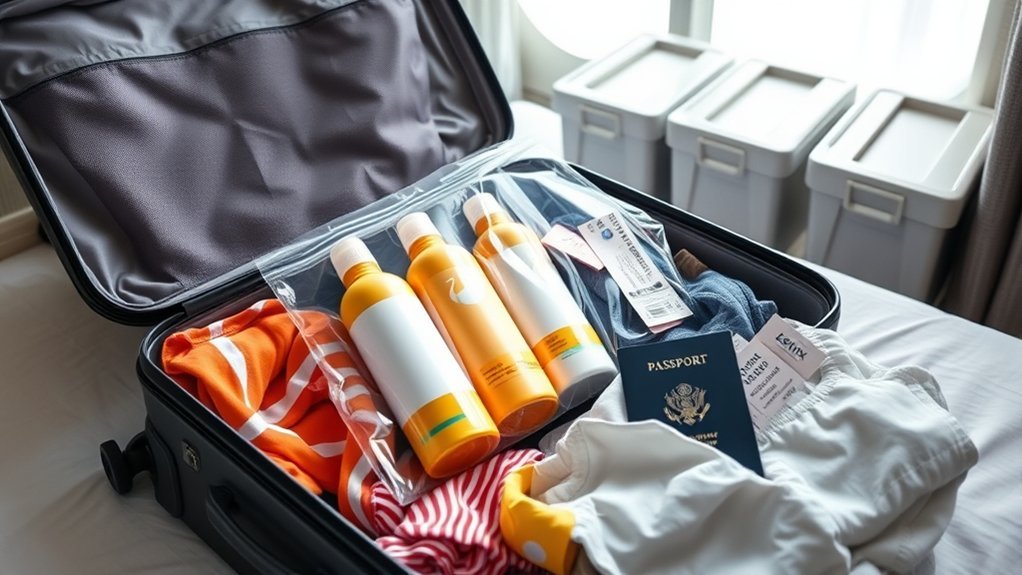
Safe packing begins with a compliant, undamaged container. A plastic bag can contain a small leak, but it cannot make an oversized, damaged, overheating, or improperly capped aerosol safe to transport.
TSA Size Limits
For a carry-on, check the capacity printed on the original container. The limit applies to the container’s maximum capacity, not the amount of sunscreen remaining inside it. A half-empty 6-ounce can is still too large for the standard carry-on liquids bag.
Place a compliant container in the same quart-sized, clear, resealable bag as your other liquids and aerosols. A gallon-sized bag does not satisfy the TSA carry-on liquids rule.
Seal and Secure
- Inspect the can. Do not pack it if it is leaking, badly dented, punctured, heavily rusted, bulging, or missing its protective cap.
- Protect the release device. Fit the original cap securely over the button or nozzle.
- Contain possible leakage. Use the quart-sized liquids bag in a carry-on or a separate resealable bag in checked luggage.
- Cushion the container. Place clothing or a towel around it so hard objects do not crush or strike the nozzle.
- Keep it away from excessive heat. Do not leave the aerosol in direct sunlight, beside a heater, or inside an extremely hot vehicle.
Pro Tip: A solid sunscreen stick is usually the simplest option for short trips. It does not count toward the carry-on liquids allowance and cannot discharge like a spray nozzle.
Pack in Checked Bags
Place a larger compliant can in a resealable plastic bag, close the protective cap, and cushion it in the center of your suitcase. Keeping it away from the suitcase edges reduces the chance that baggage handling will crush or damage the container.
Do not pack a can larger than the federal per-container limit. Moving an oversized container from a carry-on to checked luggage does not make it permitted.
Warning: Many spray sunscreens contain alcohol or other flammable ingredients. Read the label. Do not smoke or go near grills, candles, flames, or sparking materials while applying or wearing a product labeled flammable. Do not puncture or burn the can.
Can You Bring Aerosol Sunscreen in Checked Bags?
Yes. Aerosol sunscreen qualifies as a personal medicinal or toiletry article under the FAA PackSafe rules. It may be transported in checked baggage when the container, total quantity, packaging, and nozzle meet the applicable requirements.
Checked Bag Size Limits
For products measured by liquid volume, each container may hold no more than 500 milliliters, approximately 17 fluid ounces. The rule also permits up to 0.5 kilograms or 18 ounces by mass for products measured by weight.
The combined allowance for covered medicinal and toiletry articles is no more than 2 liters or 68 fluid ounces by volume, or 2 kilograms or 70 ounces by mass, per person. This total can include products such as aerosol sunscreen, hairspray, perfume, shaving cream, rubbing alcohol, and similar restricted toiletries.
Most retail sunscreen aerosols are much smaller than the per-container maximum. Even so, check the label rather than estimating the size from the appearance of the can.
Safe Packing for Aerosols
| Packing step | Why it matters |
|---|---|
| Read the container capacity | Confirms that the can meets the per-container limit. |
| Count other restricted toiletries | Helps keep the combined quantity within the per-person allowance. |
| Fit the protective cap | Prevents baggage from pressing the release button. |
| Use a resealable bag | Contains minor leakage if the container is damaged. |
| Cushion with clothing | Reduces impact and pressure from nearby objects. |
How to Travel With Sunscreen Without Leaks
No method can guarantee that a container will never leak, but careful inspection and packing reduce the risk considerably. Start with a can that is in good condition and still has its original protective cap.
- Wipe sunscreen residue from the nozzle and cap before packing.
- Make sure the cap locks firmly into place.
- Place carry-on sunscreen inside the required quart-sized liquids bag.
- Use a separate resealable bag around sunscreen in checked luggage.
- Keep the container away from shoes, tools, and other hard objects.
- Do not pack a can that is already leaking, damaged, or unusually swollen.
- Keep sunscreen away from excessive heat and direct sunlight before and after the flight.
FDA advises protecting sunscreen containers from excessive heat and direct sun. It also advises users not to spray sunscreen directly onto the face. Spray it into your hands first, then apply it carefully while avoiding the eyes and mouth.
Can You Use Spray Sunscreen During the Flight?
It is better to apply spray sunscreen before boarding or after leaving the aircraft. Spraying it in a confined cabin can expose nearby passengers to mist, fragrance, or vapors, and the product may have a flammability warning.
FAA notes that not every item permitted in carry-on baggage should be used during flight and advises passengers to consult the flight crew before using products that create strong odors or vapors. A lotion or sunscreen stick is a more considerate choice if you need to reapply while seated.
Frequently Asked Questions
Will my aerosol sunscreen explode on a plane?
TSA and FAA permit compliant aerosol sunscreen during normal air travel. However, no packing method guarantees that a damaged, leaking, defective, or overheated can cannot fail. Use an undamaged container, stay within the quantity limits, protect the nozzle, and follow the heat warnings on the label.
Can aerosol sunscreen burst in extreme heat?
Excessive heat can increase pressure inside an aerosol container and damage the product or can. Follow the storage temperature and safety warnings printed on the label, and do not leave spray sunscreen in direct sun or an extremely hot vehicle.
Are all spray sunscreens flammable?
Not every spray sunscreen has the same formula, but many contain flammable ingredients such as alcohol. Read the Drug Facts and warning labels. When a product is labeled flammable, avoid smoking, flames, grills, candles, and sparks while applying and wearing it.
Are aerosol spray sunscreens safe to use?
They can be used safely when you follow the product label. Apply them in a ventilated area, avoid inhaling the mist, do not spray directly onto the face, and keep products labeled flammable away from ignition sources.
Can I put a full-size spray sunscreen in my carry-on?
Not through a standard U.S. security checkpoint if the container holds more than 3.4 fluid ounces or 100 milliliters. Pack a compliant full-size can in checked luggage, buy sunscreen after security when available, or carry a travel-size spray or solid stick.
Do the same sunscreen rules apply on international flights?
Not always. Many countries use a similar 100-milliliter cabin-liquid limit, but screening procedures, aerosol restrictions, and transfer rules can differ. Check the departure airport, connecting airport, destination authority, and airline before each leg of an international trip.
Conclusion
You can bring spray sunscreen on a plane when you follow the applicable size, quantity, and packing rules. Keep carry-on cans at 3.4 fluid ounces or 100 milliliters or less, place larger compliant cans in checked luggage, and protect every aerosol nozzle against accidental release.
Before closing your suitcase, inspect the container, read its heat and flammability warnings, and check the latest rules for your airline and departure airport. A sunscreen stick is a useful alternative when you want sun protection without using space in your carry-on liquids bag.
Sources
- Transportation Security Administration — Sunscreen — confirms that sunscreen is permitted in carry-on and checked baggage and identifies the carry-on size rule.
- Transportation Security Administration — Liquids, Aerosols, and Gels Rule — explains the 3.4-ounce container and quart-sized bag requirements.
- Federal Aviation Administration — Medicinal and Toiletry Articles — provides the aerosol container, aggregate quantity, and protected-nozzle rules.
- Electronic Code of Federal Regulations — 49 CFR 175.10 — contains the federal passenger-baggage exception for medicinal and toiletry aerosols.
- U.S. Food and Drug Administration — Sunscreen Safety — supports the heat, storage, facial-application, and flammability guidance.
- Transportation Security Administration — Powder Policy — explains additional screening for powder containers over 12 ounces or 350 milliliters.

