
Last Updated on July 28, 2026 by Daniel Globe
Italy offers an extraordinary range of settings for wedding photography, from Lake Como’s waterside villas and Tuscany’s vineyards to Venice’s canals and Rome’s historic streets. The best location is not simply the prettiest one. It should also fit your ceremony schedule, preferred light, transport plan, privacy needs, weather backup, and photography permissions.
Quick Answer
Lake Como, the Amalfi Coast, Tuscany, Venice, Rome, Puglia, and Lake Bracciano offer Italy’s strongest wedding-photography settings. Choose by visual style, access, crowd levels, weather backup, and venue rules—not scenery alone. Confirm photography permission, transport time, and a rain plan before finalizing your wedding-day timeline.
Key Takeaways
- Lake Como and the Amalfi Coast are ideal for water, cliff, garden, and villa backgrounds, but boat and road travel require extra time.
- Tuscany and Puglia offer more space, countryside scenery, vineyards, olive groves, and private-estate options.
- Venice and Rome provide famous architecture but usually involve larger crowds, more walking, and location-specific photography rules.
- Private venues, monuments, churches, gardens, boats, and public spaces may each require separate approval.
- Build the photography schedule around real travel times, seasonal light, a weather backup, and the comfort of the couple and guests.
Disclosure: As an Amazon Associate I earn from qualifying purchases. Some links on this page are affiliate links, at no extra cost to you.
Stunning Wedding Photography in Lake Como
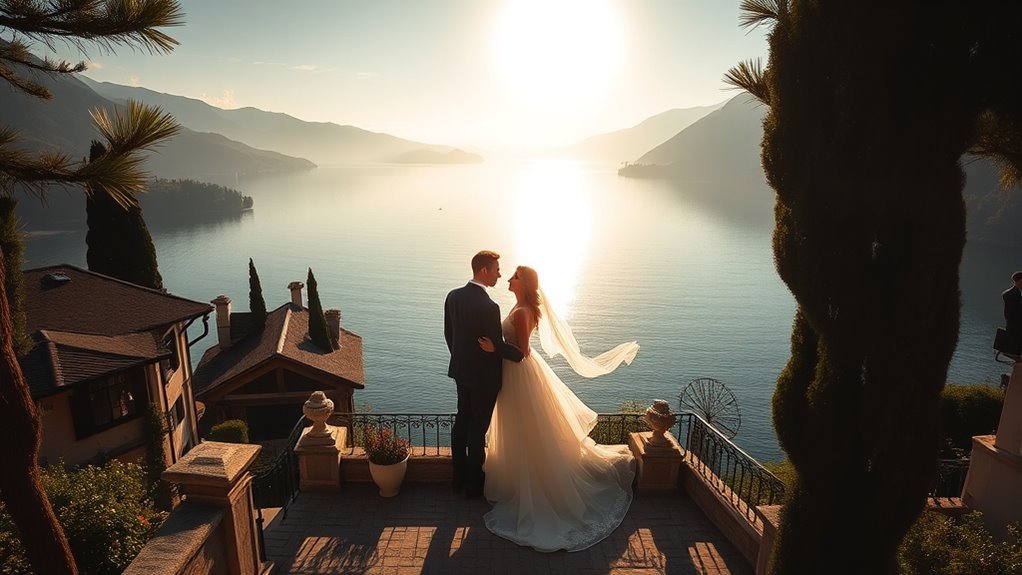
Lake Como pairs deep blue water, Alpine scenery, formal gardens, stone villages, and historic villas. It works especially well for couples who want elegant portraits with a mix of architecture and nature.
Villa del Balbianello is one of the lake’s best-known settings. The 18th-century property sits on a wooded promontory and includes terraces, a loggia, lake views, and carefully maintained gardens. The villa requires advance booking for visits, while weddings, private events, and professional productions have separate arrangements through FAI.
A Lake Como photo plan may also include a private dock, a village lane, a hotel terrace, or a boat ride. Boat portraits can provide open water, mountain layers, and a clean horizon, but boarding time, wind, spray, and the position of the sun must be considered.
Late spring and early autumn are often practical choices because the light can be softer and the busiest summer period may be easier to avoid. However, rain, changing lake conditions, and cooler evenings remain possible in every season.
Pro Tip: Ask the photographer to build the timeline backward from sunset and include boarding, walking, and docking time. A 20-minute boat portrait session may require far more than 20 minutes in the wedding schedule.
Photogenic Spots Along the Amalfi Coast
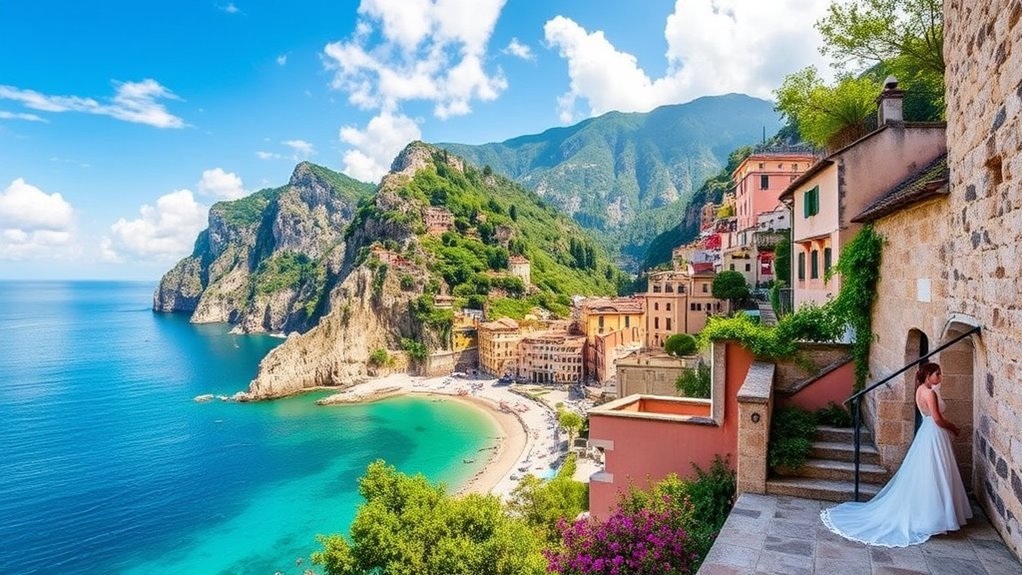
The Amalfi Coast combines steep cliffs, pastel buildings, tiled church domes, Mediterranean water, narrow streets, and terraced gardens. Positano, Ravello, and Atrani each offer a different visual style, but coastal road traffic and elevation changes can make short distances take longer than expected.
| Location | Photography Highlights | Planning Consideration |
|---|---|---|
| Positano | Pastel buildings, steep lanes, beach views, and layered cliffside scenery | Crowds, stairs, limited vehicle access, and strong midday sun |
| Ravello | High coastal viewpoints, villa gardens, terraces, and historic architecture | Venue permission, walking distance, garden hours, and transfer time |
| Atrani | Compact lanes, arches, a small beach, and close-set village architecture | Tight spaces, pedestrian activity, and changing beach conditions |
Positano is strongest for colorful, layered views. Ravello feels more formal and garden-focused, while Atrani works well for intimate street scenes and architectural details. The official Italian tourism site provides a useful overview of the Amalfi Coast’s towns and landscapes.
Note: Do not schedule portraits in Positano, Atrani, and Ravello on the same wedding day unless a local planner and photographer confirm that the route is realistic. Coastal traffic, stairs, parking, and guest transfers can quickly consume the available light.
Capturing the Beauty of Tuscany’s Rolling Hills
Tuscany is suited to couples who want a quieter countryside setting with vineyards, olive groves, cypress-lined roads, stone farmhouses, medieval towns, and open views. It also gives photographers more room to create wide environmental portraits than many crowded city locations.
Ideal Seasons for Photography
Late spring and early autumn are often favored for outdoor weddings because they can provide green fields, flowering gardens, harvest colors, and comfortable evening light. April through June and September through October are useful planning windows, but no month guarantees dry weather or a specific landscape color.
| Period | Possible Visual Character | What to Confirm |
|---|---|---|
| Late spring | Green fields, garden growth, flowers, and longer daylight | Rain backup, field access, pollen, and evening temperature |
| Summer | Dry golden tones, long evenings, and strong sunlight | Heat, shade, hydration, and a later portrait schedule |
| Early autumn | Warm fields, vineyard activity, softer evenings, and harvest details | Harvest operations, sunset time, rain, and cooler nights |
Scenic Vineyard Backdrops
Tuscany’s vineyards create strong leading lines and natural layers for portraits. The Chianti countryside, Val d’Orcia, Montepulciano, and Montalcino can provide vines, stone walls, farm roads, and distant hill towns.
Vineyards are working agricultural properties, not automatic public photo locations. Obtain the owner’s permission before entering a field, moving equipment, or photographing among the vines. During harvest, access may be limited even when a property normally welcomes guests.
Borgo Santo Pietro is an example of a private Tuscan estate that combines landscaped gardens, farmland, historic buildings, and luxury hospitality. Its variety can reduce the need to move between unrelated photo locations during the wedding day.
Charming Hilltop Villages
San Gimignano, Pienza, Montepulciano, and Montalcino add medieval streets, Renaissance squares, stone doorways, towers, and broad countryside views. San Gimignano is especially recognizable for its surviving towers, while Pienza offers Renaissance architecture and Val d’Orcia scenery.
| Village | Distinctive Feature | Useful Photo Window |
|---|---|---|
| San Gimignano | Medieval towers and narrow stone streets | Early morning or late afternoon |
| Pienza | Renaissance architecture and Val d’Orcia viewpoints | Morning for quieter streets or near sunset for countryside views |
| Montepulciano | Sloping lanes, stone palaces, and nearby vineyards | Late afternoon, allowing time for uphill walking |
| Montalcino | Hilltop panoramas, fortress details, and wine-country scenery | Late afternoon or early evening |
Cobblestones, slopes, pedestrian traffic, and parking restrictions can affect the schedule. Carry comfortable shoes between portrait locations and change into formal footwear shortly before the photographs.
Iconic Wedding Photography Locations in Venice
Venice provides canals, bridges, carved stone, quiet passageways, grand waterfront buildings, and reflected light. Its most recognizable locations include St. Mark’s Square, the Rialto Bridge, the Grand Canal, and the colorful island of Burano.
- St. Mark’s Square: The basilica, arcades, bell tower, and Doge’s Palace create a formal Venetian setting. Dawn is usually the most practical period for portraits with fewer pedestrians.
- Rialto Bridge and the Grand Canal: These locations offer water traffic, historic facades, and active city scenes. Choose viewpoints carefully so the couple is not lost in the crowd.
- Burano: Brightly colored houses provide a playful alternative to central Venice’s stone architecture. The boat journey must be included in the schedule.
- Quiet canals and passageways: Less famous streets can produce more intimate images without moving far from the ceremony or hotel.
The official Venezia Unica guide to San Marco provides destination information for the central district. Professional photography involving equipment, organized activity, or temporary use of public space may require municipal authorization. Venice publishes photography and filming information through its Sportello Cinema.
A gondola can add movement, canal reflections, and a distinctly Venetian setting. Confirm the boarding point, route, duration, passenger limit, photography plan, and luggage arrangements with the operator. A large dress, multiple assistants, or substantial equipment may require a different setup.
Warning: Public access does not automatically authorize a staged professional shoot. Get written guidance before using tripods, freestanding lights, large crews, props, or equipment that blocks pedestrian movement.
Products Worth Considering

1.Material : Vinyl Cloth, Non Splice, Seamless,Computer-printed

Size: 7 x 5 ft (2.1 x 1.5 m).80x60 Inch. BELECO Italian Backdrops for Photography

[Size] 6x4ft/1.8x1.2m (1.8m width, 1.2m height).
Timeless Wedding Moments in Historic Rome
Rome gives wedding photographers ancient ruins, Baroque fountains, basilicas, villas, gardens, terraces, and lively streets. It suits couples who want architectural variety, but the city requires careful route planning because its best-known sites can be crowded and widely separated.
Iconic Landmarks as Backdrops
- Colosseum: Exterior viewpoints can frame the amphitheater’s arches without requiring the couple to enter the monument. Crowd control, traffic, security boundaries, and ongoing works may affect the available angles.
- Trevi Fountain: The fountain provides dramatic stonework and moving water, but it is one of Rome’s busiest locations. Early morning is normally more workable than the middle of the day.
- St. Peter’s Basilica and Square: The dome, colonnade, and open square create a monumental setting. Remember that Vatican City has its own security and property rules.
- Spanish Steps: The staircase and surrounding streets can support wider city portraits, but photographers must not obstruct public movement or treat the monument as a private set.
Rome Capitale maintains an official service for certain filming and production authorizations. Requirements vary according to the property, equipment, activity, and whether public space is occupied. Obtain separate approval for privately managed villas, museums, churches, archaeological sites, and interiors.
Romantic Al Fresco Settings
Rome’s gardens and terraces offer a softer alternative to its monumental streets. The Orange Garden provides a broad city view from the Aventine Hill, while the Pincio overlooks Piazza del Popolo and the surrounding skyline. Both are public spaces, so timing and pedestrian activity matter.
Private venues such as Villa Aurelia can provide controlled access, gardens, reception areas, and indoor alternatives. A private venue is often easier for a full wedding-day schedule because portraits, dining, and weather backup can remain within one property.
Historic Architecture and Details
Rome’s strongest photographs do not always need a complete landmark. Arches, fountains, stone textures, balconies, cobbled lanes, frescoed rooms, and framed views can create a clear sense of place without placing the couple in a busy square.
A photographer should scout the route for temporary barriers, restoration work, security closures, traffic, and special events. Golden-hour light can be beautiful, but a shaded street or interior may produce better results when the schedule does not match sunset.
Charming Masserias for Wedding Photography in Puglia
Puglia’s masserias combine pale stone walls, arched passageways, courtyards, olive groves, gardens, and rustic interiors. They are well suited to couples who want a private countryside celebration with ceremony, reception, and portraits in one place.
Masseria San Domenico is a fortified historic farmhouse that hosts weddings and social events. Its current event information states that exclusive hotel rental is available from April through November, subject to request and minimum-stay terms. December through March arrangements differ and may not include hotel accommodation.
Masseria Torre Coccaro is another well-known option with traditional architecture, olive trees, courtyards, and nearby coastal scenery. Availability, exclusivity, music limits, catering, guest accommodation, and portrait access should be confirmed directly with each property.
Puglia can remain warm well beyond midsummer, so shade and hydration should be part of the photography plan. Ask where family photographs will take place if the ceremony area has full sun, and identify an indoor room or covered arcade for rain and heat.
The Luxurious Aesthetic of Borgo Santo Pietro
Nestled in the Tuscan countryside near Chiusdino, Borgo Santo Pietro combines an approximately 800-year-old estate with landscaped gardens, historic interiors, farmland, vineyards, dining, and luxury accommodation.
A venue with gardens, interiors, accommodation, and dining in one place can provide more portrait variety while reducing wedding-day travel.
Three features make the estate especially useful for wedding photography:
- Varied settings: Gardens, terraces, stone buildings, cultivated land, and indoor rooms create several visual styles without a long transfer.
- Farm-to-plate dining: The estate includes Saporium Chiusdino, which is listed in the Michelin Guide. Restaurant awards and schedules can change, so verify the current status when planning.
- Privacy: Exclusive-use arrangements can give the couple more control over the schedule, guest movement, and portrait locations.
The best month depends on the estate’s current event calendar and the landscape the couple prefers. Spring may provide greener gardens, while late summer and early autumn may bring warmer fields and harvest details. Ask the venue for recent photographs taken in the same month as the planned wedding.
Why Ravello Works So Well for Wedding Photography
Ravello sits high above the Amalfi Coast and combines broad sea views with gardens, historic villas, church architecture, and quieter streets than some coastal towns at sea level. It works especially well for couples who want refined garden portraits rather than beach-focused images.
Breathtaking Coastal Views
The Terrazza dell’Infinito at Villa Cimbrone is known for its wide view across the coast and sea. Its statues, stone terrace, and open horizon create a strong formal composition, particularly when the light is soft.
Because the terrace is part of a managed property, couples should not assume that ordinary visitor admission includes a professional wedding shoot. Villa Cimbrone’s official event information confirms that the property hosts weddings, filming, and photography and provides direct event-planning support.
Historic Architectural Backdrops
Villa Cimbrone is a historic residence with gardens and architectural features developed across several periods. Palazzo Avino offers terraces and formal interiors, while churches and civic spaces throughout Ravello provide stone arches, steps, doorways, and decorative details.
| Setting | Photography Strength | Permission to Confirm |
|---|---|---|
| Villa Cimbrone | Panoramic terrace, gardens, statues, and historic architecture | Event or professional-photography approval |
| Palazzo Avino | Elegant interiors, terraces, and coastal views | Hotel and event-team approval |
| Principessa di Piemonte Garden | Garden ceremony setting and open coastal view | Municipal ceremony and photography arrangements |
| Churches and civic spaces | Ornate details, stone architecture, and local character | Religious, municipal, or property-specific approval |
Vibrant Floral Gardens
Ravello’s gardens can provide climbing plants, structured paths, mature trees, stone features, and seasonal flowers. Villa Cimbrone and Villa Rufolo are the best-known examples, but bloom timing varies from year to year.
April and May can offer abundant spring growth, while September and October may provide softer light and fewer peak-summer visitors. Ask the venue which plants are normally in bloom during the planned week rather than relying on photographs from another season.
Dramatic Backdrops at Castello Odescalchi
Castello Odescalchi in Bracciano combines fortified architecture, courtyards, frescoes, formal rooms, stone stairways, and views toward Lake Bracciano. The contrast between the castle’s darker interiors and the open lake scenery can create a varied wedding gallery.
The castle’s official wedding and ceremony information describes spaces overlooking the lake and garden, while other event areas may be reserved exclusively. Ask which rooms, courtyards, terraces, and exterior viewpoints are included in the contract.
Popular weekends and high-demand months may be reserved early, but there is no universal booking period for every wedding. Contact the venue as soon as you know the preferred month, estimated guest count, ceremony type, and whether exclusive access is required.
Pro Tip: Ask the photographer to test the castle’s indoor exposure and flash restrictions during the walkthrough. Historic interiors can be much darker than exterior photographs suggest.
Elegant Wedding Photography at Villa Aurelia
Villa Aurelia stands on the Janiculum Hill and offers gardens, terraces, historic interiors, and broad views across Rome. The property has belonged to the American Academy in Rome since 1909 and is used for cultural and private events.
Three features make it a useful photography venue:
- City views: Elevated outdoor areas can place Rome’s skyline behind the couple without requiring a trip into a crowded square.
- Historic interiors: Formal rooms, architectural details, and restored spaces provide an indoor alternative during rain or intense heat.
- Several portrait zones: Gardens, stairs, terraces, windows, and reception spaces can create variety within one property.
Do not rely on a generic claim that one terrace always receives perfect golden light. The photographer should check the sun’s seasonal position, the event layout, and the venue’s permitted access times. From April through October, outdoor events may have longer daylight, but heat, wind, rain, and private-event scheduling still require backup plans.
How to Plan an Italy Wedding Photography Timeline
Products Worth Considering

STUNNING PHOTOGRAPHY OF ITALY – Features 26 vibrant full-color photographs showcasing Venice, Tuscany, the Amalfi Coast, and other breathtaking destinations throughout Italy.


Wedding Planner Book and Organizer - This 144-page day planner and budget book covers vendors, guest list, and every wedding planning book essential from engagement to I Do
1. Define the Ceremony and Photo Session
Clarify whether the event includes a legally recognized civil or religious ceremony, a symbolic ceremony, an elopement, or only a portrait session. Legal marriage documents depend on citizenship, residence, and the municipality. Foreign couples should consult the appropriate Italian consulate and the municipality where the ceremony will occur. The Italian government explains that foreign nationals may need a declaration showing that there is no legal impediment to marriage.
2. Get Written Permission
Ask each municipality, venue, church, garden, boat operator, hotel, and monument whether professional photography is permitted. Describe the number of people, cameras, tripods, lights, assistants, props, and vehicles involved. Keep written approvals with the planner or photographer on the wedding day.
3. Build Realistic Travel Buffers
Add time for boats at Lake Como, ferries in Venice, coastal traffic near Positano and Ravello, cobbled streets in Rome, and uphill walking in Tuscan towns. Avoid filling every available minute with a new location. One relaxed portrait route usually creates better photographs than several rushed stops.
4. Match the Location to the Light
Open water and terraces can be harsh at midday, while narrow streets may lose direct light early. Ask the photographer to identify one location for soft morning light, one shaded option, and one sunset option. Build family photographs around guest comfort rather than forcing everyone to stand in full sun.
5. Prepare a Weather Backup
Choose an indoor room, arcade, covered terrace, or hotel space that is included in the contract. Confirm whether furniture can be moved and whether flash, stands, or additional lighting are allowed.
6. Confirm Drone Compliance
Drone photography must follow current EU and Italian aviation rules. The operator should check registration, pilot competency, insurance, local geographical zones, altitude limits, nearby airports, crowds, and property restrictions. Italy’s civil aviation authority, ENAC, publishes current drone geographical-zone guidance.
Warning: Permission from a hotel or wedding venue does not by itself authorize a drone flight. Airspace rules and geographical-zone restrictions still apply.
7. Plan for Accessibility and Comfort
Check stairs, steep lanes, uneven stone, restroom access, shade, and the walking distance from the vehicle or boat. Bring water and comfortable shoes, and choose a shorter portrait route for guests with limited mobility.
Frequently Asked Questions
What is the best time of year for wedding photography in Italy?
Late spring and early autumn are often practical because many regions have comfortable evenings and attractive seasonal color. However, northern lakes, central countryside, coastal towns, and southern masserias have different weather and operating seasons. Confirm the venue calendar, sunset time, recent weather patterns, and indoor backup before choosing a month.
How do we obtain permits for photography in public locations?
Contact the municipality or authority responsible for the exact location and explain whether the session is personal, professional, editorial, or commercial. Include details about tripods, lights, assistants, props, vehicles, and temporary use of public space. Private venues, monuments, museums, churches, gardens, and archaeological areas may require separate approval.
Are local photographers familiar with these locations?
Yes. A photographer who regularly works in the chosen region may know practical routes, crowd patterns, seasonal light, venue contacts, and backup locations. Review complete wedding galleries rather than only highlight images, and ask how the photographer handles permits, rain, transportation, dark interiors, and schedule delays.
What should we consider for travel logistics with our photographer?
Confirm travel days, accommodation, local transportation, parking, ferries, boat transfers, equipment limits, meal timing, and overtime. The contract should state who pays travel costs and what happens if weather, traffic, or a delayed boat changes the portrait schedule.
Can we include pets in our wedding photography session?
Possibly, but obtain written approval from every venue, hotel, garden, restaurant, boat operator, and transport provider involved. Arrange a handler who can remove the pet after the photographs, and provide water, shade, treats, cleanup supplies, and a quiet place away from crowds and loud music.
Can our photographer use a drone at an Italian wedding venue?
Only when the flight complies with current aviation rules, local geographical-zone restrictions, privacy requirements, and the property’s policy. Venue approval alone is not enough. Use an operator who can document the required registration, competency, insurance, and flight checks.
Is a symbolic ceremony easier to photograph than a legal ceremony?
A symbolic ceremony may offer more freedom in location and timing because it is not the legal act of marriage. It still requires the property owner’s approval and may be subject to event, sound, guest, and photography restrictions. A legally recognized ceremony must also follow the applicable civil or religious procedures.
Sources
- FAI — Villa del Balbianello — official property history, visitor access, location, and booking information.
- Comune di Venezia — Sportello Cinema — public-space filming, video, and photography authorization information.
- Roma Capitale — Filming Authorization Service — official guidance for productions in certain municipal areas.
- Hotel Villa Cimbrone — Events — official wedding, event, filming, and photography information.
- Masseria San Domenico — Events — official event availability and seasonal operating information.
- ENAC — Italian Drone Geographical Zones — official information on airspace limitations and restricted drone operations.
Conclusion
Italy’s best wedding photography location is the one that supports both the couple’s visual style and the real wedding-day plan. Lake Como offers villas and water, the Amalfi Coast adds cliffs and coastal towns, Tuscany and Puglia provide countryside privacy, Venice delivers canals, and Rome combines gardens with monumental architecture.
Before booking, compare more than photographs. Confirm permission, seasonal access, crowd levels, walking distance, transport time, weather backup, indoor options, pet policies, and drone restrictions. With those details settled, the photographer can focus on creating a relaxed, coherent record of the day rather than solving preventable logistical problems.
