
Last Updated on July 23, 2026 by Caleb Warren
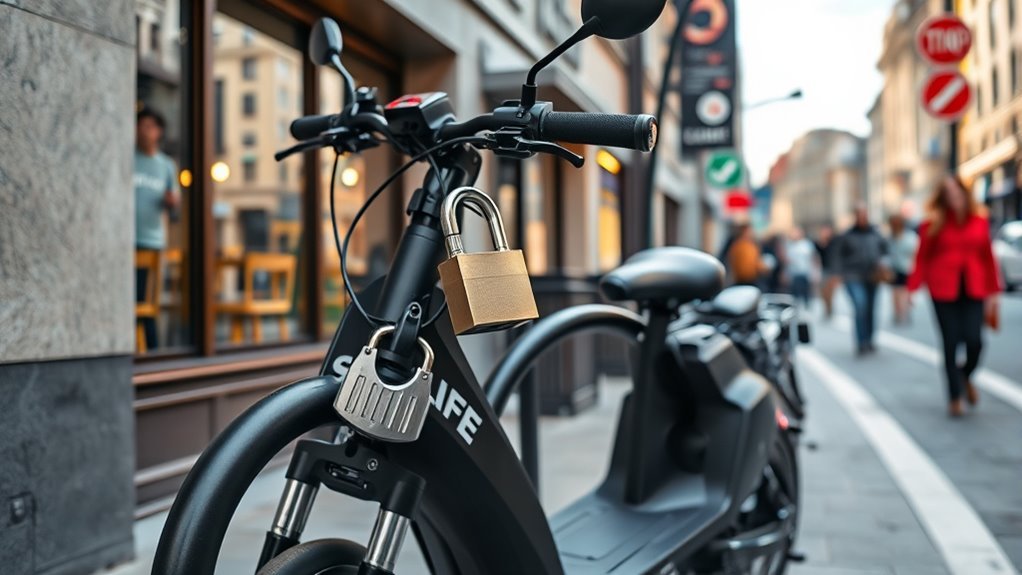
Electric scooters are easy to carry, quick to resell, and often left outside with limited locking points. You cannot make one impossible to steal, but you can make it a much harder target. The best approach combines a security-rated lock, correct lock placement, safer parking, an alarm or tracker, and clear ownership records.
Quick Answer
Prevent electric scooter theft by locking a solid, non-removable part of the scooter to a fixed anchor with a security-rated U-lock or hardened chain. Add a second lock, alarm, or tracker, park in a visible area, remove detachable valuables, and save the scooter’s serial number, photos, and purchase record.
Key Takeaways
- Use a tested U-lock or hardened chain as the main lock. Treat a thin cable as a secondary deterrent only.
- Lock through a dedicated pass-through, solid frame section, or strong stem area that cannot be removed without major disassembly.
- Fill as much empty space inside the lock as possible and keep the lock away from the ground.
- Use an alarm, motor lock, or tracker as an extra layer, not as a replacement for a physical lock.
- Record the serial number, take clear photos, and report a theft as soon as you discover it.
At a Glance
| Time Required | About 5 minutes for each lock-up; 15 to 30 minutes for tracker setup and ownership records |
| Difficulty | Easy |
| Tools Needed | Security-rated U-lock or chain, optional second lock, alarm or tracker, phone camera, and serial-number record |
| Cost | Varies by security rating, lock size, alarm, tracker, and any data subscription |
Disclosure: As an Amazon Associate I earn from qualifying purchases. Some links on this page are affiliate links, at no extra cost to you.
Why Thieves Target Electric Scooters
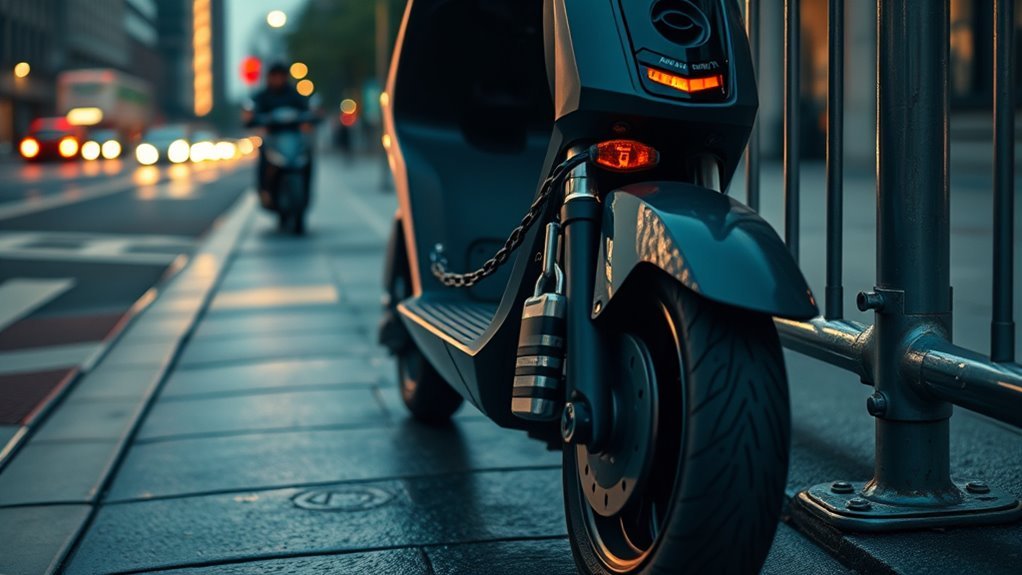
Electric scooters attract thieves because many models are light enough to lift into a vehicle, have removable parts with resale value, and lack the large closed frame triangle found on many bicycles. A thief may not need to ride the scooter away. They can carry it, remove a wheel or battery, or strip valuable parts.
Risk rises when a scooter is left unlocked, secured only by an app, attached through a removable part, or parked for a long time in a quiet location. A visible lock does not guarantee safety, but a strong lock-up increases the time, tools, noise, and attention required.
Choose the Best Electric Scooter Lock
Your main lock should be independently security-rated and small enough to fit tightly around the scooter and anchor. In markets where it is available, the Sold Secure rating system grades locks from Bronze through Diamond, with Diamond intended for the highest threat level. Check your insurer’s rules because some policies require a particular lock rating.
Before buying, measure the solid locking area on your scooter and the racks you normally use. A very strong lock is not useful if its shackle cannot pass through the scooter or around a secure anchor.
U-Locks for Scooters
A compact U-lock, also called a D-lock, is often the best everyday choice. Its rigid shackle limits the space available for tools, and a short model is easier to position tightly than an oversized one.
- Choose a security-rated model that fits your scooter’s dedicated locking point, structural frame, fork crown area, or solid stem section.
- Avoid locking only through a wheel, handlebar, fender, folding hook, brake cable, or bolted accessory.
- Use the smallest shackle that still reaches the fixed anchor.
- Check the keyway, shackle coating, and locking mechanism regularly. Clean and lubricate it only as the lock maker directs.
Kryptonite’s electric-scooter lock-up guidance also recommends reducing unused space inside the lock because less room makes tool attacks harder.
Chain Locks vs. Cable Locks
A hardened chain offers more flexibility than a U-lock and can reach thick posts or awkward racks. The trade-off is weight. Select a chain and padlock that carry a recognized security rating, since an untested chain may look heavy without offering strong resistance.
A cable lock is lighter and easier to carry, but most thin cables can be cut quickly with common tools. Use one to secure a second wheel, helmet, or accessory only after the scooter itself is attached with a stronger lock. Sold Secure notes that accessory cables bundled with approved locks may not be covered by the lock’s security approval.
Smart Locks and Alarms
Smart features can warn you about movement, disable controls, or help locate the scooter, but they do not stop someone from lifting it into a vehicle. Xiaomi, for example, states that its app-based motor lock and movement alarm cannot prevent the scooter from being stolen.
- Choose an alarm with adjustable sensitivity so normal bumps do not trigger constant false alerts.
- Check how the device is powered and how often its battery must be charged or replaced.
- Confirm whether remote tracking requires cellular service, a subscription, Bluetooth proximity, or nearby network devices.
- Keep the app, account recovery details, and firmware current.
Note: No lock is theft-proof. Your goal is to make your scooter slower, noisier, and less attractive to steal than nearby alternatives.
Lock Your Scooter the Right Way
Good hardware can fail when it is attached to the wrong part. The main lock must capture a solid part of the scooter and a fixed object at the same time.
Step-by-Step Scooter Locking Method
- Choose a secure anchor. Use a closed bike rack, ground anchor, or thick fixed post that cannot be lifted, unbolted, or cut easily. Check that the scooter and lock cannot be slipped over the top.
- Find a structural locking point. Use the manufacturer’s dedicated pass-through when available. Otherwise, use a strong frame or stem section below the handlebars that cannot slide out of the lock when the scooter is folded.
- Capture the scooter and anchor together. Do not rely on locking only a wheel. A wheel can sometimes be removed while the rest of the scooter is taken.
- Reduce open space. Position the shackle or chain tightly so there is little room to insert cutting or twisting tools.
- Keep the lock off the ground. A lock resting on pavement may be easier to strike or brace during an attack.
- Add a different second lock. Use a chain with a U-lock, or add a second lock through a wheel or another structural point. Different locks may require different tools.
- Check before leaving. Pull on the scooter, lock, and anchor. Confirm that the lock fully engaged and that no removable part is the only thing holding the scooter.
Pro Tip: Practice the lock-up at home. A lock that is awkward to use is more likely to be fitted loosely or skipped during a quick stop.
Add GPS Trackers and Smart Alarms
A tracker can improve the chance of locating a stolen scooter, while an alarm can draw attention during tampering. These tools work best as backup layers after a strong physical lock.
Dedicated GPS trackers usually use satellite positioning plus a cellular connection to send location updates. Check coverage, update frequency, battery life, waterproofing, mounting method, subscription cost, and whether the tracker sends movement or geofence alerts. Hide the device where it cannot be removed quickly, but do not place it where it can overheat, interfere with wiring, or damage the battery enclosure.
Bluetooth item trackers work differently. An AirTag can show a location when it is detected by Apple’s Find My network, but it is not a live cellular GPS tracker. Apple also builds in unwanted-tracking alerts and sounds, so a person carrying the stolen scooter may be warned that a tracker is moving with them.
Warning: If a tracker shows your stolen scooter at a house, vehicle, or other location, do not confront anyone or attempt recovery yourself. Save screenshots and share the location with police.
Park in Safer Places Every Time
Choose a busy, well-lit location with a secure rack and visible foot traffic. CCTV can help, but it is not a substitute for a proper lock and may not cover every angle. Avoid isolated corners, weak fences, short posts, removable signs, and objects that can be cut more easily than your lock.
| Better choice | Why it helps |
|---|---|
| Closed steel bike rack | Harder to lift the lock free |
| Busy, well-lit area | Increases visibility and witnesses |
| Area covered by working cameras | May provide evidence after a theft |
| Indoor staffed storage | Reduces access by opportunistic thieves |
For a short errand, park as close to the entrance as rules allow. For work, school, or overnight storage, look for access-controlled indoor parking or bring the scooter inside when permitted.
Protect the Battery, Wheels, and Display
Thieves may target a scooter’s battery, wheels, display, lights, or other parts even when they cannot take the whole scooter. Protect these components without modifying safety-critical hardware.
Battery Locking Methods
If the battery is designed for routine removal, take it with you during longer stops and follow the manufacturer’s shutdown and removal instructions. Store and carry it in a way that protects the terminals from impact, moisture, and metal objects.
- Use the factory battery lock and confirm that it clicks fully into place.
- Record the battery serial number if one is present.
- Use only model-compatible security hardware around the battery compartment.
- Do not drill the enclosure, route a metal lock across exposed wiring, or replace battery fasteners unless the scooter maker approves the change.
If the battery is not intended to be user-removable, leave it installed and focus on securing the complete scooter. Forced removal can damage the pack, seals, wiring, or fire protection.
Wheel Security Tactics
Secure a wheel with a second lock or accessory cable when the design allows, but keep the main lock around a structural part of the scooter. Wheel-only locking is weak because a thief may remove the wheel or carry the scooter.
Security nuts or anti-theft fasteners can slow component removal when they are designed for that exact model. Do not replace axle, brake, folding-joint, or steering fasteners with generic hardware. Those parts affect riding safety and require the correct grade and torque.
Display Protection Tips
Remove a detachable display only when the manufacturer designed it for regular removal. For a fixed display, use a fitted cover during storage and keep the scooter out of direct attention. Record any display or controller serial number, and photograph the scooter’s unique marks.
A cover can hide the make and model and add another step for a thief, but it must not block public walkways or violate parking rules. Always lock the scooter underneath the cover.
Secure Your Scooter at Home and Overnight
Many owners focus on street parking and overlook garages, sheds, shared hallways, balconies, and apartment storage rooms. Use the same layered approach at home:
- Bring the scooter inside a locked area whenever building rules allow.
- Anchor it to a wall or floor point installed into suitable structural material.
- Keep it out of view from windows and open garage doors.
- Lock the scooter even inside a shared storage room.
- Do not leave the charger, spare keys, proof of purchase, or tracker packaging beside the scooter.
- Check your home or renters insurance terms, storage requirements, deductible, and lock-rating rules.
Register and Mark Your Scooter
Clear ownership records help police identify recovered property and support an insurance claim. Registration options differ by country and city, so use a police-recognized property database where one is available.
| Action | Benefit |
|---|---|
| Save the scooter serial number | Links the scooter to your records |
| Photograph both sides and unique marks | Helps identification |
| Keep the receipt and model details | Supports proof of ownership |
| Register on an approved database | May help police return recovered property |
| Mark removable parts | Makes resale and identification harder |
Store copies in a secure cloud account or another place you can reach without the scooter. Include the make, model, color, serial number, battery number, tracker details, purchase date, photos, and any distinctive scratches or accessories.
Maintain Your Locks and Security Setup
A damaged or neglected lock may jam when you need it or provide less protection than expected. Every few weeks, inspect the shackle, chain links, lock body, key, mounting bracket, alarm, and tracker.
- Remove dirt from the keyway and use only the lubricant recommended by the manufacturer.
- Replace a bent key, cracked cable, damaged chain link, loose alarm mount, or heavily corroded lock.
- Charge or replace tracker and alarm batteries before they become unreliable.
- Test movement alerts and confirm that the app can still sign in.
- Update your stored photos after major repairs, color changes, or accessory changes.
The strongest practical setup is layered: a rated physical lock, a secure anchor, a second type of lock, an alert or tracker, and ownership records.
What to Do If Your Scooter Gets Stolen
Act as soon as you discover the theft. If the theft is happening now or someone is in danger, call your local emergency number. Otherwise, use the local police non-emergency or online reporting system.
- Confirm the details. Note the exact location, time window, lock damage, nearby cameras, and any witnesses.
- Save tracker evidence. Take screenshots showing the location and timestamp. Do not travel to the location yourself.
- File a police report. Provide the serial number, photos, receipt, tracker information, lock details, and any camera locations. Keep the case or reference number.
- Tell the property owner or parking operator. Ask them to preserve CCTV quickly because retention periods may be short.
- Contact your insurer. Follow the policy deadline and evidence requirements. Do not discard the cut lock or damaged parts.
- Mark the scooter as stolen. Update any registration database and manufacturer account.
- Check resale listings safely. Save links, seller details, screenshots, and dates. Give them to police rather than arranging a meeting or accusing a seller.
- Protect connected accounts. Change the scooter app password if needed and remove shared access, but avoid actions that erase useful location history.
Police guidance commonly recommends reporting quickly and providing the serial number, photos, and registration details. Recovery is never guaranteed, but complete records give officers and insurers more useful evidence.
Frequently Asked Questions
Can an AirTag track an electric scooter?
Yes. An AirTag can help locate your scooter when Apple’s Find My network detects it. It does not provide continuous cellular GPS tracking, and its location may be delayed or unavailable when no participating device is nearby. Unwanted-tracking alerts or sounds may also reveal the AirTag to the person carrying the scooter.
How do you stop electric scooter theft?
Use several layers: a security-rated U-lock or hardened chain, a solid locking point, a fixed anchor, a different second lock, safer parking, an alarm or tracker, and ownership records. Bring the scooter indoors whenever practical. No single device can guarantee that it will not be stolen.
What is the most effective anti-theft device for a scooter?
A compact, independently rated U-lock or a high-security hardened chain is the most important device because it physically attaches the scooter to an anchor. The best choice is one that fits tightly through a structural part of your scooter and meets any insurance requirement. Add a second lock and tracker for more protection.
Where should you put a U-lock on an electric scooter?
Use a manufacturer-provided pass-through or a solid frame, fork, or stem section that cannot be removed or slipped through the lock. Avoid the handlebar, fender, folding hook, brake cable, and wheel as the only locking point. Check the owner’s manual because scooter frames differ.
Is an app motor lock enough?
No. A motor lock may stop the wheel from driving and may trigger an alarm, but a thief can still lift or load the scooter. Use the app feature only as an extra layer with a physical lock.
Do police investigate stolen electric scooters?
Police response depends on local policy, available evidence, current priorities, and whether there are useful leads such as a serial number, clear video, witnesses, or a tracker location. Report the theft promptly and provide complete details. Do not attempt to recover the scooter yourself.
Should you remove the scooter battery when parking?
Remove it only if the battery is designed for regular user removal and you can store it safely. Taking it may reduce the scooter’s resale value and protect an expensive part. Do not force out a sealed or non-removable battery.
Conclusion
Protect your electric scooter by combining strong physical security with good habits. Attach a solid part of the scooter to a fixed anchor with a security-rated U-lock or hardened chain, keep the fit tight, and add a second lock where practical. Use alarms, app locks, and trackers as backup layers. Park visibly, protect removable parts, keep ownership records, and act quickly without confronting anyone if theft occurs.
Sources
- Metropolitan Police: Protect your bike from theft — supports double-locking, secure parking, registration, marking, and prompt reporting.
- Sold Secure ratings guide — explains independent lock-security grades and intended threat levels.
- Kryptonite electric-scooter lock-up guidance — supports tight lock placement through a fixed structural pass-through.
- Apple Support: Locate an AirTag or item in Find My — explains Find My location updates and last-known-location behavior.
- Apple Support: Unwanted tracking alerts — explains alerts and sounds that can reveal a separated Bluetooth tracker.
- Warwickshire Police theft-prevention guidance — supports layered security, tracking, marking, covers, and avoiding self-recovery.
