
Last Updated on July 30, 2026 by Caleb Warren
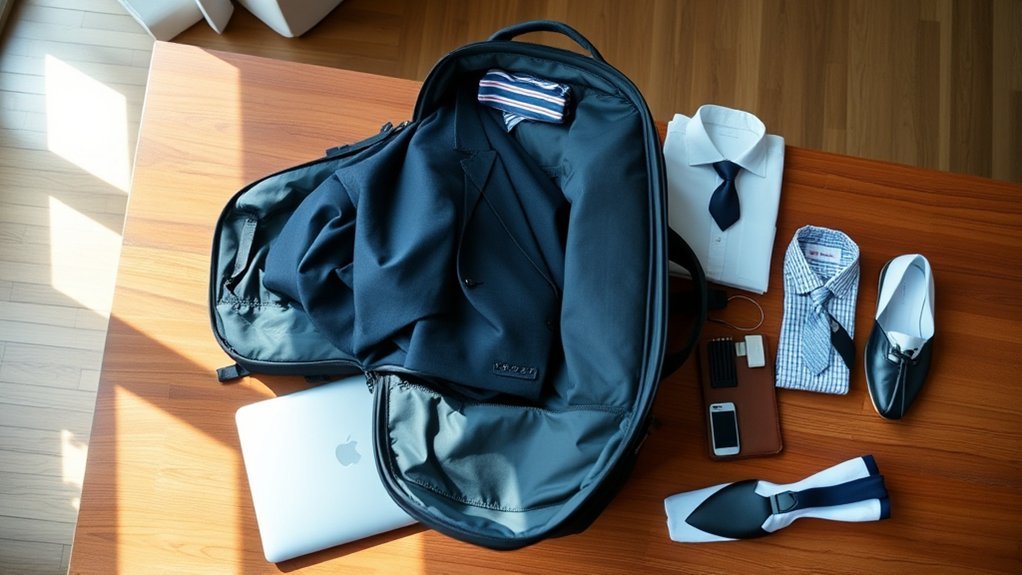
Packing for a business trip in one backpack is easier when every item has a job. Start with your schedule, dress code, weather, trip length, and airline baggage rules. Then build a small capsule wardrobe, protect your work technology, and place the items you will need in transit where you can reach them quickly.
Quick Answer
To pack a backpack for a business trip, choose a bag that meets your airline’s limits, plan mix-and-match outfits, use cubes or pouches by category, and keep your laptop, documents, liquids, and power bank accessible. Wear bulky items in transit and leave a little empty space for the return trip.
Key Takeaways
- Check your airline’s current size, weight, and personal-item rules before choosing a backpack.
- Build outfits around a small set of coordinated tops, bottoms, layers, and shoes.
- Use regular packing cubes for organization and compression cubes only when you need to reduce bulk.
- Keep travel documents, work materials, liquids, and screening items in easy-access compartments.
- Carry power banks and spare lithium batteries in the cabin, not in checked baggage.
At a Glance
| Time Required | About 20–30 minutes after your outfits and work materials are selected |
| Difficulty | Easy |
| Tools Needed | Backpack, packing cubes or pouches, toiletry bag, cable organizer, and packing checklist |
| Cost | Usually $0 with gear you already own; organizers are optional |
Disclosure: As an Amazon Associate I earn from qualifying purchases. Some links on this page are affiliate links, at no extra cost to you.
Plan Around Your Trip Before You Pack
Do not begin by filling the bag. Begin with the trip. Review the number of travel days, meeting schedule, expected weather, office dress code, evening plans, hotel amenities, and transportation between stops. This keeps you from packing complete outfits that work only once.
- List each event: Include flights, meetings, presentations, dinners, workouts, and free time.
- Choose a clothing standard: Decide whether the trip calls for formal business wear, business casual clothing, or a mix.
- Check the forecast: Add one suitable outer layer, compact rain protection, or temperature layer only when needed.
- Review baggage rules: Confirm whether the backpack will count as a personal item or carry-on and note the airline’s exact size and weight limits.
- Check hotel services: An iron, steamer, toiletries, or laundry service may let you leave duplicate items at home.
Pack for the schedule you actually have, not every situation that could possibly happen.
Choosing the Right Backpack for Your Business Trip

The right business travel backpack should fit your body, your equipment, and your airline’s rules. Cabin baggage allowances vary by airline, fare, cabin, and aircraft, so compare the packed bag with the carrier’s current limits instead of relying on a universal capacity. The International Air Transport Association’s baggage guidance also recommends checking directly with the operating airline.
Choose a professional-looking design made from durable, water-resistant material. A clamshell opening makes clothing easier to pack, while a separate laptop sleeve protects the device from shoes and toiletries. Measure your actual laptop before buying; a compartment advertised for a 15-inch device may not fit every 15-inch model or a thick protective case.
Comfort matters on long travel days. Look for padded shoulder straps, a supportive back panel, and a handle that feels secure when the bag is fully loaded. Organizational pockets are useful for chargers, business cards, pens, and documents, but too many small compartments can add weight and reduce the main packing space.
Note: A backpack can qualify as a personal item only when it meets the airline’s personal-item rules and fits in the required space. A second carry-on is not automatically included with every fare.
Essential Clothing Items for Mixing and Matching
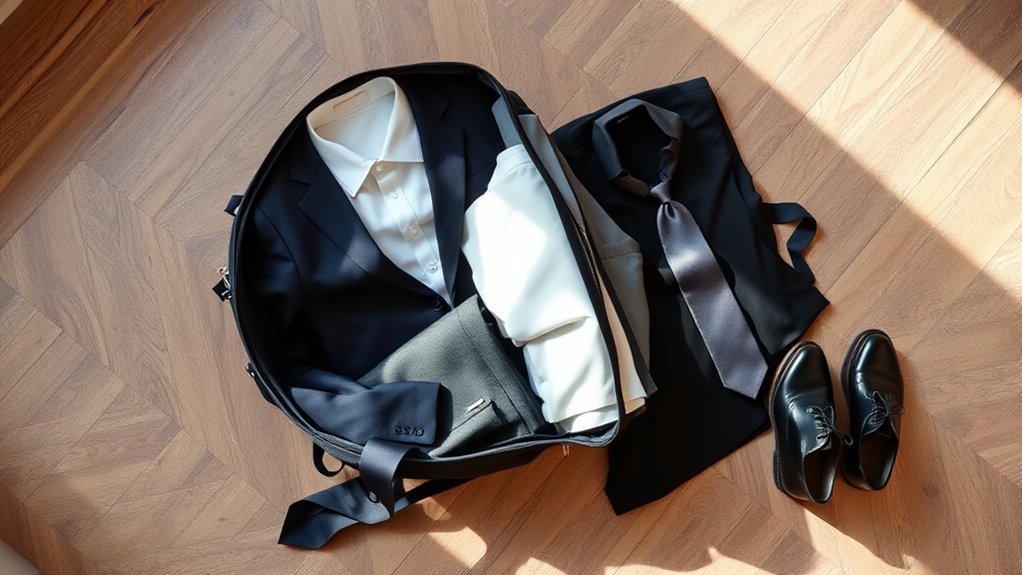
A small capsule wardrobe creates more outfits with fewer pieces. Pick a simple color base so every top works with every bottom, then add one or two accessories for variety. Your exact list should reflect the trip length and dress code rather than a fixed formula.
- Tops: For a short trip, pack two or three professional tops, such as a button-down shirt, blouse, knit top, polo, bodysuit, or polished T-shirt. Include at least one fresh top for an important presentation or client meeting.
- Bottoms or one-piece outfits: Choose one or two coordinated options, such as dress pants, a skirt, chinos, dark jeans when appropriate, or a dress or jumpsuit that matches your layer.
- Layering pieces: Bring one blazer, cardigan, or structured overshirt and one light temperature layer if the forecast or office air conditioning calls for it.
- Basics: Add underwear, socks, sleepwear, and any required workout clothing. Pack one set per day unless you plan to wash or rewear items.
Wear the bulkiest layer and heaviest shoes while traveling when they are comfortable enough for the journey. Avoid packing an item that works with only one outfit unless it is required for a specific event.
Pro Tip: Photograph each planned outfit before packing. The photos make morning decisions faster and reveal pieces that do not coordinate with the rest of the capsule.
Utilizing Packing Cubes for Organization
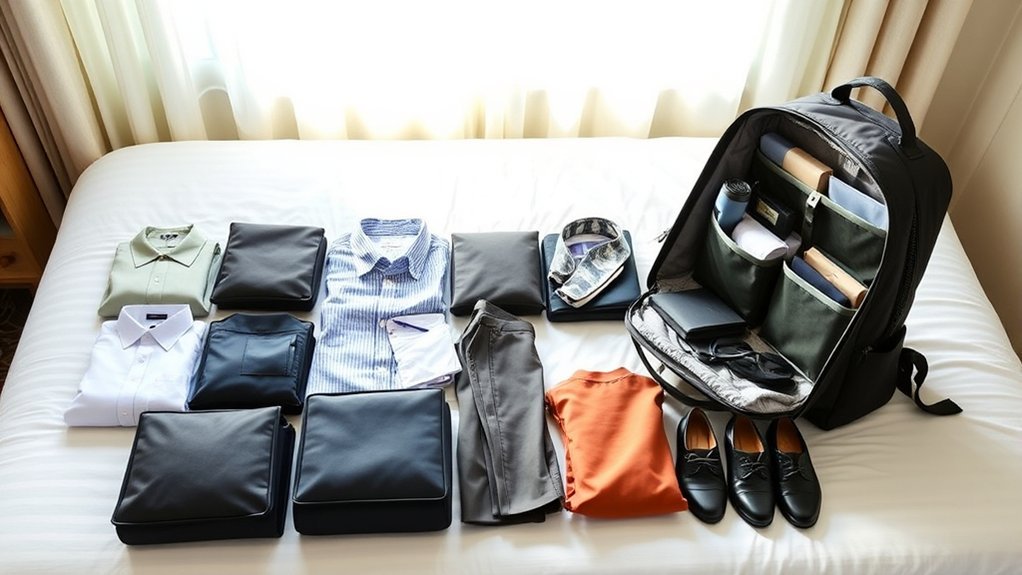
Packing cubes keep clothing and accessories grouped so you can find items without emptying the entire backpack. Use one cube for workwear, one small cube or pouch for underwear and socks, and another for casual or workout clothing. Different colors or labels can make the system easier to follow.
Regular cubes organize clothing but do not always reduce its volume. Compression cubes use an additional zipper or panel to squeeze out excess air, which can reduce bulk but may also make the bag dense and heavy. Do not compress structured jackets, padded bras, or delicate garments that can lose their shape.
At the hotel, transfer the cubes to a drawer or shelf and keep worn clothing in a separate laundry pouch. Breathable mesh can help you see the contents, but no organizer can keep damp or dirty clothing odor-free. Let wet items dry before sealing them in the bag.
How to Load a Business Travel Backpack
Once everything is selected, load the backpack in an order that balances weight and protects business clothing.
- Lay out every item: Compare the pile with your itinerary and remove duplicates or “just in case” pieces that have no clear use.
- Protect shoes: Put each packed pair in a shoe bag. Fill the inside with socks or small accessories, then place the shoes near the bottom or side.
- Pack dense items near your back: Position the heaviest clothing cube close to the center of your back so the bag feels more stable.
- Add lighter clothing: Place lighter cubes around the dense core without crushing collars, structured jackets, or delicate fabric.
- Keep wrinkle-prone items high: Fold dress shirts, blouses, dresses, or a blazer carefully and place them near the top.
- Create an easy-access zone: Put the clear liquids bag, travel documents, headphones, and in-flight items in an outer or top compartment.
- Use the laptop compartment: Slide the laptop into its fitted sleeve last, confirm that no hard object presses against the screen, and close every zipper.
- Test the packed bag: Wear it for several minutes, check the weight, and make sure it fits the airline’s measured limits without force.
Minimizing Wrinkles With Effective Folding Techniques
No packing method prevents every wrinkle, but the right technique can reduce deep creases. Smooth each garment before folding, fasten a few buttons, and avoid overfilling the cube.
- Fold structured clothing: Fold dress shirts, blouses, trousers, skirts, and jackets along their natural seams. A board-style fold helps keep edges even.
- Roll soft clothing: Rolling works well for T-shirts, knitwear, pajamas, and other soft items that do not have stiff collars or pressed creases.
- Use careful layering: Place delicate items between smoother garments and keep hard objects, shoes, and cable plugs away from them.
- Leave breathing room: A tightly packed backpack presses permanent-looking folds into business clothing. Remove an item rather than forcing the zipper closed.
For a blazer, turn one shoulder partly inside out, nest the other shoulder inside it, fold the jacket lengthwise, and place it on top. You can also wear the blazer in transit. On arrival, hang wrinkle-prone pieces immediately and use the hotel iron or steamer only after checking the garment’s care label.
Packing Travel-Sized Toiletries and Grooming Essentials
For U.S. airport screening, the TSA liquids rule limits carry-on liquids, aerosols, gels, creams, and pastes to containers of 3.4 ounces or 100 milliliters or less, with the containers fitting in one clear quart-size bag. The rule applies to the container’s capacity, even when a larger bottle is partly empty.
Use leak-resistant travel containers rather than calling them “TSA-approved,” because TSA applies size and screening rules rather than approving ordinary toiletry bottles one by one. Decant only what you need and label similar products. Toothpaste, liquid foundation, creams, and gel products count toward the liquids allowance, while solid toiletries can reduce the space used in the bag.
Pack a toothbrush, toothpaste, floss, deodorant, skincare, makeup, shaving items, and other grooming essentials in a water-resistant toiletry pouch. Multi-use products can save space when they work for your routine, but avoid testing unfamiliar skincare or grooming products during an important trip.
Warning: Do not put loose razors, scissors, or other sharp grooming tools in the backpack without checking current security rules. Medically necessary liquids may have different screening provisions, so declare them as directed rather than forcing them into the standard liquids bag.
Organizing Your Electronics and Important Documents
Keep electronics in one protected zone and documents in another. A padded laptop sleeve, small cable pouch, and zippered document compartment prevent loose plugs and papers from spreading through the bag.
- Laptop and tablet: Pack devices where you can remove them if screening officers request it. TSA instructions can vary by screening lane and program, so follow the directions at the checkpoint.
- Chargers and adapters: Bring only the cables your devices use. Add a universal plug adapter when the destination requires one, and check that it is an adapter rather than a voltage converter.
- Power bank: Choose a clearly labeled unit that meets airline limits and keep it accessible in the cabin.
- Documents: Store your identification, itinerary, meeting details, business cards, and required permits in a zippered pocket.
- Backups: Keep secure digital copies of critical reservations and presentations. For international travel, the U.S. Department of State’s international travel checklist recommends keeping copies of travel documents separate from the originals.
Follow your employer’s security policy for confidential files, removable drives, device tracking, and network access. Lock devices when unattended, and avoid placing sensitive documents in an open outer pocket.
Warning: The FAA requires spare lithium batteries and power banks to remain in carry-on baggage. If your backpack is gate-checked, remove them and keep them with you. Most lithium-ion batteries up to 100 Wh are allowed; larger 101–160 Wh batteries require airline approval, and batteries above 160 Wh are prohibited on passenger aircraft.
Tips for Packing Shoes and Accessories
Most short business trips need one versatile pair on your feet and, at most, one packed pair. Wear the bulkier shoes during travel if they are comfortable, then pack a lighter professional or casual option only when your schedule requires it. Flip-flops or slippers may be useful for shared facilities or hotel downtime, but they are optional.
Place packed shoes in separate shoe bags to prevent dirt transfer. Do not roll shoes. Instead, fill their empty space with socks, a belt, or other clean small items, then position them near the bottom or side of the backpack where they will not crush clothing.
Choose compact accessories that change the look of several outfits: a belt, tie, scarf, simple jewelry, or pocket square. Use a small organizer so chains, earbuds, and adapters do not tangle. Keep valuable jewelry to a minimum and carry it securely.
Add a Small Emergency and Laundry Kit
A few lightweight items can prevent a small problem from disrupting a meeting. Pack a stain-removal wipe or pen, a compact lint roller, a few adhesive bandages, required medication, and a small sewing repair item that complies with security rules. A reusable laundry bag keeps worn clothing separate.
For longer trips, plan one laundry cycle instead of adding a full second wardrobe. Check whether the hotel offers laundry service, or bring a small amount of suitable detergent within the liquids rules. Never pack damp clothing; it can transfer odor and moisture to the rest of the bag.
Final Packing Checklist for a Seamless Trip
Before closing the backpack, compare every item with this list. The goal is not to fill every pocket; it is to arrive with the work materials, clothing, and personal essentials you will actually use.
Essential Documents and Items
- Government-issued identification required for the trip
- Passport, visa, permits, or entry documents when traveling internationally
- Boarding pass and itinerary
- Hotel, ground transportation, and meeting details
- Business cards, notebook, and pens
- Payment cards and a small amount of destination-appropriate cash when useful
- Insurance information and required health or vaccination documents when applicable
- Secure copies of critical travel documents stored separately from the originals
Clothing and Accessories Checklist
- Two or three coordinated professional tops for a short trip
- One or two matching bottoms or one-piece outfits
- One blazer, cardigan, or structured layer
- Underwear, socks, sleepwear, and optional workout clothing
- One versatile shoe pair worn in transit and one optional packed pair
- Compact accessories such as a belt, tie, scarf, or simple jewelry
- Light outerwear or rain protection based on the forecast
- Laundry pouch and small stain-removal item
Electronics and Tech Gear
- Laptop or tablet in a padded sleeve
- Phone and required chargers
- Headphones or headset for calls
- Mouse, presentation remote, dongles, or adapters required for work
- Universal plug adapter for compatible international use
- Power bank in carry-on baggage with its capacity label visible
- Secure backup of the presentation or essential files
- Cable organizer to keep cords contained
Last Check Before You Leave
- Confirm the backpack meets the operating airline’s current size and weight limits.
- Make sure all liquids fit the required bag and cannot leak.
- Verify that the laptop, identification, and travel documents are easy to reach.
- Remove duplicate clothing and unused “just in case” items.
- Leave a little space for meeting materials, receipts, or items acquired during the trip.
- Check every zipper, wear the packed bag briefly, and adjust the straps.
Frequently Asked Questions
How do I choose the right size backpack for my business trip?
Start with your airline’s current personal-item or carry-on dimensions, then choose the smallest bag that fits your actual laptop, capsule wardrobe, toiletries, and work materials. Capacity labels such as 20 or 30 liters are useful for comparison, but the bag’s external measurements and packed shape determine whether it meets the airline’s rules.
Can I bring a carry-on suitcase in addition to my backpack?
Sometimes. Many tickets include one carry-on and one smaller personal item, but allowances vary by airline, fare, cabin, route, and aircraft. Your backpack must meet the personal-item limit when you also bring a carry-on suitcase. Check the operating airline’s policy before departure.
What should I do if my backpack exceeds airline carry-on limits?
Remove nonessential items, wear a bulky layer, and redistribute belongings only when your fare permits another bag and that bag also meets its limit. Otherwise, follow the airline’s checking or gate-check procedure. Before surrendering the bag, remove identification, medication, valuables, work devices, power banks, and spare lithium batteries.
How do I keep my backpack organized during travel?
Assign one location to each category: clothing cubes in the main compartment, toiletries in a leak-resistant pouch, cables in a tech organizer, documents in a zippered pocket, and the laptop in its sleeve. Return each item to its assigned place after use and keep worn clothing in a separate laundry bag.
Which fabrics resist wrinkles better for business attire?
Garments made from knit fabrics, many synthetic fibers, or blended fabrics often recover from packing creases better than crisp, untreated woven cotton or linen. Construction and finishing matter as much as fiber content, so check the care label and test-pack important garments before the trip.
How should I pack a blazer in a backpack?
Empty the pockets, fasten one button, turn one shoulder partly inside out, nest the other shoulder inside it, and fold the jacket lengthwise. Place it flat near the top of the backpack without heavy objects above it, or wear it during travel and hang it as soon as you arrive.
Can I pack a power bank in my business travel backpack?
Yes, when it meets FAA and airline limits, but it must remain in carry-on baggage rather than checked baggage. Keep the capacity marking visible, protect the terminals from short circuit, and remove the power bank if the backpack is gate-checked.
Conclusion
A well-packed business backpack should make the trip easier, not simply hold more. Choose a compliant and comfortable bag, build a coordinated wardrobe, protect wrinkle-prone clothing, and keep your technology and documents accessible. A final size, liquids, and battery check will help you leave prepared for the journey and focused on the work ahead.
Sources
- International Air Transport Association: Passenger Baggage Rules — cabin baggage allowances and the need to check airline-specific limits
- Transportation Security Administration: Liquids, Aerosols, and Gels Rule — the U.S. carry-on liquids limit
- Transportation Security Administration: What Can I Bring? — screening guidance for electronics, medication, and restricted items
- Federal Aviation Administration: Airline Passengers and Batteries — power bank and lithium-battery baggage rules
- U.S. Department of State: International Travel Checklist — document preparation and backup guidance

