
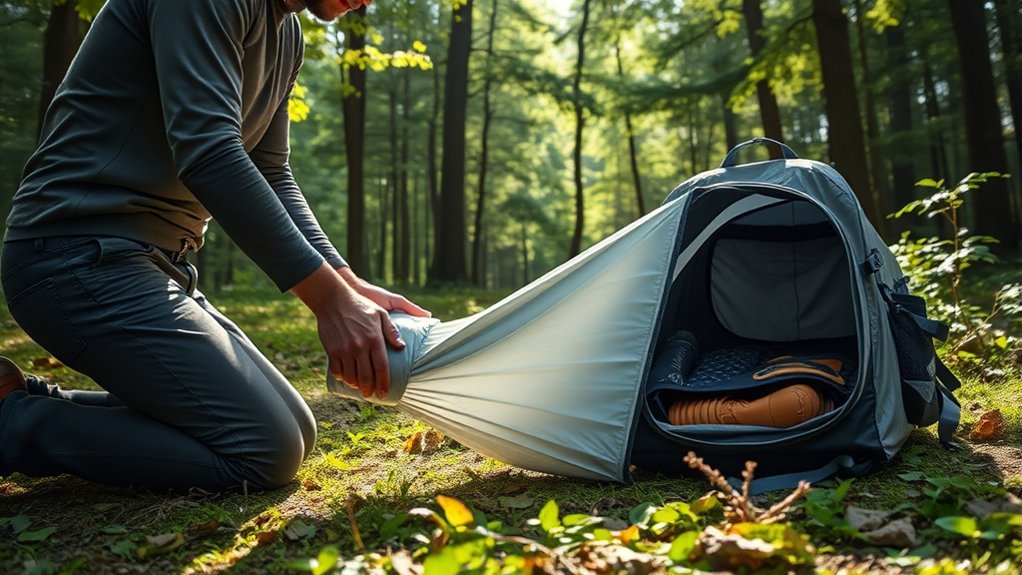
To pack your tent efficiently, start by removing poles and stakes, then keep your corners staked in. Fold the tent lengthwise to fit your backpack width, and create manageable widths by folding inward. Roll tightly from one end, securing with Velcro straps. Store poles in side pockets and stakes in the main compartment or a dedicated pouch. Finally, maintain organization and guarantee everything’s compact for easy access. You’ll find more tips and techniques to optimize your packing further.
Preparing Your Tent for Packing
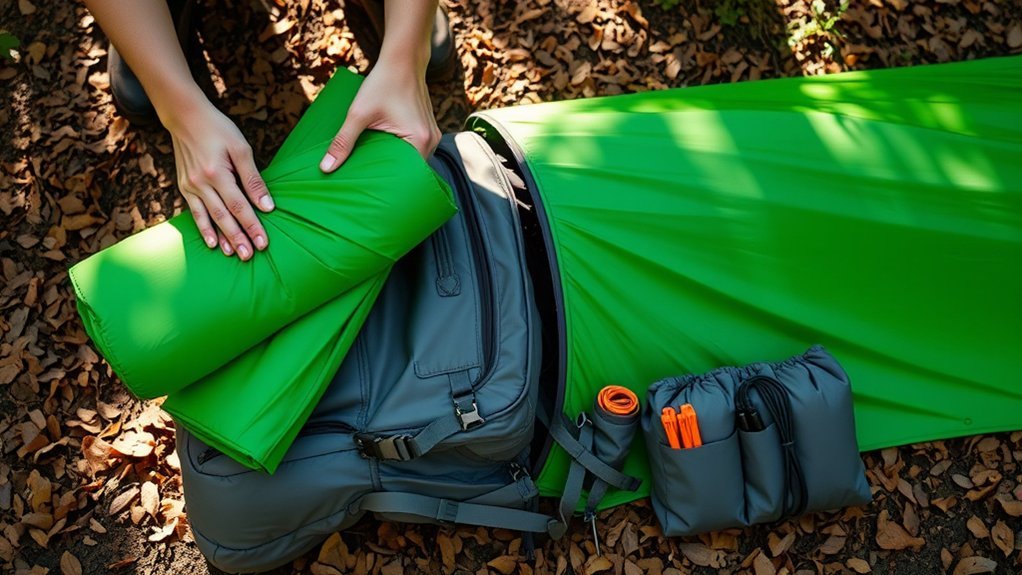
To prepare your tent for packing, start by removing all poles and stakes. This step streamlines the packing process and prevents tangling. Keep the four corners staked in to simplify folding and maintain the tent’s shape. Next, lay the rainfly inside the tent for better organization, guaranteeing it doesn’t get lost. Before you start folding, it’s essential to perform a quick tent cleaning to remove any debris or dirt that could damage the fabric. Once cleaned, fold the tent lengthwise to match the width of your backpack. Aim for a narrower width than the backpack for easy placement and to maximize space efficiency. As you pack, refer to your packing checklist to verify you have all components ready. With these steps, you’ll not only save space but also prepare for a more enjoyable outdoor experience.
The Right Folding Technique
After preparing your tent for packing, mastering the right folding technique guarantees it fits snugly in your backpack. Start by folding the tent lengthwise to match your backpack’s width, eliminating excess fabric. Next, create manageable widths by folding both sides inward before halving the end for a tighter roll. As you roll the tent from one end, keep it straight, tucking in webbing and clips to maintain a clean finish. This method not only enhances space optimization but also prevents unnecessary creases that could lead to fabric failure over time. Once rolled, use velcro straps to secure the tent tightly, allowing for horizontal placement inside your backpack and preventing it from unrolling. Consistent folding techniques assure your tent stays compact, making your outdoor adventures more efficient and freeing you to focus on the journey ahead.
Rolling Your Tent for Efficiency
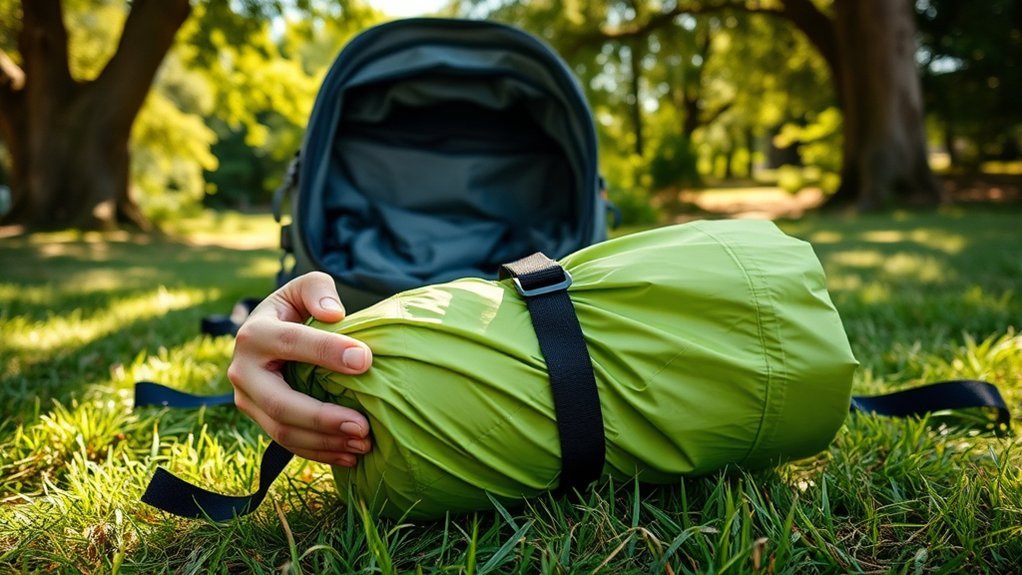
To roll your tent efficiently, start by removing the poles and stakes while keeping the corners staked in. Lay the rainfly inside the tent for organization, then fold and roll using consistent techniques to minimize bulk. Secure the roll with velcro straps to guarantee a compact fit in your backpack.
Proper Folding Techniques
While packing your tent efficiently, it’s crucial to fold it properly to guarantee it fits snugly in your backpack. Start by folding the tent lengthwise to match the backpack’s width, ensuring it stays narrow for easier packing. Use these folding techniques to maximize space:
- Fold both sides of the tent inward towards the center to create a manageable width.
- For a tighter roll, fold the end of the tent in half to maintain a compact shape.
- As you roll, start from one end, keeping it straight and tucking in webbing and clips to avoid snagging.
Finally, secure the rolled tent with velcro straps, ensuring the tent material remains organized and ready for your next adventure.
Secure Rolling Methods
Once you’ve folded your tent properly, rolling it efficiently is the next step to guarantee it fits snugly in your backpack. Start by folding the tent lengthwise to match your pack’s width. Roll tightly from one end, keeping it straight and tucking in webbing and clips. Secure the rolled tent with velcro straps to prevent unrolling and allow for horizontal placement in your bag.
| Step | Description |
|---|---|
| Fold Lengthwise | Match the width of your backpack. |
| Tight Roll | Keep it straight, tucking in clips. |
| Secure with Velcro | Wrap tightly for stability in your backpack. |
For ideal space, store poles in the side pocket and stakes inside the main compartment, maximizing your backpack’s organization.
Securing the Rolled Tent
To secure your rolled tent effectively, use Velcro straps to keep it compact and prevent unrolling during transport. Wrap the strap tightly around the tent, ensuring it maintains its shape for ideal horizontal placement in your backpack. A snug fit not only maximizes space but also helps keep your gear organized.
Use Velcro Straps
Using Velcro straps to secure your rolled tent is essential for efficient packing and transport. These straps not only offer velcro benefits but also guarantee your tent remains compact, preventing it from unrolling during your travels. By wrapping the Velcro strap snugly around the tent, you maintain its form, facilitating horizontal placement inside your backpack without wasting space.
- Maintain organization within your backpack for easy access.
- Suitable for various tent sizes, guaranteeing a snug fit.
- Durable straps withstand outdoor conditions for reliable use.
Horizontal Placement Tips
Securing your rolled tent horizontally inside your backpack is essential for optimizing space and maintaining balance. First, verify the tent is tightly rolled and use velcro straps to keep it compact. Position the secured roll horizontally, as this allows for better horizontal weight distribution, preventing strain on your back during hikes. Make sure the rolled tent is narrower than the backpack’s width to facilitate easy insertion without bulging. Tuck any loose webbing or clips into the roll for a neat package. Finally, utilize compression straps to secure the roll further, confirming it doesn’t shift during transit. These tent orientation strategies not only maximize space but also contribute to a stable, organized load, enhancing your outdoor experience.
Maintaining Backpack Organization
Maintaining organization in your backpack is essential for a smooth outdoor experience. To secure your rolled tent effectively and enhance tent organization, follow these practical steps:
- Use velcro straps to keep the tent tightly rolled.
- Position the tent horizontally to prevent shifting.
- Tuck webbing and clips inside for a compact package.
Store poles in the side pocket for quick access, while placing stakes in the main compartment. This approach guarantees backpack efficiency, allowing you to find components easily when needed. Finally, utilize compression straps on the outside of your backpack for any taller items, making sure everything fits snugly. With these tips, you’ll enjoy a well-organized backpack, ready for your next adventure without unnecessary hassle.
Packing Tent Accessories Separately
When you pack your tent accessories separately, you not only enhance organization but also streamline your setup process at the campsite. Start by placing tent poles in the side pocket of your backpack. This keeps them secure and prevents damage to other items. Store your tent stakes inside the main compartment to avoid losing them and to maintain order. Use a dedicated pouch for the stakes, ensuring easy access and protecting your gear from punctures.
For taller items like poles, employ compression straps to secure them, maximizing packing efficiency and preventing movement during transport. Grouping your accessories together allows for a more efficient packing process, saving you time on the trail. By organizing your tent accessories thoughtfully, you’ll feel liberated from the chaos, making your outdoor experience more enjoyable.
Utilizing Backpack Space Effectively
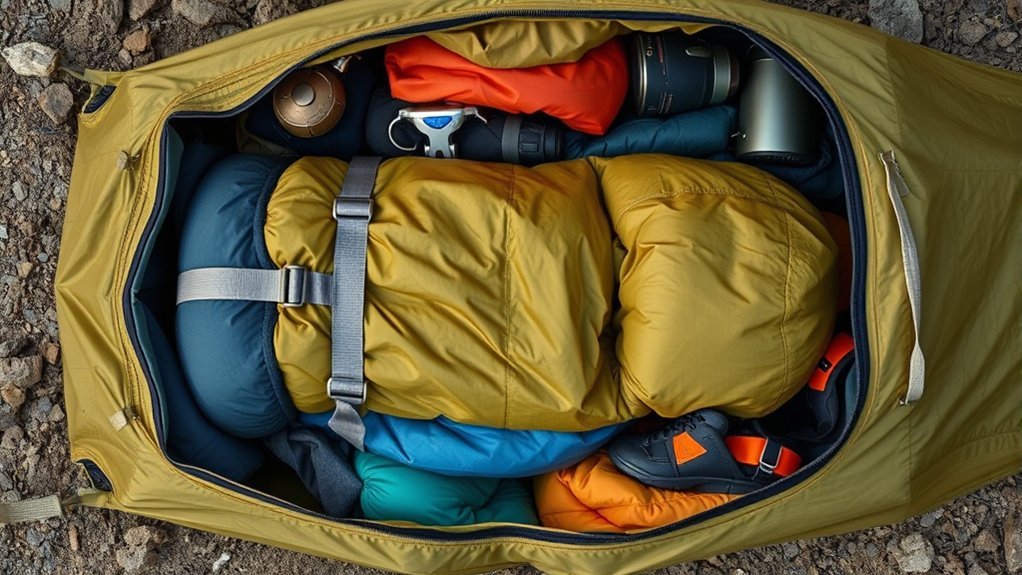
To maximize the available space in your backpack, start by rolling your tent tightly to match its width, which minimizes wasted space. This snug fit is essential for effective space optimization and reduces overall backpack weight.
- Place the rainfly inside the tent before folding it, keeping everything organized.
- Fold the tent lengthwise and then into manageable widths to fit comfortably in the main compartment.
- Use velcro straps to secure the rolled tent, preventing unraveling and ensuring it occupies minimal horizontal space.
For even better organization, store the tent poles in the side pocket of your backpack and pack the stakes inside the main compartment. This method not only enhances space optimization but also streamlines your packing process, making your outdoor adventures more liberating and enjoyable. Plus, with everything in its place, you won’t waste time rummaging through your gear.
Organizing Your Backpack for Easy Access
Although organizing your backpack may seem trivial, it’s crucial for quick access to your gear during outdoor adventures. Start by utilizing backpack compartments efficiently. Store poles in side pockets for easy retrieval, while stakes can fit neatly in the main compartment. Secure your rolled tent with velcro straps, allowing for horizontal placement to maximize space.
Pack your tent at the top of the backpack to guarantee you can access it quickly upon reaching your campsite, enabling a swift setup. Organize smaller accessories like guy lines and repair kits in outer pockets or mesh bags, keeping them readily accessible when needed. Additionally, use compression straps to secure taller items, preventing shifting and maintaining organization. This approach not only enhances accessibility but also guarantees you can focus on enjoying your adventure, rather than fumbling through your gear.
Tips for Different Tent Sizes
Packing a tent efficiently varies depending on its size, impacting how well it fits in your backpack. Consider these tent size considerations to optimize your backpack weight distribution:
- For 1-2 person tents, roll it tightly to maintain a compact size, making it easier to fit alongside other gear.
- When dealing with 3-4 person tents, fold it so the width remains narrower than the backpack’s width, allowing for more efficient use of space.
- For larger tents, utilize vertical space by rolling them tightly and securing them with Velcro straps to prevent shifting during transit.
Always keep poles and stakes in separate compartments — store poles in side pockets and stakes in the main compartment. Adjust your folding technique based on size, ensuring larger tents are rolled with consistent folds to avoid wasting any backpack space. This approach maximizes your packing efficiency and enhances your outdoor experience.
Maintenance and Care for Your Tent
Maintaining your tent is essential for its longevity and performance. After each use, clean your tent by lightly brushing off dirt and debris, then wipe it down with a damp cloth to prevent mold and mildew. Always guarantee your tent is completely dry before packing it away; moisture can lead to odors and deterioration. Store it in a cool, dry place, away from direct sunlight, to protect the fabric from UV damage. For proper tent washing, avoid keeping it in its stuff sack for long periods. Instead, use a large cotton bag to allow the material to breathe. Regularly inspect your tent for tears or broken zippers, and repair any damage with suitable patches or seam sealants to maintain its waterproof integrity. By following these steps, you’ll guarantee your tent remains in top condition for your next adventure.
Frequently Asked Questions
Can I Pack My Tent Without Removing the Rainfly?
Yes, you can pack your tent without removing the rainfly. Use tent packing techniques that allow the rainfly to remain attached, or consider rainfly storage options like rolling it separately for efficient space usage in your backpack.
What if My Tent Is Wet When Packing?
If your tent’s soaking wet, don’t panic! Use quick tent drying techniques like shaking off excess water, then roll it loosely for moisture management. Air it out as soon as you can to prevent mildew.
How Do I Prevent My Tent From Getting Dirty in the Backpack?
To prevent your tent from getting dirty, use a protective stuff sack and keep it separate from other gear. Organizing your backpack efficiently guarantees tent care, minimizing dirt and debris exposure during your adventures.
Is It Necessary to Use a Stuff Sack for the Tent?
Using a stuff sack isn’t necessary, but it offers benefits like compactness and protection. Alternatively, you could roll your tent tightly, though it may invite dirt. Choose what liberates your space and peace of mind.
Can I Pack My Sleeping Bag With the Tent?
Yes, you can pack your sleeping bag with the tent. For effective sleeping bag storage, compress the tent first to maximize space. This method optimizes your pack’s capacity, ensuring a more liberating hiking experience.
Conclusion
Packing your tent efficiently transforms it into a compact sail, ready to navigate the wilderness. By mastering the folding and rolling techniques, you create harmony within your backpack, much like fitting puzzle pieces together. Organizing your gear for easy access guarantees you’re prepared for spontaneous adventures. Remember, every inch of space counts; treat your backpack like a treasure chest, and your tent will be the jewel that shines brightly under the stars. Happy camping!
