
Last Updated on September 10, 2026 by Daniel Globe
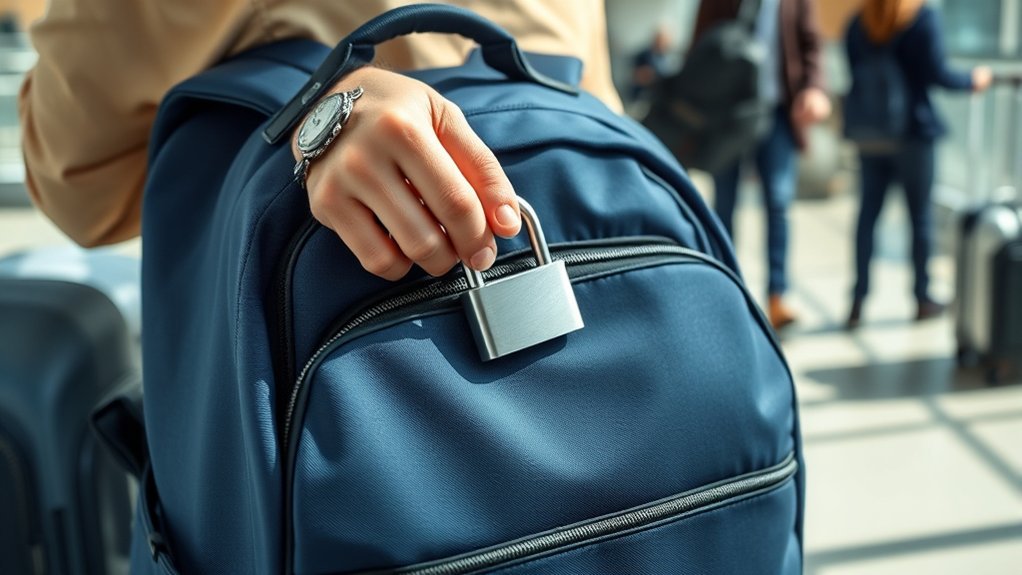
A backpack lock cannot make a soft-sided bag theft-proof, but it can make quick, unnoticed access much harder. The most effective approach is to lock compatible zipper pulls, keep valuables in interior pockets, stay aware of the bag in crowded places, and use a cable or built-in anchor strap when you need to secure the whole backpack to an appropriate fixed object.
Quick Answer
To lock a backpack for travel, fully close the compartment, bring compatible zipper pulls together, pass a small combination or cable-shackle lock through them, and lock it securely. For extra protection, use a longer cable or built-in anchor strap to attach the backpack to a sturdy fixed object where doing so is permitted.
Key Takeaways
- A small lock can deter quick zipper access, but it cannot make a fabric backpack impossible to steal or cut open.
- Use a lock that actually fits your zipper-pull openings; thin cable-shackle locks are useful when a rigid shackle is too thick.
- Use a longer cable or a purpose-built anchor strap when you need to secure the entire backpack to a sturdy fixture.
- For baggage that may be inspected by TSA, a TSA-recognized lock can usually be opened by security officers without cutting it.
- Keep passports, payment cards, phones, and other high-value essentials close to your body whenever practical instead of relying only on a bag lock.
At a Glance
| Time Required | About 1–3 minutes once your lock is set up |
| Difficulty | Easy |
| Tools Needed | Small luggage or zipper lock; optional longer cable or built-in anchor strap |
| Cost | Varies by lock; no extra purchase is needed if your backpack already has suitable locking hardware |
Disclosure: As an Amazon Associate I earn from qualifying purchases. Some links on this page are affiliate links, at no extra cost to you.
Importance of Backpack Security
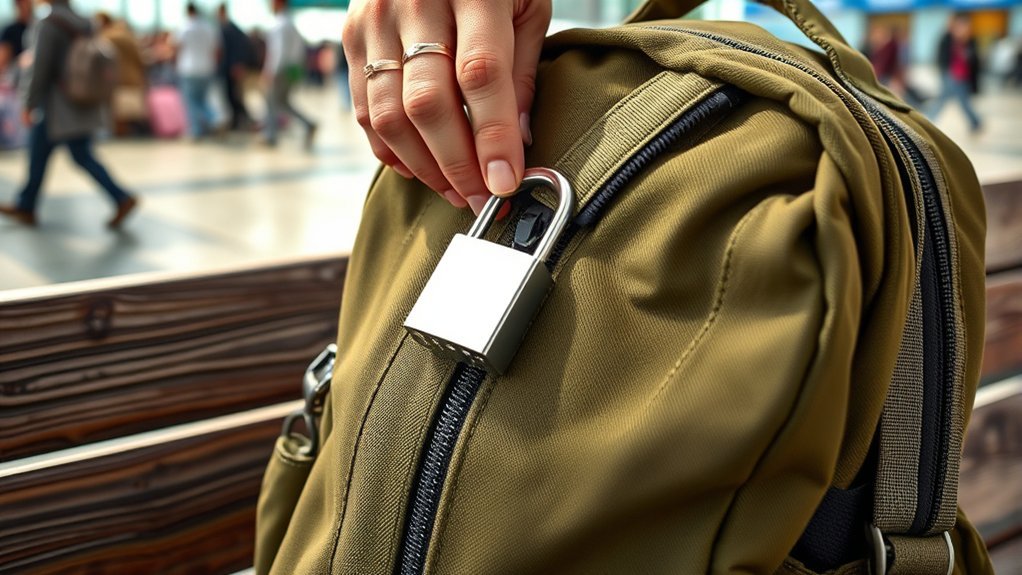
Backpack security matters most where strangers can get close to you or your bag without attracting attention: busy stations, public transportation, queues, cafés, hostels, tourist areas, and crowded streets. A zipper lock adds friction to a quick opening attempt, while good carrying and storage habits reduce opportunities to steal the entire bag.
Think of a backpack lock as a deterrent rather than a guarantee. A determined person may still be able to damage a zipper, cut fabric or straps, or simply take a backpack that is not anchored. That is why the best strategy combines several layers: secure the openings, protect the most valuable items, maintain physical control of the bag, and use a solid anchor point when appropriate.
The U.S. Department of State advises travelers to secure keys, identification documents, and personal items and to remain aware of crime risks while traveling. Its international crime guidance is a useful reminder that protecting your property should be part of a broader personal-safety plan.
Warning: Do not physically confront or chase someone over a backpack. If a robbery or theft occurs, prioritize your safety, move to a safer location, and contact local authorities or security personnel.
Choosing the Right Locking Mechanism

The best backpack lock is one that fits the bag’s hardware and is simple enough that you will actually use it. Check the holes in the zipper pulls before buying or packing a lock. A thick padlock shackle may not fit small zipper tabs, while a flexible cable-shackle lock can pass through narrower openings.
| Lock Type | Best Use | Limitation |
|---|---|---|
| Small combination padlock | Two zipper pulls with large enough lock holes | Rigid shackle may not fit small zipper tabs |
| Cable-shackle luggage lock | Small or awkward zipper-pull openings | Designed mainly to deter quick access, not heavy-force attacks |
| Long locking cable | Anchoring the entire backpack to a suitable fixture | Needs a strong attachment point on both the bag and fixture |
| Locking clip or carabiner | Quick tamper deterrence on frequently used compartments | Usually not equivalent to a true keyed or combination lock |
If your bag may be inspected by the U.S. Transportation Security Administration, consider a TSA-recognized lock. TSA explains that officers have tools for opening recognized locks during baggage inspection, although a lock may still need to be cut in some situations. See the TSA guidance on recognized baggage locks.
Note: “TSA-recognized” does not mean stronger or theft-proof. It means the lock is designed so TSA personnel can open it with compatible inspection tools when necessary.
Utilizing Fixed Objects for Security
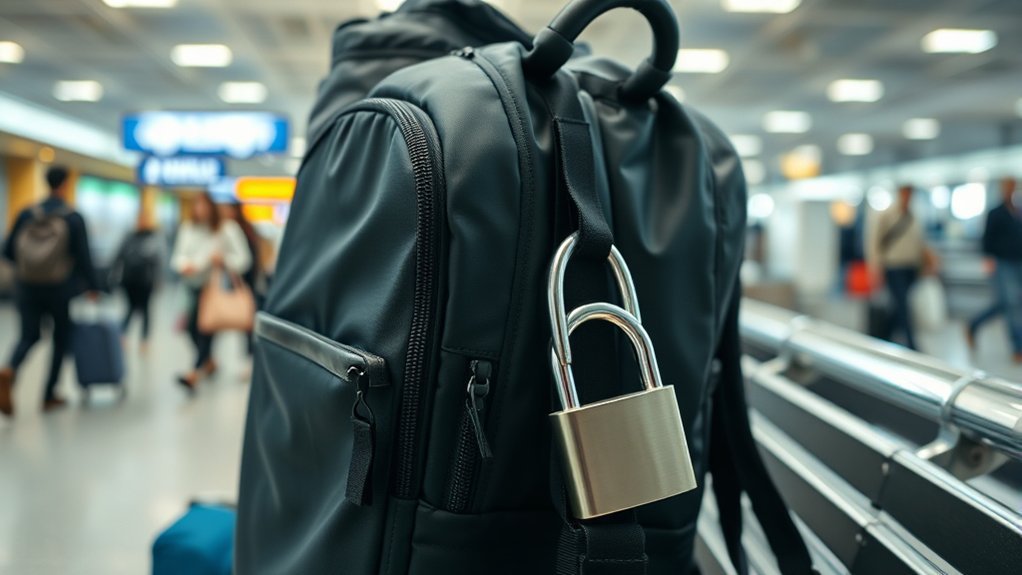
Locking the zipper prevents quick access to a compartment; anchoring the backpack helps prevent someone from simply walking away with the whole bag. When it is permitted and practical, run a locking cable or purpose-built anchor strap through a strong structural part of the backpack and around a genuinely fixed object.
Good anchor points may include a properly installed luggage rack, substantial bed frame, heavy fixed furniture, or another fixture that cannot be lifted or easily dismantled. Avoid thin decorative rails, lightweight chairs, removable table legs, weak fabric loops, and objects that someone could simply carry away with the bag.
Do not attach a backpack where the cable or strap could block a walkway, emergency exit, stairway, door, transit aisle, accessibility route, or equipment intended for public use. Follow the rules of the hotel, hostel, transit operator, café, station, or other property.
Pro Tip: Anchor the bag through a reinforced handle, dedicated security loop, or manufacturer-designed locking strap when possible. A cable around only a thin shoulder strap or decorative loop is easier to defeat.
Features of a Secure Backpack
An anti-theft backpack can make these security steps easier by building locking and cut-resistant features into the bag. Useful features include zipper pulls that dock or lock together, hidden pockets, reinforced straps, slash-resistant materials, and an anchor strap or locking point designed to secure the bag to a fixture.
The backpack named in the original article is the Pacsafe® EXP45 anti-theft carry-on travel pack. According to Pacsafe’s current EXP45 product information, its anti-theft technology includes a Roobar™ Deluxe locking system, puncture-resistant ToughZip, eXomesh® slashguard, Carrysafe® slashguard straps, a PopNLock security clip, and an RFIDsafe™ pocket.
Those features can make unauthorized access more difficult, but even an anti-theft backpack should not be treated like a safe. Keep irreplaceable documents, essential medication, primary payment methods, and other critical items under your control whenever practical.
Additional Locking Systems to Consider
You do not need an elaborate system for every trip. Match the security method to the situation and the value of what you are carrying.
- Small combination or cable lock: useful for joining compatible zipper pulls without carrying a key.
- Longer steel cable: useful when the entire bag needs to be anchored to an approved fixed point.
- Locking clip or carabiner: useful as a quick-access deterrent when you open the compartment frequently, although it should not be confused with a high-security lock.
- Crossbody bag or waist pack: useful for keeping a passport, phone, wallet, and other essentials physically close to you while your larger backpack is stored.
- Built-in backpack security system: convenient when the bag includes zipper docks, cut-resistant materials, or a dedicated anchor strap.
If you use multiple locks, do not make the system so complicated that you stop using it. One correctly placed lock plus good awareness is more useful than several locks that are left open for convenience.
Best Practices for Using a Lock
For a backpack with two compatible zipper pulls, follow these steps:
- Close the compartment completely. Move both zipper sliders until the compartment is fully shut.
- Bring the zipper pulls together. Make sure the holes or locking loops line up without forcing or twisting them.
- Pass the lock through both pulls. Use a shackle or cable thin enough to fit without damaging the zipper hardware.
- Close the lock. For a combination model, scramble the numbers after locking it. For a keyed model, keep the key somewhere other than inside the locked backpack.
- Give it a gentle check. Confirm that the lock is fully closed and that neither zipper pull can slip free.
- Position the locked pulls sensibly. When possible, keep them under a flap or toward the side of the backpack that faces your body instead of leaving them prominently exposed.
If a compartment has only one zipper slider, look for a manufacturer-designed zipper dock, D-ring, locking loop, or reinforced attachment point near the closed position. A thin cable lock may connect the single zipper pull to that point. Do not secure it to decorative fabric, elastic cord, or weak stitching that could tear.
Check your lock before every trip. Make sure the combination still works, the cable is not frayed, the shackle closes smoothly, and the zipper pulls are not cracked or deformed.
Keeping Your Backpack in Sight
A lock is most useful when combined with physical control of the bag. In busy places, keep your backpack where you can see or feel it rather than placing it behind your chair or beside your feet where someone can reach it unnoticed.
On crowded public transportation, consider moving a small backpack to the front of your body if local conditions make rear access difficult to monitor. If you sit down, place the backpack between your feet or otherwise maintain contact with it without creating a tripping or evacuation hazard.
A small crossbody bag or waist pack can hold your passport, phone, wallet, and primary payment method while the larger backpack carries less critical items. If you use a lightweight daypack inside your main bag, apply the same rule: do not leave high-value items in an easy-to-open outer pocket.
Stay particularly alert when someone creates an unusual distraction. Opportunistic theft can happen quickly, and a lock works best as one part of your awareness rather than as a substitute for it.
Tips for Securing Your Backpack in Public Spaces
The right security method depends on whether you are walking with the bag, sitting near it, or temporarily storing it. Use the least complicated method that keeps the backpack under reasonable control.
| Situation | Safer Approach |
|---|---|
| Walking in a crowd | Lock important zipper pulls, keep valuables in interior pockets, and maintain awareness of anyone pressing unusually close to the bag. |
| Café or waiting area | Keep the bag in front of you or physically controlled; anchor it only to an appropriate fixture and only where permitted. |
| Train or bus | Keep essential valuables on your person and follow the operator’s luggage-storage rules; do not create an aisle or emergency-exit obstruction with cables. |
| Hostel | Use the provided locker when available and bring a compatible padlock if the property requires one. |
| Airport | Keep carry-on belongings with you and use a TSA-recognized lock when that screening compatibility is useful for baggage subject to TSA inspection. |
Never leave passports, substantial cash, irreplaceable documents, or essential medication in an unattended backpack simply because its zipper is locked. The fabric, zipper track, pull tabs, or attachment point can still be damaged or defeated.
Enhancing Security With Wearable Options
Wearable storage can reduce how often you need to open your main backpack in public. It can also keep the items that would be hardest to replace closer to you.
- Hidden-pocket or travel vests: can distribute documents and small valuables across secure interior pockets.
- Crossbody bags or waist packs: can keep a phone, wallet, passport, and boarding documents in front of your body and within easier reach.
- Money belts or document pouches: can provide discreet storage for backup cards, cash, or important documents when used comfortably and appropriately.
The original article suggested carrying a steel-framed pen as a discreet self-defense tool. Do not rely on ordinary objects as improvised weapons. Airport rules, venue policies, and local laws vary, and confronting a thief can escalate a property crime into a physical confrontation. Prioritize awareness, distance, help from staff or security, and your personal safety.
Safety Tips for Hotel Room Security
Backpack security in a hotel should start with the room itself. The U.S. Department of State’s lodging-safety guidance recommends checking that doors and windows lock properly, verifying room safety features, checking for unusual electronics, and reporting suspicious activity to the front desk.
Use Door Stops as a Secondary Measure
A sturdy door wedge or portable travel-door device can add another layer of resistance on some inward-opening doors, but it should never replace the room’s normal locks. Confirm that the door, deadbolt, windows, and connecting doors operate correctly first.
- Use only a device compatible with the door’s direction and design.
- Do not damage hotel property or interfere with required safety hardware.
- Keep your emergency exit route clear and make sure you can remove the device quickly.
- If a room lock does not work correctly, contact the front desk and request a repair or different room rather than relying on a portable device alone.
Be Careful With Cameras and Privacy
Inspect the room for unusual electronics or devices when you arrive, especially anything that appears out of place. If something concerns you, do not dismantle it yourself; photograph it if appropriate, leave the area if you feel unsafe, and contact hotel management or local authorities as the situation requires.
Do not routinely hide a camera in a charger or secretly record hotel staff, housekeepers, guests, or other people. Recording and surveillance rules vary by jurisdiction and property. If you plan to use any camera inside accommodation, first confirm the law and the property’s rules and protect other people’s reasonable privacy.
Note: A camera does not physically secure a passport, laptop, wallet, or backpack. Good locks, appropriate storage, awareness, and control of valuables remain the more important measures.
Secure Valuables Properly
When you leave the room, take the items you cannot afford to lose with you when practical. For belongings that remain behind, close and lock the backpack’s appropriate compartments and use legitimate secure storage provided by the accommodation when available.
- Keep passports, identification, payment cards, and essential medication under your control whenever practical.
- Use a backpack lock to discourage quick zipper access.
- If you anchor the backpack, use a strong attachment point and make sure the property permits it.
- Do not leave the bag where it is visible from a hallway, balcony, open window, or publicly accessible area.
- Confirm that the room’s doors and windows lock properly before leaving.
Hotel security measures reduce risk but cannot eliminate it. Keep a record of important account numbers and document-replacement information somewhere separate from the backpack so you can respond quickly if something goes missing.
Frequently Asked Questions
What types of locks are best for backpacks?
A small combination padlock works well when both zipper pulls have holes large enough for the shackle. A thin cable-shackle luggage lock is often easier with small zipper openings. Use a longer cable only when you also need to anchor the whole backpack to an appropriate fixed object.
Can I use a regular padlock for my backpack?
Yes, if the shackle fits the backpack’s zipper pulls without forcing or damaging them. Small luggage padlocks are usually more convenient because backpack zipper holes can be narrow. If your baggage may need TSA inspection, consider a TSA-recognized model.
Are locking backpacks worth the investment?
They can be useful for travelers who regularly use crowded transportation, hostels, or shared spaces because built-in zipper locks and anchor features are convenient. However, they are not necessary for everyone, and no soft-sided backpack should be treated as theft-proof.
How do I know if a backpack lock is secure enough?
Choose a lock that closes reliably, fits the zipper hardware correctly, has no obvious cracks or fraying, and cannot slip through the zipper-pull openings when closed. Remember that the zipper, fabric, and backpack itself may be weaker than the lock, so treat it as a deterrent rather than a complete security system.
Do I need a TSA-recognized lock on my backpack?
Not for ordinary everyday backpack use. A TSA-recognized lock is mainly useful when baggage may need to be opened during TSA screening because officers have compatible tools for many recognized locks. TSA still notes that a lock may occasionally need to be cut during inspection.
How do I lock a backpack that has only one zipper slider?
Look for a reinforced locking loop, D-ring, zipper dock, or other manufacturer-designed attachment point near the zipper’s closed position. Connect the single zipper pull to that point with a compatible thin cable lock. Avoid decorative fabric loops or weak stitching.
Should I lock my backpack to something on a train or in a hostel?
Use a provided locker in a hostel when possible. On trains or buses, follow the operator’s luggage rules. If anchoring a backpack is allowed, use only a sturdy attachment point and never run a cable across an aisle, doorway, emergency route, or other area where it could create a hazard.
What should I do if my backpack gets stolen?
Move to a safe location and report the theft to local police or relevant security personnel. Immediately lock or cancel stolen payment cards and accounts, use device-tracking or remote-lock features when available, contact your travel insurer if applicable, and begin replacement procedures for stolen identification or travel documents. Do not physically confront a suspected thief.
Conclusion
The most effective way to secure a backpack while traveling is to combine a simple zipper lock with good habits. Close and lock compatible zipper pulls, keep high-value essentials close to you, use a proper cable or built-in anchor strap when the whole backpack needs securing, and stay aware of the bag in crowded places. A lock cannot guarantee that a soft-sided backpack will not be opened or stolen, but it can remove the quick, easy access that opportunistic theft depends on.
Sources
- Transportation Security Administration — TSA Recognized Locks — explains baggage inspection and TSA-recognized locking systems.
- U.S. Department of State — Lodging Safety — supports hotel-room security, lock checks, unusual-electronics inspection, and reporting guidance.
- U.S. Department of State — Crime Abroad — supports protecting identification, keys, personal items, and maintaining personal safety while traveling.
- Pacsafe — EXP45 Anti-Theft Carry-On Travel Pack — verifies the current EXP45 name and its Roobar™, ToughZip, eXomesh®, Carrysafe®, PopNLock, and RFIDsafe™ features.

