Last Updated on July 30, 2026 by Caleb Warren
Long-term backpack storage is less about finding an exact temperature and more about controlling dirt, moisture, sunlight, pressure, and heat. Clean the backpack according to its care label, dry every part completely, support its shape without overstuffing it, and place it in a stable indoor location where it will not be crushed or exposed to damp air.
Quick Answer
To store a backpack long term, empty and clean it, let it dry completely, loosely support its shape, close or secure loose straps, and place it on a shelf or suitable hanger in a dark, dry, ventilated indoor area. Avoid damp basements, hot attics, direct sunlight, heavy loads, and vacuum compression.
Key Takeaways
- Follow the sewn-in care label or manufacturer instructions before washing or applying any treatment.
- Never store the backpack while it is damp, sweaty, muddy, or holding food, toiletries, batteries, or a wet hydration reservoir.
- Use light, dry stuffing to support the shape, but do not pack the bag tightly or leave heavy gear inside.
- A stable indoor closet or cabinet is usually safer than a garage, attic, basement, shed, or uncontrolled storage unit.
- Silica gel is optional moisture control. It cannot make a damp room or wet backpack safe for storage.
At a Glance
| Time Required | About 30–60 minutes of active work, plus enough time for the backpack to dry completely |
| Difficulty | Easy |
| Tools Needed | Soft brush or cloth, mild soap approved by the manufacturer, towels or tissue for shape support, and an optional breathable dust cover |
| Cost | Usually $0–$15 with basic household supplies |
Disclosure: As an Amazon Associate I earn from qualifying purchases. Some links on this page are affiliate links, at no extra cost to you.
Clean and Empty the Backpack Before Storage
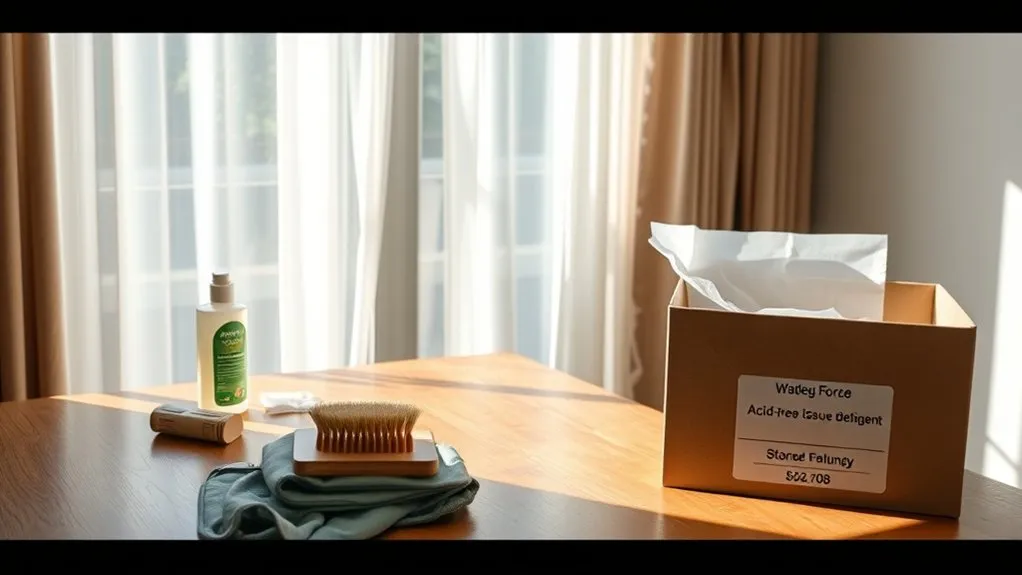
Dirt, sweat, food crumbs, spilled drinks, sunscreen, and salt can cause odors, attract pests, stain fabric, or speed up the deterioration of coatings and hardware. Cleaning does not always mean soaking the entire backpack, however. Begin with the least aggressive method allowed by the care label.
1. Read the Care Label
Look inside the main compartment or along a seam for washing instructions. The backpack manufacturer’s directions should override general advice, especially for leather bags, waxed canvas, camera backpacks, wheeled travel packs, child carriers, airbag packs, and bags with electronics.
For standard fabric backpacks, both Osprey and Deuter recommend gentle cleaning with mild soap, water, and a soft brush or sponge, followed by thorough drying. Their guidance also warns against machine washing typical backpacks.
2. Empty Every Compartment
- Open the main compartment, lid, hip-belt pockets, laptop sleeve, organizer pockets, and hidden security pockets.
- Remove food, wrappers, toiletries, pens, batteries, chargers, power banks, and other electronics.
- Take out removable inserts, rain covers, pouches, and hydration reservoirs.
- Turn pockets inside out when their construction allows it.
- Shake the backpack outdoors or use a soft brush to remove sand, dirt, and crumbs.
3. Spot Clean Light Dirt
Use a damp cloth or soft brush on dusty areas and small stains. Avoid scrubbing aggressively because hard brushing can roughen fabric, damage coatings, or force dirt deeper into seams.
4. Hand Wash Only When Appropriate
If the care label permits a fuller wash, use lukewarm water and a small amount of mild or pH-neutral soap. Gently clean the fabric, shoulder straps, back panel, and hip belt. Rinse until no soap remains.
Warning: Do not use a washing machine, clothes dryer, bleach, fabric softener, harsh stain remover, boiling water, iron, heater, or open flame unless the backpack’s manufacturer expressly permits it. These methods can damage foam, polyurethane coatings, seam treatments, hardware, and the pack’s structure.
5. Dry Every Part Completely
Open all zippers and hang or position the backpack so air can reach its pockets, seams, straps, and padding. Dry removable components separately. Keep the pack in a shaded, well-ventilated place and away from radiators, hair dryers, fireplaces, and direct sunlight.
Pro Tip: After the outer fabric feels dry, press a clean paper towel against thick shoulder straps, the back panel, and the bottom corners. If the towel picks up moisture, continue air-drying before storage.
Fix Odors, Mold, and Material Damage First
Strong Odors
Empty the bag, brush out debris, and follow the care label’s cleaning directions. Allow several days of shaded ventilation if necessary. Do not cover the smell with perfume or store the backpack with scented dryer sheets, which may leave residue or irritate sensitive skin.
Visible Mold or Mildew
Move the backpack away from other stored textiles. Handle it outdoors or in a well-ventilated area, and avoid breathing disturbed spores. Follow the manufacturer’s cleaning instructions rather than applying chlorine bleach or an unapproved mold chemical. Widespread mold, persistent staining, or a severe musty smell may require professional cleaning or replacement.
Sticky or Peeling Interior Coatings
A sticky lining, flakes, powder, or a strong chemical odor can indicate that an internal coating or laminated material is deteriorating. Washing may not reverse this damage. Contact the manufacturer about repair, warranty coverage, or safe disposal before storing the pack with other gear.
Maintain the Backpack’s Shape
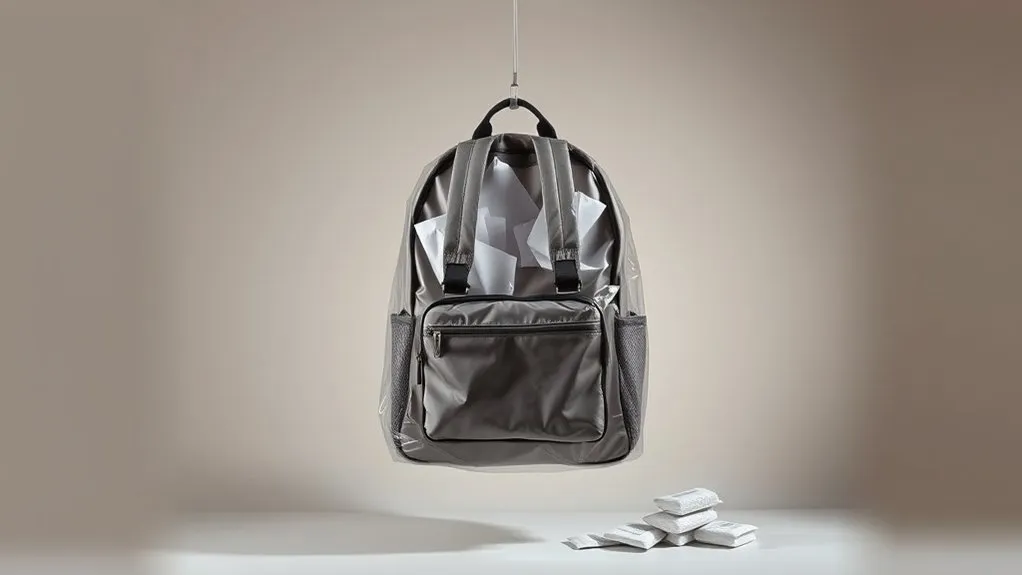
An empty backpack can collapse, while an overfilled one can develop stretched seams, compressed padding, sharp folds, or a distorted frame. The goal is light support rather than tight packing.
- Loosely fill the main compartment with clean, completely dry white towels, unprinted tissue paper, or another lightweight material.
- Use only enough support to preserve the basic shape.
- Do not use newspaper because ink can transfer to the lining.
- Bubble wrap may be used loosely if it is clean and dry, but it should not be packed tightly against a coated lining.
- Do not leave books, tools, water bottles, cookware, or other heavy objects inside.
- Avoid sharply folding padded shoulder straps, hip belts, laptop sleeves, or structured back panels.
Long-term physical stress can distort some plastics and flexible components. The Canadian Conservation Institute recommends supporting plastic objects in their proper shape rather than storing them under sustained stress. This is one reason a structured backpack should not be vacuum-compressed for months at a time.
Note: Packable backpacks designed to fold into their own pocket may be stored according to their manufacturer’s folding instructions. That exception does not mean a framed, padded, leather, camera, or laptop backpack should be tightly compressed.
Choose the Right Storage Environment
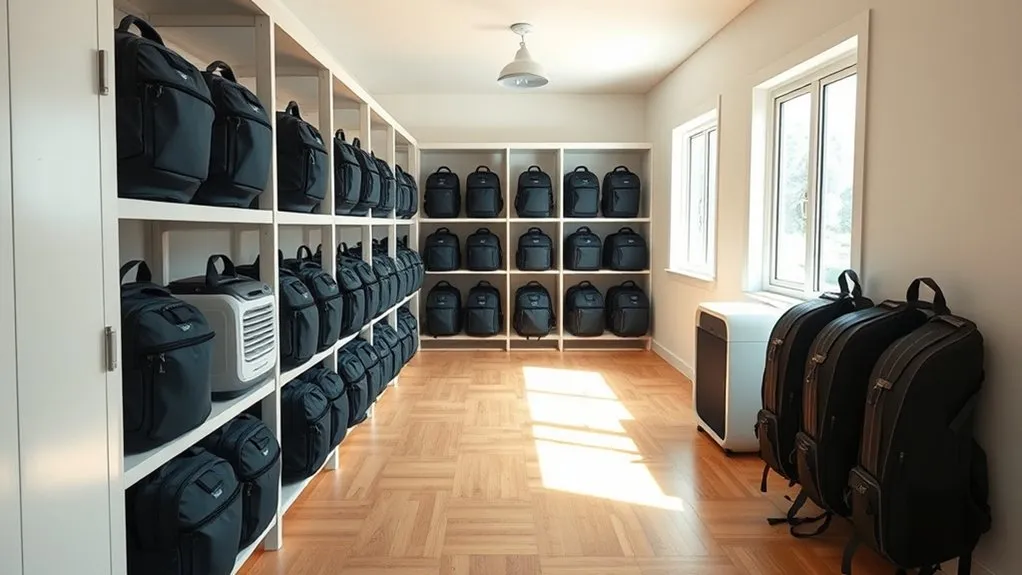
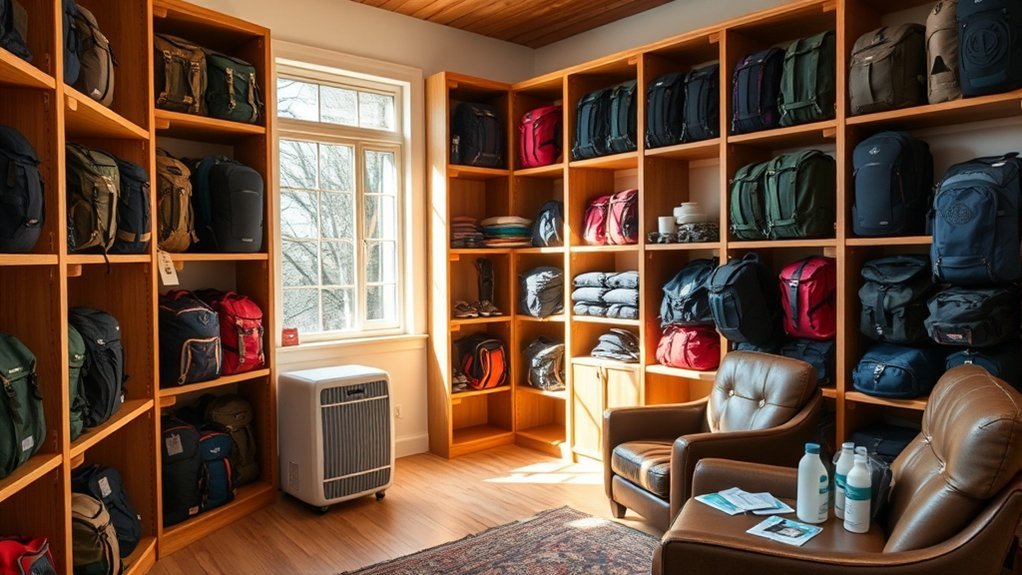
The safest location is usually a clean indoor closet, cabinet, or shelf with stable household conditions. Avoid making one temperature number the deciding factor. Moisture, heat, direct sunlight, pests, and repeated temperature swings are usually more useful warning signs.
Stable Temperature and Humidity
Keep the backpack away from heaters, hot pipes, exterior walls that collect condensation, and areas that become unusually hot or cold. Abrupt temperature changes can also change relative humidity and encourage condensation.
| Storage Location | Suitability | What to Check |
|---|---|---|
| Indoor closet or cabinet | Usually best | Dry, clean, dark, and not crowded |
| Under-bed area | Often suitable | Airflow, dust protection, and enough height to prevent crushing |
| Basement | Use caution | Humidity, leaks, condensation, flooding, mold, and pests |
| Garage or shed | Usually not ideal | Heat, freezing conditions, fumes, rodents, insects, and moisture |
| Attic | Usually not ideal | High heat, large temperature swings, dust, and pests |
| Storage unit | Depends on climate control | Humidity control, leak history, pests, and protection from crushing |
Prevent Moisture Damage
Do not store the backpack against a damp wall, directly on a concrete floor, under a leaking pipe, or near a water heater. Use shelving to keep it above floor level in areas where minor leaks are possible.
A sealed plastic bin can block dust and pests, but the backpack must be completely dry before the lid is closed. Open the bin periodically if the location is humid or if condensation appears. A breathable cotton cover is often a simpler choice in a clean indoor closet.
Limit Sunlight Exposure
Light and ultraviolet exposure can fade textiles and contribute to material deterioration. The Canadian Conservation Institute recommends dark storage for textile collections. For a household backpack, a closed closet, cabinet, opaque bin, or breathable dust cover provides practical light protection.
Use Silica Gel for Supplemental Moisture Control
Silica gel is a desiccant that removes moisture from the air immediately around it. It can help inside a small closed storage bin or cabinet, but a few packets will not control the humidity of an entire closet, basement, attic, or garage.
Choose and Monitor the Packets
| Silica Gel Type | How It Is Used | Important Detail |
|---|---|---|
| Regular white or clear packets | Basic moisture control | No visible saturation indicator |
| Indicating packets | Change color as moisture increases | Follow the maker’s color chart; avoid loose beads |
| Rechargeable packets or canisters | Dried and reused as directed | Use only the product’s specified recharging method |
| Disposable packets | Replaced when saturated or expired | Replacement timing varies with humidity and packet size |
Check the packets after the first few weeks and then during regular backpack inspections. Replace or recharge them when the product indicator or instructions say they are saturated. Do not rely on a universal three-month replacement rule.
Use Silica Gel Safely
Poison Control states that standard silica gel is usually considered non-toxic, but the packets can still cause choking or an intestinal blockage. Some blue indicating silica gel contains cobalt chloride. Keep every packet intact, do not let loose beads touch the backpack lining, and store packets away from children and pets.
Note: Silica gel cannot dry a backpack that was put away wet. If the pack, padding, or storage bin feels damp, remove everything and correct the moisture source before storage continues.
Creative Storage Solutions for Small Spaces
A small home can still provide safe backpack storage. Choose a method that supports the bag without crushing it or placing excessive force on one strap.
- Pegboard: Use a properly mounted system and a hook rated for the empty backpack’s weight.
- Over-the-door hanger: Check that the door closes freely and that the bag is not pinched against the frame.
- Wall or adhesive hook: Follow the exact hook model’s weight rating, surface-preparation instructions, and curing time. Do not assume every hook supports 15 pounds.
- Repurposed locker or cabinet: Keep the interior clean and allow space around the backpack rather than wedging it tightly between objects.
- Cubby: Choose a compartment tall and deep enough to avoid bending the frame or compressing the shoulder straps.
- Under-bed container: Use a container that is high enough for the backpack’s supported shape and check it for condensation.
- Sturdy shelf: Place the backpack upright with support or lay it flat without stacking heavy objects on top.
Hanging is acceptable only when the backpack is empty, its top loop is designed to carry the bag, and the hanger does not distort the frame. A shelf is safer for heavy, structured, leather, camera, or wheeled backpacks.
Perform Regular Maintenance Checks
A seasonal check or inspection every two to three months is a useful household routine, but it is not a manufacturer-required cleaning schedule. Clean the bag only when its condition calls for it.
| Check | What to Look For | Action |
|---|---|---|
| Moisture and odor | Damp fabric, condensation, or musty smell | Remove the pack, air it out, and find the moisture source |
| Mold and pests | Spots, webbing, droppings, holes, or insect activity | Isolate the backpack and clean the storage area |
| Straps and seams | Fraying, loose threads, torn fabric, or compressed foam | Arrange repair before the next trip |
| Zippers and buckles | Dirt, corrosion, cracks, sticking, or missing parts | Clean gently and contact the manufacturer for compatible parts |
| Shape support | Collapsed sides, sharp folds, or overstuffing | Adjust the lightweight support material |
| Coatings and lining | Stickiness, flakes, powder, bubbles, or delamination | Stop using unapproved cleaners and contact the manufacturer |
Long-Term Backpack Storage Checklist
- Empty the backpack: Check every pocket and remove food, liquids, batteries, electronics, and removable accessories.
- Read the care label: Identify cleaning limits and material-specific instructions.
- Remove loose dirt: Shake out the pack and use a soft brush or cloth.
- Clean only as needed: Spot clean first and hand wash only when approved.
- Dry completely: Open zippers and air-dry every compartment, strap, cover, and removable component in the shade.
- Inspect and repair: Check seams, zippers, buckles, foam, frames, and coatings.
- Support the shape: Add light, dry stuffing without stretching the fabric.
- Choose the location: Use a dry, dark indoor shelf, cabinet, or closet with enough room to prevent crushing.
- Add optional protection: Use a breathable dust cover or monitored silica gel in a suitable enclosure.
- Inspect periodically: Look for moisture, odor, mold, pests, stress, and coating damage.
The most important storage rule is simple: never seal, fold, stack, or put away a backpack until every part is clean enough and completely dry.
Best Practices for Packing a Backpack for Storage
A backpack should not remain packed as though it were ready for a hike. Heavy gear can stretch seams, compress foam, distort the back panel, and hide leaks or food residue.
- Remove the sleep system, cooking kit, clothing, first-aid supplies, rain gear, snacks, and water containers.
- Store modular gear kits separately in containers suited to those items.
- Wash and dry the hydration reservoir before storing it separately with openings positioned for airflow.
- Remove batteries from lights, trackers, scales, or integrated electronic accessories.
- Leave quick-access pockets empty so their contents cannot stain or deform the fabric.
- Use only lightweight shape-support material inside the main compartment.
When the backpack returns to active use, the normal trail-packing principles still apply: place heavier gear close to the spine, use compression sacks appropriately, organize equipment into modular kits, and reserve external pockets for items needed during the trip. Those techniques are for carrying gear, not for months of storage.
Protect the Backpack From Sunlight and Dust
- Use a closed closet, cabinet, opaque bin, or shaded shelf.
- Cover the backpack with a clean cotton pillowcase or breathable fabric dust cover.
- Do not wrap a potentially damp backpack in plastic.
- Keep the bag away from windows and direct sunlight.
- Do not place a clear storage bin in a sunny area unless the bin is covered or stored inside a dark space.
- Keep the backpack off dusty floors and away from household chemicals, paint, fuel, and strong fumes.
- Inspect the cover and surrounding shelf for dust, condensation, pests, and leaks.
Special Materials and Removable Components
Leather Backpacks
Do not soak leather unless its manufacturer permits it. Brush away dry dirt, use products approved for that leather finish, and allow the bag to dry naturally. Avoid overstuffing, plastic wrapping, and storage next to heat.
Waxed Canvas
Waxed canvas often requires brushing or limited spot cleaning rather than detergent washing. Follow the manufacturer’s instructions before applying new wax because formulas and finishes differ.
Camera, Laptop, and Electronic Backpacks
Remove cameras, computers, batteries, trackers, charging cables, and detachable electronic modules. Check the padded dividers for trapped moisture and store the backpack without heavy equipment compressing its foam.
Rain Covers and Hydration Systems
Remove the rain cover and hydration reservoir when possible. Clean and dry each component according to its own instructions. Never seal a damp reservoir inside the backpack.
Frequently Asked Questions
Can I store my backpack in a garage or attic?
Only when the space remains dry, reasonably stable, clean, and protected from pests and fumes. Most uncontrolled garages and attics experience larger heat, cold, and humidity swings than an indoor closet, making them a poorer choice for long-term storage.
How often should I replace silica gel packets?
There is no universal schedule. Check the packet’s indicator and follow its replacement or recharging instructions. Packet size, enclosure size, and humidity all affect how quickly silica gel becomes saturated.
Is it necessary to empty every compartment?
Yes. Food, liquids, toiletries, batteries, pens, electronics, and damp gear can leak, attract pests, create odors, or damage the lining. Emptying every pocket also lets you inspect seams and hidden areas for moisture.
What should I do if my backpack has a strong odor?
Empty it, remove debris, and clean it according to the care label. Rinse away all approved soap and allow thorough shaded ventilation. A persistent musty odor may indicate hidden moisture, mold, or deteriorating coatings that need closer inspection.
Can I use a vacuum-sealed bag for backpack storage?
Avoid vacuum-compressing structured, framed, leather, padded, camera, or laptop backpacks for long-term storage. Sustained compression can stress folds, foam, plastic parts, and coatings. It may also trap residual moisture. Store the backpack loosely supported instead.
Should I hang the backpack or place it on a shelf?
A shelf is usually best for a structured or heavy backpack. A lightweight empty bag may be hung from a strong loop designed for that purpose, provided the hanger and mounting system are properly rated and the bag is not being pulled out of shape.
Conclusion
Proper long-term backpack storage begins with an empty, clean, and completely dry bag. Support its shape without loading or vacuum-compressing it, protect it from sunlight and dust, and choose a stable indoor location away from dampness and heat. Periodic inspections will catch odors, mold, pests, damaged seams, failing hardware, or deteriorating coatings before the backpack is needed again.
Sources
- Osprey: How to Clean Your Osprey Backpack — supports gentle cleaning, thorough rinsing, shaded ventilation, and avoiding machine washing.
- Deuter: How to Clean a Backpack — supports hand cleaning, complete drying, dry cupboard storage, and avoiding damp basements, sunlight, and heat.
- Canadian Conservation Institute: Textiles and the Environment — supports protection from light, ultraviolet exposure, and damaging humidity extremes.
- Canadian Conservation Institute: Caring for Plastics and Rubbers — supports avoiding prolonged physical stress and storing components in their proper shape.
- Poison Control: Is Silica Gel Toxic? — supports silica gel’s moisture-control purpose and its choking, irritation, and indicator-dye cautions.
- REI: How to Clean and Store Camping and Hiking Gear — supports complete drying, cool dry storage, and avoiding prolonged compression of outdoor gear.