
Last Updated on July 30, 2026 by Caleb Warren
Keeping money safe in a travel backpack is less about buying one special wallet and more about dividing your funds wisely. Carry only the cash and card you need for the day in an accessible place, keep a backup payment method in a separate concealed location, and avoid storing every financial resource in the same bag.
Quick Answer
Store a small amount of spending cash in a secured inner pocket, place a backup card and emergency cash in a different concealed compartment, and keep your main reserves on your body or in secure lodging storage when practical. Never put all your cash, cards, identification, and phone in one backpack.
Key Takeaways
- Divide your money into daily spending funds, a concealed backup, and a reserve stored separately from the backpack.
- Use interior zippered pockets instead of exterior bottle pockets, open organizers, or easy-access front compartments.
- Treat lockable zippers, RFID sleeves, and anti-theft fabrics as deterrents, not guarantees.
- Keep backup cards separate from your main wallet and turn on transaction alerts before traveling.
- If a card or backpack disappears, freeze the card and contact the issuer immediately.
At a Glance
| Time Required | About 10 minutes before leaving your lodging |
| Difficulty | Easy |
| Tools Needed | Zippered inner pocket, slim wallet, small pouch, and an optional money belt or cable lock |
| Cost | $0 with existing gear; optional security accessories vary by brand |
Disclosure: As an Amazon Associate I earn from qualifying purchases. Some links on this page are affiliate links, at no extra cost to you.
Why Travel Money Should Be Stored in Separate Layers
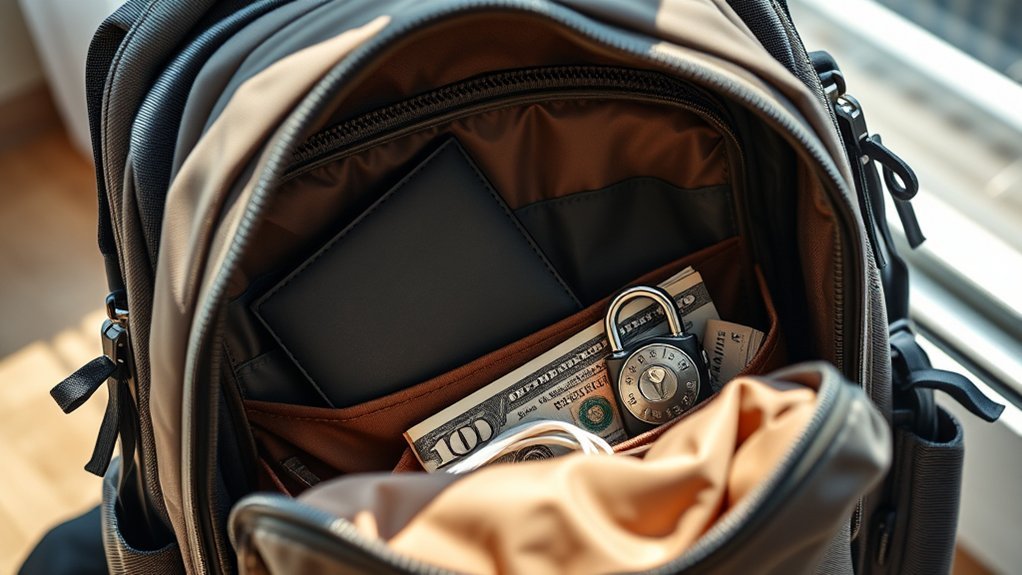
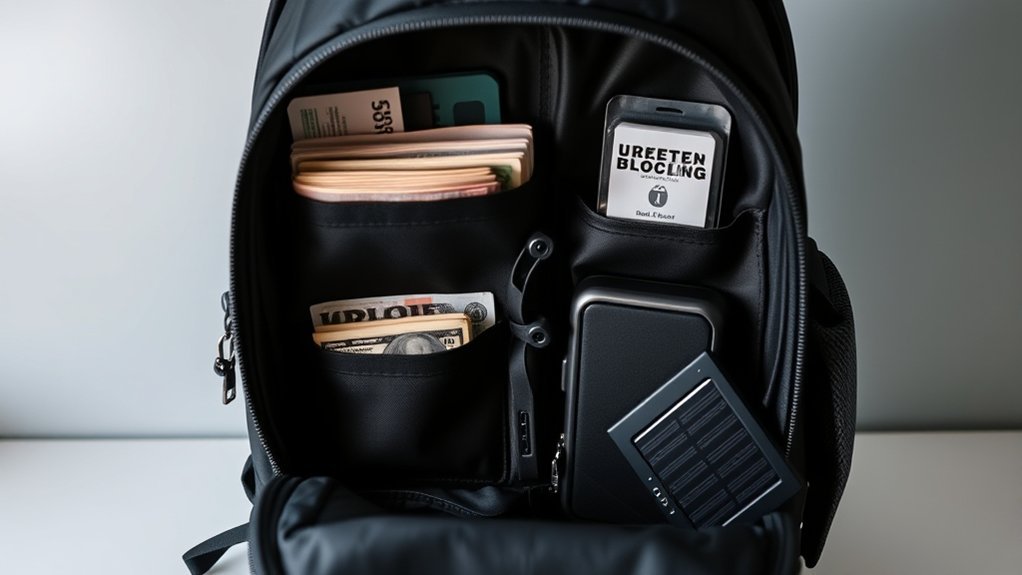
The biggest mistake is keeping your cash, primary card, backup card, identification, and phone together. A lockable zipper may make a pocket harder to open, but it cannot stop someone from taking the entire backpack.
A safer system divides your money into three layers:
- Daily access: Carry only the cash and one payment card you expect to use that day.
- Concealed backup: Keep a second card and a small emergency cash reserve in a different inner compartment, hidden pouch, or money belt.
- Deep reserve: Leave excess cash and additional payment methods in secure lodging storage when practical, or carry them separately on your body during transit days.
Warning: Do not place all your money, cards, passport, and phone in one backpack. A thief does not need to open every compartment if the entire bag can be removed.
Monitor card and bank-account activity during your trip. The Federal Trade Commission advises consumers to report lost cards and unauthorized transactions promptly. Reporting speed can be especially important when a debit card is involved.
Prepare Your Cards and Emergency Access Before Packing
A secure packing method works best when your accounts and emergency information are prepared before departure.
Bring More Than One Payment Method
Carry at least two usable payment methods when the destination supports them, but do not keep them in the same wallet. A practical setup is one primary card for daily purchases and one backup card from a separate account or issuer.
Check each card’s foreign-use settings, transaction fees, cash-withdrawal limits, and issuer instructions before departure. Some issuers ask for travel information, while others use automated fraud detection and do not require a travel notice.
Turn On Account Alerts
Enable notifications for purchases, ATM withdrawals, online transactions, and declined payments. Alerts can help you notice unauthorized activity before your next statement arrives.
Save your card issuers’ official international contact numbers in your phone and in a separate written or encrypted record. Do not rely only on the phone number printed on a card that may be stolen with your wallet.
Prepare Copies of Important Documents
The U.S. Department of State’s International Travel Checklist recommends making copies of essential travel documents, giving one set to a trusted person, and keeping another set separate from the originals.
Protect digital copies with a strong account password and multi-factor authentication. A photograph of your passport or card should not be left openly visible in an unlocked photo gallery.
Pro Tip: Store the last four digits of each card and the issuer’s emergency number, but do not keep complete card numbers, PINs, and security codes together in an unsecured note.
Choosing the Right Wallet for Travel
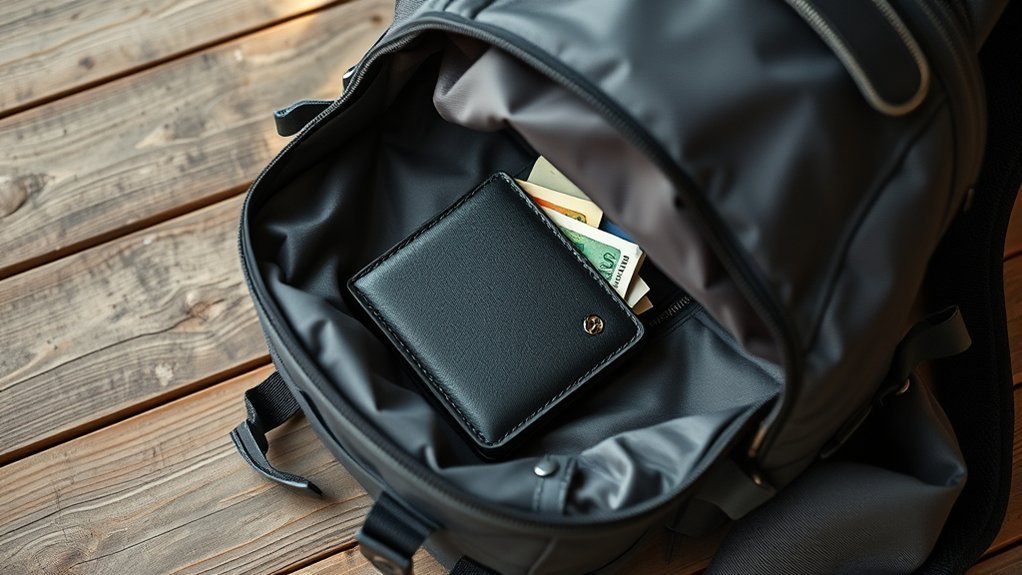
The best travel wallet is compact, easy to control, and large enough for the items you actually need. Oversized wallets encourage travelers to carry unnecessary cards, receipts, and cash.
Travel Wallet Types Compared
| Wallet Type | Key Benefits |
|---|---|
| Slim Wallet | Minimal bulk, quick access, and fewer unnecessary items |
| Travel Wallet | Space for organized bills, cards, receipts, and travel documents |
| Clip Wallet | Keeps folded cash together without a bulky bill compartment |
| Water-Resistant Wallet | Adds protection from rain, spills, and leaking bottles |
| Crossbody Wallet | Keeps essentials visible and close to the body in crowded places |
Security Features That Add Practical Value
Look for a secure closure, durable stitching, a compact shape, and enough compartments to separate cash from cards. A zipper or snap can reduce accidental loss and make casual access more difficult.
A front-pocket wallet or close-fitting crossbody wallet is usually easier to monitor than a loose wallet in a back pocket. Water-resistant material can also protect bills and cards from sweat, rain, and leaking containers.
Note: RFID-blocking material is optional. Contactless payment cards use security controls such as transaction-specific data, and Visa describes fraudulent use of skimmed contactless information as unlikely and limited in scope. An RFID sleeve does not protect against physical theft, fraudulent websites, compromised terminals, or an exposed PIN.
Using Hidden Money Belts and Pouches
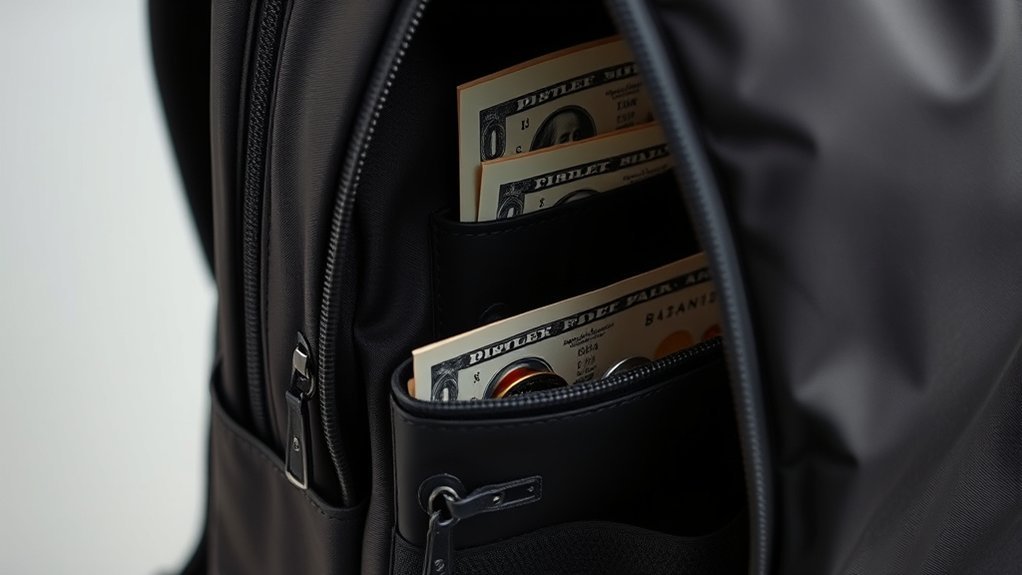
A hidden money belt or under-clothing pouch is useful for deep storage. It can hold a backup card, emergency cash, and important documents out of casual view.
Choose an adjustable design made with breathable fabric. A lightweight, flat pouch is less visible and more comfortable during long travel days. Multiple compartments can keep cards away from coins, keys, and folded documents.
Do not use a hidden pouch like an everyday wallet. Reaching under your clothing at a ticket counter, market, or crowded station reveals its location. Move the amount you expect to spend into your daily wallet before leaving a private place.
Protect paper currency from moisture by placing it in a small resealable sleeve inside the pouch. Sweat can damage bills, receipts, and document copies even when the outer fabric is advertised as water-resistant.
Keeping Local Cash Accessible
Carry enough local currency for immediate transportation, tips, food, small purchases, or places that do not accept your card. The correct amount depends on the destination, the day’s plans, and access to reliable ATMs.
Optimal Cash Storage Locations
- Daily cash: Place a modest amount in a slim wallet, front pocket, or secured inner backpack pocket.
- Emergency cash: Keep it in a different concealed compartment or money belt.
- Larger reserves: Store them outside the daily backpack when practical.
- Coins: Use a small zippered coin pouch so they do not reveal the location of your main wallet when they rattle.
Choose an interior pocket that sits against the back panel or beneath other packed items. Avoid exterior bottle pockets, open tote-style sections, and quick-access compartments that can be reached without removing the bag.
Organizing Bills for Quick Transactions
Carry several small and medium denominations so you do not need to display a large bill for a minor purchase. Arrange the bills before leaving your lodging instead of counting your full cash supply in public.
Keep receipts in a separate slot or pouch. Stuffing receipts among bills makes the wallet thicker and forces you to expose more of its contents during a payment.
Emergency Cash Tips
Emergency cash should be separate from your daily wallet and large enough to cover a realistic short-term problem, such as transportation back to your lodging, a meal, or a temporary card outage. Do not automatically rely on U.S. dollars or euros. Research which currencies are accepted at your destination and where they can be exchanged legally and safely.
Check your remaining cash privately each day and refill the daily amount only when needed. This makes it easier to notice a missing pouch or an unusually high level of spending without repeatedly exposing all your funds.
How to Organize Your Backpack for Money Security
- Empty the bag first. Remove old receipts, unused cards, loose change, and documents that do not need to travel with you.
- Select one daily-access pocket. Use an interior zippered pocket that can be reached without displaying the entire contents of the bag.
- Create a separate backup location. Place a backup card and emergency cash in a different concealed pocket or pouch.
- Protect against moisture. Keep cash and documents away from water bottles, toiletries, food, and electronics that may leak or overheat.
- Cover valuable compartments. Pack an ordinary item, such as a light layer or packing cube, over the concealed pocket without making access difficult in an emergency.
- Perform a final check. Confirm that the bag contains only the payment methods and documents you intend to carry that day.
Packing cubes and small zippered pouches can separate money, cards, receipts, and documents. Choose plain designs rather than pouches labeled “cash,” “passport,” or “valuables.”
If you use lodging storage, test the safe or locker before placing items inside. Follow the property’s instructions, use a unique code when possible, and keep a private record of what you stored. No hotel safe, hostel locker, cable lock, or backpack compartment should be treated as completely theft-proof.
Using Zippered Compartments Effectively
Zippered compartments reduce accidental loss and make opportunistic access more difficult than an open pocket. They work best when the zipper pulls remain close to your body and outside pockets contain no valuable items.
Use separate zippered sections for daily cash, coins, receipts, and nonfinancial items. Do not place every reserve in adjacent pockets that can be emptied together.
A small luggage lock, locking clip, or interlocking zipper pull can add delay. However, these devices may also signal that a compartment contains something valuable. Use them as one layer rather than your only defense.
Check the compartments privately at the start and end of each day. Confirm that cards, cash, and documents are still in their assigned locations, and look for damaged stitching, open zippers, or torn pocket linings.
Securing Your Backpack in Transit and Crowded Places
Keep the backpack in physical contact with you whenever possible. On a bus, train, or in an airport, place it between your feet, against your leg, or on your lap instead of on the seat beside you.
- Do not hang the bag over the back of a café chair.
- Avoid leaving it on the floor near an exit or walkway.
- In a crowded area, move the backpack to your front if doing so improves control.
- When using an overhead rack, keep important money and documents on your body.
- At security checkpoints, watch the bag until it enters the scanner and retrieve it immediately after screening.
- In a hostel, use a locker that closes properly and supply your own lock when allowed.
Stay alert when someone creates a distraction, bumps into you, spills something, asks for help, or crowds a ticket machine. Pickpockets may work with another person who draws attention away from a bag or pocket.
Using ATMs and Payment Terminals Safely
Prefer an ATM inside or directly attached to a bank, airport, hotel, or attended business. Avoid isolated machines when a safer option is available.
The FBI warns that skimming devices may be installed in or over ATM and point-of-sale card readers. Before inserting a card, look for loose parts, mismatched colors, an unusually thick keypad, exposed wires, or anything that appears attached over the original reader.
- Cover the keypad while entering your PIN.
- Do not accept help from a stranger who approaches during a transaction.
- Cancel the transaction if the machine behaves unexpectedly.
- Take the card, cash, and receipt before reorganizing your wallet.
- Move away from the machine before counting cash.
- Check the account promptly if an ATM retains your card or fails to dispense the expected amount.
Use a credit card instead of a debit card when appropriate for ordinary purchases, based on your issuer’s terms and your ability to pay the balance. Debit-card transactions can remove money directly from a checking account, so unauthorized activity may cause immediate disruption even when it is later resolved.
Avoiding Common Theft Scenarios
- Do not use a back pocket for your main wallet. A front pocket or secured inner compartment is easier to monitor.
- Limit visible cash. Prepare small denominations privately and avoid displaying your reserve.
- Close the bag after every transaction. Do not walk away from a counter with an open zipper.
- Keep straps under control. Wear the backpack correctly rather than carrying it loosely by one strap in a crowd.
- Do not leave valuables unattended. A locked zipper offers little protection when the bag is left alone.
- Watch for coordinated distractions. One person may attract your attention while another reaches for the bag.
- Avoid obvious money containers. Plain pouches attract less attention than cases labeled for passports or currency.
The safest backpack setup assumes the bag could be lost and makes sure that one loss will not remove every way you have to pay, identify yourself, or reach help.
Useful Travel Accessories for Money Storage
Security accessories can improve organization and slow casual access, but they should support a layered plan rather than replace it.
- Slim wallet: Holds the day’s cash and one primary card without unnecessary bulk.
- Hidden money belt or pouch: Keeps backup funds beneath clothing during high-risk transit days.
- Small zippered pouch: Separates coins, receipts, or emergency cash inside the bag.
- Water-resistant sleeve: Protects bills and document copies from moisture.
- Locking clip or small luggage lock: Adds delay to compatible zipper pulls.
- Cable lock: Secures a bag to a fixed object in situations where suitable lockers are unavailable, although it does not make the bag theft-proof.
- Crossbody wallet or sling: Keeps frequently used valuables visible and close to the body.
Choose accessories that are comfortable enough to use consistently. A bulky belt, complicated lock, or overfilled wallet often gets abandoned after a few days.
What to Do If Your Money or Backpack Is Lost or Stolen
Move to a safe place first. Then identify exactly what is missing and respond according to the item.
Credit or Debit Card
- Use the issuer’s official app or phone number to freeze or report the card immediately.
- Review recent transactions and report anything you do not recognize.
- Follow the issuer’s written dispute or replacement instructions.
- Continue checking the account because additional transactions may appear later.
The FTC explains that protections differ between credit and debit cards and that delayed debit-card reporting may increase the amount a consumer can lose. Card-network policies and account agreements may provide additional protection, but travelers should not assume every card has identical rules.
Physical Cash
Cash generally cannot be canceled or replaced by a bank. Record where and when it went missing, ask the property or transport operator about lost-and-found procedures, and file a police report when theft is suspected or when the report is needed for an insurance claim.
Phone or Digital Wallet
Use the device maker’s remote-location or remote-lock service, contact your mobile carrier, and review the wallet provider’s instructions. A digital wallet should be protected with a device passcode, biometric authentication where available, and an account password that is not reused elsewhere.
For example, Apple explains that Apple Pay uses a device-specific account number and transaction-specific security data. Even with those controls, a traveler should retain a separate physical payment method.
Passport or Identification
Contact the appropriate embassy or consulate for your nationality. U.S. citizens can follow the State Department’s instructions for reporting and replacing a lost or stolen passport abroad. Keep passport copies separate from the original so they remain available during the replacement process.
Emergency Financial Help
Contact trusted family, friends, your employer, card issuer, travel insurer, or financial institution. U.S. citizens who face a serious financial emergency abroad can also review the State Department’s Emergency Financial Assistance for U.S. Citizens Abroad.
Note: Card liability, replacement options, insurance coverage, and reporting rules vary by country, issuer, payment type, and account agreement. Follow the instructions supplied by your own bank, card issuer, insurer, and local authorities.
Frequently Asked Questions
What types of local currency should I carry when traveling?
Carry the official or commonly accepted local currency in small and medium denominations for immediate expenses. Research the destination before bringing U.S. dollars, euros, or another reserve currency because acceptance and exchange conditions vary. Avoid carrying more physical cash than you can reasonably afford to lose.
How can I securely store spare credit cards while traveling?
Keep a spare card separate from your primary wallet. Use a concealed inner backpack pocket, hidden pouch, money belt, or secure lodging storage. Do not store the backup card with a written PIN, complete account number, or the same phone that holds all your issuer contact information.
Are digital wallets safe for storing travel funds?
A reputable digital wallet on an updated, passcode-protected device can be a secure payment option. Enable biometric authentication where available, account alerts, multi-factor authentication, and remote locking. Keep a separate physical payment method because a lost phone, dead battery, network problem, or unsupported terminal can still block access.
How often should I check my cash supply while traveling?
Check it privately at least once a day and before a major transit day. Confirm that your daily cash, concealed reserve, and cards remain in their assigned locations. Review electronic account activity more frequently when transaction alerts show something unexpected.
What should I do if I lose my money while abroad?
Freeze and report missing cards immediately, review account activity, and contact your issuer. Physical cash cannot normally be canceled, but a police or lost-property report may help with an insurance claim. Contact your embassy or consulate if identification is missing or you cannot access emergency funds.
Should I keep my passport and money in the same backpack?
Avoid keeping your passport, every card, all cash, and your phone together. During ordinary sightseeing, use the storage arrangement appropriate for local identification rules and your lodging. During transit, keep essential identification and at least one payment method under your direct control.
Is an anti-theft backpack enough to protect travel money?
No. Hidden openings, durable fabric, and locking zippers can discourage casual access, but the entire backpack can still be lost, grabbed, or left behind. Divide your payment methods and keep a backup outside the bag whenever practical.
Conclusion
The safest way to store money in a backpack is to plan for the possibility that the backpack itself may disappear. Carry only the day’s spending money in an accessible inner pocket, conceal a separate backup card and emergency cash, and keep larger reserves elsewhere when practical. Combine that split-storage method with account alerts, secure ATM habits, close control of the bag, and a clear loss-response plan.
Sources
- U.S. Department of State — International Travel Checklist — document copies, destination research, and travel preparation
- U.S. Department of State — Emergency Financial Assistance — emergency access to funds abroad
- Federal Trade Commission — Lost or Stolen Credit, ATM, and Debit Cards — reporting losses and monitoring unauthorized activity
- Federal Bureau of Investigation — Skimming — ATM and point-of-sale skimming risks and precautions
- Visa — Contactless Payment Security — transaction-specific contactless-card security controls
- Apple — Apple Pay Security and Privacy Overview — device-specific payment credentials and transaction security
