
Last Updated on July 30, 2026 by Caleb Warren
A backpack lock can discourage quick zipper access, keep compartments from opening accidentally, and make tampering more noticeable. The key is choosing a lock that fits your zipper pulls, following the exact reset method for that model, and treating the lock as a deterrent rather than theft-proof protection.
Quick Answer
To use a backpack lock, open it with the current code, follow the model’s reset instructions, enter a new code, and test it several times while the lock remains open. Thread the shackle or cable through compatible zipper pulls, close the lock, and scramble the dials. Never force a jammed lock or rely on it as your only theft protection.
Key Takeaways
- Check the lock manual before resetting it because buttons, levers, shackles, cables, and built-in locks use different procedures.
- Test a new combination at least three times while the lock is open before attaching it to your backpack.
- Use a lock that passes easily through both zipper pulls without twisting or placing heavy tension on them.
- A TSA-recognized lock may let authorized airport officers open and relock checked baggage, but it can still be cut or damaged.
- Backpack locks deter casual access; they do not prevent someone from cutting the fabric, separating a vulnerable zipper, or taking the entire bag.
At a Glance
| Time Required | About 3–5 minutes to set and test a combination |
| Difficulty | Easy, provided the correct model instructions are available |
| Tools Needed | Backpack lock, compatible zipper pulls, and the lock instructions; a pen tip may be needed only when the manufacturer specifies a recessed reset button |
| Cost | No additional cost if you already own a suitable lock; otherwise the price varies by lock type and construction |
Disclosure: As an Amazon Associate I earn from qualifying purchases. Some links on this page are affiliate links, at no extra cost to you.
Choose the Right Lock for Your Backpack
Before setting a combination, make sure the lock fits both your backpack and the way you plan to use it. A heavy lock is not automatically more secure if it twists, bends, or damages a lightweight zipper pull.
Common Backpack Lock Types
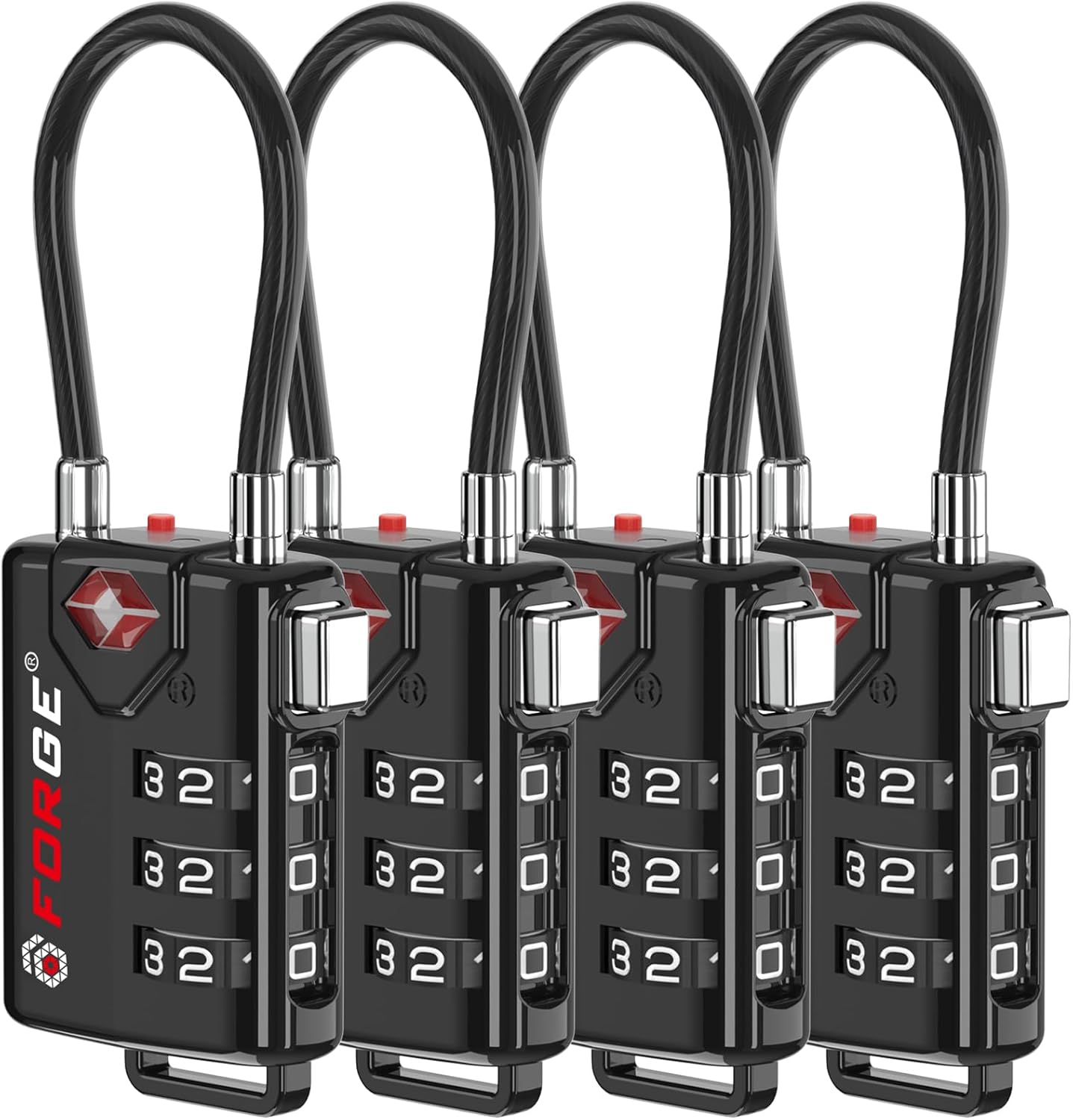
- Small-shackle combination padlock: Best for two metal zipper pulls with openings large enough for the shackle. It is compact but may not fit thick, recessed, or widely spaced pulls.
- Flexible cable lock: Easier to thread through several zipper pulls, odd-shaped openings, or a locker anchor. The exposed cable should remain short enough that it does not snag while the bag is moving.
- Built-in combination lock: Common on travel backpacks and rolling bags. The zipper pulls usually click or slide into a fixed lock body.
- Keyed luggage lock: Simple to operate, but you must keep the key separate from the locked bag and have a backup plan for a lost key.
- Four-digit combination lock: Offers 10,000 possible codes instead of the 1,000 available on a three-digit lock, although both remain light travel locks rather than high-security devices.
Inspect the zipper pulls before buying or attaching a lock. The lock should pass through the intended openings without forcing them apart. Avoid depending on thin decorative cords, soft fabric tabs, or plastic pulls that can tear under light pressure.
Note: A lock cannot securely close a compartment with only one zipper slider unless the backpack includes a separate lock loop or anchor point. Do not improvise by piercing the fabric or placing the lock around a strap that could be cut or unclipped.
Set Your Backpack Lock Combination
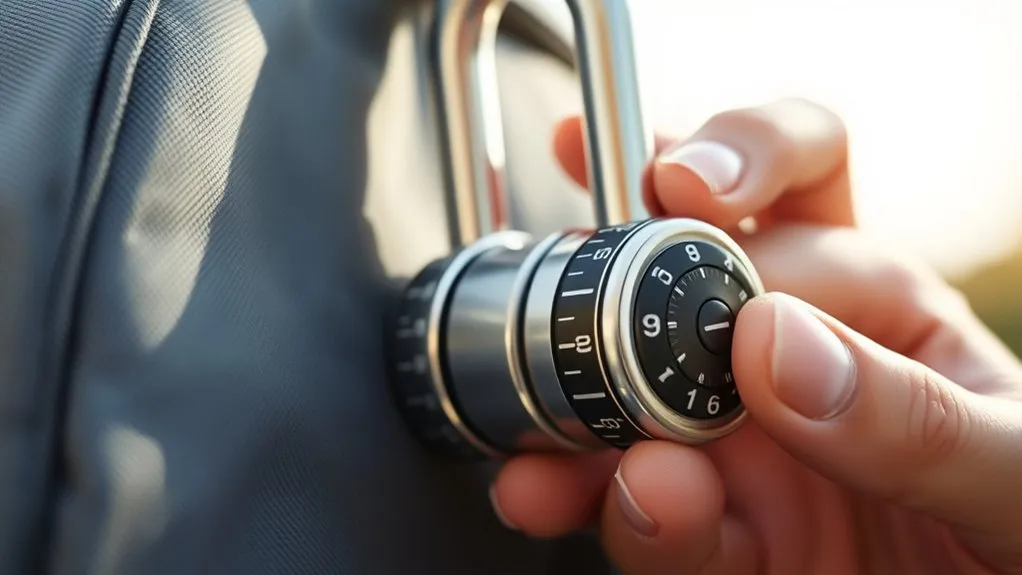
Many new three-dial luggage locks are preset to 0-0-0, but that is not a universal rule. Verify the factory code and reset procedure in the packaging, instruction sheet, or manufacturer’s support page before moving any reset mechanism. For example, the Master Lock 4680 instructions require the user to rotate and depress the shackle rather than press a separate reset button.
Before You Reset It
- Keep the lock open and remove it from the backpack.
- Set the dials to the current or factory combination.
- Open and close the lock once to confirm the current code works.
- Find the model’s reset mechanism and read the full procedure before starting.
- Choose a code that is memorable to you but not obvious to someone who knows you.
Avoid 0-0-0, 1-2-3, repeated digits, a visible birth year, an address number, or the last digits of your phone number. Do not display the code on the bag, lock packaging, luggage tag, or a note stored inside the same compartment.
General Reset Process
The exact movement varies, but most resettable backpack locks follow this basic sequence:
- Open the lock with the current combination. The lock normally cannot be reset while closed.
- Place the lock in reset mode. Depending on the design, this may require pressing a recessed button, sliding a lever, turning and depressing the shackle, or holding an integrated release switch.
- Turn each dial to the new number. Center every number in its viewing window rather than leaving it between positions.
- Return the reset mechanism to its normal position. Release the button, move the lever back, rotate the shackle, or follow the model’s specified finishing step.
- Test the new code with the lock still open. Scramble the dials, enter the new code, and operate the release at least three times.
- Record the combination securely. Store it in a password manager or another private location that does not identify the bag or lock in plain language.
Warning: Do not close the shackle, insert the zipper pulls, or scramble the dials until the new combination has worked several times. A small setup error can leave the lock closed with an unknown code.
Pro Tip: After testing the code, photograph the model number and instruction sheet separately from the combination. That makes it easier to find the correct support procedure without revealing the code in the same image.
Lock Your Backpack Without Damaging the Zippers
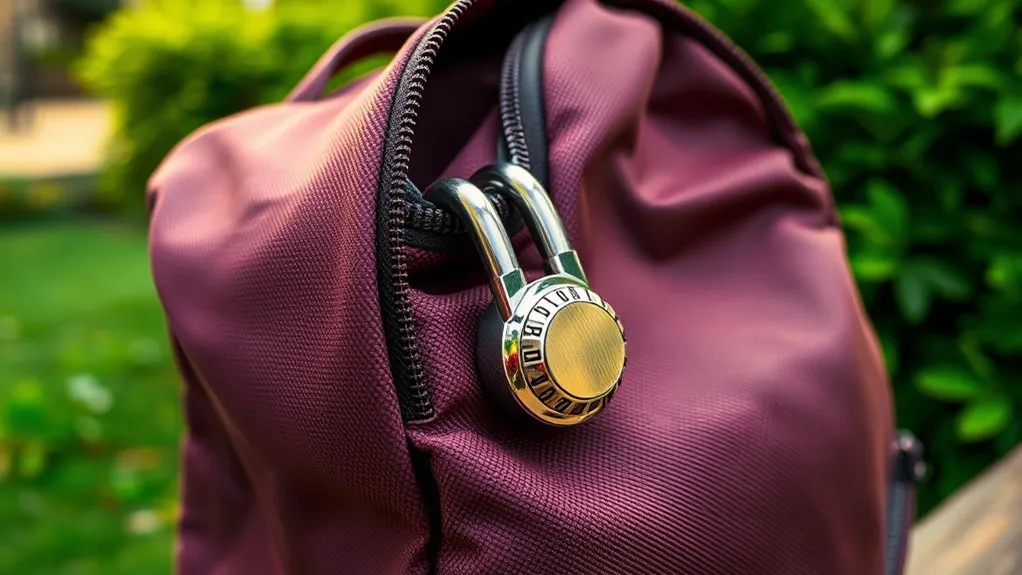
Once the combination has been tested, close the compartment normally before attaching the lock. The lock should hold the zipper pulls together without carrying the load of an overfilled compartment.
- Pack the compartment without overstuffing it. Pulling two strained sliders together can bend the pulls, separate the zipper teeth, or make the lock difficult to release.
- Close both zipper sliders completely. Bring the pulls to a position where they meet naturally.
- Align the lock openings. Do not twist one pull over the other or force a thick shackle through a small hole.
- Insert the shackle or cable. Pass it through both metal zipper pulls or the backpack’s dedicated security loops.
- Close the lock fully. Tug it gently to confirm that the shackle, cable, or built-in latch has engaged.
- Scramble the dials. Turn all dials away from the opening code and check that the release no longer operates.
- Position the lock safely. Tuck a small lock close to the bag so it does not swing, strike objects, or catch on conveyor equipment.
A cable lock can also connect a backpack to a proper locker anchor or another secure fixed point. Route the cable through a strong carry handle or reinforced security loop rather than a removable strap, plastic buckle, or thin piece of fabric. Do not block a walkway, emergency exit, or equipment access point.
For a backpack with several compartments, lock the compartment holding the most sensitive items instead of hanging numerous heavy locks from every zipper. Keep frequently needed items in an accessible pocket so you are not repeatedly opening the secured section in public.
Unlock Your Backpack Correctly
- Place the backpack on a stable surface so the lock and zipper pulls are not under tension.
- Center each dial precisely on the correct number.
- Press, slide, pull, or lift the release mechanism specified for the lock.
- Remove the shackle, cable, or zipper pulls without twisting them.
- Open the compartment and leave the lock in a secure place rather than hanging loosely from the bag.
Practice opening the lock at home before traveling. Familiarity helps when lighting is poor, you are wearing gloves, or you need to reach the compartment quickly.
Troubleshoot a Lock That Will Not Open
If the correct code appears to be entered but the lock remains closed, do not immediately assume the combination has changed.
- Remove zipper tension: Push the two zipper sliders slightly toward each other while operating the release. An overfilled compartment may be pulling against the latch.
- Recenter every dial: A number sitting just above or below the index line can prevent release.
- Clear the dials: Rotate each dial through a full turn, return to the code, and try again.
- Check the release direction: Some locks require the button to slide sideways, while others must be pressed, lifted, or pulled.
- Inspect for dirt: Sand, lint, salt, and dried residue can obstruct small mechanisms. Brush away loose debris without pushing it farther inside.
- Warm a cold lock gradually: Condensation or freezing conditions can stiffen a mechanism. Move it to a dry, moderate environment instead of applying an open flame or extreme heat.
- Stop if parts bend: Forcing a jammed shackle or zipper pull can damage the backpack even when the lock survives.
If the mechanism appears defective, follow the manufacturer’s support guidance. A locksmith may be needed when a malfunctioning lock is attached to the bag and cannot be safely removed.
What to Do if You Forget the Combination
A resettable combination lock usually cannot be assigned a new code while it is closed. The TSA keyway on a TSA-accepted combination lock is intended for authorized security personnel and is not a backup keyhole for the traveler.
- Check your password manager, travel records, purchase documents, or other secure place where you may have stored the code.
- Confirm that you are reading the dials from the correct side and aligning them with the correct index mark.
- Find the exact model number and review the manufacturer’s lost-combination policy.
- Contact the manufacturer and ask what proof of ownership or product information it requires.
- If the lock is attached to your property and no supported recovery method is available, contact a locksmith or qualified luggage-repair service.
Do not rely on random online bypass methods. Procedures vary by lock, may damage the zipper or bag, and may not establish that the person opening the lock owns the property.
Understand TSA-Recognized Locks
A TSA-recognized or TSA-accepted lock is designed so authorized airport security officers can open it with controlled tools, inspect the baggage, and relock it when the system works as intended. Travel Sentry locks can be identified by the organization’s red diamond symbol.
This feature is most relevant when a backpack is placed in checked baggage. According to the Transportation Security Administration’s travel guidance, a lock may still have to be cut when officers cannot open the bag through other means. Locks can also be damaged or lost in baggage-handling systems.
If a TSA officer physically opens checked baggage, TSA states that a Notice of Baggage Inspection will be placed inside the bag. Some lock models also include a separate inspection indicator, but that feature is not present on every TSA-accepted lock.
Note: “TSA-recognized” describes an airport-inspection access system, not a theft-resistance rating. It does not certify the strength of the backpack fabric, zipper chain, zipper pulls, cable, or lock body.
Carry-On Versus Checked Backpacks
On a carry-on backpack, a small lock can discourage someone from opening a zipper while the bag is beside you, in an overhead bin, or in shared accommodation. Be prepared to open it when an authorized officer needs access during screening.
For a checked backpack, use a TSA-recognized lock if you choose to lock the zippers. Secure or cover loose shoulder, waist, and compression straps so they are less likely to catch on baggage equipment. Never pack a critical item in checked baggage solely because the compartment is locked.
Recognition of the red-diamond system extends beyond the United States at participating airports, but procedures and tool availability vary. Check the relevant airport, airline, and national security guidance when traveling internationally.
Improve Backpack Security While Traveling
A lock is most effective when combined with good handling habits. The U.S. Department of State advises travelers to secure identification and personal items and remain alert to theft risks. Review current destination-specific guidance on the department’s international travel crime and safety page.
- Keep essential valuables with you: Carry your passport, primary identification, medication, cash, payment cards, and critical electronics where you can supervise them.
- Do not leave the backpack unattended: A zipper lock does not stop someone from taking the entire bag.
- Wear the bag carefully in crowds: Keep it in front of you or maintain contact with it in packed transit areas, queues, elevators, and tourist sites.
- Use secure storage: In hostels, gyms, and stations, place the backpack inside a proper locker and lock the locker according to the facility’s rules.
- Keep the code private: Shield the dials with your hand when opening the lock around other people.
- Change the code after exposure: Reset it if someone has seen it, you shared it temporarily, or you believe it may be compromised. Routine changes are unnecessary when the code remains private.
- Inspect the bag after transit: Look for a missing lock, bent zipper pulls, separated zipper coils, cuts, loose stitching, or signs that a compartment was opened.
- Avoid advertising valuables: Do not label a compartment as containing a laptop, camera, cash, or passport.
Warning: Do not resist or pursue a thief when doing so could put you in danger. Personal safety is more important than the backpack or anything inside it.
Maintain and Test the Lock
Inspect the lock before each trip and after it has been exposed to rain, sand, salt, or rough baggage handling.
- Check the shackle or cable for bends, broken strands, cracks, or corrosion.
- Confirm that all dials turn smoothly and stop clearly at each number.
- Open and close the lock several times before attaching it to the backpack.
- Wipe away dirt with a dry or slightly damp cloth, then dry the lock completely.
- Use only a cleaner or lubricant approved by the manufacturer; some oils attract dirt or can harm internal materials.
- Replace a lock that releases intermittently, fails to latch fully, or requires excessive force.
- Inspect the zipper pulls as well as the lock. A strong lock cannot compensate for a cracked or loose pull.
Frequently Asked Questions
Can I use any lock for my backpack?
No. The shackle or cable must fit through the backpack’s metal zipper pulls or dedicated security loops without forcing, bending, or twisting them. Choose a compact luggage lock for ordinary zipper pulls, a flexible cable for awkward or widely spaced openings, or the manufacturer-specified lock for an integrated system.
What should I do if I forget my lock combination?
Check any secure record of the code, verify the dial alignment, identify the exact lock model, and follow the manufacturer’s lost-combination policy. Most resettable locks must be open before the code can be changed. When no supported recovery method is available, contact the manufacturer, a locksmith, or a luggage-repair service rather than forcing the backpack’s zippers.
Are there specific locks for different backpack types?
Yes. Small padlocks suit paired metal zipper pulls, cable locks work with irregular openings or locker anchors, and integrated locks accept specially shaped zipper tabs. Drawstring or roll-top backpacks may require a separate secure storage solution because their closures are not always designed for padlocks.
How do I choose the right size lock?
Measure the openings in the zipper pulls and the distance between them when the compartment is closed normally. The shackle or cable should pass through easily but leave little unnecessary space. Avoid an oversized or heavy lock that swings against the bag, strains the zipper, or catches on surrounding objects.
Can I use a lock on a rolling backpack?
Yes, provided the rolling backpack has paired lockable zipper pulls, security loops, or a working integrated lock. Keep any separate lock or cable close to the bag so it cannot strike the frame, wheels, or handle or snag during baggage handling.
Does a backpack lock prevent theft?
No backpack zipper lock can guarantee that. It may discourage quick, casual access and make tampering more noticeable, but a determined person may cut the fabric, damage the zipper, break a weak pull, or take the entire backpack. Keep the bag supervised and use secure storage whenever possible.
How can I tell whether TSA opened my checked backpack?
TSA states that an officer who physically opens checked baggage will place a Notice of Baggage Inspection inside it. Some TSA-accepted locks also have an inspection indicator, but not every model includes one, and a missing or damaged lock can also result from baggage-handling equipment.
Conclusion
Using a backpack lock correctly starts with matching the lock to the zipper pulls and following the exact reset procedure for that model. Keep the lock open while testing a new code, avoid placing tension on the zippers, and troubleshoot alignment before applying force. For checked air travel, a TSA-recognized lock may make an authorized inspection easier, but it is not guaranteed to remain undamaged.
Most importantly, treat a small backpack lock as one layer of protection. Keep valuable and essential items under your supervision, use secure lockers or storage when available, and replace damaged locks or zipper pulls before your next trip.
Sources
- Transportation Security Administration — Travel Tips — TSA-recognized locks, physical baggage inspections, cut-lock warnings, inspection notices, and baggage-handling damage.
- Master Lock — 4680 TSA Luggage Lock Instructions — Factory code, shackle-based reset procedure, combination testing, and lost-code limitations for a representative travel lock.
- Travel Sentry — TSA Locks — Red diamond identification and the authorized inspection-tool system.
- Travel Sentry — TSA Lock Keyhole Guide — Explanation that the keyway is intended for airport security personnel rather than the traveler.
- U.S. Department of State — Crime and International Travel — Guidance on securing identification and personal belongings while traveling.