
Last Updated on July 29, 2026 by Mason Reed
Walking time depends on your pace, the route, and how often you stop. On flat ground, a moderate pace of about 3 miles per hour works out to roughly 20 minutes per mile. Hills, rough surfaces, crowds, road crossings, weather, fatigue, and rest breaks can all increase the total time, so treat any estimate as a starting point rather than a deadline.
Quick Answer
Most adults can plan on about 20 minutes per mile on flat ground at a moderate 3 mph pace. A brisk 4 mph pace takes about 15 minutes per mile, while an easy 2 mph pace takes about 30 minutes. Add time for hills, rough surfaces, crossings, weather, breaks, and fatigue.
Key Takeaways
- A moderate planning pace is about 3 mph, or 20 minutes per mile, on level ground.
- Use distance divided by speed to estimate moving time, then add breaks and route delays.
- Steep grades, mud, sand, crowds, heat, wind, snow, and a heavy pack can slow your pace.
- Your own recent walking pace is more useful than a general average for planning a long route.
At a Glance
| Time Required | About 15–30 minutes per mile on level ground, plus breaks and delays |
| Difficulty | Easy on short, flat routes; moderate to strenuous on long, steep, or rough routes |
| Tools Needed | Map or route app, watch or phone, suitable footwear, water, and weather protection |
| Cost | Usually free, although parking, transit, admission, or permits may cost extra |
Disclosure: As an Amazon Associate I earn from qualifying purchases. Some links on this page are affiliate links, at no extra cost to you.
The Average Walking Speed and Its Impact on Travel Time
Your average walking speed determines the basic moving time for a route. A review of outdoor walking studies found that apparently healthy adults walking at their usual pace averaged about 1.31 meters per second, which is approximately 2.9 mph or 21 minutes per mile. Age, health, mobility, fitness, route conditions, and whether you are sightseeing or exercising can all change that pace. You can review the study through the National Library of Medicine.
For simple planning, these pace ranges are useful:
- Easy pace: About 2 to 2.5 mph, or 24 to 30 minutes per mile
- Moderate pace: About 3 mph, or 20 minutes per mile
- Purposeful pace: About 3.5 mph, or roughly 17 minutes per mile
- Brisk pace: About 4 mph, or 15 minutes per mile
Long-distance walkers often move more slowly later in the day. A pace you can hold for one mile may not be comfortable for 10 miles, especially when you carry a pack or climb hills. Planned water, food, restroom, and sightseeing stops also affect your arrival time.
Walking Time Chart by Distance and Pace
The chart below shows estimated moving time on flat ground. It does not include breaks, traffic signals, crowds, route-finding, hills, or difficult surfaces.
| Distance | 2 mph 30 min/mile |
2.5 mph 24 min/mile |
3 mph 20 min/mile |
3.5 mph 17 min/mile |
4 mph 15 min/mile |
|---|---|---|---|---|---|
| 1 mile | 30 min | 24 min | 20 min | About 17 min | 15 min |
| 2 miles | 1 hr | 48 min | 40 min | About 34 min | 30 min |
| 3 miles | 1 hr 30 min | 1 hr 12 min | 1 hr | About 51 min | 45 min |
| 5 miles | 2 hr 30 min | 2 hr | 1 hr 40 min | About 1 hr 26 min | 1 hr 15 min |
| 10 miles | 5 hr | 4 hr | 3 hr 20 min | About 2 hr 51 min | 2 hr 30 min |
Pro Tip: Time yourself over a familiar one- or two-mile route. Use that personal pace for future estimates instead of assuming you will maintain a generic 3 mph speed.
Factors Influencing Walking Times: Terrain and Weather
The surface beneath your feet, route grade, weather, visibility, and surrounding traffic can make a major difference. A smooth path may let you hold your normal pace, while mud, loose rock, ice, sand, stairs, or dense crowds may require shorter and more careful steps.
Terrain Types Impact Speed
On flat pavement, many walkers can remain near their normal pace. Trail walking is less predictable. Roots, rocks, mud, stream crossings, soft sand, snow, and overgrown sections can slow you considerably. A heavy backpack may also shorten your stride and increase fatigue.
- Paved paths: Usually the easiest surface for maintaining a steady pace
- Gravel and packed dirt: Often close to a normal pace when dry and level
- Rocky or rooted trails: Require more attention to foot placement
- Mud, sand, and snow: Increase effort and may reduce traction
- Crowded urban routes: Add delays at crossings, stairs, entrances, and busy sidewalks
Use your normal road pace only as a starting estimate. On an unfamiliar trail, give yourself extra time and avoid scheduling a tight connection immediately after the walk.
Weather Conditions Affect Pace
Weather can influence both speed and safety, but there is no single percentage that applies to every walk.
- Rain: Wet leaves, painted road markings, rocks, and wooden surfaces can become slippery.
- Wind: A strong headwind increases effort, especially in exposed areas.
- Heat and humidity: You may need a slower pace, more shade breaks, and additional water.
- Cold: Ice, snow, stiff muscles, and bulky clothing may reduce speed.
- Lightning or severe storms: May require delaying, shortening, or abandoning the walk.
Check the forecast and any official trail alerts shortly before departure. Conditions can change after a route was mapped or reviewed.
Elevation Changes Challenge Walkers
Climbing requires more effort than walking the same distance on level ground. Descents can also be slow when they are steep, loose, wet, or hard on the knees. Altitude may further reduce endurance if you are not acclimatized.
| Factor | Likely Effect on Walking Time |
|---|---|
| Steep inclines | Shorter steps, higher effort, and more rest breaks |
| Rugged trails | Slower foot placement and greater concentration |
| High altitude | Possible breathlessness and earlier fatigue |
| Wet, icy, or loose surfaces | More cautious movement and a higher slip risk |
For a new hilly route, build in a generous buffer rather than relying on an exact percentage. Your recent experience on similar terrain is the best guide.
Navigating Elevation Changes: Strategies for Hills
When tackling hills, assess your current fitness, study the elevation profile, and choose gear that matches the surface. A route with several short climbs can feel very different from a flat route of the same mileage.
Assessing Your Fitness Level
Start by measuring how comfortably you can walk on flat ground. Gradually add distance and elevation rather than making a sudden jump from a short neighborhood walk to a steep day hike. Strength exercises such as supported squats, step-ups, calf raises, and lunges can help prepare the muscles used during climbs and descents.
- Take shorter steps on steep climbs.
- Keep a steady pace that allows controlled breathing.
- Pause before you become exhausted rather than waiting until your balance or judgment declines.
- Turn around when conditions, daylight, pain, or fatigue make continuing unsafe.
People with significant heart, lung, balance, or joint concerns should seek individualized medical or rehabilitation advice before sharply increasing walking distance or elevation.
Choosing Appropriate Gear
Wear footwear that fits securely and provides traction for the planned surface. Lightweight, breathable layers help manage temperature, while a rain shell or insulating layer can protect you if the weather changes.
Trekking poles may improve stability and reduce some lower-extremity loading during downhill walking when they are adjusted and used correctly. Research on downhill walking is available through PubMed. Poles are optional, however, and poor placement can become a tripping hazard.
Carry enough water for the route, conditions, and available refill points. Higher elevations, direct sun, dry air, and strenuous climbing can increase fluid loss. Do not rely on the presence of a stream unless you have confirmed that collecting and treating the water is permitted and practical.
How to Estimate Walking Time Effectively
Start with a simple calculation:
Walking time = distance ÷ average speed
Keep the units consistent. If distance is measured in miles, use miles per hour. You can also calculate with pace:
Walking minutes = distance in miles × minutes per mile
Worked Example
At 3 mph, a five-mile walk has a moving time of:
5 miles ÷ 3 mph = 1.67 hours, or about 1 hour 40 minutes.
If you expect a 15-minute rest, 10 minutes at crossings, and a short sightseeing stop, your total elapsed time may be closer to 2 hours 10 minutes.
Moving Time vs. Elapsed Time
- Moving time counts only the minutes you are actively walking.
- Elapsed time includes water stops, meals, photos, restrooms, route checks, traffic lights, and other delays.
For a familiar, flat route, your moving-time calculation may be close. For an unfamiliar urban route, allow extra time for crossings and crowds. For a steep or rough trail, use a larger buffer and compare your estimate with the managing agency’s posted difficulty and typical duration.
Measure Your Personal Pace
- Choose a safe, measured route that is one or two miles long.
- Walk at a pace you could comfortably maintain for the planned trip.
- Record your moving time without trying to set a personal record.
- Divide the time by distance to find your minutes per mile.
- Repeat the test on a hill or trail if that matches your future route.
Walking apps can help record routes and pace. Examples include MapMyWalk and Strava. GPS readings can drift near tall buildings, cliffs, or dense tree cover, so do not treat every recorded distance as exact. Download maps for offline use and carry a backup power source on remote trips.
Note: A route app may show an estimated time based on a generic user. Replace that estimate with your own recent pace whenever possible.
Packing Essentials for Long Walks
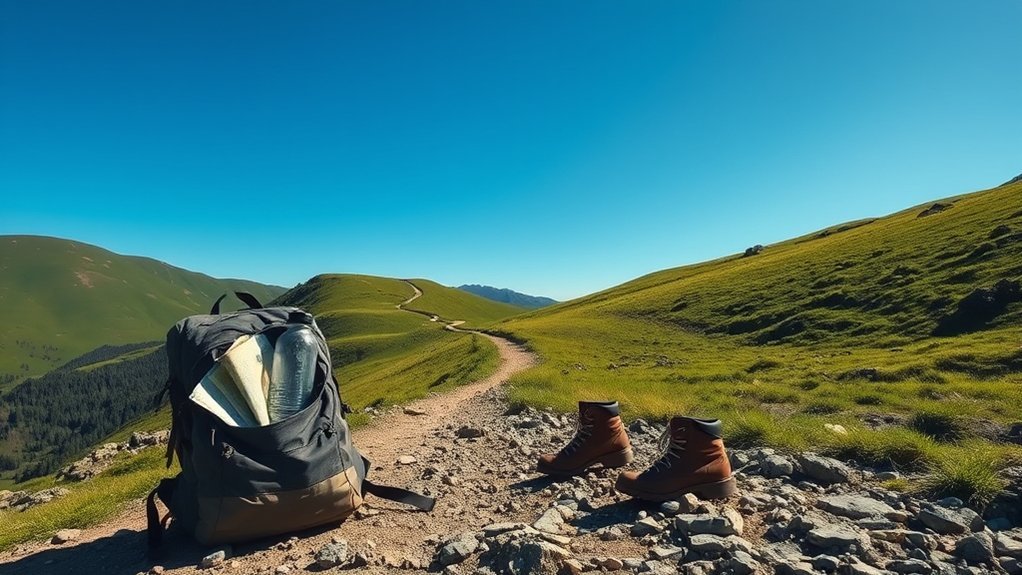
For a long walk, use a lightweight, comfortable backpack that holds the gear you need without bouncing or rubbing. The correct contents depend on the route, weather, remoteness, and duration.
The National Park Service Ten Essentials provide a useful starting point for outdoor routes:
- Navigation: Map, compass, GPS, or downloaded offline map
- Sun protection: Sunscreen, sunglasses, hat, and protective clothing
- Extra clothing: Rain shell, warm layer, gloves, or other seasonal protection
- Light: Headlamp or flashlight with spare power
- First aid: Supplies for blisters, cuts, and personal medical needs
- Food: Trail mix, energy bars, sandwiches, fruit, or another practical snack
- Water: Enough for the conditions, plus a safe refill or treatment plan when needed
- Emergency supplies: Whistle, fire-starting equipment where appropriate, shelter, and repair items
Moisture-wicking clothing and layers can help control sweat and changing temperatures. Avoid testing new footwear or an unfamiliar pack on your longest planned walk. Use them on shorter outings first so you can identify pressure points and fit problems.
No single water amount fits every walk. A short walk in cool weather may require far less than a strenuous desert hike. For hot Grand Canyon hiking, the National Park Service advises roughly one-half to one quart of fluid per hour, but that is condition-specific guidance rather than a universal target. Review the local NPS hiking guidance and adjust for temperature, exertion, body size, refill access, and medical needs.
Staying Motivated During Long Walks
A long walk is easier to manage when you divide it into smaller sections. Focus on reaching the next rest point, landmark, or mile rather than thinking about the full distance at every step.
- Break the route into manageable segments.
- Walk with a friend or group when companionship improves safety and motivation.
- Use music, podcasts, or audiobooks only where they do not prevent you from hearing traffic, wildlife, warnings, or other trail users.
- Track your distance and pace to see gradual progress.
- Schedule food, water, and rest before fatigue affects your judgment.
A steady, sustainable pace is usually more useful than starting quickly and slowing sharply later. During training, record how you felt as well as how far and how fast you walked. Soreness, blisters, fatigue, and recovery time can reveal whether you increased the distance too quickly.
Safety Tips for Walking Long Distances
Plan your route before leaving and check weather, daylight, closures, surface conditions, water access, parking rules, and emergency options. Tell someone where you are going and when you expect to return. The National Park Service also recommends carrying navigation, sun protection, extra clothing, lighting, first aid, food, water, and emergency supplies.
- Wear comfortable footwear that has already been tested.
- Protect exposed skin with sunscreen, clothing, and a hat.
- Carry identification and any essential medication.
- Download offline maps instead of relying entirely on cell service.
- Use reflective clothing or a light in dim conditions.
- Walk facing traffic when there is no sidewalk and local rules direct you to do so.
- Respect trail closures, private property, wildlife restrictions, and permit requirements.
Warning: Stop and seek urgent help for chest pain, fainting, confusion, severe breathing trouble, loss of coordination, or signs of heat stroke. Move to safety during lightning, wildfire, flooding, extreme heat, or other hazardous conditions. Do not continue merely to meet a distance or time goal.
Popular Walking Trails and Their Distances
Long-distance trails show why a simple miles-per-hour calculation is only the beginning. Terrain, resupply stops, weather, permits, rest days, and seasonal conditions shape the total trip.
- Appalachian Trail: The Appalachian Trail Conservancy lists the official 2026 length as 2,197.9 miles. The mileage changes slightly as sections are relocated or remeasured, and an average thru-hike takes around six months.
- Pacific Crest Trail: The Pacific Crest Trail Association uses a rounded distance of 2,650 miles from Mexico to Canada. A full thru-hike generally occupies most of the snow-free season, often around five months.
- Camino de Santiago: The Camino is a network of pilgrimage routes rather than one fixed 500-mile path. Spain’s official tourism portal lists the French Way at just over 900 kilometers under its route definition. Starting point, chosen variation, daily distance, and rest days determine whether the journey takes several days, several weeks, or more than a month.
Before attempting any long-distance trail, check official closures, permit requirements, water availability, seasonal hazards, and current route changes. A guidebook or saved route may be outdated after a fire, storm, bridge failure, or trail relocation.
Planning Your Route: Direct vs. Scenic Paths
Choose a route according to your available time, fitness, safety needs, and reasons for walking. The shortest route is not automatically the easiest, safest, or fastest. A slightly longer paved route may take less time than a shorter route with steep stairs, mud, or difficult crossings.
Direct Route Advantages
A direct route can reduce unnecessary distance and simplify navigation, particularly when you have a fixed arrival time. Compare more than the mileage before deciding.
- Check whether sidewalks or maintained paths are available.
- Look for busy road crossings, construction, stairs, and restricted entrances.
- Confirm that the route remains open at the planned time.
- Allow enough time to arrive without rushing near traffic or on uneven ground.
Do not assume a direct route is automatically safer or better maintained. Verify the route with a current map and, for trails, information from the managing agency.
Scenic Path Benefits
A scenic path can make a walk more enjoyable and may provide green space, wildlife viewing, quieter surroundings, or places to rest. Research suggests that nature walks may support mental well-being and reduce symptoms of anxiety and depression, although results vary among individuals and settings. A systematic review is available through the National Library of Medicine.
There is no fixed amount of time that a scenic detour adds. Compare the mapped distance, elevation, trail surface, opening hours, and likely stopping time before choosing it. Also keep a safe distance from wildlife and follow local rules about feeding, photography, and protected areas.
The Benefits of Walking: Health and Well-Being
Regular walking can support cardiovascular health, mood, mobility, sleep, and the ability to complete daily activities. The Centers for Disease Control and Prevention states that regular physical activity can lower the risk of cardiovascular disease, type 2 diabetes, some cancers, functional limitations, anxiety, and depression.
For most adults, a practical weekly goal is at least 150 minutes of moderate-intensity activity, such as brisk walking, plus muscle-strengthening activity on two days.
- Build cardiovascular endurance through regular moderate activity.
- Support bone, muscle, and joint function.
- Reduce short-term feelings of anxiety and support sleep.
- Maintain mobility and independence as you age.
- Support weight management when combined with eating habits that match your needs.
The amount of activity needed for weight management varies. Walking is helpful, but it does not guarantee effortless weight loss or maintenance. Beginners can start with shorter sessions and build up as comfort and recovery improve.
Frequently Asked Questions
How long does it take to walk one mile?
A one-mile walk usually takes about 15 to 30 minutes on flat ground. At 3 mph, it takes 20 minutes. A brisk 4 mph pace takes 15 minutes, while an easy 2 mph pace takes 30 minutes.
How long does it take to walk five miles?
Five miles takes about 1 hour 40 minutes at 3 mph, 2 hours at 2.5 mph, or 1 hour 15 minutes at 4 mph. Add time for breaks, hills, crossings, and route-finding.
How do I train for longer walking distances?
Increase distance gradually and repeat a new distance until it feels manageable. Include shorter recovery walks, strength work for the legs and core, and practice on terrain similar to your planned route. Avoid making a sudden jump from a short walk to an all-day outing.
What should I wear for comfort while walking?
Choose well-fitting footwear that matches the surface, moisture-wicking clothing, and layers suitable for the forecast. Use sun protection and carry a rain or warm layer when conditions may change. Test new shoes and clothing on shorter walks first.
Can I walk with my dog on trails?
Only when the specific trail permits dogs. Rules vary by park and land manager, and some trails prohibit pets completely. Check the current rules, leash requirements, seasonal restrictions, and wildlife warnings before leaving. Carry water and waste bags for your dog.
How do I stay hydrated during long walks?
Carry water based on the duration, temperature, humidity, exertion, and refill options. Drink regularly and increase preparation for hot, dry, or strenuous routes. Electrolyte-containing food or drinks may be useful during prolonged heavy sweating, but individual medical needs differ.
What are the best apps for tracking walking distances?
MapMyWalk and Strava can record distance, route, pace, and moving time. A phone’s built-in health app may also be enough for simple tracking. Download offline maps for remote routes and remember that GPS measurements can be imperfect.
How much extra time should I add for hills and breaks?
There is no universal percentage. Add the planned length of your breaks, then include a route buffer based on elevation, surface, weather, crowds, and your experience. Use a larger buffer for unfamiliar, steep, remote, or technically difficult routes.
Conclusion
A moderate walking pace of about 3 mph gives you a useful starting estimate of 20 minutes per mile. Calculate the moving time from your distance and pace, then add realistic time for hills, surfaces, weather, crossings, navigation, food, water, and rest. Measure your own pace on similar terrain whenever possible, prepare for changing conditions, and choose a route that fits your current ability.
Sources
- Outdoor Walking Speeds of Apparently Healthy Adults — supports the typical outdoor walking-speed discussion.
- Centers for Disease Control and Prevention: Benefits of Physical Activity — supports the health, mental well-being, and weight-management guidance.
- National Park Service: Ten Essentials — supports navigation, weather preparation, first aid, food, water, and emergency packing advice.
- Grand Canyon National Park: Hiking Frequently Asked Questions — supports condition-specific hydration guidance for strenuous hiking in heat.
- Appalachian Trail Conservancy: A.T. Basics — supports the official 2026 trail mileage and typical thru-hike duration.
- Pacific Crest Trail Association: Discover the Trail — supports the PCT’s rounded distance, route, and planning information.
