

Last Updated on July 29, 2026 by Mason Reed
Camping near a lake, river, stream, or spring can make water collection easier and provide a beautiful view, but your tent should not crowd the shoreline. For most dispersed and backcountry trips, 200 feet is the safest general starting point. You must still follow the posted rules, designated-site boundaries, weather conditions, and permit requirements for the land you are visiting.
Quick Answer
For dispersed or backcountry camping, pitch your tent at least 200 feet—about 70 to 80 adult steps—from lakes, rivers, streams, and springs unless local rules require a different distance. Use an official designated site when one is provided, even if it is closer, and always stay above flood-prone ground.
Key Takeaways
- Use 200 feet as the default distance for dispersed and backcountry camping.
- A posted local rule or required designated campsite overrides the general recommendation.
- Two hundred feet is approximately 70 to 80 adult steps, but pacing is only an estimate.
- Distance alone does not make a site safe; avoid washes, low ground, drainage channels, and evidence of past flooding.
- Carry water away from the shoreline before washing, cooking, or disposing of wastewater.
- Treat water from natural sources before drinking or cooking unless the managing agency confirms that it is potable.
At a Glance
| Time Required | About 5–10 minutes to measure the setback and inspect the site |
| Difficulty | Easy, but terrain and local regulations require judgment |
| Tools Needed | Current map or permit, posted regulations, stride count, and optional GPS or mapping app |
| Cost | Usually $0 |
Disclosure: As an Amazon Associate I earn from qualifying purchases. Some links on this page are affiliate links, at no extra cost to you.
Understanding the Importance of Distance From Water Sources
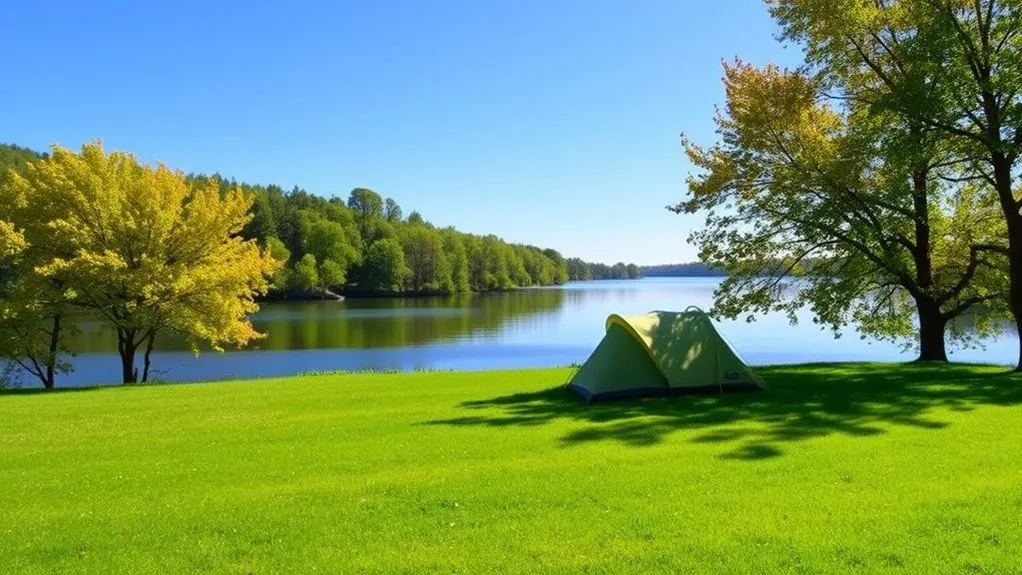
A setback protects more than the water itself. Shoreline and streamside areas often contain soft soil, dense vegetation, wildlife routes, and natural drainage paths. Repeated tent placement, foot traffic, food preparation, and washing can strip vegetation and create compacted paths that carry sediment or wastewater toward the water.
Leave No Trace recommends camping about 200 feet from the water’s edge. This distance also leaves room for animals to reach water without walking through an occupied campsite. The National Park Service gives the same general advice for protecting riparian areas while reminding visitors to use durable surfaces and established campsites where available.
A 200-foot setback is a general decision-making tool, not a guarantee that every site beyond that line is safe or environmentally sound. A tent located uphill in a drainage channel, beneath an unstable bank, or inside a floodplain may still be dangerous.
Recommended Setback Distances for Camping
The correct distance depends on the type of camping and the rules for the specific park, forest, wilderness, shoreline, or recreation area. Start with the official regulation, then use the more protective option when you have a choice.
Minimum Recommended Distances
- Dispersed or backcountry camping: Use 200 feet from lakes, rivers, streams, springs, and other natural water sources as the standard low-impact distance.
- Developed campgrounds: Stay within the assigned tent pad or campsite boundary. Do not move into undisturbed vegetation merely to create a 200-foot separation.
- Designated backcountry sites: Use the designated site even when it is closer than 200 feet. Managers may have selected it to contain impacts and prevent campers from creating additional sites.
- Posted 100-foot rule: Follow the posted rule, but understand that it applies to that location rather than establishing a universal national minimum.
- More restrictive areas: Some locations require setbacks greater than 200 feet because of wildlife, fragile soil, cultural resources, water-supply protection, or local topography.
Local Regulations Considerations
Rules can differ even within the same federal agency. For example, the Forest Service Intermountain Region instructs dispersed campers to stay at least 200 feet from water, while Caribou-Targhee National Forest lists a 100-foot setback on its dispersed-camping page.
Check the current park, forest, district, wilderness, or permit page rather than relying on a general camping article. Also review seasonal closures, fire restrictions, food-storage orders, group-size limits, and rules covering archaeological or wildlife-sensitive areas.
Environmental Impact Awareness
Camping too close to water can remove protective plants, compact soil, widen access paths, and channel runoff toward a lake or stream. Soap, food particles, ash, urine, human waste, and sediment may then travel more directly into the water.
A 2018 Forest Service research review found that the environmental effects of shoreline camping depend on vegetation, soil depth, slope, drainage, use intensity, sanitation, and wildlife conditions. Water-quality studies cited in that review produced mixed findings, so the responsible conclusion is not that every shoreline campsite causes measurable contamination. The practical concern is that camping near water increases the opportunity for runoff, wildlife displacement, erosion, and concentrated damage.
Estimating Distance Accurately in the Wilderness
Leave No Trace describes 200 feet as approximately 70 to 80 adult steps. Your stride, slope, vegetation, and route will affect the estimate, so pacing is best used as a field guide rather than a survey measurement.
- Identify the relevant water boundary. Begin at the water’s edge or the boundary identified in the local regulation. On a reservoir, river, beach, or flood-prone shore, also inspect the higher ground for water stains and debris lines.
- Walk away from the water. Count roughly 70 to 80 normal adult steps while moving in a reasonably direct line.
- Inspect the ground. Look for a flat, durable surface that is not part of a drainage channel, wet meadow, animal trail, or fragile plant community.
- Check the route back to water. Avoid creating a straight, eroding path between the campsite and shoreline. Use existing durable access when possible.
- Confirm the rule. Compare your site with the permit, map, signs, ranger instructions, or official land-management page.
Pro Tip: Count your steps on a measured 100-foot distance at home. Knowing your approximate pace count makes it easier to judge 100- and 200-foot setbacks in the field.
Two hundred feet is approximately 70 to 80 adult steps—but the current local regulation and designated-site instructions always take priority.
How to Choose a Safe Campsite Near Water
Distance is only one part of campsite selection. Choose level, durable ground that will not collect water during rain. The National Park Service advises campers to avoid low and sunken areas because they can become extremely wet.
Before pitching the tent, check for:
- Water stains, driftwood, branches, leaves, or debris caught above the current waterline
- Dry washes, gullies, narrow canyons, and channels that could carry flash-flood water
- Soft or undercut riverbanks that may collapse
- Low depressions that drain surrounding slopes
- Dead limbs, unstable trees, loose rocks, or steep banks above the site
- Game trails or obvious wildlife access routes leading to water
- Fragile vegetation, wet soil, cryptobiotic crust, dunes, or newly disturbed ground
Warning: Never rely on the current water level alone. Do not camp in a dry wash, stream channel, low floodplain, or narrow drainage when rain is possible. Flash flooding can arrive from storms occurring miles upstream. Check the forecast and move to higher ground immediately if water begins rising or turns muddy or debris-filled.
The National Weather Service advises campers not to camp or park along streams and washes during threatening conditions. Coastal campers must also account for tides, storm surge, waves, and local rules governing the high-tide line.
Regulations and Guidelines for Campsite Location
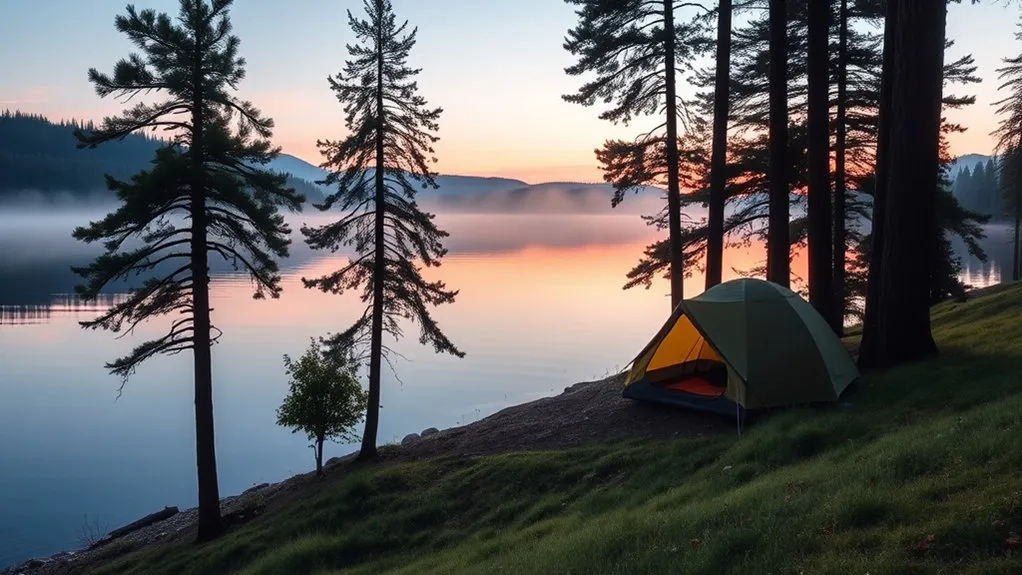
A land manager may establish a setback to protect water quality, vegetation, wildlife, cultural resources, solitude, or public safety. Other locations use designated campsites instead of a single distance rule because concentrating use can prevent dozens of unofficial sites from forming around a popular lake or river.
Recommended Distances by Camping Type
The 200-foot Leave No Trace recommendation is most useful when you are allowed to choose a dispersed backcountry site. It does not authorize camping in closed areas or outside a required campsite. In a developed campground, river corridor, beach zone, or heavily used wilderness destination, the correct site may be marked by a post, tent pad, numbered campsite, map, or permit.
When no specific distance is posted, use 200 feet and select durable ground. When a local rule requires a greater setback, follow the greater distance. When an official site is closer, remain within its established boundaries rather than disturbing a new location.
Local Regulations Variability
A 2018 peer-reviewed review reported that Forest Service wilderness setback regulations examined at that time ranged from 50 to 1,320 feet, with 100 feet the most common rule and 200 feet the next most common. These figures describe the regulations reviewed for that study; they are not a live national database of current campsite rules.
The same review cited an older 1983 survey in which 37% of Forest Service units and 22% of National Park Service units surveyed used water-setback regulations. Those percentages are useful as historical management research, but they should not be used to predict whether a park or forest has a rule today.
Importance of Setbacks
| Guideline | What It Means |
|---|---|
| General Backcountry Distance | Use 200 feet unless current local instructions require something different. |
| Pollution Risk | Distance gives soil and vegetation more opportunity to slow and filter runoff, but sanitation practices still matter. |
| Wildlife Access | A setback helps animals reach water without passing through tents, food, people, and pets. |
| Soil and Vegetation | Keeping tents and heavy foot traffic away from riparian ground reduces trampling, compaction, and erosion. |
| Designated-Site Exception | Use the official site and remain within its boundary rather than creating a new disturbed area. |
Leave No Trace Principles and Responsible Camping
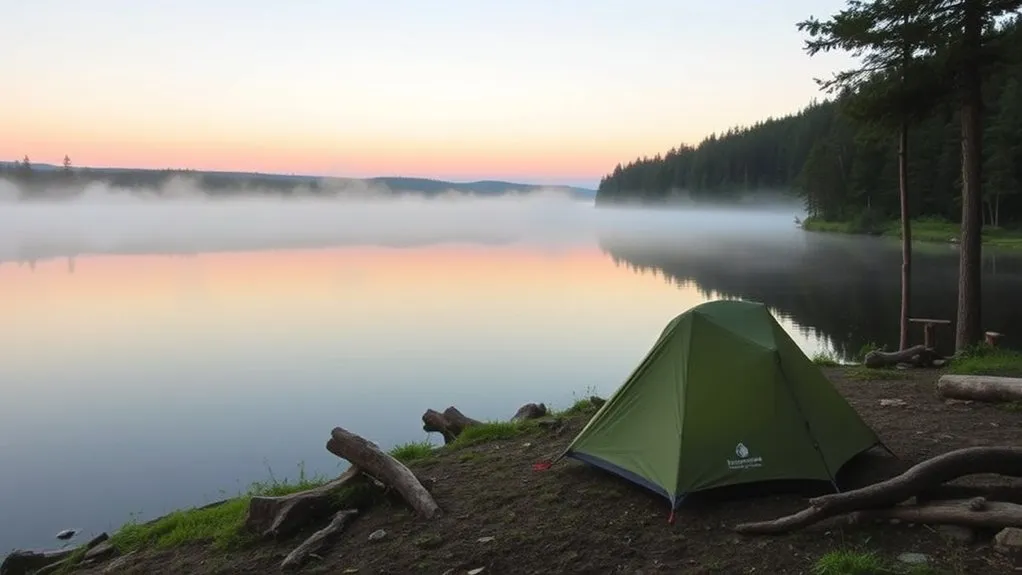
Leave No Trace guidance published by the National Park Service recommends protecting riparian areas by camping at least 200 feet from lakes and streams. It also stresses that good campsites are found rather than constructed.
Use an established or designated site whenever one is available. Keep the campsite compact, concentrate activity on durable ground, and avoid expanding the disturbed area. Do not dig trenches, cut vegetation, move large rocks, or build structures to modify the site.
Pack out trash, food scraps, hygiene products, and anything else you brought. Store food and scented items according to the local bear or wildlife regulations. Use an existing fire ring only when fires are permitted, and check current restrictions before lighting one.
Note: An official campsite may be closer than 200 feet because of terrain, historic use, or a management plan designed to contain damage. Stay within that site and take extra care to keep soap, food, wastewater, and human waste away from the water.
Keep Waste, Washing, and Food Away From Water
A tent setback will not protect a water source if cooking, bathing, toothbrushing, dishwashing, or waste disposal occurs at the shoreline. Collect the water you need and carry it back to an appropriate work area.
- Dishwashing: Scrape food into your trash, use as little soap as possible, strain the wastewater, pack out the food particles, and disperse the remaining water where local rules permit.
- Bathing and toothbrushing: Carry water at least 200 feet away before using it. Even biodegradable soap should not be used directly in a stream or lake.
- Human waste: Use toilets whenever they are available. Where catholes are allowed, follow the local depth, location, and toilet-paper rules. Many agencies direct users to stay at least 200 feet from water, camp, and trails.
- Food preparation: Keep scraps, grease, and wash water away from the shoreline, and follow local food-storage requirements.
- Drinking water: Clear-looking water can still contain germs. Treat uncertain natural water before drinking, cooking, brushing teeth, or washing food.
The National Park Service advises campers to avoid bathing and brushing teeth within 200 feet of water. Waste-disposal methods can vary by soil, elevation, desert conditions, river corridors, and local pack-out requirements, so check the rules before the trip.
The Role of Riparian Zones in Ecosystem Health
Riparian zones are the bands of soil and vegetation beside rivers, streams, lakes, springs, and wetlands. Their plants help stabilize banks, slow runoff, capture sediment, provide shade, and create habitat for birds, mammals, amphibians, insects, and aquatic species.
These areas can also be narrow. A single tent may appear harmless, but repeated camping in the same shoreline patch can create a bare campsite, widened water-access trails, exposed roots, compacted soil, and direct drainage into the water. Staying back from the shoreline helps protect the ecological functions that make waterside camps attractive in the first place.
Visitor Preferences: The Attraction to Water
Campers have long preferred sites near water for scenery, drinking-water access, fishing, swimming, paddling, wildlife viewing, and the sound of moving water. Historical research illustrates how strong that attraction can be.
A 1971 Minnesota campground study reported that the percentage of waterfront sites explained much of the variation in campground occupancy, and 77% of interviewed visitors identified obtaining a waterfront site as the most important campsite-selection factor. A separate 2001 study in Oregon’s Mount Jefferson Wilderness found that 62% of comments about campsite choice concerned location, 38% mentioned proximity to water, and 22% mentioned avoiding other groups.
These figures describe particular studies from past decades, not the preferences of every current camper. Their continuing value is managerial: when people strongly favor shorelines, designated sites and clear setback rules may be needed to prevent campsite proliferation and protect solitude.
Environmental Concerns Associated With Shoreline Camping
Shoreline camping can remove vegetation and organic litter that normally protect the soil. Once bare ground develops, rainfall may carry sediment, ash, food residue, soap, and waste toward the water. Informal access trails can act like drainage channels and make the problem worse.
Occupied shoreline sites may also block or discourage wildlife from using limited watering areas, especially in dry environments. Noise and visible tents can affect solitude for paddlers, anglers, hikers, and campers across the water.
Shorelines may contain archaeological or cultural resources as well. Do not move artifacts, dig into soil, dismantle structures, or camp in an area that is closed or marked as culturally sensitive.
In some managed river corridors, officials may direct campers to durable beaches, sandbars, or other non-vegetated sites near the water. In those settings, follow the river permit and local instructions rather than applying a generic setback without context. Monitor weather and water releases carefully because low shoreline sites may flood.
Strategies for Effective Camping Management in Sensitive Areas
Land managers generally use one or more of the following approaches in popular or sensitive areas:
- Setback regulations: Camping is prohibited within a stated distance of water, trails, roads, cultural sites, or facilities.
- Designated-site camping: Visitors must stay in marked sites selected to contain damage.
- Established-site guidance: Campers are asked to reuse a durable existing site instead of creating a new one.
- Area closures: Camping may be prohibited around restoration zones, wildlife water sources, archaeological areas, or fragile habitats.
- Permit systems: Group numbers and site assignments are controlled to reduce crowding and resource damage.
The 2018 Forest Service research review concluded that well-selected designated sites can sometimes protect resources more effectively than poorly followed setback rules. This does not mean campers should ignore distance requirements. It means that an official designated site represents a management decision and should be used as directed.
As a camper, you can support these strategies by keeping the site small, staying on durable ground, using established access routes, obeying closures, and leaving no sign that a new campsite should form after you depart.
Frequently Asked Questions
What are the risks of camping too close to water?
A shoreline campsite may be exposed to rising water, flash floods, collapsing banks, insects, heavy condensation, wildlife traffic, erosion, and runoff contamination. It can also damage riparian vegetation and block animals from reaching water.
Can I camp closer than 100 feet during a dry season?
Not unless the current local rule or an official designated campsite permits it. Dry weather does not cancel a setback, remove wildlife needs, or guarantee that upstream storms cannot cause flooding. Use 200 feet as the general dispersed-camping default when no different rule is provided.
How do I find the nearest water source?
Check an official map, current ranger information, permit materials, and reliable topographic or navigation data before leaving the trailhead. Seasonal sources may be dry, frozen, contaminated, or difficult to reach, so carry backup water and do not rely only on listening for a stream.
What wildlife can be affected by camping near water?
Deer, elk, bighorn sheep, bears, small mammals, birds, amphibians, reptiles, and many other animals may depend on shoreline or spring habitats. The effect is often greatest in deserts and dry regions where dependable water sources are scarce.
Are there exceptions to the 200-foot recommendation?
Yes. A managing agency may require 100 feet, more than 200 feet, or camping only in an assigned site. River corridors and developed campgrounds may use designated sites closer to water to concentrate impacts. Follow the official instruction rather than creating a new site.
Can I use biodegradable soap in a stream or lake?
No. Biodegradable soap still needs soil and time to break down. Carry water at least 200 feet away, use only a small amount of soap, strain food particles from dishwater, and follow local wastewater-disposal rules.
Is clear mountain water safe to drink?
Not necessarily. Clear water can contain disease-causing germs. The CDC recommends treating water of uncertain safety before drinking or cooking. Boiling is the most reliable general method for killing germs; another option is to filter and then disinfect according to the treatment product’s instructions.
Conclusion
For most dispersed and backcountry camping, keep your tent at least 200 feet from lakes, rivers, streams, and springs. That is roughly 70 to 80 adult steps. Then look beyond the number: choose durable ground, stay above flood-prone terrain, protect wildlife access, and keep washing and waste away from the shoreline.
A 100-foot rule, larger setback, or designated campsite may be correct for a particular location. Check the current official instructions before your trip and follow them in the field. Camping near water can still be enjoyable without placing your tent directly beside it.
Sources
- Leave No Trace: Travel and Camp on Durable Surfaces — supports the 200-foot and 70-to-80-step recommendation.
- National Park Service: Leave No Trace Seven Principles — supports durable-surface use and protection of riparian areas.
- U.S. Forest Service Research: Camping Near Waterbodies in Wilderness — supports the regulatory history, environmental context, and historical visitor-preference research.
- National Park Service: Finding and Setting Up a Campsite — supports avoiding low and water-collecting ground.
- National Weather Service: Flooding Safety — supports avoiding streams, washes, flooded areas, and unstable riverbanks.
- Centers for Disease Control and Prevention: Water Treatment While Camping — supports treating uncertain natural water before drinking or cooking.

