
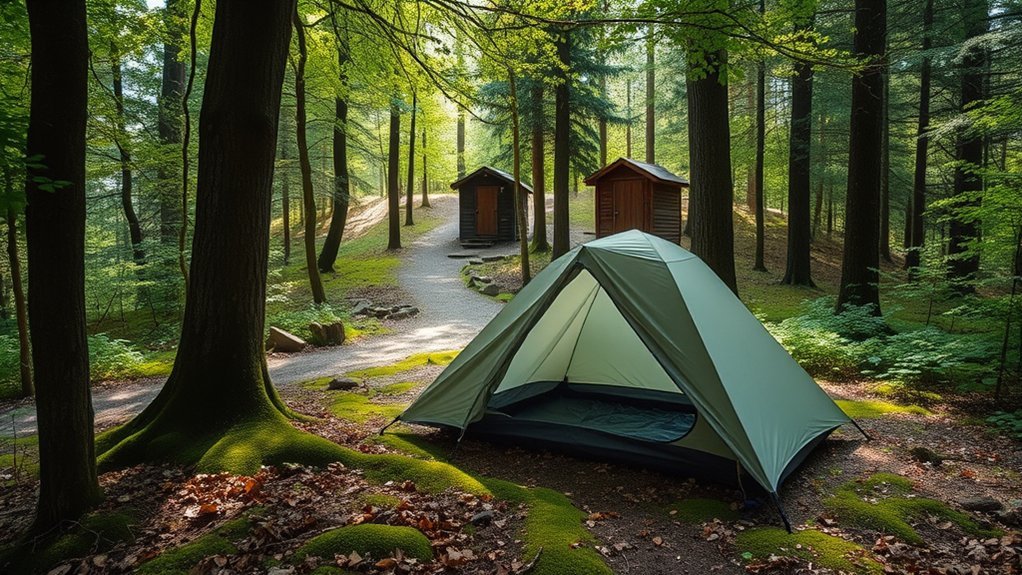
When camping, pitch your tent at least 100 feet from bathrooms to avoid unpleasant odors and germs, and aim for a 200-foot distance from trails to guarantee privacy and tranquility. This keeps you comfortable while minimizing disturbances to local wildlife and ecosystems. Following these guidelines not only enhances your camping experience but also supports the environment. Stick around to uncover more tips on choosing the perfect campsite!
Importance of Distance From Bathrooms

When you’re setting up your tent, it’s essential to contemplate the distance from bathrooms, as pitching your tent too close can lead to an unpleasant camping experience. Ideally, you should aim for at least 100 feet away, but 200 feet is even better. This distance not only helps you avoid unpleasant odors but also minimizes the spread of germs and bacteria, keeping everyone healthier.
Products Worth Considering
MULTIPURPOSE PRIVACY TENT - This versatile shelter with a removable bottom can be used as an outdoor shower enclosure, changing room, portable bathroom, or pop up privacy tent for sporting events, conventions, camping, or road trips.
MULTIPURPOSE PRIVACY TENT - This versatile shelter with a removable bottom can be used as an outdoor shower enclosure, changing room, portable bathroom, or pop up privacy tent for sporting events, conventions, camping, or road trips.
Multi-Use Privacy Tent: This privacy tent provides a private enclosed space for outdoor use, suitable as a camp shower tent, portable toilet enclosure, changing room, or beach changing tent. Made with thick 190T polyester fabric, it offers water resistance and sun protection for camping, beach, and outdoor environments.
Understanding the 100-Foot Rule
Understanding the 100-foot rule is essential for a pleasant camping experience. By pitching your tent at least 100 feet from bathrooms and water sources, you not only enhance your privacy but also protect the environment from pollutants. This simple guideline helps maintain a clean, healthy campsite for everyone to enjoy.
Products Worth Considering
ULTRALIGHT & PACK‑FRIENDLY – Weighing only 0.92 oz / 26 g, this compact 7.67" trowel slips into bottle pockets or clips to the outside of your pack, so you’re always ready on hikes, backpacking trips, and campouts.
Roomy 4-PersonTent: Spacious design offers enough room for 4 people, with a size 8' x 7' x 72"(H), nearly straight walls, and a 72 inch center height to create generous space to stand up and move around
Importance of Distance
To guarantee a comfortable camping experience, you should always place your tent at least 100 feet away from restrooms and trails. This isn’t just camping etiquette; it’s about creating a pleasant environment for yourself and other campers. Being 100 feet from restrooms helps avoid unpleasant odors and guarantees your privacy. Staying clear of trails reduces wildlife encounters and minimizes disruptions for both you and passing hikers. Additionally, this distance promotes health by limiting the spread of germs from restroom facilities. By adhering to the 100-foot guideline, you also protect natural resources, preventing pollution from human waste. Ultimately, smart tent positioning supports Leave No Trace principles, keeping our wilderness areas pristine for generations to come.
Environmental Impact Assessment
While you might not think about it at first, the 100-foot rule plays an essential role in protecting both the environment and your camping experience. Pitching your tent at least 100 feet away from bathrooms and water sources minimizes unpleasant odors and keeps your campsite safe from germs. By following this guideline, you contribute to sustainable camping practices that help protect aquatic ecosystems from pollutants like soap and food waste. This distance safeguards drinking water sources, ensuring a healthier camping environment for everyone. Ultimately, adhering to the 100-foot rule reduces your ecological footprint and promotes the Leave No Trace principles, allowing future generations to enjoy nature as you do. So, respect the distance and cherish the wilderness!
Benefits of Staying Away From Trails
Staying at least 200 feet away from trails not only enhances your camping experience but also offers several benefits that contribute to a more enjoyable and serene outdoor adventure. By distancing yourself from foot traffic, you create a peaceful experience that allows you to truly immerse yourself in nature. This increased separation also reduces the likelihood of unexpected wildlife encounters, as animals typically navigate along trails.
Moreover, being further away grants you greater privacy, letting you enjoy your campsite without the interruption of passersby. Your campsite won’t just feel more secluded; it’ll also help preserve the untouched beauty of the wilderness around you. Finally, keeping a safe distance minimizes the spread of germs and bacteria from other campers, promoting overall health and safety. Embrace the liberation of nature by choosing a campsite that offers tranquility and a deeper connection to your surroundings.
Products Worth Considering
INNOVATIVE DESIGN - The pop-up privacy tent is a hands-free design that rests right on your head with a stabilization pad. And without any hassles of tedious installation – a must-have travel accessory for your next adventure!
INNOVATIVE DESIGN - The pop-up privacy tent is a hands-free design that rests right on your head with a stabilization pad. And without any hassles of tedious installation – a must-have travel accessory for your next adventure!
2 PERSON TENT – This lightweight 2 man tent with D-style door has enough space for you and a friend. This essential piece of camping equipment is ideal for hiking, fishing, or as a beach tent, and it’s perfect as an indoor or backyard tent for kids.
Impact on Wildlife and Ecosystems
When you set up your tent too close to trails, you risk disrupting local wildlife and their natural behaviors. This stress can lead to dangerous encounters and harm the delicate balance of the ecosystem. By maintaining a safe distance, you not only protect wildlife but also help preserve the health of the surrounding environment.
Wildlife Disruption Risks
Camping near trails can considerably disrupt local wildlife and ecosystems, as increased human presence and noise often lead to animals altering their natural behaviors. When you set up camp too close, you’re not just enjoying nature; you’re influencing wildlife behavior and increasing human impacts on delicate habitats. Disturbances can raise stress levels in animals, affecting reproduction and survival rates—especially in sensitive species. Additionally, your presence and waste can attract scavengers, throwing off local food webs and endangering native wildlife. Wildlife may even become habituated to human activity, leading to conflicts and dangerous encounters. By maintaining a safe distance from trails and bathrooms, you help protect these ecosystems and promote a healthier coexistence with nature.
Ecosystem Health Protection
To protect the health of ecosystems and wildlife, it’s essential to choose your campsite wisely. Pitch your tent at least 100 feet from water sources to prevent pollutants like soap and food waste from harming aquatic ecosystems. This distance helps maintain ecosystem balance and preserves habitats for diverse species. Camping too close to trails can disrupt wildlife movement, increasing stress and fragmenting habitats. By adhering to the 200-foot rule for campsite selection, you safeguard the natural beauty of the landscape and guarantee ecosystems remain undisturbed for future generations. Also, keeping a safe distance from restrooms minimizes harmful bacteria risks, further protecting both wildlife and ecosystems. Your careful choices today support habitat preservation and promote a thriving environment for all.
Health and Comfort Considerations
Choosing the right spot for your tent can greatly enhance your health and comfort while camping. To guarantee a pleasant experience, consider these points:
- Distance from restrooms: Aim for at least 100 feet away. This keeps unpleasant odors at bay and protects your personal space, making bathroom visits more comfortable.
- Hygiene practices: A greater distance reduces your risk of encountering germs and bacteria found in high-traffic areas. You want to enjoy nature, not worry about illnesses!
- Proximity to trails: Set up your tent at least 200 feet from trails. This not only offers privacy but also minimizes disturbances from passersby, allowing you to relax and truly immerse yourself in the great outdoors.
Products Worth Considering
[ERGONOMICAL DESIGN]Expanding Size 39.4" Lx39.4" Wx74.8" H. Note:The steel wire will deform when folded.But the steel wire is elastic and can still be used normally when unfolded again. 1. Two zippered window for ventilation; 2. lantern hook and shower hooks for easy changing or showering
Easy to set up and highly portable this quick-assembly beach tent features a automatic pop-up mechanism, enabling swift setup and fold-down within 30 seconds. Weighing only 5.5 pounds with a compact storage size of 32 x 5 inches, it is exceptionally convenient to carry and store.
MULTIPURPOSE PRIVACY TENT - This versatile shelter with a removable bottom can be used as an outdoor shower enclosure, changing room, portable bathroom, or pop up privacy tent for sporting events, conventions, camping, or road trips.
Safety Tips for Tent Placement
While finding the perfect spot for your tent, it’s essential to prioritize safety to guarantee a worry-free camping experience. Follow these tips for effective site selection and tent orientation:
| Distance from | Recommended Distance | Benefits |
|---|---|---|
| Restrooms | 100 feet | Reduces odors, guarantees privacy |
| Trails | 200 feet (70 meters) | Minimizes disturbances, enhances seclusion |
| Flood-prone areas | Avoid entirely | Prevents damage and discomfort |
| Wildlife trails | Stay clear | Guarantees safety from animals |
| Durable surfaces | Choose wisely | Protects the environment |
Remember to use natural landmarks or a step count to guarantee compliance with safety guidelines. By adhering to these suggestions, you enhance your camping experience while prioritizing both your safety and the ecosystem’s health. Enjoy your liberating outdoor adventure!
Products Worth Considering
A MUST FOR TENT: An extra tent tarp doesn't just give you extra waterproofing, it is used as ground cloths under tents to prevent wear and tear. There’s no question that an insulated tent footprint is a great idea to help protect your investment, definitely, the choice to extend your tent's life
A MUST FOR TENT: An extra tent tarp doesn't just give you extra waterproofing, it is used as ground cloths under tents to prevent wear and tear. There's no question that an insulated tent footprint is a great idea to help protect your investment, definitely the choice to extend your tent’s life
Double Waterproof Protection: Tent footprint is made from waterproof 210T polyester fabric with silver waterproof coating, which can provide double waterproof protection, ensuring your gear and belongings stay dry in wet conditions
Leave No Trace Principles in Camping
When you immerse yourself in the great outdoors, embracing Leave No Trace principles guarantees that your camping adventures have a minimal impact on the environment. Practicing these guidelines not only reflects good camping etiquette but also fosters respect for nature and fellow campers. Here are three key practices to follow:
- Pitch your tent at least 200 feet from restrooms to avoid unpleasant odors and maintain privacy.
- Set up away from trails to minimize disruption to wildlife and fellow adventurers.
- Keep a distance of at least 100 feet from water sources to prevent contamination from soap and food waste.
Frequently Asked Questions
What Happens if I Camp Closer Than 100 Feet to a Bathroom?
If you camp closer than 100 feet to a bathroom, you might face unpleasant bathroom odor and increased wildlife encounters, as animals are drawn to food scraps and scents. Keep your distance for a better experience.
Can I Use Landmarks to Measure the 100-Foot Distance?
Yes, you can use landmarks for distance estimation, but verify their accuracy. Visualize the 100-foot distance clearly, and measure it out if possible. Trust your instincts, and enjoy your camping experience to the fullest!
How Can I Find Trails When Camping in Unfamiliar Areas?
To find trails when camping, use trail maps and consult local guides. They’ll provide valuable insights and help you discover hidden routes, ensuring you explore and enjoy the area’s beauty without getting lost.
Are There Exceptions to the 100-Foot Rule for Specific Campsites?
Sometimes, you’ll find exceptions to the 100-foot rule at certain campsites. Always check campsite regulations; environmental considerations may allow closer placements. Embrace the freedom of nature while respecting its delicate balance.
How Can I Ensure My Tent Is Eco-Friendly While Camping?
Choose a tent made from sustainable materials and practice waste management by packing out all trash. Use biodegradable products and opt for solar-powered lights to minimize your environmental impact while enjoying the great outdoors.
Conclusion
In the end, choosing the right distance for your tent isn’t just about comfort—it’s about preserving nature and your health. Imagine waking up to the sounds of rustling leaves instead of bathroom chatter! By following the 100-foot rule and respecting wildlife, you’re not only enhancing your own camping experience but contributing to a more sustainable environment. So, take a moment to reflect on where you pitch your tent; it can make all the difference for you and the great outdoors.