
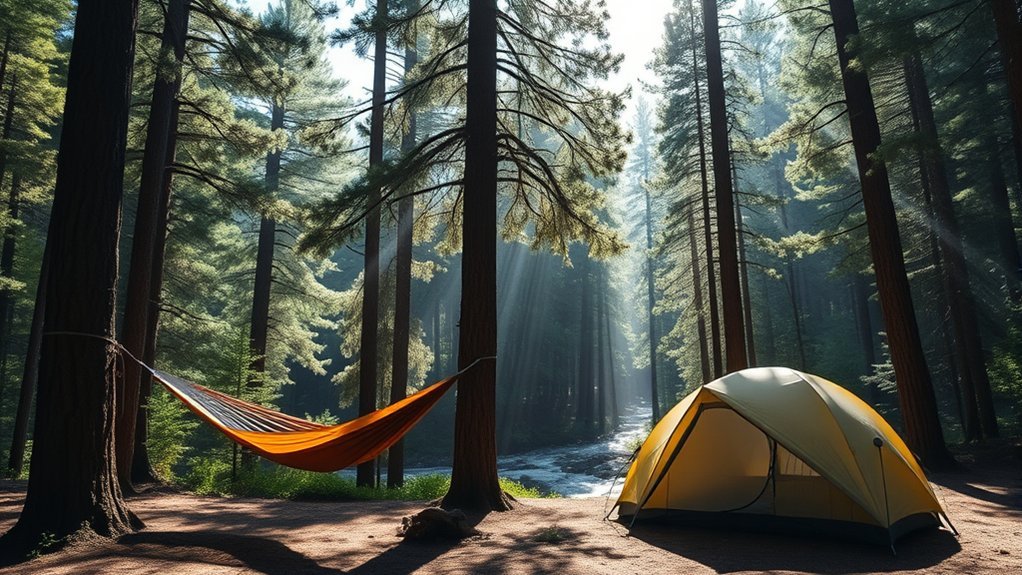
When choosing between hammock camping and tent camping, consider comfort, setup, and weather. Hammocks cradle your body for restful sleep and set up quickly between two trees. Tents offer stable surfaces and greater protection against the elements, but require a flat, clear space. Hammocks excel in ventilation but need extra bug protection and rain covers. Both setups have their advantages, and there’s more to explore on how each can enhance your outdoor adventure.
Comfort Comparison: Hammocks vs. Tents
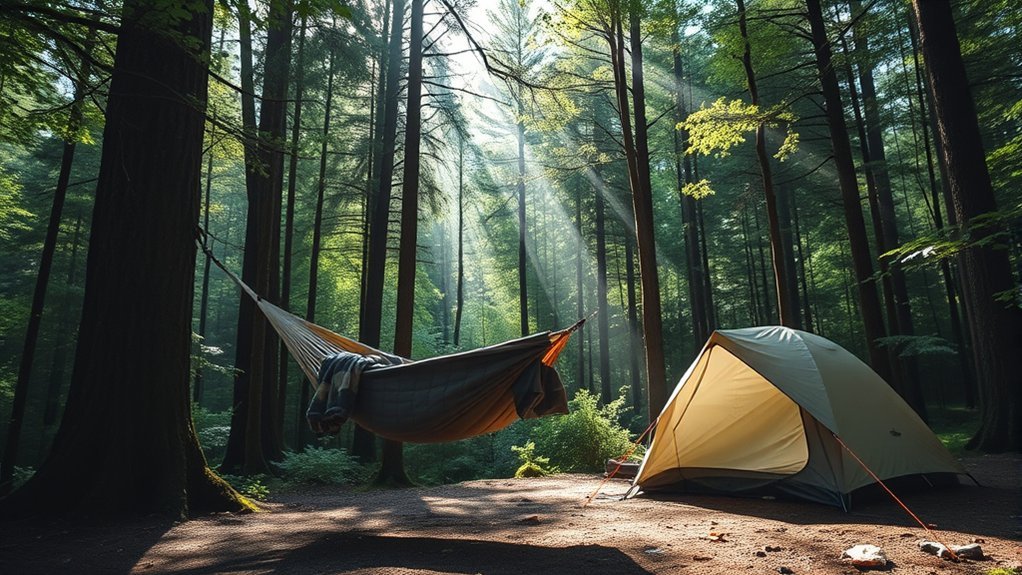
When you weigh the comfort of hammock camping against tent camping, you’ll find distinct advantages to each option. Hammocks, crafted from comfortable hammock materials, cradle your body, promoting restful sleep that traditional tent fabrics can’t match. Elevation keeps you off the cold, damp ground, while tents provide a stable surface for customizing your bedding. However, that stability can sometimes feel constrictive.
Hammocks excel in ventilation, allowing air to circulate and preventing overheating, ideal for those warm nights under the stars. The gentle swaying motion adds an element of relaxation, enhancing your overall experience. But remember, space is limited in a hammock, which can restrict gear storage. In contrast, tents offer more room for personal belongings and movement, accommodating larger groups. Ultimately, your choice hinges on whether you prioritize the liberating comfort of a hammock or the spacious stability of a tent.
Setup Simplicity: Quick and Easy Choices
While both hammock and tent camping offer unique experiences, hammock setup stands out for its simplicity and speed. With fewer components, you can enjoy remarkable setup efficiency, allowing you to hit the trail sooner. Finding two sturdy trees 12 to 15 feet apart is all you need, while a tent often requires searching for flat, debris-free ground, which can be time-consuming. Hammocks shine in their accessibility, letting you set up in uneven or sloped terrain, unlike tents that demand specific conditions.
The adjustable suspension system makes it a breeze to change height and angle, ensuring a comfortable spot in moments. Many modern hammocks even come with integrated bug nets and tarps, combining essential elements into one complete system. This streamlined approach not only enhances your camping experience but also gives you the freedom to embrace the great outdoors without the hassle of complicated setups.
Weather Resistance: Battling the Elements
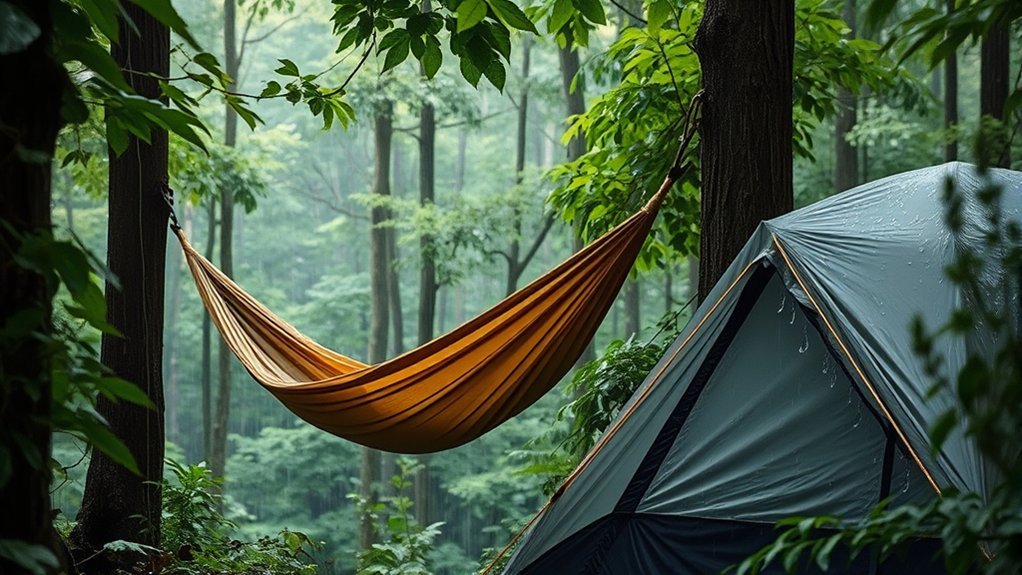
As you prepare for your outdoor adventure, understanding how each option withstands the elements is essential. Weather durability and element resistance can make or break your experience in the wild. Here’s a quick breakdown:
Understanding how your gear withstands the elements is crucial for a successful outdoor adventure.
- Tents feature waterproof rainflies, rated between 1500–3000+ mm hydrostatic head, ensuring you stay dry during heavy downpours.
- The enclosed structure of tents provides security, protecting you from wind and pesky insects, creating a cozy shelter even in inclement weather.
- Hammocks require additional gear like tarps and bug nets for adequate protection, potentially limiting your comfort and gear storage.
In essence, if you prioritize weather resistance, tents often offer superior protection. However, with the right setup, hammocks can still provide a liberating experience. Consider your gear’s quality to maximize effectiveness against nature’s challenges, ensuring your adventure remains enjoyable regardless of the forecast.
Terrain Suitability: Finding the Right Spot
Finding the right spot for your camping adventure can make all the difference in your overall experience. For hammock camping, tree selection is vital; you need two sturdy trees spaced about 12 to 15 feet apart. Look for healthy, strong trees free of dead branches overhead. On the other hand, tent camping requires a careful ground assessment. You’ll want flat, debris-free ground, avoiding any low spots that might collect water during rain. While hammocks elevate you above uncomfortable terrain like rocks and roots, tents depend heavily on the ground’s condition for comfort and safety. Remember, both campers should assess their terrain before settling in. Whether you’re hanging from the trees or pitching a tent, choosing the right spot can enhance your liberation in the wild, allowing you to fully immerse yourself in nature’s embrace.
Gear Essentials: What You Need for Each
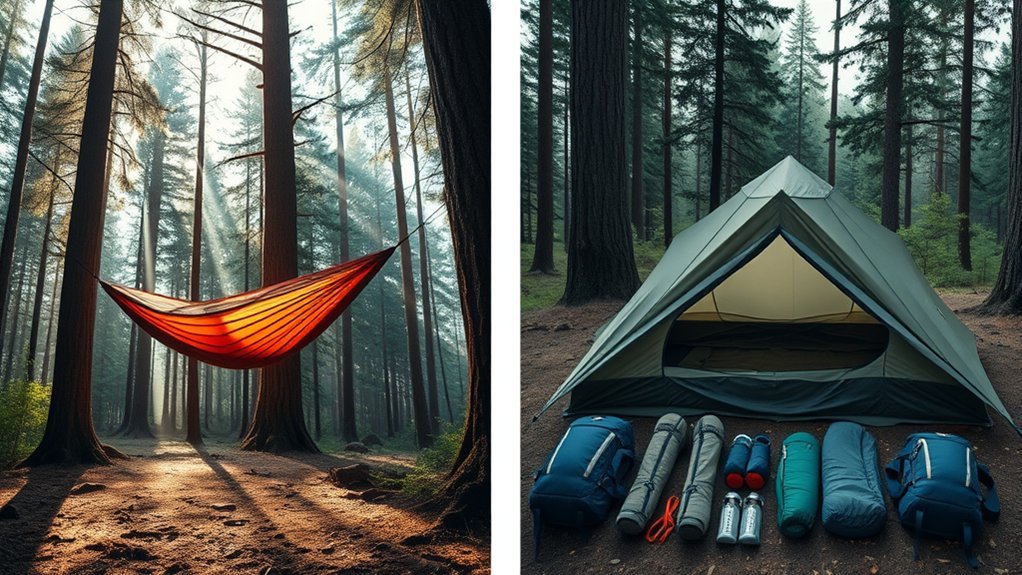
When you’re gearing up for an outdoor adventure, knowing what to pack for hammock or tent camping can enhance your experience considerably. Let’s break it down into essentials:
- Tent Camping:
- Tent body with a footprint for ground protection
- Sleeping bag and pad (optional cot for extra comfort)
- Rainfly and stakes for stability against the elements
- Hammock Camping:
- Hammock with straps for secure hanging
- Sleeping bag and optional underquilt for warmth
- Rainfly and stakes for weather protection
Both setups benefit from additional camping accessories, like a tarp for extra coverage. Remember, gear maintenance is key—keep your equipment clean and dry to guarantee longevity. Whatever your choice, being prepared with the right gear will give you the freedom to connect with nature confidently. Happy camping!
Sleeping Positions: Flexibility and Options
When it comes to sleeping positions, tents offer you a world of options with their spacious interiors, allowing for various arrangements that suit your comfort. In contrast, hammocks limit you to a flat diagonal lay, which might not be ideal if you prefer to shift around while you sleep. While both setups have their perks, the terrain adaptability of a tent can enhance your overall comfort on uneven ground.
Tent Position Variability
Tents offer a remarkable range of sleeping positions, making them an appealing choice for campers with varied preferences. With their spacious interiors, you can enjoy sleeping arrangement flexibility that suits your style. Here are three key benefits of tent layout options:
- Diverse Sleeping Positions: Whether you’re a side, back, or stomach sleeper, tents accommodate your comfort needs.
- Multiple Sleeping Pads: You can easily fit several sleeping pads or cots, perfect for couples or families sharing space.
- Adjustable Configurations: Rearranging your tent setup based on group size lets you customize your environment for the best experience.
Unlike hammocks, tents provide ample room for movement, ensuring a restful night while maintaining organization with gear storage areas.
Hammock Limited Options
Hammocks may seem like a cozy alternative for camping, but they come with limitations, especially regarding sleeping positions. The hammock design primarily supports a flat diagonal lay, restricting your movement and forcing you into one position throughout the night. Unlike a tent, where you can shift and adjust, you’re suspended between trees, limiting your orientation options. Many users find this confinement uncomfortable, especially if they frequently change sleeping positions. The unique swaying experience can feel liberating, yet it lacks the stability of solid ground. Plus, adding an underquilt or extra layers complicates your setup, further reducing flexibility. So, while hammocks offer a whimsical escape, their limited options might not suit every adventurous spirit.
Comfort With Terrain Adaptability
While enjoying the great outdoors, finding the right sleeping arrangement can greatly impact your comfort level. Hammocks and tents each offer unique advantages when it comes to terrain adaptability and sleeping positions. Here’s how they stack up:
- Hammock Comfort: They conform to your body, reducing pressure points and allowing for a swaying motion that enhances sleep quality.
- Tent Flexibility: You can arrange sleeping bags and pads to suit your preferences, providing multiple options for comfort within the enclosed space.
- Terrain Adaptability: Hammocks can easily be set up on inclines or uneven ground, while tents require careful site selection for a stable, debris-free surface.
Ultimately, your choice between hammock and tent camping will depend on your desired comfort and adaptability in the wild.
Bug Protection: Keeping Pests at Bay
When you’re out camping, keeping bugs at bay is essential for a comfortable experience. Hammocks often need extra bug netting to create a protected space, while tents come with built-in mesh panels that keep insects outside. No matter your choice, using repellents and sealing openings can dramatically enhance your comfort under the stars.
Hammock Bug Netting Options
Many campers appreciate the comfort and convenience of hammock bug netting options, which are essential for keeping pesky insects at bay. With a variety of features, you can guarantee a peaceful night under the stars. Consider these options:
- Integrated Netting: Detachable bug nets create a secure barrier while allowing airflow and visibility.
- Shock Cord System: This feature makes setup and adjustment a breeze, guaranteeing a snug fit around your hammock to keep pests out.
- Access Features: Look for models with zippers or toggle closures for easy entry while maintaining protection.
Don’t forget, pairing your bug net with a rainfly enhances your experience, safeguarding you from both rain and insects, so you can embrace the great outdoors with confidence.
Tent Insect Protection Features
Tents come equipped with a range of insect protection features designed to keep pesky bugs at bay while you enjoy the great outdoors. With built-in mesh panels, you get excellent tent ventilation, allowing fresh air to flow in while keeping unwanted critters out. Many models include a rainfly that extends over the mesh, enhancing protection from rain and insects alike. The sealed floors are crafted from durable materials, ensuring that bugs can’t crawl in from below. Additionally, some tents offer vestibules for gear storage, keeping your belongings safe from pests. To maximize insect prevention, always check that zippers are in working order and that all openings are securely closed before settling in for the night.
Effective Repellent Strategies
While tents offer built-in features to keep insects away, hammock campers need to adopt their own strategies for effective bug protection. To keep those pesky bugs at bay, consider these essential tactics:
- Use a Mosquito Net: An effective insect barrier, a mosquito net will provide vital protection while you enjoy the sway of your hammock.
- Incorporate Natural Repellents: Oils like citronella, eucalyptus, and lavender can ward off bugs, offering a more eco-friendly alternative to chemical sprays.
- Secure Food Storage: Keep food sealed and stored away from your sleeping area to minimize attracting insects and wildlife, enhancing your overall comfort.
Embrace these strategies, and your hammock camping experience will be liberating, peaceful, and pest-free!
Portability and Weight: Packing for Adventure
When you’re gearing up for an outdoor adventure, the weight and portability of your camping setup can make all the difference. Hammocks offer incredible hammock portability, weighing as little as 16 ounces. They pack down smaller than a Nalgene bottle, making them perfect for minimalist campers. In contrast, tent weight can range from 3 to 5 pounds, often weighing you down with additional gear like stakes and poles.
A complete hammock setup—including a hammock, straps, tarp, and bug net—typically weighs between 2 to 3 pounds, providing a lightweight alternative to traditional tent setups. Plus, you can customize your hammock gear based on your specific needs and weather conditions, ensuring you’re equipped without excess bulk. So, if you crave the freedom of the outdoors without the burden of heavy gear, consider the liberating choice of hammock camping. Your back (and your adventure) will thank you!
Cost Considerations: Budgeting for Your Trip
As you weigh your options for outdoor gear, understanding the cost implications of hammock versus tent camping can help you make a budget-friendly choice. Here’s a breakdown of what you might expect:
- Basic Gear: Entry-level hammocks range from $30 to $50, while basic tents cost between $50 and $100.
- Complete Setups: Full hammock setups can run from $100 to $400, while quality backpacking tents typically range from $150 to $300.
- Customization Costs: Accessories like underquilts for hammocks or footprints for tents add to your budget but enhance comfort.
Hammocks generally present more affordable options since they require fewer components, especially in good weather. However, don’t forget to factor in costs for rainflies, bug nets, and other gear to create your ideal custom setup. With a little planning, you can embrace the freedom of the outdoors without breaking the bank.
Frequently Asked Questions
Can I Use a Hammock in Winter Conditions?
Yes, you can use a hammock in winter conditions! Just make certain you’ve got proper hammock insulation to stay warm. With the right gear, winter camping can be an exhilarating adventure beneath the stars. Enjoy the freedom!
How Do I Choose the Right Hammock for Camping?
As you envision swaying gently between trees, choose a hammock made from durable materials like nylon or polyester. Consider suspension systems for easy setup, ensuring comfort and stability during your liberating outdoor adventures.
What Are the Best Trees for Hammock Camping?
For hammock camping, look for sturdy trees with a diameter of at least six inches, spaced 12-15 feet apart. Make certain they’re healthy and positioned for ideal hammock height, providing a comfortable, swaying experience in nature.
How Do I Stay Warm in a Hammock?
To stay warm in a hammock, you’ll need insulation techniques like underquilts or sleeping bags. Ironically, while you’re swaying in the breeze, cozy layers make all the difference against the chill of the night.
Are There Any Safety Concerns With Hammock Camping?
Yes, there are safety concerns with hammock camping. Guarantee proper hammock safety by checking straps and knots. Be aware of fall risks, especially when getting in or out, to enjoy your adventure without worry.
Conclusion
Ultimately, whether you choose a hammock or tent, each offers its own cozy embrace of nature. Hammocks cradle you in a gentle sway, while tents wrap you in a protective cocoon. Both have their charm, inviting you to explore the great outdoors while keeping comfort in mind. As you gear up for your next adventure, consider what speaks to your heart. After all, it’s not just about where you sleep, but the memories you’ll weave beneath the stars.
