
Last Updated on July 24, 2026 by Tyler Morgan
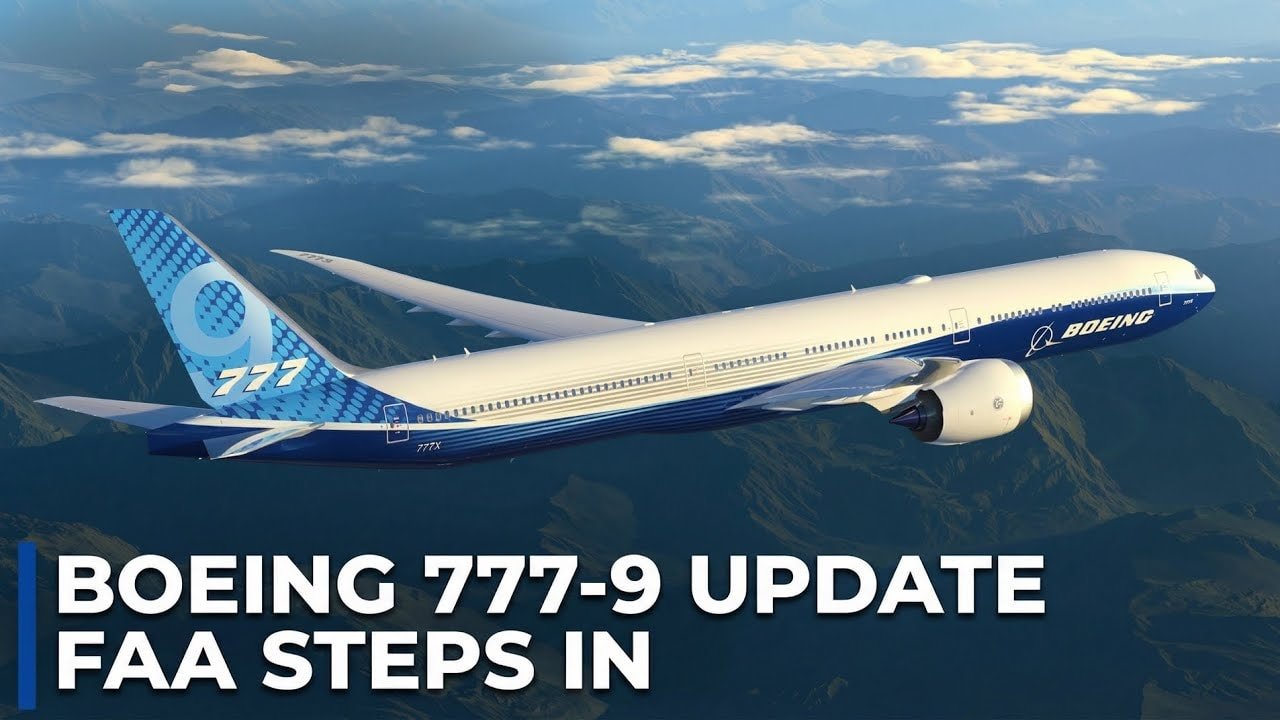
The Boeing 777-9 has reached an important point in its long certification campaign, but it is not yet certified for passenger service. The FAA authorized Boeing to begin Type Inspection Authorization Phase 4A testing on March 17, 2026. Since then, the program has advanced further, including the first flight of a Lufthansa-configured aircraft and additional certification work.
Quick Answer
The FAA’s March 17, 2026 approval allowed the Boeing 777-9 to begin TIA Phase 4A certification testing. It did not grant a type certificate or permission to carry passengers. Boeing said on July 16 that half of planned certification testing was complete and that first delivery remained targeted for 2027.
Key Takeaways
- Phase 4A is part of the 777-9 program’s Type Inspection Authorization sequence, not the final FAA approval.
- Boeing reported more than 4,800 test hours, about 1,700 flights, and 50% of planned certification testing complete on July 16, 2026.
- The first Lufthansa-configured 777-9 flew on May 8, 2026 and is being used for cabin, systems, and certification-related testing.
- Boeing currently targets the first 777-9 delivery in 2027, but the FAA has not guaranteed that schedule.
Disclosure: As an Amazon Associate I earn from qualifying purchases. Some links on this page are affiliate links, at no extra cost to you.
Why the FAA’s Phase 4A clearance matters
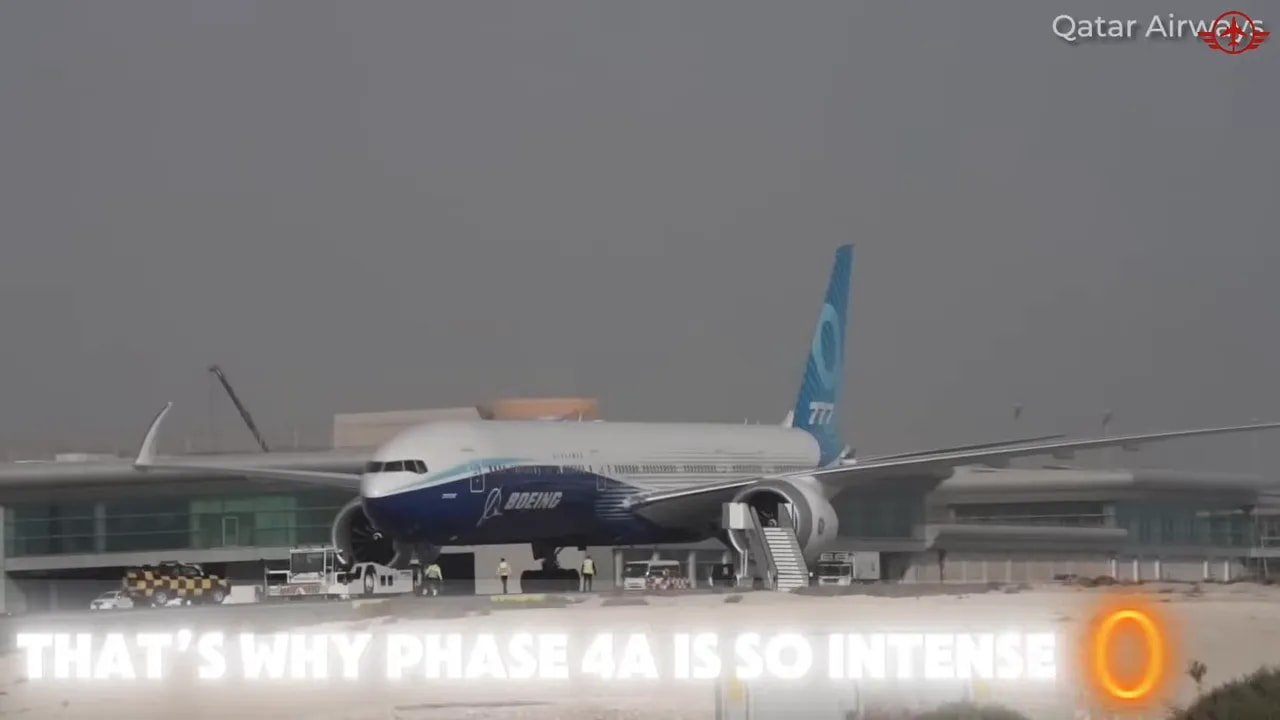
On March 17, 2026, the FAA authorized Boeing to begin Phase 4A of the 777-9 program’s Type Inspection Authorization, or TIA, testing. Boeing later confirmed the Phase 4A milestone in its first-quarter results. The approval meant that another group of aircraft systems and test conditions was ready for official ground and flight evaluations intended to show compliance with U.S. aviation rules.
The milestone matters because TIA testing produces evidence used in the type-certification decision. FAA personnel may conduct or witness official tests, review results, inspect conformity, and determine whether the aircraft demonstrates compliance with its certification basis.
Note: Phase 4A clearance is not the same as FAA type certification. The 777-9 still must complete remaining tests, analyses, inspections, and regulatory approvals before Boeing can deliver a certified aircraft for airline service.
This distinction is important. The original headline milestone showed meaningful progress, but it did not put the airplane one automatic step away from carrying passengers. Certification remains an evidence-based process, and new findings can still require design changes, more analysis, or repeat testing.

What the FAA and Boeing are testing
Certification testing covers far more than the aircraft’s engines, range, size, or cabin. The 777-9 must demonstrate that its structures, systems, software, flight characteristics, and crew interfaces meet the applicable requirements under normal, abnormal, and failure conditions.
Public updates do not identify every Phase 4A test card, so it would be inaccurate to claim that one fixed list defines the whole phase. However, the broader 777-9 certification campaign includes work involving:
- Flight-control behavior and handling qualities
- Electrical power and backup functions
- Cabin pressurization and environmental systems
- Warnings, displays, checklists, and pilot responses
- Software-driven interactions between aircraft systems
- Structural loads, fatigue, vibration, and icing conditions
- Failure cases and safe continuation of flight
Boeing has publicly described specialized tests that help show the depth of this work. In early 2026, Boeing and FAA pilots completed a human-factors evaluation that examined whether crews could read displays and complete checklist actions during sustained vibration. Boeing also reported simulated-ice testing using hundreds of shaped ice forms to reproduce required icing conditions.
These less visible tests matter because a modern airliner must remain predictable when a component fails, a system changes mode, or several functions interact under stress. A problem found late in testing can lead to new analysis, software revisions, hardware changes, or additional flights.
Why direct FAA involvement is important
The FAA does not simply accept a manufacturer’s marketing claims. Under the FAA aircraft-certification process, the applicant must show compliance, while the FAA determines the level of direct involvement, reviews technical data, oversees conformity, and conducts or witnesses selected official tests.
TIA authorization is important because it allows designated official testing to proceed after the aircraft, test configuration, and supporting data have reached the required state. The FAA’s own guidance describes TIA as the authorization used for official conformity inspections and air or ground tests.
That does not mean FAA crews take complete control of the entire program or personally fly every Phase 4A test. Boeing test pilots, engineers, delegated representatives, and FAA personnel can all have roles, depending on the test and the FAA’s involvement plan. The accurate takeaway is that the evidence is produced under formal regulatory oversight and must satisfy the FAA, not that Boeing has already passed the full certification program.

What remains before the 777-9 can enter service
The program has moved beyond the March Phase 4A headline. On July 16, 2026, Boeing reported that the 777-9 test fleet had completed more than 4,800 flight hours and roughly 1,700 flights, with 50% of planned certification testing complete. Boeing also said that most Type Inspection Authorizations had been granted, while TIA 5 and ETOPS-focused TIAs remained.
As of July 16, 2026, Boeing reported that only half of the planned 777-9 certification testing was complete, despite more than 4,800 test hours.
Remaining certification tests and analyses
Flight testing is only part of the work. Boeing must also close technical findings, submit safety assessments, complete compliance documentation, resolve regulator questions, and show that the final production configuration matches the approved design.
Some tests examine isolated requirements. Others evaluate how systems work together across realistic flight profiles. If a test result falls outside an approved limit or exposes an unexpected interaction, Boeing may need to revise the design and provide new evidence.
Function and reliability work
Late-stage programs normally include repeated operation intended to show that the airplane and its systems work consistently in airline-like conditions. The purpose is not merely to complete one successful flight. Regulators need enough evidence to judge whether the aircraft performs reliably across repeated cycles, normal procedures, and expected operational demands.
Faults, delays, maintenance messages, and unexpected behavior are recorded and evaluated. A recurring issue can lead to corrective work and additional testing before certification documents can be closed.
ETOPS-related demonstrations and approvals
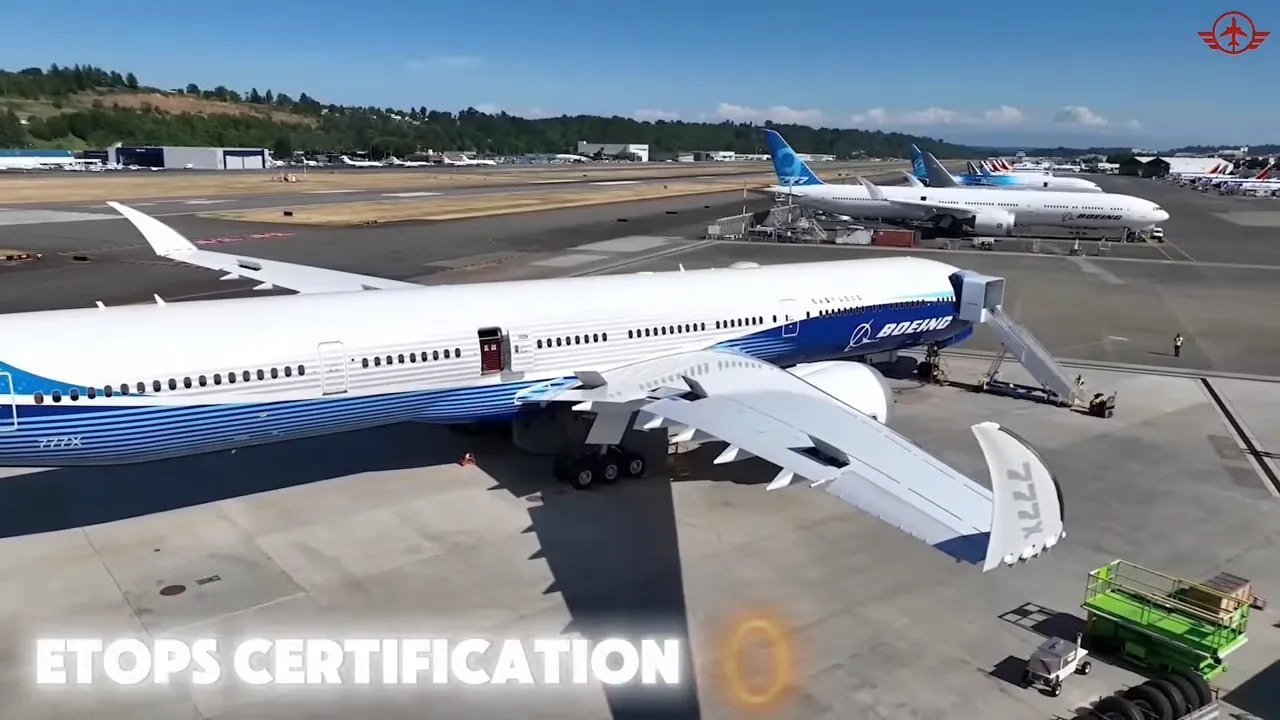
ETOPS is especially important for a long-range twin-engine aircraft because it concerns operations on routes that may place the airplane more than a specified flying time from an adequate diversion airport. Boeing has said ETOPS-focused TIAs and approval to begin ETOPS demonstrations remain in the 777-9 program.
ETOPS should not be described as one simple certificate that automatically follows Phase 4A. The aircraft type must meet applicable design and reliability requirements, and each airline also needs the relevant operational authorization, procedures, maintenance program, training, and route planning approval. The FAA’s active ETOPS guidance explains the operational-approval requirements.
Why the 777-9 delay has become so expensive
The 777X was launched in 2013, and Boeing originally targeted the first delivery for 2020. Boeing now expects the first 777-9 delivery in 2027, which makes the program roughly seven years late against that original target.
The financial effect is substantial. In October 2025, Boeing recorded a $4.9 billion pre-tax charge tied to the updated 777X certification schedule. That charge was not the program’s total historical cost, but it shows how a further schedule shift can affect Boeing’s earnings.
Delays also affect airlines. Carriers plan fleet retirements, cabin products, pilot training, maintenance capacity, route growth, and financing years in advance. When a replacement aircraft arrives late, an airline may have to retain older jets, spend more on heavy maintenance and cabin upgrades, lease interim capacity, or postpone network changes.
Waiting therefore becomes more than an inconvenience. It changes capital plans and can reduce the fuel, maintenance, and seating benefits that airlines expected to receive earlier.
How Emirates and Lufthansa are affected
Emirates
Emirates remains the largest publicly identified 777X customer. Its financial-year results published on May 7, 2026 listed 270 Boeing 777X aircraft in the airline’s order book as of March 31. Emirates has also continued a $5 billion cabin retrofit program covering existing Airbus A380 and Boeing 777 aircraft.
The retrofit program serves several purposes, but the prolonged wait for new aircraft increases the importance of keeping the current fleet competitive and usable. Emirates still sees the 777X as central to its high-capacity long-haul network, yet it must bridge the gap until certified aircraft are delivered.
Lufthansa
Lufthansa is one of the 777X launch customers, and its first customer-configured 777-9 completed its first flight on May 8, 2026. The aircraft flew with a fitted Lufthansa passenger cabin rather than a test-only interior and entered further ground and flight testing focused partly on cabin systems and connectivity.
That flight was a real production-readiness milestone, but it was not a delivery. The aircraft remains part of the certification and preparation effort, and Boeing has not promised that the FAA will approve the type by a fixed date.
Lufthansa previously said that additional Boeing 787-9 aircraft were intended to help fill capacity gaps caused by the delayed 777-9. The continuing uncertainty also affects fleet sequencing, training, cabin rollout, and the retirement timing of older aircraft.
The 777-9 timeline is clearer, but not guaranteed
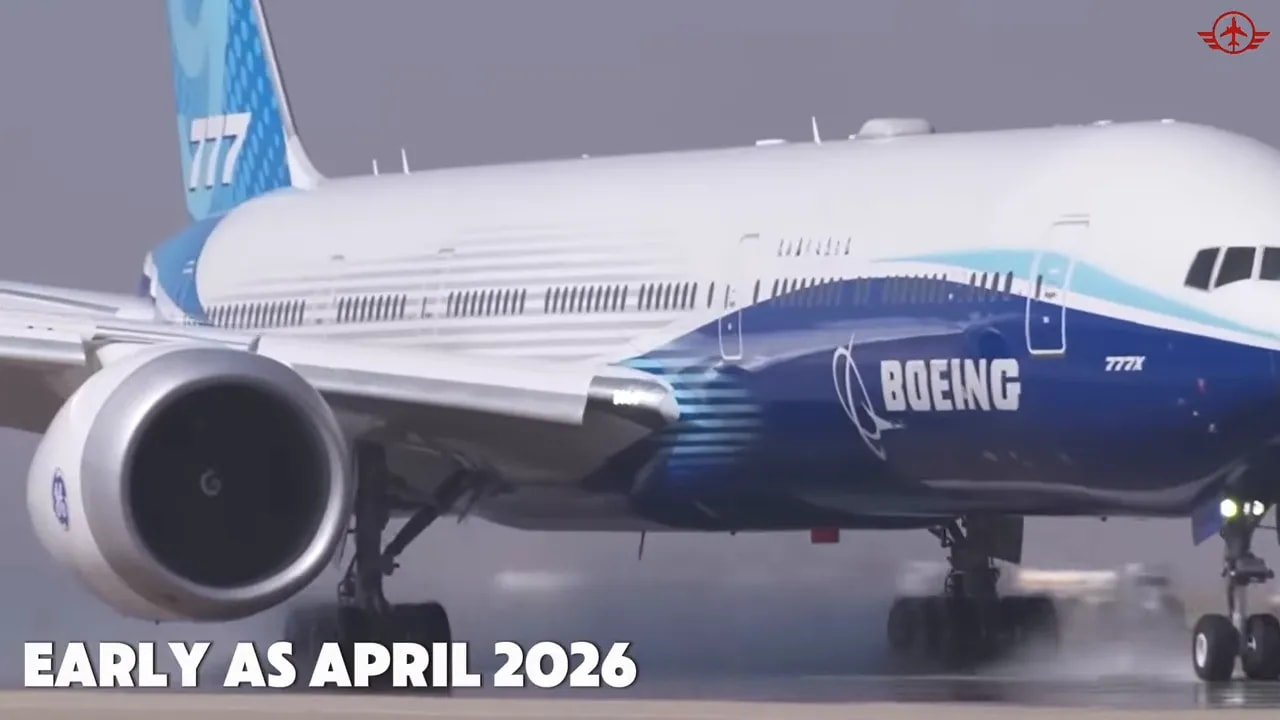
Earlier planning pointed to an April 2026 first flight for the Lufthansa-configured production aircraft. The actual flight took place on May 8, 2026. That aircraft became the sixth 777-9 to fly and the first with a customer interior.
Boeing’s current public target is first delivery in 2027. The company has not narrowed that guidance to a guaranteed month, and FAA certification remains the controlling requirement.

Caution: Boeing’s 2027 delivery target is company guidance, not an FAA commitment. Certification schedules can change if testing finds a new issue or if required evidence takes longer to review and close.
The key milestones to watch now are the remaining TIAs, approval and completion of ETOPS demonstrations, closure of safety and compliance documentation, issuance of the amended type certificate, production conformity, and the first customer delivery.
Why airlines are still willing to wait
The 777-9 remains attractive because it is designed for high-capacity, long-range routes that need more seats than many other twin-engine aircraft provide. Boeing’s current 777X specifications list a length of 76.7 meters and a range of up to 8,000 nautical miles for the 777-9. Its airport-planning document lists typical seating of 349 passengers in a three-class layout or 414 in a two-class layout, although each airline’s cabin will differ.
Boeing also advertises 20% lower fuel use and emissions than the aircraft the 777X is intended to replace, along with lower operating costs. Those are manufacturer performance claims based on the design and planned mission assumptions. They cannot be confirmed through normal airline service until the aircraft is certified, delivered, and operated at scale.
Airlines continue to support the family because the combination of capacity, range, a composite wing, folding wingtips, and GE9X engines could improve economics on dense intercontinental routes. Boeing said in May 2026 that customers had ordered more than 620 aircraft across the 777X family.
The order book gives Boeing a strong commercial reason to finish the program, but orders alone do not remove certification risk. Airlines receive the promised benefit only after the jet enters dependable service.
The bigger question hanging over the 777-9
The 777-9 is closer to certification than it was when Phase 4A began, but the latest Boeing update also shows how much work remains. Half of planned certification testing was complete in mid-July 2026, and the company still had final TIAs and ETOPS-related work ahead.
If the aircraft meets its approved requirements and enters service reliably, it could become an important replacement for older Boeing 777s and Airbus A380s on high-demand routes. If new findings cause another schedule shift, airlines will face further fleet and investment decisions.
The most accurate conclusion today is neither that the 777-9 has been “finally cleared” nor that another delay is certain. The FAA cleared a major testing stage, Boeing has made measurable progress since then, and the program is still working toward certification and first delivery in 2027.
Frequently Asked Questions
What is Phase 4A testing for the Boeing 777-9?
Phase 4A is part of the 777-9 program’s Type Inspection Authorization sequence. The FAA’s approval allowed another set of official ground and flight evaluations to proceed. It was an important certification milestone, but it was not a type certificate.
Is the Boeing 777-9 FAA certified?
No. As of July 24, 2026, Boeing says the program is still completing certification testing and documentation. The FAA has not issued the final approval needed for normal airline delivery and passenger service.
Why is FAA involvement important for the 777-9?
The FAA sets the certification basis, determines its level of involvement, reviews compliance data, oversees conformity, and conducts or witnesses selected official tests. Boeing must provide acceptable evidence that the design meets the applicable safety requirements.
What systems are being checked?
The full certification campaign covers flight controls, electrical and backup systems, pressurization, structures, software, warnings, pilot interfaces, icing, vibration, failure cases, and other requirements. Boeing has not published every test assigned specifically to Phase 4A.
What remains after Phase 4A?
Boeing must complete remaining flight and ground tests, final TIAs, ETOPS-focused work, safety analyses, compliance documents, production conformity, and any corrective actions required by test findings before certification and delivery.
When did Lufthansa’s first 777-9 fly?
The first Lufthansa-configured 777-9 flew on May 8, 2026. It carried a fitted customer cabin and entered additional ground and flight testing. The flight did not mean the aircraft had been delivered.
When is the first Boeing 777-9 delivery expected?
Boeing currently targets first delivery in 2027. That remains a company forecast rather than a guaranteed FAA schedule, so the date can change if certification work takes longer than planned.
Why have airlines kept their 777X orders?
The 777X family is designed to combine high capacity, long range, and lower fuel use than the older aircraft it is intended to replace. Airlines with dense long-haul networks may still see strong value in that combination despite the delay.
Sources
- Federal Aviation Administration: How Aircraft Certification Works — explains the FAA certification process and the role of testing and compliance evidence.
- Boeing First-Quarter 2026 Results — confirms FAA approval to begin 777-9 TIA Phase 4A and Boeing’s 2027 first-delivery target.
- Boeing July 16, 2026 Certification Update — provides the latest test-hour, flight-count, completion, TIA, and ETOPS status.
- Boeing: Lufthansa’s First 777-9 Takes Flight — confirms the May 8, 2026 first flight and customer-aircraft testing role.
- FAA Advisory Circular 120-42B — explains ETOPS operational approval for extended operations.
- Emirates 2025-26 Financial Results — confirms the airline’s 777X order book and retrofit program.

