

Last Updated on July 27, 2026 by Daniel Globe
The best hiking clothes keep you comfortable without getting in the way. What you wear should match the weather, trail surface, trip length, and how hard you expect to work. A good outfit manages sweat, protects you from sun, wind, rain, insects, and rough vegetation, and lets you add or remove layers as conditions change. Feeling comfortable and prepared also makes it easier to focus on the trail instead of sore feet, wet clothing, or overheating.
Quick Answer
For most hikes, wear moisture-managing underwear and a shirt, quick-drying hiking pants or shorts, wool or synthetic socks, and trail footwear that fits well and suits the terrain. Carry a rain shell and extra insulation when conditions may change. Add a hat, sunglasses, sun protection, and insect protection as needed.
Key Takeaways
- Choose hiking clothing for the expected weather, terrain, trip length, and activity level rather than relying on one outfit for every trail.
- Wool and many synthetic fabrics manage moisture better than cotton when getting wet or chilled is a concern.
- Use layers so you can remove clothing before you overheat and add warmth or weather protection when you slow down.
- Footwear should fit comfortably, grip the trail, and provide the protection appropriate for the terrain; heavy boots are not necessary for every hike.
- Remember sun, insect, rain, wind, and cold-weather protection rather than thinking only about your shirt and pants.
What to Wear Hiking: Basic Outfit Checklist
A simple hiking outfit can work for many day hikes. Adjust each piece for the forecast and trail conditions:
- Underwear: Comfortable, breathable underwear that does not bunch or create friction.
- Shirt: A lightweight synthetic or merino-wool hiking shirt that manages sweat.
- Bottoms: Stretchy, quick-drying hiking pants or shorts that allow a full range of motion.
- Socks: Wool or synthetic hiking socks that fit smoothly without wrinkles.
- Footwear: Hiking shoes, trail runners, or boots with suitable traction and a comfortable fit.
- Weather layer: A wind-resistant or waterproof shell when wind or precipitation is possible.
- Sun protection: A brimmed hat, sunglasses, protective clothing, and sunscreen when exposed to strong sun.
- Cold-weather extras: An insulating layer, warm hat, gloves, and dry backup clothing when temperatures can fall.
Warning: Weather, trail surfaces, and temperatures can change quickly, especially in mountains. Check the current forecast, park alerts, and trail conditions before leaving. Carry enough clothing for conditions becoming colder or wetter than expected, and turn around if conditions exceed your equipment or experience.
Choosing the Right Footwear for Hiking
Footwear is one of the most important parts of a hiking outfit because poor fit, inadequate grip, or insufficient protection can make every step uncomfortable. However, there is no rule that every hiker needs a heavy boot.
The National Park Service recommends footwear appropriate for the route. For easy, maintained trails, lightweight hiking shoes or suitable trail-running shoes may provide all the traction and protection you need. Rough, rocky, wet, steep, snowy, or heavily loaded trips may justify a more protective hiking boot.
Match Footwear to the Trail
- Maintained, relatively smooth trails: Lightweight hiking shoes or trail runners can be comfortable and breathable.
- Rocky or root-filled trails: Look for a secure fit, protective toe area, stable sole, and good outsole traction.
- Wet or muddy trails: Waterproof footwear may help when water is shallow and conditions are cool, while breathable, fast-drying footwear can be more comfortable in warm conditions.
- Snow and cold: Insulated or waterproof boots may be appropriate, depending on temperature and snow depth.
- Heavy backpacking loads: A more supportive shoe or boot may feel better over long distances.
Higher-cut boots can provide additional structure around the ankle, but they do not make slips or ankle injuries impossible. Good traction, appropriate pacing, balance, trail awareness, and proper fit remain important.
Get the Fit Right
Try hiking footwear with the same type and thickness of socks you intend to use on the trail. Your toes should not strike the front of the shoe on descents, your heel should not slide excessively, and there should be no obvious pinching or rubbing points.
New, stiff hiking or backpacking boots should be tested on shorter walks before a long trip. Lighter hiking shoes and trail runners may require little break-in, but they should still be worn enough to confirm that the fit works for your feet.
Pro Tip: Bring blister treatment such as moleskin or your preferred blister dressing on longer hikes. Small friction spots are easier to manage before they become painful blisters.
Layering for Comfort and Protection

Layering lets you adjust your clothing without replacing your entire outfit. A useful system usually includes a moisture-managing base layer, insulation when needed, and a protective outer layer.
Base Layer
The base layer sits next to your skin. Its main job is to move moisture away from the body and dry reasonably quickly. Lightweight polyester, nylon blends, and merino wool are common choices.
Cotton absorbs and holds considerably more moisture than typical hiking synthetics. That may be merely uncomfortable on a warm, dry walk, but it becomes a bigger concern when temperatures drop or rain, snow, or cold wind is possible. The National Park Service advises avoiding water-holding clothing such as cotton when hypothermia is a concern.
Insulating Layer
An insulating layer slows heat loss. Fleece is a practical choice because it is breathable and continues to work reasonably well when damp. Synthetic insulated jackets and down jackets provide more warmth for their weight, although their ideal use depends on moisture and temperature.
A fleece jacket, insulated vest, or lightweight puffy may be enough for mild cold. Colder conditions may require substantially more insulation.
Outer Shell
The outer layer protects you from wind and precipitation. A wind shell can be enough for dry, breezy weather. When sustained rain is possible, bring a waterproof shell designed for outdoor activity. Waterproof-breathable membranes, including GORE-TEX and competing technologies, can help block external water while allowing some moisture vapor to escape, but no shell eliminates sweat during hard exercise.
In prolonged or cold rain, waterproof pants can also be useful. In warm rain, some hikers prefer fast-drying clothing and a light shell because heavy waterproof clothing can feel hot and humid.
The safest hiking outfit is not the warmest outfit you can wear at the trailhead. It is a flexible system you can adjust before sweat, wind, rain, or falling temperatures become a problem.
Selecting the Best Fabric for Hiking Clothing
| Fabric Type | Advantages | Limitations |
| Merino Wool | Manages moisture, insulates when damp, resists odor well, comfortable across a broad temperature range | Usually more expensive and may be less abrasion-resistant than some synthetics |
| Polyester | Lightweight, quick-drying, widely available, good for active use | Can retain body odor and performance varies by fabric construction |
| Nylon | Durable, abrasion-resistant, common in hiking pants and shells | Breathability and drying time vary by garment |
| Cotton | Soft, familiar, inexpensive | Absorbs substantial moisture and dries slowly, making it a poor choice when cold or wet conditions are possible |
| Bamboo-Derived Rayon/Viscose | Often soft and comfortable against the skin | Trail performance, durability, drying speed, and environmental impact vary widely by construction and manufacturing process |
Synthetic fabrics such as polyester and nylon are popular for hiking because many versions are durable and dry quickly. Merino wool is especially useful for base layers and socks because it combines moisture management with insulation and good odor resistance.
Cotton is less suitable when becoming wet could leave you cold for an extended period. A cotton T-shirt on a short, hot, predictable walk is not automatically dangerous, but wool or quick-drying synthetic clothing gives you a larger safety margin when weather is variable.
Choosing Hiking Pants, Shorts, and Shirts
Hiking pants and shorts should let you climb steps, bend, and take long strides without pulling or binding. Stretch fabrics and articulated knees can improve freedom of movement.
Shorts provide ventilation in hot weather but expose more skin to sun, insects, scratches, and vegetation. Lightweight pants offer more protection while still remaining comfortable in many warm conditions. Convertible pants can provide both options.
For shirts, choose short or long sleeves based on temperature, sun exposure, insects, and vegetation. A lightweight long-sleeve shirt can provide useful sun and bug protection without necessarily being hotter than a heavy short-sleeve shirt.
Your underwear matters too. Seams, damp fabric, and poor fit can cause friction during long walks. Choose a comfortable design that stays in place and dries reasonably quickly.
Essential Accessories for Hiking
Small clothing accessories often make a bigger difference than expected.
Hiking Socks
Wool and synthetic socks are common choices because they manage moisture better than typical cotton socks. Choose a thickness that matches your footwear and the temperature. The sock should extend above any part of the shoe or boot that could rub against your skin.
An extra pair can be useful on long or wet hikes. Changing out of soaked socks may improve comfort and reduce prolonged skin moisture.
Hats and Sunglasses
A wide-brimmed hat provides more coverage for the face, ears, and neck than a standard cap. In cold weather, a warm hat or beanie helps protect exposed skin and retain comfort.
For sun protection, choose sunglasses that block UVA and UVB radiation. The CDC recommends combining protective clothing, a brimmed hat, sunglasses, shade, and broad-spectrum sunscreen rather than relying on sunscreen alone.
Gloves and Gaiters
Gloves protect against cold and can also be useful when scrambling over rough surfaces. Gaiters cover the gap between pants and footwear, helping keep snow, mud, loose debris, or vegetation out of your shoes or boots.
Backpack
A lightweight, comfortable backpack gives you room for water, snacks, insulation, rain gear, sun protection, first-aid supplies, and other hiking essentials. Avoid filling it with unnecessary weight, but do not leave behind clothing you may need if the weather changes.
What to Wear in Different Hiking Conditions
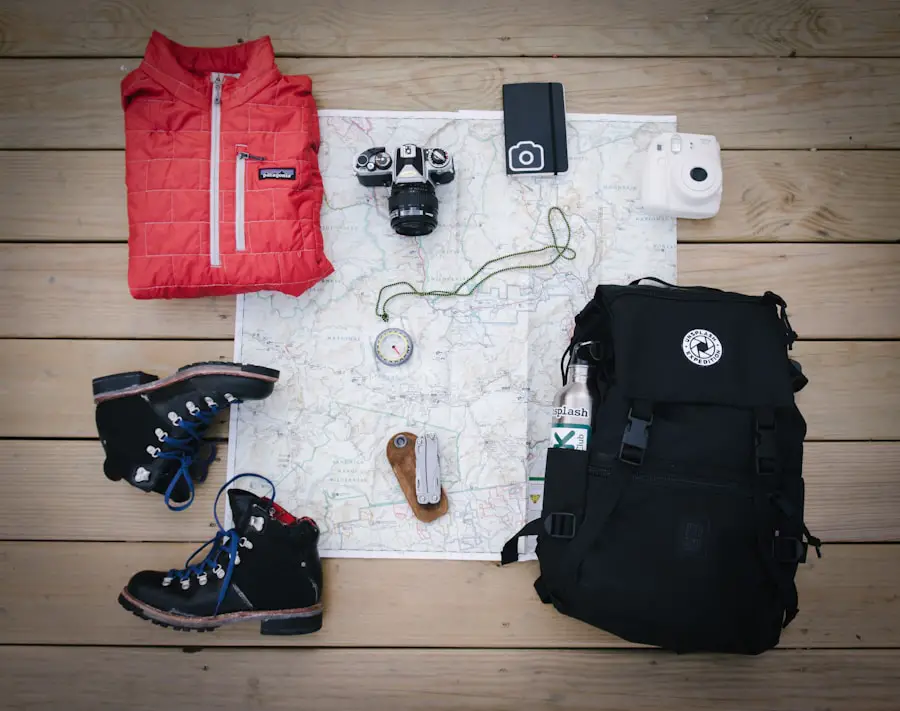
| Conditions | Useful Clothing |
| Hot and sunny | Lightweight breathable shirt, shorts or light pants, sun hat, UV-blocking sunglasses, breathable footwear |
| Warm with possible rain | Quick-drying clothing, light waterproof shell, suitable trail footwear |
| Cool and windy | Moisture-managing base layer, light insulation, wind-resistant shell |
| Cold or snowy | Base layer, insulating midlayer, warm outer layer, hat, gloves, warm socks, suitable boots, extra dry clothing |
| Hard-packed snow or ice | Warm layers, appropriate boots, and traction devices suited to the conditions |
| Brushy or tick-prone terrain | Long pants, long sleeves, closed footwear, repellent, and treated clothing where appropriate |
Staying Comfortable in Warm Weather
In hot weather, lightweight, breathable, loose-fitting clothing helps your body manage heat. The National Park Service recommends lightweight, light-colored, loose-fitting clothing as part of its heat-illness prevention guidance.
Color involves a tradeoff. Light colors can reduce solar heat absorption, while tightly woven or specifically sun-protective fabrics can offer better UV coverage. For long exposure, prioritize a garment’s sun protection, coverage, breathability, and comfort rather than color alone.
Add a brimmed hat, UV-blocking sunglasses, and broad-spectrum sunscreen. Reapply sunscreen according to its label, particularly after heavy sweating.
Hiking in Rain and Wind
Rain changes clothing priorities because wet fabric can increase heat loss and discomfort. Pack a waterproof shell when meaningful rain is possible. In cooler or sustained rain, rain pants may also be worthwhile.
A wind shell can provide useful protection on exposed ridges even when precipitation is not expected. Because waterproof jackets can feel humid during strenuous movement, use ventilation features when available and slow down or remove insulation before you become excessively sweaty.
Note: “Waterproof” does not mean you will always feel dry inside a jacket. During hard hiking, perspiration can exceed the rate at which moisture escapes through even a breathable waterproof shell.
Dressing for Cold Weather
Cold-weather hiking calls for layers that can be adjusted before you become sweaty. Begin with a moisture-managing base layer, add insulation, and carry windproof or waterproof protection appropriate for the conditions.
The National Park Service winter hiking checklist includes warm waterproof clothing, a hat, gloves, waterproof footwear, gaiters, and an extra set of dry clothing. Keeping backup clothing dry inside your pack can be valuable if your primary layers become soaked.
Preparing for Slippery Surfaces
Snow and ice require more than warm clothing. The correct traction equipment depends on the surface. Over-the-shoe traction devices can improve grip on hard-packed snow and ice, while deeper soft snow may call for snowshoes rather than small traction devices.
Always check local trail guidance because winter conditions, steepness, avalanche exposure, and required equipment vary dramatically by location.
Hiking Attire for Sun, Insects, and Trail Safety
Sun Protection
Clothing can reduce UV exposure, particularly when it covers the arms and legs and uses tightly woven or purpose-designed sun-protective fabric. According to the CDC, sunglasses that block UVA and UVB rays, a hat with a brim around the head, protective clothing, shade, and broad-spectrum sunscreen work best as a combined strategy.
Ticks and Mosquitoes
Long sleeves and pants create a physical barrier against insects, but clothing alone is not complete protection in tick-prone areas. The CDC recommends EPA-registered insect repellents and says clothing, boots, and gear can be treated with products containing 0.5% permethrin. Permethrin products are intended for clothing and gear according to their labels, not for direct application to skin.
Stay toward the center of trails where practical, avoid brushing through tall grass and dense vegetation unnecessarily, and check your clothing and body for ticks after hiking in tick habitat.
Visibility
Bright or high-visibility clothing can make a hiker easier to locate in low light or during an emergency. It is particularly worth considering in areas where hunting is permitted during hunting seasons; follow local land-management recommendations.
Long pants and sleeves also protect against scratches from thorny plants and rough vegetation.
Wildlife
Do not rely on neutral clothing colors to prevent wildlife encounters. Wildlife safety depends on the species and location. Follow park-specific rules, maintain required distances, store food correctly, stay alert, and avoid surprising animals. In bear country, for example, the National Park Service emphasizes awareness, appropriate noise in low-visibility areas, and avoiding surprise encounters.
How to Prepare for Changing Weather
Check the weather forecast before leaving, but do not assume the trail will remain exactly as forecast. Elevation, shade, wind, storms, and changing fronts can create conditions very different from those at the trailhead.
A small clothing reserve can make a large difference. Depending on the hike, consider carrying:
- A rain shell
- A lightweight fleece or insulated layer
- A dry pair of socks
- A warm hat and gloves in cool seasons
- Rain pants for sustained cold rain
- Dry base layers for winter or remote trips
Put critical dry clothing in a waterproof pack liner or sealed bag when prolonged rain, snow, or stream exposure is possible.
Tips for Maintaining and Caring for Hiking Attire
Good care extends the useful life of hiking clothing, but there is no single washing method for every technical fabric. Always start with the manufacturer’s care label.
Do not assume that every outdoor garment requires a specialized technical detergent. For example, current GORE-TEX care guidance recommends a small amount of liquid detergent for its garments and advises against powder detergent, fabric softener, chlorine bleach, and certain stain removers. Other manufacturers may specify different instructions.
Waterproof shells with a durable water-repellent treatment may eventually stop beading water at the surface. Cleaning, drying, heat treatment, or reapplying a compatible water-repellent treatment may restore performance, but follow the garment manufacturer’s directions before doing so.
Allow footwear and clothing to dry thoroughly before storage. Avoid putting damp gear into a sealed closet or storage bin for long periods. Brush dirt from footwear, inspect seams and soles, and repair small problems before the next trip.
Regular inspection is especially important for rain shells, footwear tread, laces, fasteners, and other items whose failure could cause trouble on the trail.
Pro Tip: After every hike, empty your pack and let damp socks, rainwear, and insulation dry completely. It is much easier to discover a torn shell, worn shoe tread, or missing glove at home than at the next trailhead.
If you are planning a hiking trip that also includes remote work or extended travel, packing weight may matter beyond your trail clothing. One related resource is the best lightweight laptop for travel, which covers portable computer options for travelers who need to stay connected, document a journey, or work between outdoor adventures.
Love travel? Join Our Facebook Community For More Tips.
Frequently Asked Questions
What should I wear for hiking?
For a typical day hike, wear a moisture-managing shirt and underwear, quick-drying hiking pants or shorts, wool or synthetic socks, and comfortable trail footwear with suitable traction. Carry weather protection and an insulating layer when the forecast or elevation makes colder, wetter, or windier conditions possible.
What type of socks should I wear for hiking?
Wool or synthetic hiking socks are generally better choices than ordinary cotton socks because they manage moisture and dry more effectively. Choose a thickness that fits your shoes without making them tight, and make sure the socks extend above any collar that could rub your skin.
Should I wear a hat when hiking?
A hat is useful in many conditions. A brimmed sun hat protects more of the face, ears, and neck during sunny hikes, while a warm hat helps protect exposed skin in cold weather. A baseball cap provides less neck and ear coverage, so combine it with other sun protection when needed.
What kind of outerwear should I bring for hiking?
Bring outerwear that matches the expected hazards. A light wind shell may be enough for dry, breezy weather, while sustained rain calls for a waterproof shell. In cold conditions, carry insulation under the shell. Packable layers are useful because you can remove them when you warm up.
Are there any specific clothing items to avoid when hiking?
Avoid clothing that restricts movement, rubs badly, or stays wet for a long time when cold or wet conditions are possible. Cotton jeans and heavy cotton layers are especially poor choices for cold, wet hikes because they absorb moisture and dry slowly. Also avoid footwear with inadequate grip or a poor fit.
Do I need hiking boots, or can I wear trail runners?
You do not need heavy hiking boots for every trail. Trail runners or hiking shoes can work well on maintained or moderate terrain when they provide adequate traction, protection, and fit. More rugged trails, snow, cold weather, or heavy packs may justify a sturdier hiking or backpacking boot.
Should I wear shorts or pants for hiking?
Both can work. Shorts provide more ventilation in hot weather, while lightweight pants provide more protection from sun, ticks, insects, brush, and scratches. Choose based on temperature, vegetation, sun exposure, insect activity, and personal comfort.
Sources
- U.S. National Park Service — Hike Smart — hiking footwear, socks, insect protection, equipment, and general trail-safety guidance.
- U.S. National Park Service — Winter Hiking Tips — winter layers, waterproof footwear, gaiters, traction devices, and extra dry clothing.
- Centers for Disease Control and Prevention — Sun Safety Facts — protective clothing, hats, sunglasses, and sunscreen guidance.
- Centers for Disease Control and Prevention — Preventing Tick Bites — repellents, permethrin-treated clothing and gear, trail precautions, and post-hike tick checks.
- GORE-TEX — Product Care FAQ — manufacturer guidance for washing waterproof-breathable garments and maintaining water repellency.
