Last Updated on September 10, 2026 by Daniel Globe
Hiking boots can be excellent footwear for long-distance walking, but they are not automatically the best choice for every route. Their tougher uppers, stiffer soles, traction, and added coverage can be valuable on rough trails. On smooth paths, pavement, or hot-weather walks, a lighter hiking shoe or trail runner may feel more comfortable and efficient.
Quick Answer
Yes—hiking boots can be a good choice for long-distance walking, especially on rocky, uneven, muddy, cold, or wet trails and when you want more underfoot protection. They are not automatically better than trail runners or hiking shoes, though. Fit, terrain, pack weight, weather, and your own comfort matter more than boot height alone.
Key Takeaways
- Hiking boots are most useful when you need durable foot protection, a stable platform, and trail-focused traction on rough or wet ground.
- A high boot collar can add coverage and mechanical restraint, but it should not be treated as a guarantee against ankle sprains.
- Heavier, stiffer, waterproof boots can feel hotter and more tiring than lighter footwear over many miles.
- Fit is more important than the label on the shoe: your toes need room, your heel should stay controlled, and there should be no painful pressure points.
- Trail runners and hiking shoes can be better choices for well-maintained trails, warm weather, light packs, and faster walking.
- Break new boots in gradually, keep socks dry, address hot spots early, and follow the manufacturer’s care instructions.
Disclosure: As an Amazon Associate I earn from qualifying purchases. Some links on this page are affiliate links, at no extra cost to you.
Benefits of Hiking Boots for Long-Distance Walking
The biggest advantage of a hiking boot is not simply that it rises above the ankle. A well-designed boot combines a protective upper, structured midsole, secure heel hold, and trail-specific outsole. Together, those features can make rough ground feel more controlled underfoot.
The U.S. National Park Service recommends sturdy, rubber-soled hiking boots with ankle support for dirt and gravel trails. That kind of footwear can be especially useful on routes with sharp rocks, roots, loose gravel, mud, or frequent elevation changes.
Protection and Stability on Rough Ground
Stiffer midsoles and internal support structures can reduce how much sharp rocks and uneven surfaces press into the bottom of the foot. Higher uppers also protect the ankle area from brush, debris, and abrasion.
A boot collar can provide some mechanical restraint around the ankle. A 2026 biomechanics study of high-top versus low-top shoes found that high-top shoes reduced peak ankle-inversion angle and velocity during a simulated inversion event. However, that laboratory result does not prove that ordinary hiking boots prevent ankle sprains on real trails.
Note: Think of a higher boot as added coverage and possible mechanical support, not as an ankle brace. A clinical review of ankle-sprain prevention found that the protective effect of high-top shoes had not been established.
Traction for Trail Conditions
Many hiking boots use rubber outsoles with pronounced lugs that bite into dirt, gravel, and mud. The exact grip depends on the rubber compound and lug pattern, so no boot has “excellent” traction on every surface. Deep, widely spaced lugs may shed mud well, while a different outsole design can work better on smooth wet rock.
Durability and Weather Protection
Hiking boots are often built with thicker leather, synthetic reinforcements, toe protection, and more durable soles than ordinary walking shoes. That can make them a good match for repeated use on abrasive trails.
Waterproof versions can also be valuable in cold rain, wet grass, mud, shallow puddles, and similar conditions. Waterproof/breathable membranes are designed to keep liquid water from entering while allowing some water vapor to escape.
Drawbacks of Hiking Boots for Long-Distance Walking

Hiking boots trade weight and flexibility for protection and structure. That tradeoff can be worthwhile on demanding trails, but it can also become a disadvantage when you are walking many easy miles.
Extra Weight
Traditional hiking boots are generally heavier than hiking shoes and trail-running shoes. Research in other load-bearing walking settings has found that heavier boots can increase oxygen demand, so footwear mass is not meaningless when every step is repeated thousands of times.
That does not mean a light shoe is always superior. A heavier boot may still feel better when its stiffness and protection reduce discomfort from rocks, roots, or a heavy load.
Stiffness and Break-In Time
Some modern synthetic hiking boots feel comfortable almost immediately. Stiffer backpacking boots and full-grain leather models can need considerably more break-in time.
A new boot should not require you to endure significant pain in the hope that it will eventually fit. According to REI’s hiking-boot break-in guidance, gradual wear can help a correctly fitted boot adapt to your feet, but breaking in cannot fix a fundamentally poor fit.
Heat and Reduced Breathability
Waterproof boots are useful in wet conditions, but the same membrane that blocks outside water can make footwear less ventilated than an otherwise similar non-waterproof mesh shoe. In warm, dry weather, that can mean sweatier feet and slower moisture escape.
For dry summer trails, a breathable hiking shoe or trail runner can therefore be more comfortable even if it offers less coverage.
Less Comfortable on Pavement for Some Walkers
You can walk on sidewalks or concrete in hiking boots, but a stiff boot with aggressive lugs may feel bulky on smooth surfaces. Pavement can also wear trail-oriented rubber faster. For a route that is almost entirely paved, an ordinary walking or athletic shoe is often the simpler choice.
Considerations for Choosing Hiking Boots for Long-Distance Walking
There is no single boot specification that guarantees comfort. The best choice depends on your feet and the route you expect to walk.
What to Look for at a Glance
| Consideration | What Matters |
| Fit | Very important. The boot should feel secure without pinching, rubbing, or forcing the toes against the front. |
| Material | Leather is often durable but heavier; synthetic materials can be lighter, faster-drying, and quicker to break in. |
| Support | Look at the whole platform—heel hold, midsole stiffness, torsional stability, footbed, and collar—not collar height alone. |
| Traction | Choose a lug pattern and rubber compound suited to the dirt, mud, rock, or other surfaces you expect. |
| Weight | Lighter footwear can be easier over high-mileage days, but do not sacrifice protection you genuinely need for the terrain. |
| Durability | Check upper construction, toe protection, stitching, outsole wear, and whether the boot suits repeated use on abrasive terrain. |
| Terrain and Load | Rough terrain and heavier loads may justify a more structured boot; groomed trails and light packs often allow lighter footwear. |
Start With Fit
Proper fit is more important than choosing the most rugged-looking boot. Your heel should remain reasonably secure, the sides of the foot should not be painfully squeezed, and your toes need enough room that they do not strike the front on descents.
Current hiking-footwear fitting guidance recommends a snug-but-not-tight fit with room to wiggle the toes. It is also smart to try footwear later in the day, when feet have normally swollen somewhat from daily activity.
Wear the same thickness of socks you plan to hike in. If you use custom orthotics or replacement insoles, bring those too because they can change the amount of room inside the boot.
Pro Tip: Test both uphill and downhill movement before committing to a boot. Your heel should not slide excessively uphill, and your toes should not slam into the front when your weight shifts downhill.
Match the Boot to the Terrain
For smooth, well-maintained trails, a light hiking boot, hiking shoe, or trail runner may provide all the grip and protection you need. Rocky trails, loose scree, brush, mud, and rough off-trail travel can justify a stiffer sole, more protective upper, and higher collar.
Pack weight matters too, although there is no universal point at which everyone must switch to a boot. Some walkers prefer the firmer platform of a backpacking boot under a heavier pack, while experienced long-distance hikers may still prefer light footwear.
A study of long-distance Appalachian Trail and Pacific Crest Trail hikers found that, after pack weight and footwear were considered together, footwear type was not significantly associated with musculoskeletal injuries such as joint sprains or chronic pain. That is another reason not to assume that “more boot” automatically means fewer injuries.
Waterproof or Non-Waterproof?
A waterproof boot makes sense when cold rain, wet vegetation, snow, mud, or frequent shallow water are likely. A non-waterproof shoe can make more sense in hot, dry conditions because it usually vents and dries faster.
Remember that water can still enter a waterproof boot from the top. Once the inside is soaked, a lined boot may take longer to dry than an airy trail runner.
Do Higher Hiking Boots Prevent Ankle Sprains?
Higher collars can restrict some ankle motion and may make a walker feel more stable. Recent biomechanics research supports a mechanical effect during sudden inversion. However, clinical evidence has not established that ordinary high-top footwear reliably prevents ankle sprains.
The safest approach is to choose footwear that fits well, develop strength and balance, pay attention to terrain, and avoid relying on boot height as your only protection.
Warning: If you are recovering from an ankle injury or have persistent foot pain, numbness, neuropathy, or another condition that affects walking, do not use a hiking boot as a substitute for medical advice or a prescribed brace. Ask an appropriate healthcare professional about footwear for your situation.
Alternatives to Hiking Boots for Long-Distance Walking
Hiking boots are only one part of the hiking-footwear spectrum. The best alternative depends on how much protection, flexibility, and ventilation you want.
Trail-Running Shoes
Trail runners are popular for long-distance hiking because they are light, flexible, and usually breathable. Rugged models can have aggressive outsoles and rock plates that provide substantial trail protection.
The tradeoff is usually less coverage, less stiffness, and potentially faster wear than a traditional backpacking boot. They are particularly appealing for warm weather, light packs, maintained trails, and walkers who prefer a faster, more natural stride.
Hiking Shoes
A low-cut hiking shoe sits between a traditional boot and a trail runner. It may use a structured hiking midsole and tough outsole while saving weight and allowing greater ankle movement.
For many walkers, this middle ground works well for day hikes, travel, and long walks on moderate trails.
Approach Shoes
Approach shoes are designed for the hike to and from climbing routes. Their sticky rubber and precise fit can work well on rocky scrambles and slabs. Some models are relatively stiff or close-fitting, though, so they are not automatically ideal for high-mileage walking.
Hiking Sandals
Secure hiking sandals can work in warm environments and on some easy trails. They offer excellent ventilation and dry quickly, but leave more of the foot exposed to rocks, sticks, insects, and other trail debris.
Tips for Walking Long Distances in Hiking Boots
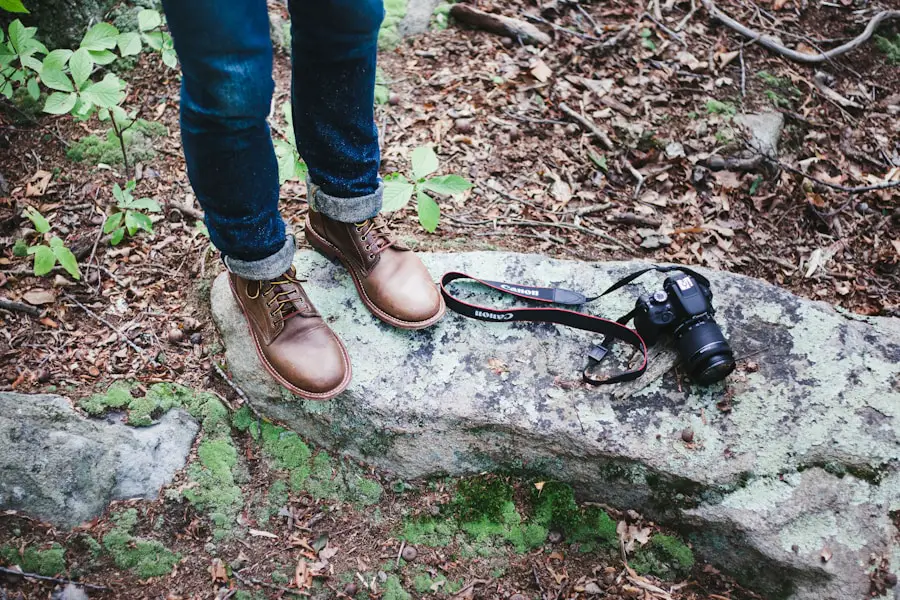
Break in Your Boots Gradually
Start by wearing new boots with the socks and insoles you will use on the trail. Walk around the house, then take short local walks. If they remain comfortable, add longer outings, hills, trail surfaces, and eventually the pack you expect to carry.
Do not try to force a break-in by soaking the boots or immediately taking them on a full-day hike. A gradual increase in distance gives you time to find pressure points before they become injuries.
Keep Your Feet and Socks Dry
Moisture matters because wet skin is more vulnerable to friction. A 2022 study of 203 long-distance hikers found that 68.5% had foot blisters and that finishing the day in wet socks was associated with 1.94 times the risk of blistering.
In a study of Camino hikers, wet socks were associated with nearly twice the risk of foot blisters.
Use socks that manage moisture well, carry a dry spare pair on long or wet hikes, and change socks when they become soaked. Sock material alone is not a magic solution; keeping the foot environment dry is the more important lesson from the research.
Deal With Hot Spots Early
A burning, rubbing, or tender spot is an early warning. Stop before it becomes a full blister. Adjust the sock, remove grit, change the lacing if needed, and cover the area with an appropriate blister dressing or protective tape.
Continuing for several miles after a hot spot begins can turn a small fit problem into a painful blister that affects the rest of the trip.
Prepare for Various Conditions
Training walks should include some of the terrain you expect on the real route. Hills, uneven ground, and longer descents place different demands on the feet than a short neighborhood walk.
Take reasonable breaks on long days and pay attention to changes in how the boots feel. Feet can swell as mileage, temperature, and time on your feet increase, so lacing that felt perfect at the start may need adjustment later.
How to Properly Care for Hiking Boots for Long-Distance Walking
Proper care helps the upper, outsole, and waterproof treatments last longer. The exact procedure depends on the material, so the boot manufacturer’s instructions should always come first.
Clean Off Dirt After Use
Remove loose mud, grit, and stones with a soft brush or cloth. Take out the laces and removable insoles when a deeper cleaning is needed.
For GORE-TEX footwear, the manufacturer recommends brushing away loose dirt and cleaning with lukewarm water and a small amount of liquid detergent. Bleach and machine washing are not recommended.
Dry Boots Without Excessive Heat
Allow wet boots to dry naturally at moderate temperatures. Avoid placing them against a heater, open fire, or other strong direct heat source that could damage adhesives, leather, or other materials.
Restore Water Repellency Correctly
Waterproof footwear may eventually stop beading water on its outer surface. For GORE-TEX footwear, Gore recommends applying an appropriate water-based durable water repellent when needed.
Do not automatically coat waterproof membrane footwear with wax or grease. Gore specifically warns that these products can affect breathability. Leather boots without a GORE-TEX membrane may have different treatment requirements, so use the product recommended by that boot’s manufacturer.
Note: A surface water-repellent treatment and the waterproof membrane are different things. Restoring the outer DWR helps water bead and roll off; it does not repair a torn or leaking membrane.
Are Hiking Boots Good for Walking Long Distances?
Yes, hiking boots can be very good for long-distance walking when the route rewards their protection and structure. They are especially sensible for rocky or uneven terrain, cold and wet conditions, abrasive trails, or walkers who simply feel better on a firmer platform.
They are not the automatic winner for every long walk. For a maintained summer trail, a light hiking shoe or trail runner may reduce weight, improve ventilation, and require less break-in. For pavement and urban walking, a normal walking or athletic shoe may be more comfortable.
A practical way to decide is to ask four questions:
- How rough is the terrain? The rougher the surface, the more useful underfoot protection and structure can become.
- How wet or cold will it be? Waterproof boots become more attractive in prolonged cold and wet conditions.
- How much weight are you carrying? Some walkers prefer a firmer boot under heavier loads, although individual preference varies.
- Which footwear actually fits your feet best? A perfectly fitted trail runner is usually a better choice than an ill-fitting boot, and vice versa.
For long-distance walking, comfort should be proven before the big trip. Test the footwear over increasingly long walks with the socks, insoles, pack, and terrain you expect to use.
If you are planning a walking trip and also shopping for a traveler, you may also find the site’s guide to the best travel gifts for her useful.
Love travel? Join Our Facebook Community For More Tips.
Frequently Asked Questions
Are hiking boots good for walking?
Yes. Hiking boots can be very good for walking on dirt, gravel, rocky trails, mud, and other uneven ground. For smooth pavement or easy paths, a lighter walking shoe, hiking shoe, or trail runner may be more comfortable.
What are the benefits of using hiking boots for walking?
Hiking boots can provide a stable platform, durable uppers, foot and ankle coverage, underfoot protection, and trail-specific traction. Waterproof models can also help in cold or wet conditions.
Can hiking boots be used for everyday walking?
Yes, but they may be more boot than you need for everyday pavement. Heavy or waterproof models can feel stiff and hot, and aggressive trail lugs may wear faster on concrete. A hiking shoe or ordinary walking shoe is often more practical for mostly paved use.
Are hiking boots comfortable for walking long distances?
They can be, provided the boot matches your foot shape, terrain, and walking style. A good long-distance fit should hold the heel without painful pressure, leave room for the toes, and remain comfortable after your feet swell during a long day.
Do hiking boots provide good traction for walking?
Many do, but traction depends on the outsole rubber, lug shape, lug depth, and surface. A boot that grips soft mud well may not be the best design for smooth wet rock, so choose the outsole for the terrain you expect.
Can hiking boots be used for walking on pavement or concrete?
Yes. There is nothing inherently wrong with using hiking boots on pavement, but stiff soles, extra weight, waterproof liners, and aggressive lugs can make them less comfortable or efficient than ordinary walking shoes on long paved routes.
Are hiking boots better than trail runners for long-distance walking?
Not always. Boots favor protection, durability, structure, and wet or rough conditions. Trail runners favor low weight, flexibility, ventilation, and quick drying. Terrain, weather, load, fit, and personal preference should decide between them.
Should hiking boots be waterproof for long-distance walking?
Waterproof boots are useful in cold rain, wet vegetation, mud, and similar conditions. In hot or mostly dry weather, non-waterproof footwear is often more breathable and can dry faster after becoming wet.
Sources
- U.S. National Park Service — Hike Smart — footwear and hiking-safety guidance for different trail conditions.
- REI — How to Choose Hiking Boots and Shoes — current 2026 guidance on fit, terrain, materials, waterproofing, traction, and footwear types.
- Zhang et al. — High-Top Shoes Reduce Ankle Inversion Injury Risk — 2026 biomechanics evidence on high-top shoe restraint during simulated inversion.
- Cochrane review — Interventions for Preventing Ankle Ligament Injuries — evidence review noting that the protective effect of high-top shoes had not been established.
- Chicharro-Luna et al. — Sock Composition and Foot Blisters in Hikers — long-distance hiking data on wet socks and blister risk.
- GORE-TEX — Footwear Care Instructions — manufacturer guidance on washing, drying, DWR restoration, and avoiding waxes or greases on GORE-TEX footwear.