

Last Updated on September 10, 2026 by Daniel Globe
The Appalachian Trail (A.T.) is one of the longest and best-known hiking routes in the United States, running from Springer Mountain in Georgia to Katahdin in Maine through 14 states. The official 2026 route is 2,197.9 miles long. For most people, hiking the entire Trail is not a matter of weeks but months, and the exact time depends on daily mileage, terrain, weather, rest days, resupply stops, and the route strategy you choose.
Quick Answer
Most Appalachian Trail thru-hikers need five to seven months to cover the official 2,197.9-mile 2026 route. The Appalachian Trail Conservancy says the average is a week or two shy of six months. Your finish time depends on daily mileage, rest days, terrain, weather, resupply, and whether you hike northbound, southbound, or flip-flop.
Key Takeaways
- The Appalachian Trail is officially 2,197.9 miles long in 2026 and crosses 14 states.
- Most thru-hikes take five to seven months; the average is slightly less than six months.
- Beginner backpackers should consider starting around 8–10 miles per day and increasing mileage gradually.
- Northbound, southbound, and flip-flop hikes have different weather windows, so the same hiking speed does not work equally well for every itinerary.
- The current overall supported fastest known time is Tara Dower’s 40 days, 18 hours, 6 minutes, set in 2024.
- There is no useful official “slowest thru-hike record.” The Appalachian Trail Conservancy defines a thru-hike as completing the entire Trail within 12 months.
Disclosure: As an Amazon Associate I earn from qualifying purchases. Some links on this page are affiliate links, at no extra cost to you.
How Long Is the Appalachian Trail in 2026?
According to the Appalachian Trail Conservancy’s 2026 mileage update, the official length of the Appalachian Trail is 2,197.9 miles. The route runs through Georgia, North Carolina, Tennessee, Virginia, West Virginia, Maryland, Pennsylvania, New Jersey, New York, Connecticut, Massachusetts, Vermont, New Hampshire, and Maine.
The mileage changes slightly from year to year as trail maintainers relocate sections, improve the footpath, change detours, and refine measurements. That is why older articles may list figures such as 2,180, 2,190, or 2,198 miles. Hikers should use the mileage for the year in which they plan to hike and check current trail updates for temporary detours.
The Trail is also far from a straight line. It repeatedly climbs and descends mountains, follows ridges and valleys, crosses rocky terrain, and winds around natural and developed features. Total effort therefore depends on much more than the number printed on a map.
The Appalachian Trail Conservancy says most thru-hikes take five to seven months, with the average finishing a week or two shy of six months.
ATC considers a person a thru-hiker when that person completes the entire A.T. in 12 months or fewer. Someone who completes the Trail over more than 12 months is considered a section hiker. Both can receive ATC recognition for completing the entire route.
Factors Affecting Hiking Duration
Physical Fitness and Early Mileage
Fitness is one of the biggest factors in how quickly a hiker can cover the Appalachian Trail, but starting too aggressively can backfire. An experienced backpacker may be comfortable with higher mileage immediately, while a first-time long-distance hiker may need several weeks to build strength and adapt to carrying a loaded pack every day.
ATC’s backpacking guidance recommends that beginners initially plan around 8–10 miles per day. Many hikers gradually increase their mileage after developing their “trail legs.” Trying to force a 15- or 20-mile schedule from the first week can increase fatigue and make overuse problems more likely.
Pro Tip: Build your itinerary around a conservative first two weeks. It is easier to add miles after your body adapts than to recover from an injury caused by starting too fast.
Terrain and Weather Conditions
The Appalachian Trail includes steep climbs, long descents, mud, exposed roots, boulder fields, stream crossings, and highly variable mountain weather. A 15-mile day on moderate terrain in Virginia can feel very different from a 15-mile day in the White Mountains of New Hampshire or rugged sections of Maine.
Rain can make rocks and roots slippery. Spring snowmelt can raise stream levels. Summer heat and humidity can slow progress, while cold, ice, snow, and short daylight hours can become serious concerns late in the season. A realistic schedule therefore needs room for days when conditions make your planned mileage unsafe or impractical.
Season, Direction, and Start Date
Seasonal timing can determine whether a planned five-, six-, or seven-month itinerary is practical. A traditional northbound hiker has more time to build fitness on the southern portion of the Trail, but still needs to reach Katahdin before late-season conditions close access to the summit. A southbound hiker begins with some of the Trail’s most difficult terrain and has a shorter favorable-weather window.
Flip-flop hikes divide the Trail into separate legs and can provide a longer period of moderate weather. They can be especially useful for hikers who expect to need more time than a traditional northbound or southbound seasonal window comfortably allows.
Rest Days, Resupply Stops, and Town Time
Daily hiking mileage is only part of the equation. Long-distance hikers commonly take “zero” days with no trail mileage and “nero” days with only a few miles. Rest days can help with recovery, laundry, equipment repairs, medical needs, and resupply.
According to the Appalachian Trail Conservancy’s resupply guidance, most hikers carry about three to six days of food at a time. Grocery stops, mail drops, restaurant meals, lodging, and transportation into trail towns can all affect the calendar even when they do not add trail miles.
Average Time to Complete the Appalachian Trail
Most people who complete the entire Appalachian Trail in one continuous thru-hike take between five and seven months. ATC says the average is a week or two short of six months.
Many northbound hikers begin during late winter or spring. March and April are common starting periods, although ATC notes that the traditional northbound route is especially crowded from mid-February through mid-April. Northbound hikers should plan their pace so they can reach Katahdin before mid-October rather than assuming the mountain will remain accessible indefinitely.
Early in a thru-hike, 8–10 miles can be a sensible day for a beginner. As conditioning improves, many hikers become comfortable with longer days. A 10–15-mile range can therefore be realistic during portions of a hike, but it should not be treated as a universal daily target for every person or every section of the Trail.
How Daily Mileage Changes Total Hiking Time
The table below uses the 2026 distance of 2,197.9 miles. The calendar estimate assumes roughly one rest day after every six hiking days. It does not include additional delays for severe weather, injury, closures, transportation, or extended town stays.
| Average on Hiking Days | Approx. Hiking Days | Approx. Calendar Time |
|---|---|---|
| 10 miles/day | 220 days | About 8.4 months |
| 12 miles/day | 183 days | About 7 months |
| 15 miles/day | 147 days | About 5.6 months |
| 18 miles/day | 122 days | About 4.7 months |
These numbers show why a six-month thru-hike usually requires more than simply walking 10 miles every day. Higher-mileage hiking days must offset zero days, short resupply days, difficult terrain, and weather delays.
Choose a Route That Fits Your Available Time
| Route | Typical Timing | Best Fit |
|---|---|---|
| Northbound (NOBO) | Many hikers start in late winter or spring and plan to reach Katahdin before October 15. | The traditional choice and generally easier for first-time thru-hikers than starting in Maine. |
| Southbound (SOBO) | June through the first half of July is the most common starting window. | Experienced, fit hikers prepared to begin with Katahdin, Maine, and New Hampshire. |
| Flip-flop | Timing varies; ATC publishes itineraries such as mid-April to mid-May starts from Harpers Ferry. | Hikers seeking a longer favorable-weather window, fewer crowds, or a more moderate start. |
The ATC southbound guide notes that the favorable SOBO weather window can be only four to five months even though the average thru-hike is almost six months. A slow SOBO itinerary can therefore involve substantial winter conditions in the southern mountains.
ATC’s flip-flop guidance provides sample itineraries around 6.5 months and explains how starting in the middle of the Trail can extend the usable weather window.
Warning: Do not choose a start date by mileage math alone. Katahdin access, snow, high water, heat, trail closures, hunting seasons, and early winter conditions can turn an otherwise reasonable schedule into an unsafe one.
Fastest Known Time Records
Fastest known times are an entirely different style of Appalachian Trail travel from a normal backpacking thru-hike. FKT attempts involve exceptional endurance, very high daily mileage, carefully minimized downtime, and, in supported categories, a crew that can provide food and logistical assistance.
As of July 27, 2026, the Fastest Known Time Appalachian Trail listing records Tara Dower’s 2024 southbound supported effort at 40 days, 18 hours, 6 minutes, making it the current overall supported FKT listed for the route.
| Hiker | Supported Time | Year | Status |
|---|---|---|---|
| Karl Meltzer | 45 days, 22 hours, 38 minutes | 2016 | Former record |
| Karel Sabbe | 41 days, 7 hours, 39 minutes | 2018 | Former overall record |
| Tara Dower | 40 days, 18 hours, 6 minutes | 2024 | Current overall supported FKT |
Sabbe’s former record required roughly 53 trail miles per day. Dower subsequently pushed the supported overall time below 41 days. These efforts should be viewed as elite endurance performances rather than useful pacing models for ordinary thru-hikers.
Other famous long trails have also produced extreme speed efforts. For historical context, Karel Sabbe completed the Pacific Crest Trail in 52 days, 8 hours, and 25 minutes in 2016 before later lowering his own PCT time, while François D’Haene completed the John Muir Trail in 2 days, 19 hours, and 26 minutes in 2017. Those records are separate from Appalachian Trail record categories and do not indicate how long a normal A.T. thru-hike should take.
Is There a Slowest Known Time Record?
There is no reliable official “slowest known time” that should be treated like an Appalachian Trail FKT. Claims circulating about a hiker called “The Turtle” taking 2 years, 2 months, and 1 day, or David “AWOL” Miller taking 372 days, should not be presented as official slowest thru-hike records.
The key distinction is the ATC definition: a hiker who completes the entire Trail in 12 months or fewer is considered a thru-hiker, while someone who takes longer than 12 months is considered a section hiker. ATC recognizes both styles of completing the Trail, regardless of speed.
Note: Hiking slowly is not a failure. A slower schedule can create more time for side trips, trail towns, rest, volunteering, and social experiences. The important distinction is simply whether the full route is completed within ATC’s 12-month thru-hike definition.
Recommended Hiking Duration for Beginners
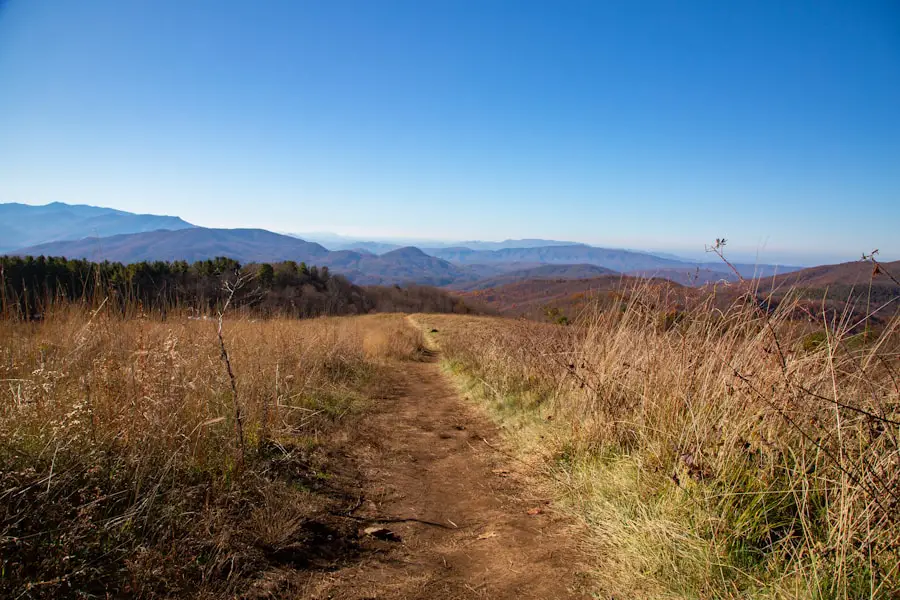
Duration and Acclimatization
For a first Appalachian Trail thru-hike, planning around six months is a reasonable starting point. A six- to seven-month plan provides more room for gradual conditioning, rest days, resupply, weather, and unexpected delays than a schedule built around aggressive mileage from the beginning.
A beginner who expects to need seven or eight months should look closely at a flip-flop itinerary rather than assuming a traditional NOBO or SOBO route will provide a comfortable weather window. The goal is to match your itinerary to your sustainable pace rather than forcing your pace to fit an arbitrary finish date.
Starting with Shorter Sections
New hikers can learn a great deal by completing shorter Appalachian Trail sections before committing to the full route. A weekend or week-long backpacking trip helps reveal whether your footwear fits properly, how much food you actually eat, how quickly you hike on steep terrain, whether your sleep system is warm enough, and which pieces of gear you rarely use.
Section hiking is also a valid way to complete the entire Appalachian Trail. ATC gives 2,000-miler recognition to hikers who finish the whole route over more than 12 months as well as to thru-hikers who finish within 12 months.
Building Confidence and Essential Skills
Shorter trips provide a safer setting for learning navigation, campsite selection, water treatment, food storage, weather awareness, first aid, pack management, and resupply planning. Those skills become increasingly important once a hiker is weeks or months into a long-distance trip.
Tips for Planning Your Hike Duration
Build Buffer Days Into Your Schedule
A rigid day-by-day itinerary is rarely realistic for a multi-month Appalachian Trail hike. Instead, estimate your normal mileage range and build enough flexibility for weather, rest, equipment problems, transportation, and unexpected trail closures.
A zero day every week is not mandatory, but many hikers benefit from occasional full or partial recovery days. It is better to finish with unused buffer time than to feel pressured into hiking through dangerous weather or significant pain because every day was preassigned.
Plan Resupply in Three- to Six-Day Segments
ATC says most long-distance hikers carry only three to six days of food at a time. Resupply can come from grocery stores, convenience stores, outfitters, restaurants, or mailed boxes. Your exact strategy can change as you learn what foods work for you.
Extra food is especially important when entering more remote sections or when high water, severe weather, or other delays could prevent you from reaching your expected resupply point.
Know the 2026 Permit Requirements
There is no single permit covering the entire Appalachian Trail. According to the current ATC permit guide, permits are required in three major areas:
- Great Smoky Mountains National Park: qualifying A.T. thru-hikers need a backcountry permit. As of 2026, the thru-hiker permit costs $44.50 and is obtained through Recreation.gov.
- Shenandoah National Park: overnight backcountry hikers need an advance permit. The permit is $9 per person plus a $6 reservation fee. A person entering on foot also needs the applicable park entrance pass.
- Baxter State Park: all A.T. hikers climbing Katahdin need a Long Distance Hiker Permit. It is free and obtained in person at Katahdin Stream Campground.
Fees, procedures, closures, and park rules can change, so verify the official requirements shortly before entering each area.
Check Current Trail Conditions
Trail mileage and conditions are not completely static. Storm damage, wildfires, flooding, maintenance projects, bear activity, bridge problems, and temporary reroutes can alter your schedule. Check ATC trail updates throughout your hike rather than relying solely on an itinerary created months earlier.
Safety Considerations for Long-Distance Hiking
Bears and Food Storage
Black bears live along almost the entire Appalachian Trail corridor. The most important protection is preventing bears from obtaining human food. The Appalachian Trail Conservancy recommends that overnight hikers use a hard-sided bear-resistant food storage container throughout their trip.
Food-storage requirements vary by land-management area. For example, a hard-sided canister is seasonally required on the Georgia section between Jarrard Gap and Neel Gap, while Great Smoky Mountains National Park requires food, trash, and scented items to be hung on the provided food-storage cables.
Keep a clean camp, never sleep with food, and store food, trash, toiletries, cookware, and other scented items correctly. Bear spray is optional on the A.T.; hikers who choose to carry it should learn how and when to use it safely rather than treating it as a replacement for proper food storage and bear behavior.
Warning: Bear regulations differ along the Trail. Follow the most restrictive rules for the land-management area you are entering and check current bear alerts before camping.
Treat Backcountry Water
Springs and streams provide much of the drinking water used by Appalachian Trail hikers, but clear-looking water can still contain microorganisms. ATC advises hikers to treat or filter backcountry water before using it for drinking, cooking, or cleaning.
Some seasonal sources can also dry up, particularly later in the year. Check current water information and carry enough capacity to bridge longer dry stretches.
First Aid and Emergency Planning
Carry a practical first-aid kit and know how to use it. Pay attention to persistent pain, illness, dehydration, heat stress, cold exposure, and worsening weather instead of assuming you must maintain your planned mileage at all costs.
Share your broad itinerary with a trusted person and update them when your plans change significantly. A phone can be useful for navigation, weather information, transportation, and communication, but battery power and service should never be your only emergency plan.
The Appalachian Trail is challenging precisely because no single daily mileage target works everywhere. A five-month hiker, a seven-month hiker, and a section hiker may experience the same route very differently. The best schedule is one that matches your fitness and available time while leaving enough flexibility to respond safely to weather, terrain, recovery needs, trail regulations, and changing conditions.
If you are planning a long hike like the Appalachian Trail, keeping your phone powered can make navigation and communication easier. The article 3 Portable Phone Chargers You Need for Your Next Getaway covers portable charging options. For other travel planning, you can also read about the Best Carry-On Suitcase with USB Charger or the Best Travel Scooter.
Love travel? Join Our Facebook Community
Frequently Asked Questions
What is the average time it takes to hike the entire Appalachian Trail?
Most Appalachian Trail thru-hikes take five to seven months. The Appalachian Trail Conservancy says the average is a week or two shy of six months.
What factors can affect the duration of an Appalachian Trail hike?
Fitness, daily mileage, pack weight, terrain, weather, rest days, injuries, resupply stops, town time, trail closures, start date, and whether you hike northbound, southbound, or flip-flop can all change the total duration.
What is the fastest known time for the Appalachian Trail?
As of July 27, 2026, the Fastest Known Time database lists Tara Dower’s 2024 southbound supported effort of 40 days, 18 hours, and 6 minutes as the overall supported Appalachian Trail FKT.
What is the slowest known time for hiking the Appalachian Trail?
There is no authoritative slowest thru-hike record comparable to an FKT. ATC defines a thru-hike as completing the entire Trail within 12 months; hikers who take longer are classified as section hikers.
What is a good starting pace for a beginner?
ATC guidance suggests beginner backpackers plan around 8–10 miles per day at first. Mileage can increase gradually as strength, efficiency, and endurance improve.
How many miles per day are needed to finish the Appalachian Trail in six months?
The raw calendar average for the 2,197.9-mile 2026 Trail is about 12 miles per day over six months, but hikers do not walk full mileage every day. Once zero days, resupply days, and delays are included, hiking days generally need to average substantially more than 12 miles to finish close to six months.
Do you need a permit to thru-hike the Appalachian Trail?
There is no single Trail-wide permit. Permits are required for overnight Appalachian Trail travel in Great Smoky Mountains National Park and Shenandoah National Park, and A.T. hikers climbing Katahdin need a Long Distance Hiker Permit from Baxter State Park.
Sources
- Appalachian Trail Conservancy — 2026 Official Mileage — official 2,197.9-mile Trail length and annual mileage changes.
- Appalachian Trail Conservancy — Thru-Hiker FAQs — average thru-hike duration and seasonal planning.
- Appalachian Trail Conservancy — Permits & Fees — current Smokies, Shenandoah, and Baxter permit requirements.
- Appalachian Trail Conservancy — Equipment & Food Resupply — long-distance resupply planning and typical food-carry intervals.
- Appalachian Trail Conservancy — Bears & Food Storage — bear safety, food-storage recommendations, and regulations.
- Fastest Known Time — Appalachian Trail — current and historical supported and self-supported FKT listings.
