
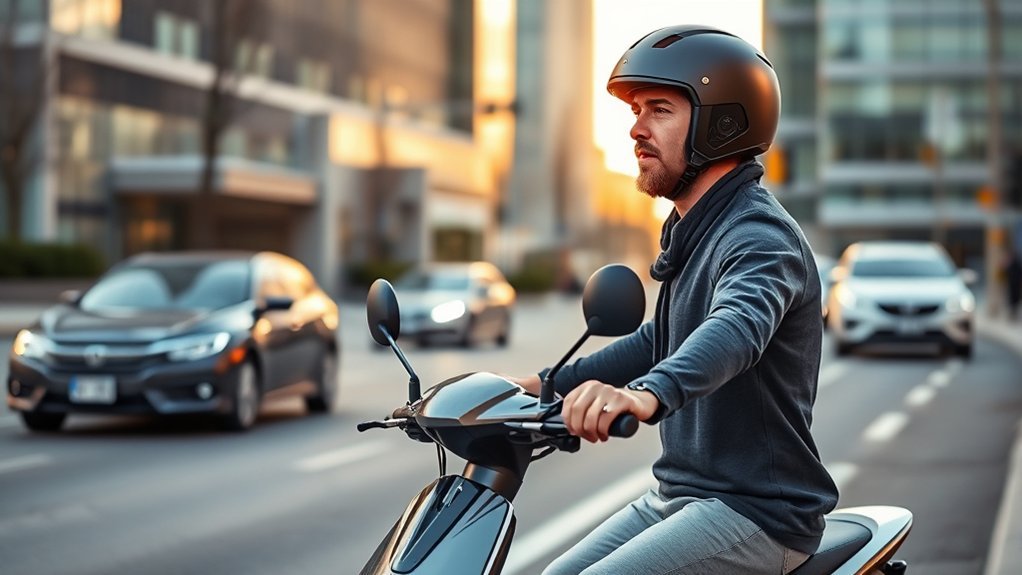
Last Updated on September 10, 2026 by Daniel Globe
Whether you legally need a helmet for an electric scooter depends on your age, location, and sometimes the scooter or rental program you use. Helmet laws vary widely between states and cities, so there is no single U.S. rule that applies everywhere. Even when a helmet is optional under local law, safety agencies recommend using appropriate head protection because falls and head injuries are common in e-scooter crashes.
Quick Answer
You may be legally required to wear an electric scooter helmet depending on your age and location. California requires helmets for riders under 18, New York requires them for e-scooter riders ages 16–17, Florida generally applies its under-16 bicycle helmet rule to motorized scooters, and Texas has no statewide scooter-helmet mandate although cities can add their own rules.
Key Takeaways
- Electric scooter helmet laws differ by state, city, rider age, and sometimes rental-company policy.
- California requires a helmet for riders under 18; New York’s statewide e-scooter helmet rule specifically covers riders ages 16–17.
- Florida generally requires riders under 16 to wear a compliant bicycle helmet, while Texas has no statewide micromobility helmet mandate.
- CPSC guidance says helmet choice should reflect scooter speed: bicycle-style protection may be appropriate below 20 mph when riding like a bicycle, while faster powered scooters call for more protective moped or motorcycle-style helmets.
- Replace a single-impact bicycle helmet after a significant crash even if damage is not obvious.
Disclosure: As an Amazon Associate I earn from qualifying purchases. Some links on this page are affiliate links, at no extra cost to you.
Do You Need a Scooter Helmet?
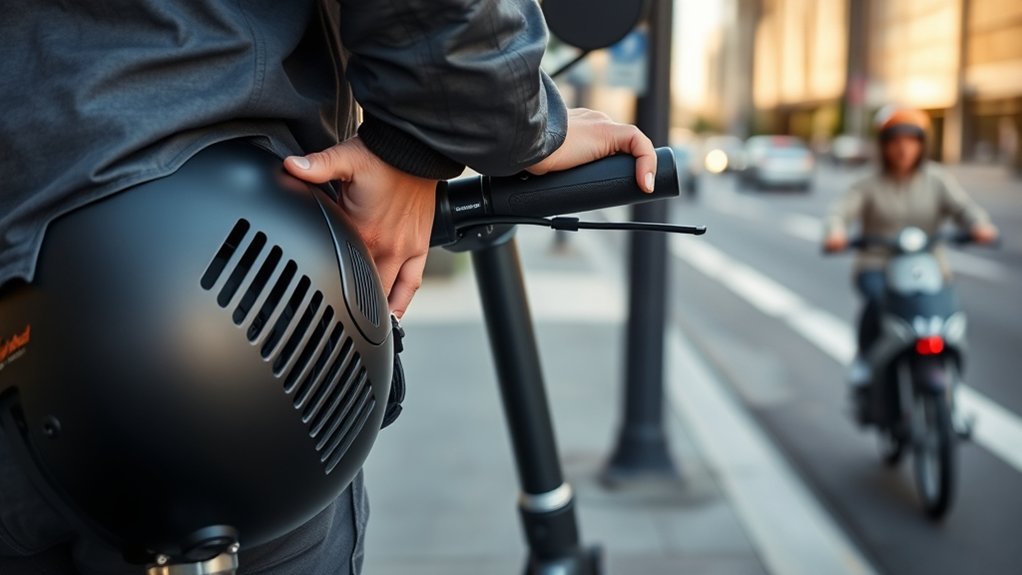
You need a scooter helmet whenever the law, property rules, your employer, or a rental provider requires one. When none of those rules applies, wearing a helmet is still a sensible safety choice.
The legal question and the safety question are different. An adult may legally ride without a helmet in some places, but that does not mean riding bareheaded is low risk. Electric scooters have small wheels, a standing riding position, and relatively little protection around the rider. Falls, pavement defects, braking errors, and collisions can all send a rider forward quickly.
Research does not support using a single universal claim such as “helmets reduce e-scooter head injuries by 70%.” Studies use different populations and methods. What the evidence does support is that head injuries are an important part of e-scooter trauma and that helmet use is a practical protective measure.
Warning: Scooter laws can change at the state, county, and city level. Rental operators and private properties may also impose stricter rules. Check the current official rule for the exact place where you will ride before relying on a general state summary.
What Are the Helmet Laws by State?
There is no single nationwide electric scooter helmet rule in the United States. The examples below show why checking both state and local rules matters.
| Location | General Helmet Rule | Important Detail |
| California | Required for motorized-scooter riders under 18. | State law also prohibits operation by riders under 16 and requires a valid driver’s license or instruction permit for public-road operation. |
| New York | Required for electric-scooter riders ages 16 and 17. | New York does not allow a person under 16 to operate an electric scooter under the state framework. NYC also recommends helmets for all riders. |
| Florida | The state’s motorized-scooter law generally carries over applicable bicycle duties, including the helmet requirement for riders under 16. | Local governments may establish additional operating and minimum-age rules. |
| Texas | No statewide bicycle or micromobility helmet mandate. | Local ordinances can be stricter. Austin, for example, requires helmets for riders age 17 and younger. |
These examples are not a substitute for checking the law where you actually ride. City rules can regulate sidewalks, bike lanes, parks, speed, parking, minimum rider age, and helmet use even when state law is less restrictive.
Where Are Helmets Required?
Helmets may be required in more situations than a simple state-law search suggests. You should check all rules that apply to your ride.
- State law: Some states impose a helmet requirement based on rider age.
- City or county ordinances: Local governments may create stricter micromobility rules where state law allows them to do so.
- Shared-scooter programs: A rental provider may set an age requirement or safety condition that is stricter than the general law.
- Private property: Campuses, workplaces, resorts, parks, or private communities may impose their own riding and helmet rules.
- Other countries: Helmet requirements can be much stricter outside the United States. For example, legal e-scooter riding in New South Wales trial areas requires an approved helmet, and Queensland requires personal-mobility-device riders to wear an approved bicycle or motorbike helmet.
Do not assume a rule you learned in one city follows you into the next. Scooter regulation remains highly local.
Who Has to Wear a Helmet?
The rider groups most likely to face mandatory helmet rules are children and teenagers, but the exact age cutoff varies. California uses under 18. New York’s electric-scooter rule applies to riders who are 16 or 17. Florida generally applies its under-16 bicycle helmet requirement to motorized scooters. Texas leaves helmet requirements largely to local governments.
Adults are often exempt from mandatory helmet rules for ordinary low-speed scooters, but an exemption is not a statement that helmets are unnecessary. Adults can suffer the same kinds of head and facial injuries in a crash.
Also check the scooter itself. A high-powered device capable of sustained speeds well above ordinary bicycle speeds may fall under different legal definitions or require a different type of helmet than a basic low-speed commuter scooter.
The safest way to interpret a helmet exemption is “not legally mandatory here,” not “head protection has no benefit.”
When Can You Skip a Helmet?
You can legally ride without a helmet only when no applicable law, ordinance, property rule, employer requirement, or rental agreement requires one. That commonly applies to adults in jurisdictions with age-based helmet laws.
- No applicable helmet mandate: An adult rider may be legally permitted to ride without one.
- Age-based exemption: You may be above the age covered by your state or local rule.
- No stricter local ordinance: Your city or county must not impose an additional requirement.
- No operator or property requirement: A rental company, workplace, campus, or private property may still require one.
Legal permission does not remove crash risk. If you choose to ride, using a properly fitted helmet is a low-effort way to add head protection.
Outside the United States, do not assume U.S. exemptions apply. Australian jurisdictions provide a useful example: New South Wales requires approved helmets when using shared e-scooters in its legal trial areas, while Queensland requires approved head protection for personal-mobility-device riders.
What Happens If You Ride Without One?
If a helmet is legally required and you ride without one, the consequences depend on the jurisdiction. You may receive a warning, citation, or fine. Some laws offer special procedures for first violations. New York, for example, allows a civil fine of up to $50 for violating its age-based e-scooter helmet rule and provides circumstances in which a first fine can be waived.
Do not assume that riding without a helmet automatically voids insurance coverage or automatically makes you legally responsible for your injuries. Those questions depend on the law, the insurance policy, and the facts of the crash. New York’s e-scooter helmet statute expressly states that failure to comply with its helmet rule does not itself constitute contributory negligence or assumption of risk.
Note: This article provides general safety and legal information, not legal advice. If a crash, citation, injury claim, or insurance dispute has already occurred, the applicable local law and policy terms should be reviewed individually.
What Other Safety Gear Should You Wear?
A helmet is the most obvious piece of protective equipment, but other gear can reduce exposure to common fall injuries and make you easier to see.
- Knee and elbow pads: Helpful for protecting joints and skin during a fall, especially for new riders.
- Grip gloves: Improve handlebar grip and help protect your palms if you put your hands out during a fall.
- Reflective or high-visibility clothing: Makes you easier for drivers and cyclists to spot in poor light.
- Closed-toe footwear: Choose shoes with secure soles and good traction. Avoid footwear that can slide off easily.
- Front and rear lights: Use working lights whenever visibility is poor and whenever local law requires them.
Safety gear works best alongside safe riding habits. Before leaving, check the brakes, tires, steering column, lights, and folding mechanism. Avoid riding while impaired, reduce speed on rough pavement, and keep both hands available for control whenever possible.
How Do You Choose a Scooter Helmet?
A good electric scooter helmet must match your riding speed, fit your head correctly, and carry an appropriate safety certification.
For slower scooters used in a bicycle-like way, a bicycle helmet meeting the U.S. Consumer Product Safety Commission’s 16 CFR Part 1203 bicycle helmet standard may be appropriate. CPSC’s activity-specific guidance says this can apply when a powered scooter is used below 20 mph in a manner similar to a bicycle or kick scooter.
For a powered scooter capable of maintaining speeds of around 20 mph or more, especially where you regularly mix with motor vehicles, CPSC points riders toward more protective moped or motorcycle-style helmets. A U.S. motorcycle helmet should carry the applicable DOT certification required under Federal Motor Vehicle Safety Standard No. 218.
Do not treat CPSC, ASTM, EN 1078, and motorcycle standards as interchangeable labels. The standard you need depends on the helmet type, local law, and riding environment. In the United States, if a law specifically requires a CPSC-compliant bicycle helmet, an overseas certification by itself may not satisfy that legal requirement.
Pro Tip: Check the actual certification label inside the helmet rather than relying only on the product name, shape, or marketing description. A novelty helmet that merely looks protective may not meet any recognized impact standard.
What Helmet Tips Make Riding Safer?
The best helmet is one that is appropriate for your riding conditions, fits correctly, remains securely fastened, and is replaced when its protective structure may have been damaged.
Choose Proper Certification
Start by deciding what type of protection your scooter use calls for. For ordinary low-speed riding, look for a bicycle helmet carrying the certification required in your country or jurisdiction. In the United States, CPSC 16 CFR Part 1203 is the federal bicycle-helmet standard.
If your scooter can sustain higher speeds, do not assume a lightweight bicycle helmet is the best match simply because it is comfortable. Follow CPSC’s activity guidance and consider moped or motorcycle-type protection for faster powered-scooter riding.
- Find the certification label on or inside the helmet.
- Match the helmet type to your scooter’s real operating speed.
- Avoid toy or novelty helmets that do not identify a recognized standard.
- Follow the helmet manufacturer’s instructions for use, care, and replacement.
Ensure Snug Fit
A helmet protects properly only when it stays in the intended position. It should sit level on your head rather than tilted far back, cover the forehead appropriately, and remain stable when you shake or nod your head.
Adjust the retention system and chin strap according to the manufacturer’s directions. The fit should be secure without creating painful pressure points. If the helmet continues to slide or wobble after adjustment, try a different size or model rather than adding unapproved padding.
Comfort still matters. Ventilation, weight, and washable padding can make it easier to wear the helmet consistently, especially on warm or longer rides.
Boost Visibility Gear
A helmet cannot prevent a vehicle from failing to see you, so visibility should be part of your safety setup. Bright helmet finishes, reflective material on clothing or a backpack, and working scooter lights can make you more noticeable in traffic.
- Choose visible or high-contrast gear where practical.
- Use reflective material when riding in low light.
- Turn on required front and rear lights before visibility deteriorates.
- Keep reflective and illuminated surfaces clean and unobstructed.
Replace a Helmet After an Impact
Many bicycle helmets are designed to manage one significant impact. The crushable liner can absorb energy even when the damage is difficult to see from the outside. CPSC therefore advises replacing a single-impact helmet after an impact event for which it was designed to provide protection.
You should also replace a helmet if you find a cracked shell, crushed or deteriorated liner, damaged straps, missing pads, or other structural damage. Follow the manufacturer’s replacement instructions for age-related replacement because materials and recommendations differ between helmet models.
Frequently Asked Questions
Can I Ride a Scooter Without a Helmet?
Possibly. Adults can legally ride without a helmet in some jurisdictions, but age-based state laws, local ordinances, rental rules, workplace policies, or private-property rules may still require one. Check the exact location before riding.
What Happens if You Get Caught on an Electric Scooter?
The result depends on which rule you violated. Helmet, speed, sidewalk, age, equipment, and parking violations may carry warnings or fines. More serious behavior, such as impaired or dangerous riding, can have significantly greater consequences.
Can a 10 Year Old Ride an Adult Electric Scooter?
A 10-year-old should not be placed on an adult electric scooter unless the manufacturer specifically permits that age and size and local law allows it. Many public-road rules and shared-scooter programs impose higher minimum ages. California, for example, prohibits motorized-scooter operation by riders under 16 on public roads covered by its scooter law.
What Is the Most Common Injury on a Scooter?
There is no single injury that dominates every study. Head and facial injuries and upper-extremity injuries are consistently common, and fractures are frequently reported. Falls are also a leading crash mechanism in e-scooter injury research.
Are Helmets Required on Rental Electric Scooters?
It depends on the city, your age, and the rental provider. A company may also set a minimum age or helmet policy that is stricter than the general state law. Always review the in-app rider agreement and local rules before starting the trip.
What Type of Helmet Should I Wear on an Electric Scooter?
For slower scooter use below about 20 mph in bicycle-like conditions, a properly certified bicycle helmet may be appropriate. For powered scooters capable of sustained speeds around 20 mph or higher, CPSC guidance points toward more protective moped or motorcycle-style helmets.
Should I Replace My Helmet After a Scooter Crash?
Yes if a single-impact helmet took a significant impact. Damage to the energy-absorbing liner may not be obvious from the outside. Replace it after such an impact and whenever the shell, liner, straps, or retention system shows meaningful damage.
Conclusion
You do not need an electric scooter helmet everywhere, but you should never assume you are exempt simply because you are an adult. Helmet rules depend on rider age, state law, local ordinances, and sometimes rental or property policies. Before riding, verify the current rule, use a helmet appropriate for your scooter’s speed, fit it correctly, and replace it after a significant impact. A helmet cannot prevent every injury, but it adds an important layer of protection when a fall or collision happens.
Sources
- U.S. Consumer Product Safety Commission — Which Helmet for Which Activity? — helmet standards, fit, powered-scooter guidance, and replacement after impact.
- California Legislative Information — Vehicle Code Article 5 — California motorized-scooter helmet, age, license, roadway, and operating rules.
- New York State Senate — Vehicle & Traffic Law §1286 — New York’s age-based electric-scooter helmet requirement and civil-penalty provisions.
- Florida Senate — Florida Statute §316.2128 — motorized-scooter duties and local-government authority.
- City of Austin Vision Zero — Texas statewide helmet context and Austin’s local under-18 helmet rule.
- PubMed — Injury Patterns of Electric-Scooter Related Trauma — systematic review of common e-scooter injuries and helmet-use patterns.
