Last Updated on September 27, 2026 by Caleb Warren
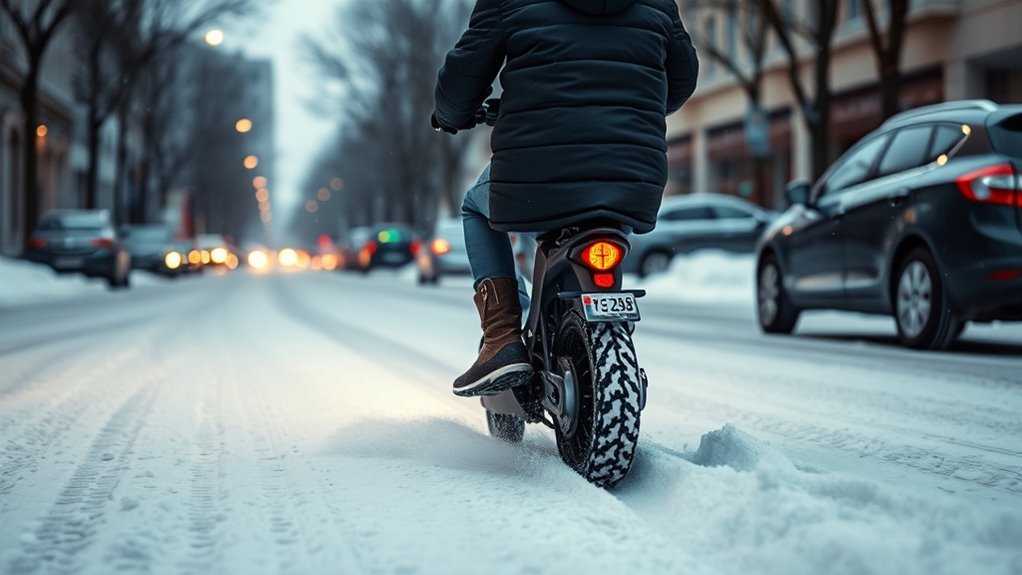
You can ride an electric scooter in snow under limited conditions, but snowy roads carry serious traction risks. Light snow on a cleared surface is very different from packed snow or hidden ice. Your scooter’s tires, water resistance, battery condition, and manufacturer instructions all matter before you decide to ride.
Quick Answer
Yes, some electric scooters can handle light snow, but riding on snow or ice is generally best avoided. Only consider a short ride on a cleared, visible route if your manufacturer permits it. Use suitable tires, reduce speed, and brake gently. Never ride through deep snow, standing slush, or suspected black ice.
Key Takeaways
- Cold weather reduces battery output and range, even when the scooter operates normally.
- Studded tires can improve ice traction, but they cannot make an icy road safe.
- Water resistance does not mean a scooter is waterproof or approved for snowy conditions.
- Charge only within your manufacturer’s permitted battery-temperature range.
- Remove road salt after riding to reduce corrosion around exposed components.
Disclosure: As an Amazon Associate I earn from qualifying purchases. Some links on this page are affiliate links, at no extra cost to you.
Can You Ride an Electric Scooter in Snow?
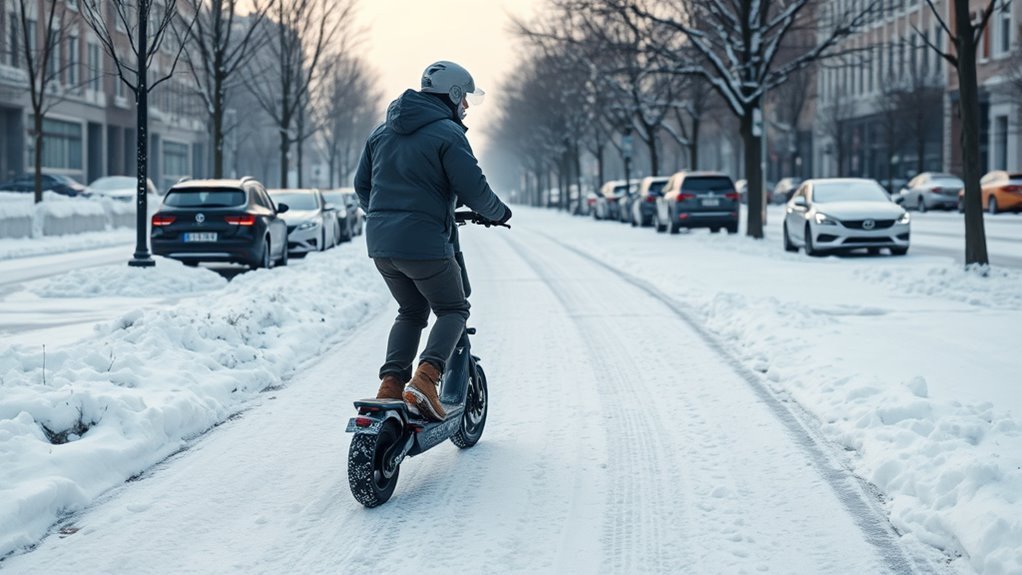
Riding an electric scooter in light snow is physically possible, but that does not mean your particular scooter is designed for it. Snow reduces tire grip, increases stopping distance, and can hide dangerous ice underneath.
For example, Xiaomi’s Electric Scooter 6 Essential guidance advises against riding in rainy or snowy weather. Its water-resistance rating does not remove the risks of slippery surfaces and poor visibility.
Before considering a winter ride, assess three things:
- Surface: Is the route cleared, predictable, and free from visible or suspected ice?
- Scooter: Does your manual permit operation in the current temperature and weather?
- Rider: Can you maintain control, visibility, and enough battery reserve to return safely?
Wear a helmet, keep both hands on the handlebars, and choose a short route with good lighting. Avoid abrupt steering or braking.
If you encounter ice or unexpectedly deep snow, stop somewhere safe and walk the scooter rather than trying to power through.
Which Electric Scooters Handle Winter Best?
Electric scooters with suitable tires, dependable mechanical brakes, effective suspension, and documented water resistance are better equipped for cold-weather use. However, no combination of these features guarantees safe riding on snow or ice.
The NAVEE ST3 Pro is one example of a scooter with useful features for challenging conditions. Its specifications include traction control, suspension, and multiple braking components.
These features do not establish that it is snow-certified or suitable for riding through winter storms.
Best Winter Tire Types
Tire design affects how your scooter handles loose snow, wet pavement, and frozen surfaces. Different tire types solve different problems.
- Pneumatic tires: Air-filled tires provide cushioning and can conform to uneven surfaces.
- Studded tires: Metal studs can improve traction on ice when the tires are suitable for your scooter.
- Wider tires: A wider setup may improve stability and flotation in loose snow, depending on the tire design.
- Off-road tires: Deeper tread can improve traction on loose surfaces and rough paths.
- Self-sealing tires: These can reduce certain puncture problems, but puncture protection does not automatically improve winter grip.
Choose tires designed for your wheel size and rim. Check clearance around the frame, brakes, and fenders before changing tire dimensions.
Snow-specific accessories must also be compatible with the scooter. Never assume that a tire or studding kit designed for another model will fit yours.
Key Cold-Weather Features
Water resistance, predictable braking, and controlled acceleration are especially useful in cold weather. Strong motor output can help a scooter move through resistance, but extra power does not create additional tire grip.
According to the NAVEE ST3 Pro specifications, the US model includes:
- 10-inch self-sealing tubeless tires.
- Front and rear Damping Arm suspension.
- Traction Control System (TCS).
- A front drum brake, rear disc brake, and rear electronic braking system.
- IPX5 water resistance.
Traction control can help limit wheel slip during acceleration. Suspension helps the wheels follow uneven surfaces, while multiple braking components provide different ways to slow the scooter.
However, none of these features makes ordinary street tires equivalent to studded winter tires.
The ST3 Pro’s official specification is IPX5, not IP65. Its standard tires are self-sealing rather than studded.
When comparing scooters, verify the exact version sold in your country. Motor output, maximum speed, and other specifications can vary between regional models.
How Cold Weather Affects Scooter Performance
Cold weather reduces the amount of energy a lithium-ion battery can deliver efficiently. As temperatures fall, your scooter may accelerate more slowly, display less available range, or limit power to protect its battery.
A rough planning estimate is a 20–50% reduction in range under harsh winter conditions. This is not a universal figure. Actual losses depend on the scooter, battery temperature, terrain, speed, wind, and rider weight.
Other winter effects include:
- Greater rolling resistance when riding through snow or slush.
- Reduced tire pressure as air temperature drops.
- Longer stopping distances on slippery surfaces.
- Reduced acceleration when battery protection limits output.
- Charging restrictions when the battery becomes too cold.
Cold-related range loss can be temporary. However, improper charging at low temperatures can cause lasting battery damage.
For trip planning, compare your expected round-trip distance with your scooter’s actual winter performance rather than its advertised maximum range.
Keep enough reserve to return without draining the battery completely. A portable manufacturer-approved charger may help on a longer trip, but only when a suitable indoor charging location is available.
What Winter Tires Make Scooters Safer?
Winter tires can improve traction, but the best choice depends on whether you encounter loose snow, packed snow, or ice. No tire eliminates the risk of losing control.
The following comparison explains the differences.
| Tire type | Main advantage | Important limitation |
|---|---|---|
| Pneumatic | Cushioning and surface contact | Ordinary road tread has limited ice traction. |
| Studded | Improved grip on ice | Compatibility, pavement behavior, and local rules matter. |
| Off-road | Traction on loose surfaces | Deep tread alone cannot provide reliable ice grip. |
| Solid | Resistance to punctures | Less cushioning and limited ability to conform to uneven ground. |
Tire Tread Matters
Deeper tread can help a tire grip loose snow and move slush away from its contact area. Worn, smooth tires provide less useful traction on challenging winter surfaces.
Inspect the tread for excessive wear, cracking, embedded debris, and uneven damage before riding.
Cold weather also reduces air pressure in pneumatic tires.
Warning: Do not deliberately underinflate your scooter tires below the manufacturer’s recommended range. Although lower pressure can increase the contact patch in some conditions, excessive underinflation can damage the tire, reduce steering control, and increase puncture risk.
Use the pressure specified for your scooter and tire combination. Check it with a suitable gauge when the tires are cold.
Studded Vs Pneumatic Tires
Studded and pneumatic describe different tire characteristics. A tire can be both air-filled and studded.
Pneumatic describes how the tire is supported by air. Studded describes the addition of traction studs in its tread.
Studded winter tires are designed to improve grip on frozen surfaces. Ordinary pneumatic road tires provide cushioning but may still slide on ice.
If your route regularly develops ice, choosing another mode of transportation is safer than relying on a tire upgrade alone.
What to Wear for Cold-Weather Scooter Riding
Winter scooter clothing should keep you warm without restricting steering, braking, or visibility. Wind resistance matters because you remain exposed while moving.
Use several comfortable layers instead of one bulky garment.
- Helmet: Wear a properly fitted helmet. A compatible full-face design can provide additional protection from cold wind.
- Jacket and pants: Choose wind-resistant outer layers with insulating clothing underneath.
- Gloves: Use warm, moisture-resistant gloves that allow you to operate both brake levers comfortably.
- Boots: Wear waterproof footwear with a grippy sole.
- Face protection: A balaclava or face covering can protect exposed skin from icy wind.
- Eye protection: Suitable cycling glasses or goggles can reduce discomfort from wind and blowing snow.
- Visibility: Add reflective clothing and use your scooter’s working lights.
Make sure loose clothing, straps, and accessories cannot catch in moving parts.
Practice operating the throttle and brakes while wearing your winter gloves before leaving.
How to Ride Safely on Snow and Slush
If your manufacturer permits the conditions and the route is clear, use smooth movements and leave extra room for stopping. Riding technique cannot compensate for ice or inadequate tires.
Follow these precautions:
- Inspect the scooter. Check tire condition, pressure, brakes, lights, and folding locks.
- Choose a low-speed setting. Avoid aggressive acceleration and unnecessary power delivery.
- Accelerate gradually. Sudden torque can cause the driven wheel to spin.
- Brake early. Apply the brakes progressively instead of waiting until the last moment.
- Turn gently. Avoid sharp steering changes while crossing slippery areas.
- Stay balanced. Keep both hands on the handlebars and your knees slightly relaxed.
- Stop when traction becomes uncertain. Move to a safe place before stepping off and walking the scooter.
Do not assume that regenerative or electronic braking will prevent skidding. Tire traction still limits how quickly any braking system can stop the scooter.
| Risk | What You Do | Why It Helps |
|---|---|---|
| Slipping | Accelerate, steer, and brake gently | Reduces sudden demands on tire grip |
| Poor visibility | Use working lights and reflective clothing | Helps others see you |
| Corrosion | Remove salt after rides | Protects exposed components |
Leave more distance from other road users than you normally would. Avoid carrying anything on the handlebars that could affect steering.
Where to Ride an Electric Scooter in Winter
Cleared, well-lit routes with predictable pavement are more suitable than untreated roads or snow-covered trails. Always follow local scooter rules and respect path closures.
Consider these route characteristics:
- Cleared bike lanes: Prefer maintained lanes where scooters are permitted and the surface is visibly free from ice.
- Quiet streets: Use low-traffic routes only where local regulations allow scooter use.
- Maintained parks: Choose open paths with reliable snow removal.
- Small-town routes: Look for predictable, cleared surfaces rather than assuming every quiet road is safe.
- Busy areas: Avoid congested routes where pedestrians, vehicles, and sudden stops leave little room to react.
Pay particular attention to shaded sections, drainage areas, intersections, and bridges.
The National Weather Service explains that black ice can form when melted snow or rain refreezes. It may be nearly invisible, especially during early morning conditions.
A road that looks wet can therefore be more dangerous than it appears.
How to Protect Your Battery in Freezing Weather
Keep your scooter battery within its manufacturer-approved operating, charging, and storage temperatures. Cold weather can reduce available power, while charging a battery that is too cold may cause permanent damage.
Store the scooter in a dry, temperature-controlled location whenever possible.
Warm Battery Before Ride
A battery stored indoors generally starts a cold-weather trip in better condition than one left outside overnight. However, you should never use direct heat to warm it quickly.
Before your ride:
- Check the battery level and any temperature-related warning.
- Allow a cold scooter or removable battery to warm naturally indoors.
- Check the manufacturer’s permitted operating-temperature range.
- Plan for reduced winter range and avoid fully draining the battery.
- Use only an approved charger if you expect to recharge during your trip.
Never place the battery beside a heater, radiator, or open flame.
If the scooter limits power or displays a temperature warning, follow the manufacturer’s instructions instead of trying to override its protection system.
Charge Indoors Only
Indoor charging is generally preferable in winter because it provides a more stable temperature and protects the charger from snow and moisture.
The correct charging-temperature range depends on your model.
For example, Segway’s E2 Pro specifications list a charging-temperature range of 0–40°C (32–104°F). Other models can have different limits.
After a cold ride, let the battery warm naturally until it reaches the permitted charging temperature.
Warning: Never charge a wet or damaged scooter, use an incompatible charger, or leave the battery charging while you sleep. Keep the charging area away from combustible materials and do not block an exit.
The US Consumer Product Safety Commission’s micromobility guidance recommends using the manufacturer-approved charger, remaining present during charging, and unplugging the device when charging is complete.
If your scooter will remain unused for an extended period, follow its recommended storage charge level and maintenance schedule.
How to Clean and Store Your Scooter After Rides
Winter maintenance helps prevent moisture and road salt from damaging your scooter. Clean it promptly after any ride that exposes it to slush, grit, or treated roads.
Use the following routine:
- Turn off the scooter. Disconnect the charger and allow components to cool.
- Remove loose dirt. Use a soft brush or microfiber cloth around the deck and frame.
- Wipe away salt. Use a slightly damp cloth with mild soap where appropriate.
- Dry the scooter. Pay attention to accessible fasteners, hinges, and exposed metal.
- Inspect the tires and brakes. Look for damage, trapped debris, and unusual wear.
- Check exposed metal. Inspect bolts and folding joints for early corrosion.
- Store it indoors. Keep the scooter in a dry location within its permitted storage-temperature range.
Never submerge the scooter, use a pressure washer, or spray water directly into electrical openings.
Use an appropriate corrosion inhibitor only where the manufacturer permits it. Keep oils and sprays away from braking surfaces, tires, and electrical contacts.
For additional battery care, Xiaomi’s Electric Scooter 3 Lite maintenance guidance recommends dry storage and avoiding prolonged outdoor exposure to harsh temperatures, rain, and snow.
Before your next ride, make sure the charging port and other exposed areas are completely dry.
When to Skip Winter Scooter Riding
Skip your scooter ride when the road surface, visibility, or weather makes reliable control doubtful. Even suitable tires and good technique cannot make every winter journey safe.
Do not ride during:
- Heavy snowfall or blizzard conditions.
- Freezing rain or suspected black ice.
- Deep snow, deep slush, or standing water.
- Dense fog or blowing snow that limits visibility.
- Conditions outside your scooter’s permitted operating-temperature range.
- Weather that leaves your hands numb or prevents normal brake control.
A wind chill below -15°C (5°F) is a sensible conservative reason to cancel a scooter trip, but it is not a universal safety threshold. Dangerous cold exposure can occur at warmer temperatures too.
The CDC’s frostbite guidance identifies numbness, unusual skin color, and firm or waxy skin as warning signs of cold injury.
If you notice these symptoms, get somewhere warm and seek appropriate medical care.
Note: There is no single temperature at which every electric scooter becomes unsafe. Your model’s specifications, pavement conditions, exposure time, and personal cold tolerance all affect the decision. Follow your manufacturer and local safety guidance.
Frequently Asked Questions
Is It Safe to Use an Electric Scooter in Snow?
Riding an electric scooter on snow is generally best avoided. Light snow on a cleared route may be manageable with a suitable scooter, but slippery surfaces can cause sudden falls. Follow your manufacturer’s restrictions, use appropriate tires, and never assume that snow-covered pavement is free from ice.
Will My E-Scooter Break if I Ride It in a Snow Storm?
A snowstorm can damage your electric scooter, although damage is not guaranteed. Snow, meltwater, and road salt can affect electrical connections, brakes, and exposed metal. Heavy snow also increases rolling resistance and crash risk. Avoid storm conditions, follow your manual, and inspect the scooter after winter exposure.
What Electric Scooter Can Go in the Snow?
Choose a scooter whose manufacturer permits the expected conditions and whose tires suit the route. The NAVEE ST3 Pro has suspension, traction control, and IPX5 water resistance, but its standard tires are not studded winter tires. These features do not establish approval for riding through snow or ice.
Can Electric Scooter Batteries Freeze?
Electric scooter batteries can become too cold to operate or charge normally. Freezing outdoor temperatures do not automatically mean the battery itself has physically frozen. Cold reduces lithium-ion battery performance, and charging outside the permitted temperature range can damage the cells. Let the battery warm naturally before charging.
Conclusion
You can ride an electric scooter in light snow under limited conditions, but clear pavement is the safer choice. Suitable tires, careful braking, proper clothing, and battery maintenance can reduce some winter risks without eliminating them.
Before riding, assess the actual route and follow your scooter manufacturer’s instructions. If ice, heavy snow, or poor visibility makes control uncertain, leave the scooter at home.
Sources
- Xiaomi — Electric Scooter 6 Essential FAQ: Snow-riding restrictions, water resistance, and cold-weather battery behavior.
- NAVEE — ST3 Pro Official Specifications: Tires, suspension, traction control, braking, and IPX5 rating.
- Intertek — Ingress Protection Testing: Interpretation of IP water- and dust-resistance ratings.
- Segway — E2 Pro Support and Specifications: Manufacturer-defined battery charging temperatures.
- National Weather Service — Ice Storms: Black ice and winter road hazards.
- US Consumer Product Safety Commission — Micromobility Safety: Safe scooter operation and battery charging.
- CDC — Preventing Frostbite: Cold-exposure risks, symptoms, and protective measures.
- Xiaomi — Electric Scooter 3 Lite FAQ: Cold-weather range, cleaning, battery maintenance, and storage guidance.