
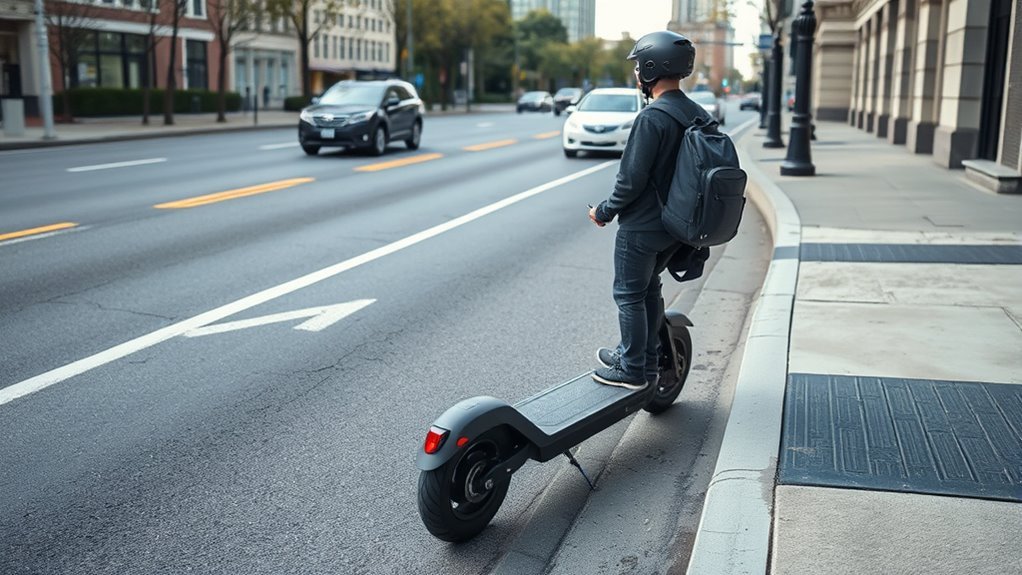
Last Updated on August 21, 2026 by Caleb Warren
You can usually ride an electric scooter on roads, bike lanes, and many bike paths or multi-use trails where local law allows bicycles. You generally can’t ride on sidewalks unless your state or city expressly permits it, and a few states — including Pennsylvania — bar public riding almost entirely. Low-speed streets, often 25–30 mph or less, are typically allowed. Age, helmet, license, and speed rules vary widely by state, so checking local ordinances before you roll is the only way to know exactly where you stand.
Quick Answer
In most states, you can ride an electric scooter on roads, bike lanes, and paths open to bicycles — usually where the posted speed limit is 25–30 mph or lower. Sidewalks are typically off-limits. A handful of states, like Pennsylvania, effectively ban public riding altogether, so always confirm your state and city’s specific rules first.
Key Takeaways
- Roads, bike lanes, and low-speed streets (usually ≤25–30 mph) are your default legal riding zones in most states.
- Sidewalk riding is banned in the majority of states, with narrow exceptions like entering or exiting adjacent property.
- Age, helmet, and license rules differ by state — 16+ is common, but some states set the bar lower or higher.
- A few states (Pennsylvania) still effectively prohibit public e-scooter riding, while others (Delaware) have recently legalized it.
- City ordinances can be stricter than state law — always check both before you ride, and check again if you’re traveling.
Note: Scooter laws change frequently at both the state and city level. This guide reflects rules current as of 2026, but it’s general information, not legal advice — confirm current requirements with your local transportation department or police department before you ride.
Disclosure: As an Amazon Associate I earn from qualifying purchases. Some links on this page are affiliate links, at no extra cost to you.
Where Can You Ride an Electric Scooter?
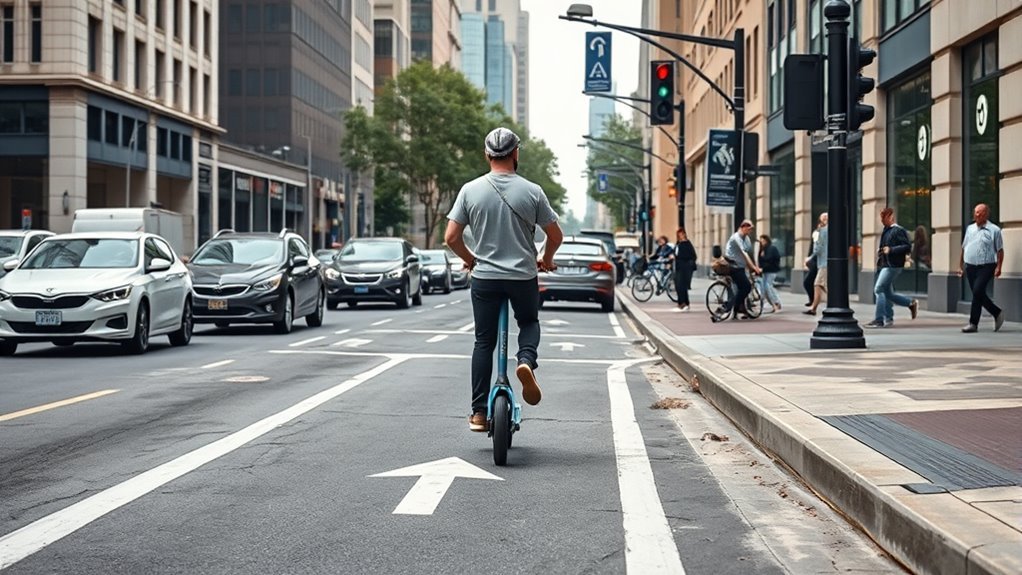
Most jurisdictions treat electric scooters similarly to bicycles: you can ride on roads, in designated bike lanes, and on many multi-use paths and trails where local rules allow it. Sidewalk riding is banned in most states to protect pedestrians, though a small number of cities allow it under limited conditions — usually only where no bike lane exists. Low-speed residential streets, typically posted at 25 mph or lower, are commonly permitted as well. Because cities can add their own restrictions on top of state law — banning scooters from certain plazas, parks, or downtown cores — you should check municipal rules every time you ride somewhere new, not just once.
Where Are Electric Scooters Legal?
Electric scooters are legal in the large majority of U.S. states, generally on streets and bike lanes where bicycles are permitted. But state law sets the outer boundary, and cities can narrow it further — restricting sidewalk use, park access, or trail riding even where the state itself is permissive. A small number of states still limit or effectively prohibit public scooter riding, so check both your state code and your city’s ordinances before assuming a rule applies everywhere.
State-by-State Rules
Rules vary considerably by state, and legality often comes down to where you ride, how old you are, and what your city adds on top of state law. Here’s a snapshot of a few representative states — always verify your own state’s current code before riding:
- California: streets and bike lanes only (not sidewalks, except to cross to adjacent property); riders must be 16+ with a valid driver’s license or learner’s permit; helmets required under 18; capped at 15 mph.
- Florida and Texas: roads, bike lanes, and bike paths are generally allowed, with no statewide helmet mandate for adults.
- New York: sidewalks are banned statewide, riders must be 16+, and helmets are required for 16- and 17-year-olds. New York City has added its own citywide 15 mph speed limit for e-scooters.
- Delaware: as of a 2025 law change, “low-speed” scooters (15 mph or under) are now legal on streets, bike lanes, and multi-use paths for riders 14 and up, with helmets required under 18 — sidewalks and rental/shared scooters are still not allowed.
- Pennsylvania: one of the strictest states — e-scooters are classified with motor-driven cycles and can’t meet titling, registration, or inspection requirements, so public roads and sidewalks are effectively off-limits statewide except for occasional local pilot programs.
Because these rules shift often — Delaware’s changed in 2025, and Pennsylvania has pending legislation that could change its rules too — treat any single source, including this one, as a starting point rather than the final word.
Local Riding Limits
Even where state law permits e-scooters, local ordinances often decide where you can actually ride. Cities can add scooter-specific lanes, low-speed zones, or tighter sidewalk bans than the state requires. In many places you can ride on bicycle paths and roads open to bicycles, but sidewalks remain off-limits in most jurisdictions, with only narrow exceptions — such as briefly crossing a sidewalk to reach a driveway or building entrance. Some cities also designate residential streets posted at 25 mph or under as scooter-friendly. Check local signage, city maps, and municipal codes before you ride, since enforcement and specific limits can vary block to block in dense areas.
Which Sidewalks Ban Electric Scooters?
Sidewalk riding is prohibited in most states, and you should treat that as binding law rather than a suggestion — enforcement exists because scooters moving at 10–15 mph pose a real risk to pedestrians. California allows sidewalk use only to enter or exit adjacent property. New York bars sidewalk riding entirely, limiting riders to streets posted at 30 mph or lower. Several states leave the sidewalk question to local governments, meaning your city or county ordinance can tighten or loosen the rule. Pennsylvania forbids scooters on sidewalks — and, unlike most states, on public roads too, since e-scooters there can’t meet motor-vehicle registration requirements.
- Check your state statute first.
- Read your city or county ordinance next — it can be stricter than the state.
- Confirm any narrow property-access exception before assuming it applies.
Knowing the exact sidewalk rule where you ride is the simplest way to avoid a citation.
Which Roads and Paths Allow Electric Scooters?
Start with bicycle paths and multi-use trails, since many jurisdictions allow electric scooters there when local rules permit it — these routes keep you apart from faster traffic. On roads, most states let you ride where the speed limit is 25–30 mph or lower, keeping scooters aligned with slower vehicle flow. Some cities add designated scooter lanes for extra clarity. Sidewalk riding is barred in most places, with only a few exceptions. Because these rules vary sharply by city, verify the exact rule before riding in an unfamiliar neighborhood, district, or trail system.
What Are the Age, Helmet, and License Rules?
Age, helmet, and license requirements vary by state, so check before you ride — especially if you’re renting rather than riding your own scooter.
- Age limits: 16 is a common statewide minimum, though it ranges from 14 (Delaware) to 18 for most rental scooter apps regardless of the state minimum.
- Helmet rules: many states require helmets only for riders under 18; some, like New York, set a narrower window (16–17-year-olds specifically).
- License rules: California requires a valid driver’s license or instruction permit in addition to the age minimum; most other states don’t require a license at all for private e-scooter use.
Don’t assume one state’s rules apply everywhere, especially if you travel with your scooter or rent one in a new city. Checking state law and local ordinances before you ride is the simplest way to avoid citations.
What Are the Speed, DUI, and Equipment Limits?
Most states cap electric scooters at 15–20 mph, with California setting a statewide 15 mph limit. Riding faster than the posted limit — or faster than your scooter’s classification allows — risks a citation. Scooter DUI laws are also taken seriously in most states: because e-scooters are legally treated similarly to bicycles or low-power vehicles, riding one while impaired can bring criminal penalties, sometimes including arrest or license consequences, depending on your state’s specific DUI statute.
Equipment standards matter too. Most states require two wheels, working brakes, and a motor capped at a set wattage to qualify as a “low-speed” scooter under the law rather than a more heavily regulated motor vehicle. For nighttime riding, front lights and rear reflectors are commonly required. A scooter that doesn’t meet these specs may not be legal to operate in public at all, regardless of where you’re riding.
How Do You Check Local Scooter Laws?
Start with your city or state transportation department’s website, since agencies typically publish current micromobility rules, permit requirements, and riding restrictions. Rental apps often summarize local requirements too, but treat those as a convenient first stop rather than the final legal word — confirm anything unclear through an official government source.
State And City Websites
Search your city or state transportation department’s site for “micromobility” or “electric scooter regulations.” Review these points carefully:
- Riding areas: confirm where you may lawfully ride and park.
- Equipment rules: note helmet, lighting, and speed requirements.
- Enforcement: identify a local contact for anything the text leaves unclear.
Because rules can change with little notice — as Delaware’s did in 2025 — revisit official pages periodically rather than relying on a rule you learned once.
Rental App Law Summaries
Rental scooter apps often summarize local laws — riding areas, speed limits, age and equipment requirements — as a practical first-stop reference. Review the designated riding areas, note any geo-fenced limits, and follow through to the local transportation department’s page if the app links to one. Rental companies sometimes coordinate directly with city governments, so the in-app guidance can be more current than a general web search. You’re still responsible for compliance either way, so treat the app as a starting point and verify anything that affects where or how fast you can legally ride.
Frequently Asked Questions
Where is it legal to ride an e-scooter in the UK?
A privately owned e-scooter can only be ridden on private land with the landowner’s permission — public roads and pavements remain off-limits. The only legal way to ride in public is through a government-approved rental scheme, where riders must be at least 18 with a provisional or full driving licence, and are limited to roads and cycle lanes (not pavements) within designated trial areas at up to roughly 15.5 mph.
Can you go on the highway with an electric scooter?
No. Highways and roads with higher posted speed limits are off-limits to electric scooters in both the U.S. and the UK. In most U.S. states the cutoff is a posted limit of around 25–30 mph; above that, scooters generally aren’t permitted.
What happens if you get caught riding a private electric scooter illegally in the UK?
Police can issue a fixed penalty notice — commonly a £300 fine and six penalty points for riding without insurance, or £100 and three to six points for the wrong licence — and can seize the scooter. Enforcement varies by police force, and repeat or serious offenses can lead to court prosecution.
What is a street-legal electric scooter?
A street-legal electric scooter meets your state or country’s specific requirements for speed, lights, reflectors, brakes, and rider age — and, in states like California, it also means the rider carries the required license. Meeting the manufacturer’s specs isn’t enough on its own; the scooter and the rider both have to satisfy local rules.
Conclusion
In short, you can ride an electric scooter only where local law allows it, and those rules shift more often than many riders expect — Delaware legalized public riding in 2025, while Pennsylvania still effectively bans it statewide. Check your city, county, and state rules before you ride, since sidewalks, roads, bike lanes, age limits, helmet rules, and speed caps all vary. Ignoring local requirements risks fines, confiscation, or worse. Stay informed, confirm the current rule where you actually ride, and you’ll stay both legal and safe.
Sources
- Delaware Code Online, Title 21 — current Delaware low-speed motorized scooter provisions
- Metropolitan Police — Advice on e-scooter usage — UK penalties for illegal private e-scooter use
- Recording Law — UK E-Scooter Laws Explained — UK rental trial age, licence, and speed requirements
- Recording Law — Pennsylvania E-Scooter Laws — Pennsylvania’s statewide restrictions and pending legislation

