
Last Updated on September 11, 2026 by Daniel Globe
You usually do not need to change your bed sheets every day. For most people, washing sheets and pillowcases about once a week provides a practical balance between cleanliness, fabric care, water use, and laundry time. You may need to wash them sooner if you sweat heavily, share the bed with pets, have allergies, are recovering from an illness, or notice stains, odors, or dampness.
Quick Answer
Most people do not need to change bed sheets every day. Wash sheets and pillowcases about once a week. Extending the schedule to every two weeks may suit a low-sweat sleeper without pets, allergies, illness, or skin concerns. Wash sooner after heavy sweating, spills, sickness, pet use, or visible dirt.
Key Takeaways
- Wash sheets and pillowcases about once a week as a useful default.
- Wash every three to seven days if you sweat heavily, sleep with pets, have allergies, or live in hot, humid weather.
- Follow the sheet care label instead of using one water temperature for every fabric.
- Pretreat stains and check that they are gone before machine drying.
- Dry bedding completely before folding, storing, or putting it back on the bed.
At a Glance
| Time Required | About 10 to 15 minutes of hands-on work, plus the washer and drying cycles |
| Difficulty | Easy |
| Tools Needed | Laundry detergent, washer, dryer or drying rack, and an optional stain treatment |
| Cost | Normal household laundry cost; no specialty product is required |
Disclosure: As an Amazon Associate I earn from qualifying purchases. Some links on this page are affiliate links, at no extra cost to you.
How Often Should You Wash Bed Sheets?
A useful starting point is to wash your sheets and pillowcases once a week. A dermatologist interviewed by Cleveland Clinic recommends at least weekly washing and notes that heat, sweating, pets, illness, allergies, and sleeping naked can justify a shorter schedule.
You may be able to stretch the interval to about two weeks if you shower before bed, sleep in clean clothing, do not sweat much, keep pets off the bed, and have no allergy or skin concerns. Do not rely on the calendar alone. Odor, dampness, visible soil, crumbs, pet hair, or skin irritation are signs that the sheets need attention sooner.
| Situation | Suggested Schedule |
|---|---|
| Typical adult sleeper | About once a week |
| Low-sweat sleeper with no pets or sensitivities | Every one to two weeks |
| Heavy sweating or hot, humid weather | Every three to seven days |
| Pets sleep on the bed | Every three to seven days, or sooner when dirty |
| Dust-mite allergy, asthma, or sensitive skin | Weekly, following any advice from your clinician |
| Illness, bedwetting, spills, or body-fluid contamination | Wash promptly after the event |
| Guest bed | After each guest and before a long storage period |
Pro Tip: Keep a second clean sheet set for each bed. You can remake the bed immediately instead of waiting for the first set to finish drying.
When to Wash Bed Sheets More Often
Daily sheet changes are not normally required, but there are times when a shorter schedule makes sense. Wash or change the sheets sooner when:
- You wake up with damp sheets from sweating.
- A pet sleeps on or under the bedding.
- You sleep without clothing.
- You have been ill, especially with vomiting, diarrhea, fever, or a skin infection.
- The sheets have blood, urine, food, makeup, lotion, or other visible stains.
- You notice odors, stickiness, crumbs, dirt, or heavy pet hair.
- Your allergy symptoms appear worse in the bedroom.
- Your clinician has given you specific bedding or infection-control instructions.
Changing sheets every day is also fine as a personal preference, provided the fabric tolerates frequent washing. Be aware that daily laundering uses more water and energy and may fade colors or wear fibers sooner.
What’s Living on Your Bed Sheets?
Your sheets collect material from your body and bedroom each night. This does not mean that every bed is dangerously contaminated. It means that regular washing removes the ordinary buildup that develops through normal use.
| Common Buildup | Why It Matters | What Helps |
|---|---|---|
| Skin cells and body oils | Can contribute to discoloration, odor, and general soil | Regular detergent washing |
| Sweat and moisture | May create odor and discomfort if allowed to remain damp | Wash sooner and dry completely |
| Dust mites and mite allergens | May worsen symptoms in people with dust-mite allergies | Weekly washing and allergen-proof covers |
| Pollen, pet dander, and dust | May irritate sensitive skin or trigger respiratory allergies | Keep pets off the bed, shower before sleep, and wash weekly |
| General microbial buildup | Increases as sweat, oils, and soil remain on the fabric | Detergent, suitable water temperature, and complete drying |
Dust mites feed on shed skin and commonly live in mattresses, upholstered furniture, carpets, and bedding. You cannot make a bedroom completely free of dust mites, but regular laundering and moisture control can reduce exposure.
Why Clean Sheets Support Comfort and Skin Health
Fresh sheets may feel cooler, smoother, and more comfortable than bedding coated with sweat, oils, crumbs, or pet hair. That clean feeling can support a relaxing bedtime routine, although washing sheets is not a treatment for insomnia or another sleep disorder.
Regular washing also removes some dust, pollen, pet dander, detergent residue, skin cells, and other material that may bother sensitive skin or respiratory allergies. For people with eczema, the American Academy of Dermatology recommends avoiding common triggers such as fragranced products and using fragrance-free, dye-free laundry detergent.
Sheets themselves do not cause eczema. However, sweat, heat, friction, fragrance, dyes, dust mites, or residue left in the fabric may contribute to a flare in a susceptible person.
How to Wash Bed Sheets the Right Way
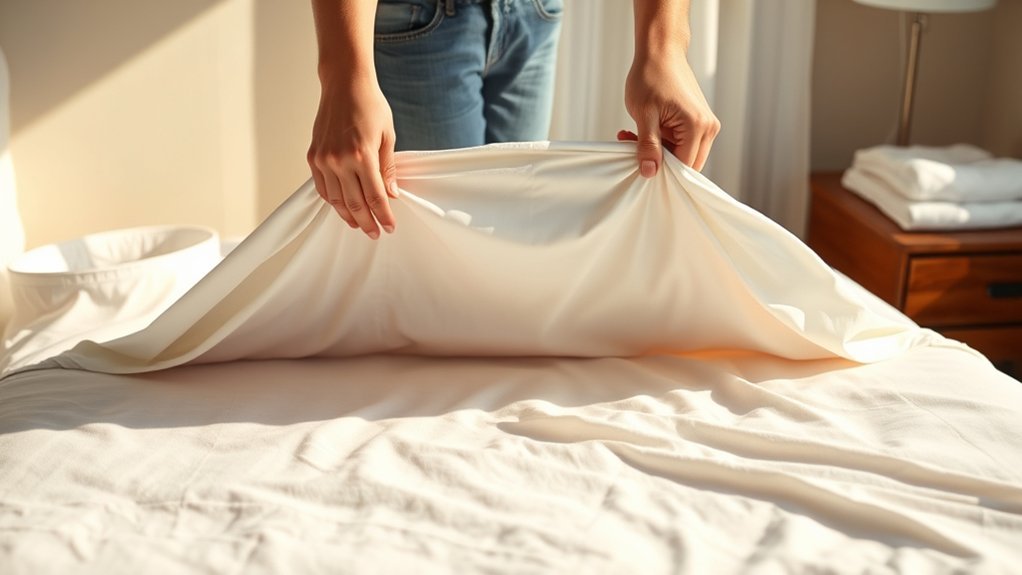
- Read the care label. Confirm the recommended water temperature, cycle, bleach restrictions, and drying method.
- Separate incompatible items. Sort light and dark colors when needed. Keep delicate sheets away from rough towels, clothing with zippers, and heavily soiled items.
- Pretreat visible stains. Apply a suitable treatment before washing and give it time to work according to its label.
- Load the washer loosely. Sheets need room to move. An overloaded drum can leave detergent, soil, and water trapped in folded fabric.
- Add the correct amount of detergent. More detergent does not always mean cleaner sheets. Excess detergent may leave residue, especially in a crowded load or hard water.
- Select the appropriate temperature. Use the warmest setting that the sheet’s care label allows and that suits your cleaning goal.
- Use an extra rinse when needed. This may help if you have sensitive skin or notice detergent residue, provided your washer offers the option.
- Dry the sheets completely. Follow the care label and avoid storing or remaking the bed with damp bedding.
The CDC recommends laundering linens with detergent at the recommended water temperature and drying them completely. In most households, laundry from a sick person can be washed with other household laundry. Wash your hands after handling dirty bedding.
Note: Do not use a hotter cycle merely because the sheets are white. Cotton, linen, silk, microfiber, elastic edges, prints, and wrinkle-resistant finishes can have different care limits.
How to Pretreat Bed Sheet Stains
Treat a stain as soon as practical. Check the care label and the stain-product label before applying anything. Test a new treatment on a hidden area when you are unsure about colorfastness or fabric sensitivity.
Choose the Right Stain Treatment
| Stain | First Treatment |
|---|---|
| Fresh blood or other protein-based stains | Rinse with cold water, then pretreat with an enzyme detergent or product if the label permits |
| Body oil, lotion, or greasy skincare products | Work in a small amount of liquid laundry detergent or grease-cutting dishwashing liquid, then rinse |
| Sweat or yellow discoloration | Pretreat with enzyme detergent or a fabric-safe oxygen bleach |
| Makeup | Use a prewash stain remover or liquid detergent suitable for the fabric |
| Food or drink | Blot excess material and follow a treatment made for that stain type |
The American Cleaning Institute’s stain-removal guidance recommends pretreating or soaking suitable stains and repeating treatment before drying if the mark remains.
Spot-Treat Before Washing
- Remove or blot excess material without spreading the stain.
- Apply the chosen treatment to the stained area.
- Let it sit for the time stated on the product label.
- Wash the sheet according to its care instructions.
- Inspect the stain before placing the sheet in a heated dryer.
- If the stain remains, repeat the treatment and wash it again.
Pro Tip: Heat can make some stains harder to remove. Air-dry the treated area or the entire sheet until you confirm that the stain is gone.
When to Use Hot Water, Bleach, and Softener
Water temperature and laundry additives should match the fabric, color, soil level, and reason for washing. The sheet’s care label takes priority over general advice.
Hot Water for Deep Cleaning
Hot water can help when bedding needs dust-mite control or when the care label recommends a hot cycle. For people with dust-mite allergies, Mayo Clinic recommends washing sheets, blankets, pillowcases, and bedcovers weekly in water that is at least 130°F or 54.4°C.
Do not apply that temperature to every sheet automatically. Hot water may fade colors, shrink some fibers, weaken elastic, or damage delicate fabrics. When hot washing is not suitable, follow the manufacturer’s alternative instructions and discuss allergy-control options with your clinician.
Bleach for White Sheets
Chlorine bleach may brighten and disinfect some white, bleach-safe fabrics, but not every white sheet can tolerate it. Check both the sheet label and bleach label. Wool, silk, spandex, some finishes, and many colored or printed sheets can be damaged.
For colored sheets, a color-safe oxygen bleach may be an option when the care label and product directions allow it. Test first if you are unsure about colorfastness.
Warning: Never mix household bleach with ammonia, vinegar, acids, disinfectants, stain removers, or other cleaners. Dangerous vapors can form. Follow the product label, ventilate the area, and keep laundry chemicals away from children and pets. The CDC provides additional bleach-safety guidance.
Skip or Limit Fabric Softener
Fabric softener is optional rather than necessary for clean sheets. Some products leave fragrance or residue, and scented softeners or dryer sheets may irritate people with eczema or fragrance sensitivity.
If you use softener, follow its label and avoid pouring undiluted liquid directly onto the sheets. Choose a fragrance-free product if scent bothers your skin or breathing. You can also skip softener and use the amount of detergent recommended for your load.
How to Dry Bed Sheets Without Damage
- Check the care label. Use the recommended dryer setting or air-drying method.
- Shake out the sheets. This reduces tight folds and helps the fabric dry more evenly.
- Do not overcrowd the dryer. Sheets need space for warm air to circulate.
- Use the lowest effective heat. High heat can shrink or weaken some fabrics.
- Clean the lint filter. Good airflow supports more efficient and even drying.
- Check for damp pockets. Fitted-sheet corners and bundled fabric may stay wet after the rest of the load feels dry.
- Remove sheets promptly. Folding or placing them on the bed soon after drying can reduce wrinkles.
There is no universal 45-minute drying time. A large cotton set, lightweight microfiber sheets, linen, and delicate fabrics may all dry at different rates. Continue drying only as needed and within the care-label limits.
Note: Do not fold, store, or place sheets on the bed while they are damp. Trapped moisture can cause musty odors and encourage unwanted microbial growth.
How to Wash Different Sheet Materials
| Material | General Care |
|---|---|
| Cotton | Usually machine washable. Follow the label because finishes, colors, and weaves affect temperature and drying limits. |
| Linen | Often benefits from a gentle cycle and low heat. Avoid overdrying, which can increase stiffness and wear. |
| Silk | Use only the method stated on the label, commonly hand washing or a delicate cycle with a silk-safe detergent. Avoid chlorine bleach and high heat. |
| Microfiber or polyester | Use a suitable gentle or normal cycle and avoid excessive heat, which can affect synthetic fibers. |
| Bamboo-derived rayon or viscose | Care varies widely. Follow the exact label because some fabrics require cold water, gentle washing, and low heat or line drying. |
| Blends and wrinkle-resistant sheets | Follow the manufacturer’s instructions because the blend and finish determine safe temperatures. |
Extra Steps for Allergies, Asthma, or Eczema
- Wash sheets and pillowcases weekly.
- Use allergen-proof covers on the mattress and pillows if dust mites are a confirmed trigger.
- Keep indoor relative humidity below 50% when practical to make the environment less favorable for dust mites.
- Use fragrance-free and dye-free detergent if fragrance or dyes irritate your skin.
- Use the detergent amount stated on the label and consider an extra rinse if residue remains.
- Keep pets out of the bedroom if pet dander worsens symptoms.
- Dry bedding completely before use.
Persistent wheezing, shortness of breath, infected-looking skin, severe itching, or repeated nighttime symptoms deserve medical attention. Laundry changes may reduce triggers, but they do not replace asthma, allergy, infection, or eczema treatment.
How to Keep Sheets Cleaner Between Washes
- Shower or wash exposed skin before bed when you are sweaty or dirty.
- Remove makeup before sleeping.
- Let damp hair dry before placing it on the pillow.
- Wear clean sleep clothing.
- Keep food and drinks out of the bed when possible.
- Use a washable mattress protector.
- Keep pets on a separate washable blanket if they are allowed on the bed.
- Allow damp bedding to air briefly instead of immediately trapping moisture under a heavy comforter.
- Vacuum the mattress surface periodically according to the mattress manufacturer’s guidance.
How Often to Wash Pillows and Blankets
Pillowcases should usually be washed with your sheets. Pillows, blankets, protectors, duvet covers, and comforters follow different schedules because they have different levels of direct contact with your body.
| Bedding Item | Practical Washing Schedule |
|---|---|
| Pillowcases | Weekly with the sheets, or sooner if oily, stained, or exposed to hair and skincare products |
| Duvet cover | About weekly if it directly touches your body; every one to two weeks may work when a top sheet is used |
| Mattress and pillow protectors | According to the manufacturer’s schedule and whenever visibly soiled |
| Washable pillows | Every few months or as directed on the label |
| Blankets and comforters | Every few months, seasonally, or sooner after spills, sweating, illness, or pet use |
| Guest bedding | After each guest |
Do not put a pillow in the washer until you confirm that it is machine washable. Many solid memory-foam and latex pillows should not be submerged. These may require removable-cover washing, vacuuming, and spot cleaning instead. Down, feather, and synthetic pillows also have different drying requirements, and thick fill must be completely dry before use.
Frequently Asked Questions
Should You Change Your Bed Sheets Every Day?
Usually, no. Weekly washing is a practical default for most people. Daily changes may make sense when sheets become wet or contaminated, during certain illnesses, when a healthcare professional recommends it, or simply because you prefer fresh bedding every night.
Can Bed Sheets Cause Eczema?
Sheets do not cause eczema, but material on them may trigger or worsen a flare in some people. Possible triggers include sweat, heat, friction, dust mites, fragrance, dyes, pet dander, and detergent residue. Use fragrance-free, dye-free detergent and speak with a dermatologist if symptoms continue.
Why Is My Wife’s Side of the Bed Yellow?
Yellowing is not specific to women. It commonly comes from sweat, body oils, hair products, skincare products, makeup, or delayed stain treatment. Pretreat the area with a fabric-safe enzyme detergent or oxygen bleach, wash according to the care label, and check the stain before drying.
How Often Does Martha Stewart Change Her Sheets?
According to a January 2026 MarthaStewart.com article, she said she changes her sheets every two to three days. That is her personal preference, not a hygiene requirement for everyone.
Should You Wash New Sheets Before Using Them?
Yes, washing new sheets before their first use is a sensible step. It removes warehouse dust, loose dye, packaging odors, and some manufacturing residue. Follow the care label so you do not shrink, fade, or damage the new fabric.
How Should You Wash Sheets After Someone Has Been Sick?
Handle the bedding without shaking it, wash your hands afterward, use detergent and the recommended water temperature, and dry everything completely. In most homes, the CDC says laundry from a sick person can be washed with other household items. Follow medical instructions when the illness requires special precautions.
Conclusion
You do not normally need to change bed sheets every day. Washing sheets and pillowcases about once a week is a strong routine for most households, while every three to seven days may be better for heavy sweating, pets, allergies, illness, or hot weather. Follow the fabric care label, pretreat stains, use laundry products safely, and dry every item completely. A consistent routine matters more than an extreme one.
Sources
- Cleveland Clinic: How Often You Should Wash Your Sheets — supports weekly washing and factors that may require more frequent cleaning.
- Mayo Clinic: Dust Mite Allergy Diagnosis and Treatment — supports weekly bedding washing, allergen-proof covers, humidity control, and hot-water guidance for dust mites.
- CDC: When and How to Clean and Disinfect Your Home — supports detergent use, recommended water temperatures, complete drying, and handling laundry during illness.
- American Academy of Dermatology: Eczema-Friendly Products — supports fragrance-free, dye-free detergent and bedding care for sensitive skin.
- American Cleaning Institute: Stain Removal Guide — supports pretreating stains and checking them before machine drying.
- CDC: Cleaning and Disinfecting With Bleach — supports bleach-label precautions and the warning never to mix bleach with other cleaners.
