
Last Updated on September 11, 2026 by Daniel Globe
A sandwich bag and a quart-size bag are usually different products. The Transportation Security Administration’s published 3-1-1 rule calls for one clear, plastic, zip-top quart-size bag per passenger. Each standard liquid, gel, aerosol, cream, or paste container inside it must hold 3.4 ounces or less. A sandwich bag may be smaller, so a bag labeled “quart size” is the safest choice for matching the rule exactly.
Quick Answer
A standard sandwich bag is usually smaller than the quart-size bag named in TSA’s 3-1-1 rule. For the least hassle, use one clear, plastic, zip-top bag labeled quart size. Every standard liquid, gel, aerosol, cream, or paste container inside it must be 3.4 ounces or 100 milliliters or less.
Key Takeaways
- TSA’s published rule specifies one clear, plastic, zip-top quart-size bag per passenger.
- Each standard liquid container must hold no more than 3.4 ounces or 100 milliliters.
- TSA does not publish one mandatory set of quart-bag dimensions, so use the capacity label rather than relying only on measurements.
- A sandwich bag is normally smaller and is not the exact bag named in the rule.
- Medications, infant feeding supplies, and certain other necessary liquids can qualify for exceptions.
Disclosure: As an Amazon Associate I earn from qualifying purchases. Some links on this page are affiliate links, at no extra cost to you.
What Does TSA Actually Require?
Under the TSA 3-1-1 liquids rule, you may bring limited quantities of liquids, aerosols, gels, creams, and pastes through a standard U.S. airport checkpoint in your carry-on bag. The three parts of the rule are:
- 3.4 ounces or 100 milliliters: the maximum capacity of each standard container
- 1 quart-size bag: one clear, plastic, zip-top bag holding the containers
- 1 bag per passenger: each traveler receives one standard liquids allowance
The 3.4-ounce limit applies to the container’s stated capacity, not merely the amount left inside it.
A half-full 6-ounce shampoo bottle is therefore too large for the standard liquids bag because the container can hold more than 3.4 ounces. Pack larger nonexempt containers in checked baggage or replace them with travel-size containers.
Note: TSA’s public guidance does not set one mandatory length and width for a quart bag. Measurements such as 7 by 8 inches are common approximations, but storage-bag dimensions vary. A clear zip-top bag labeled “quart size” is more reliable than measuring an unmarked bag.
Is a Sandwich Bag One Quart?
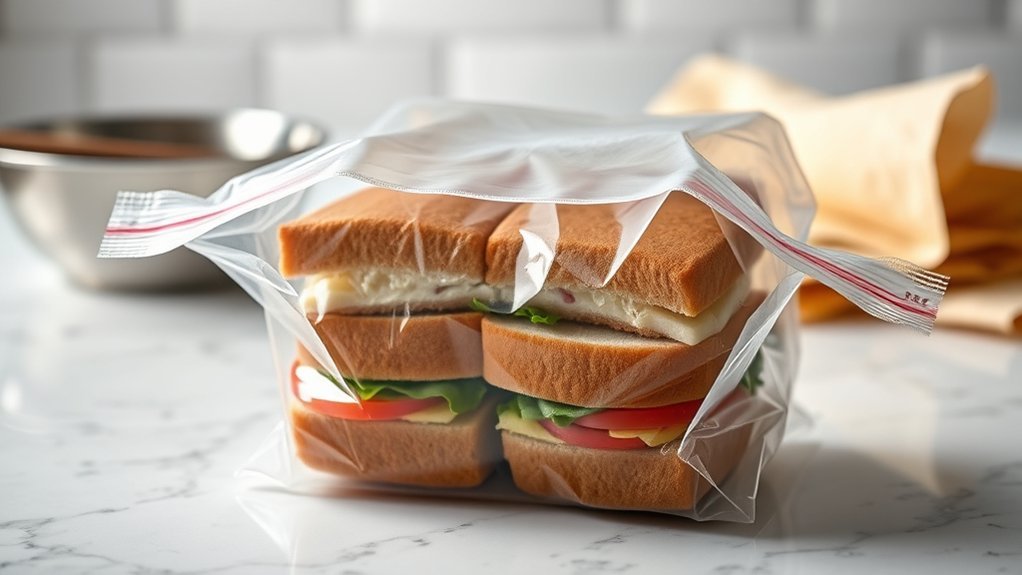
A typical sandwich bag is not the same size as a bag labeled one quart. Sandwich bags are designed to hold sandwiches, snacks, or small objects and are commonly shorter than quart storage bags. They may also have less usable space once the top is sealed.
That does not mean TSA publishes an automatic rejection rule for every bag smaller than a quart. It means a sandwich bag is not the exact quart-size bag named in TSA’s standard guidance. Using a labeled quart bag removes uncertainty and gives you the full permitted packing space.
Size and Capacity
A U.S. liquid quart equals 32 fluid ounces, four cups, or approximately 946 milliliters. The National Institute of Standards and Technology commonly rounds this household conversion to about 950 milliliters.
However, a flexible storage bag is not a rigid measuring container. Its usable capacity depends on its shape, seams, closure, and the objects placed inside it. For that reason, you should not try to prove that an unmarked bag is a quart by multiplying its length and width.
Bag manufacturers also use different dimensions. A sandwich bag from one brand may not match a sandwich bag from another brand. The same applies to quart bags. The printed capacity label is the most practical guide.
TSA Bag Rules
For standard carry-on toiletries, choose a bag that meets all of these conditions:
- It is labeled quart size.
- It is clear enough for the contents to be seen.
- It is made of plastic.
- It has a zip-top or similar resealable closure.
- All standard liquid containers fit inside without preventing the bag from closing.
- Each container holds no more than 3.4 ounces or 100 milliliters.
Pro Tip: Check the printed capacity on the box or bag before packing. “Quart” is a more dependable indicator than comparing the bag visually with a sandwich bag.
How Does a Sandwich Bag Compare to a Quart Bag?
Both products are clear food-storage bags, but they are sold for different uses. A sandwich bag normally offers less space, while a quart bag is the size named in TSA’s standard liquids rule.
| Feature | Sandwich Bag | Quart Bag |
|---|---|---|
| Product label | Sandwich or snack storage | Quart storage |
| Typical capacity | Smaller, with brand-dependent dimensions | Approximately one U.S. liquid quart |
| Best travel use | Dry snacks, cables, solid toiletries, or small accessories | Standard TSA-regulated carry-on liquids |
| TSA guidance | Not the size specifically named | The published 3-1-1 bag size |
There is no reliable universal bottle count for either bag. A few wide jars may take more space than several narrow bottles. The meaningful test is whether every permitted container fits inside the closed quart-size bag.
Why a Sandwich Bag Is Not the Safest TSA Choice
A sandwich bag is not the safest choice because it is usually smaller than the quart bag named in the rule and may not carry everything you are allowed to bring. It may also be difficult to prove its capacity if the packaging is no longer available.
- It may not be labeled with a quart capacity.
- It normally provides less usable packing space.
- Its dimensions vary by manufacturer.
- It can create an unnecessary question about whether your bag matches the published rule.
The main compliance problems are not weak plastic, whether the bag stands upright, or the number of bottles it contains. The important issues are the capacity and type of bag, the size of each container, and whether all regulated items fit inside the closed bag.
Warning: Do not place a container larger than 3.4 ounces in the standard liquids bag just because it is partly empty. Unless an exception applies, the container itself must hold 3.4 ounces or less.
TSA does not publicly state that a smaller clear bag will always be rejected solely because it is smaller. Nevertheless, using a labeled quart-size bag is the clearest way to follow the rule as written. The final checkpoint decision rests with the TSA officer.
Which Bag Is Best for Liquids and Toiletries?
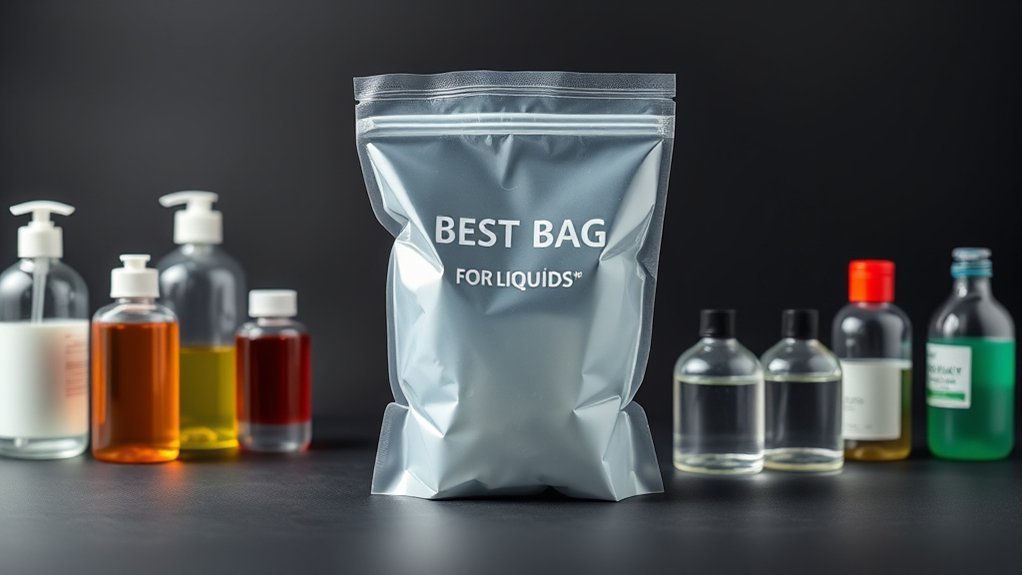
For standard carry-on liquids and toiletries, use a clear, plastic, zip-top bag labeled one quart. A basic disposable food-storage bag works well when it has the correct capacity and closes securely.
You do not need a special bag marketed as “TSA approved.” TSA does not certify every travel pouch or storage-bag brand. What matters is whether the bag matches the published type and capacity requirements.
TSA Quart Bag Rules
Your quart-size bag may contain liquids, gels, aerosols, creams, and pastes in containers holding 3.4 ounces or 100 milliliters or less. Common examples include:
- Shampoo and conditioner
- Liquid soap and body wash
- Lotion and sunscreen
- Toothpaste
- Liquid or gel deodorant
- Perfume and cologne
- Liquid foundation and mascara
- Hair gel and styling cream
- Shaving cream
Place all standard regulated containers in one bag and close it fully. Do not use multiple partly filled quart bags for one passenger.
Sandwich Bag Limitations
A sandwich bag is normally suitable for small dry items but offers less space than a quart bag. Its construction is not automatically inferior, because thickness and seal quality vary by product. Its main limitation for TSA liquids is its labeled size.
| Bag Type | Capacity Guidance | Recommended Use |
|---|---|---|
| Sandwich bag | Usually smaller than one quart; exact dimensions vary | Dry snacks and small accessories |
| Quart-size bag | Labeled one quart | Standard carry-on liquids, gels, aerosols, creams, and pastes |
| Gallon bag | Larger than the standard allowance | General organization, not the standard TSA liquids bag |
| Opaque toiletry pouch | Capacity may be unclear and contents are not fully visible | Checked baggage or nonregulated solid products |
If you currently have your toiletries in a sandwich bag, transferring them to a labeled quart-size bag before leaving home is the simplest solution.
When Can a Sandwich Bag Work for Travel?
A sandwich bag remains useful for travel when you use it for dry, solid, or unregulated items. Its compact size can help separate small belongings without taking much room.
Suitable uses include:
- Crackers, candy, nuts, and other solid snacks
- Earbuds, charging cables, and adapters
- Hair ties, clips, and small accessories
- Bandages and other dry first-aid supplies
- Solid deodorant, bar soap, and solid cosmetics
- Jewelry stored inside a more secure carry-on compartment
TSA allows solid food in carry-on bags, although an officer may ask you to separate food or other dense items when they obstruct the X-ray image. Liquid or gel-like foods, such as sauces, creamy dips, peanut butter, and yogurt, generally follow the liquids rule.
A sandwich bag can also help contain a small solid toiletry that might crumble or leave residue. It should not be treated as the standard replacement for your quart-size liquids bag.
How Do You Pack a Quart Bag Correctly?
Correct packing is more important than arranging every bottle upright. Follow these steps:
- Check each container’s stated capacity. It must be 3.4 ounces or 100 milliliters or less unless an exception applies.
- Remove unnecessary packaging. Cardboard boxes and decorative sleeves take up space and are not required.
- Tighten every lid. Check pump locks and replace loose caps before packing.
- Place all standard regulated products in one quart-size bag.
- Close the bag completely. If the zipper will not close, remove a product rather than forcing it.
- Keep the bag accessible. Place it near the top or front of your carry-on.
- Follow checkpoint instructions. Some screening lanes may allow liquids to remain in your bag, while others may ask you to remove them.
| Checkpoint | Requirement |
|---|---|
| Bag capacity | One quart-size clear plastic zip-top bag |
| Container limit | 3.4 ounces or 100 milliliters or less per standard container |
| Quantity of bags | One standard liquids bag per passenger |
| Closure | The bag should close fully with all containers inside |
Pro Tip: Solid alternatives such as bar soap, solid deodorant, shampoo bars, and toothpaste tablets can remain outside the standard liquids bag and free space for products that must go inside.
Which Bag Should You Use for TSA?
Use a clear, plastic, zip-top bag labeled quart size. This directly matches TSA’s published rule and avoids relying on assumptions about the capacity of an unmarked sandwich bag.
- Choose a disposable or reusable bag only if it is clear, plastic, resealable, and quart size.
- Do not substitute a gallon bag for the standard liquids allowance.
- Make sure every standard container holds 3.4 ounces or less.
- Keep solid toiletries outside the bag to save space.
- Pack larger nonexempt liquids in checked baggage.
- Follow the instructions given at your specific checkpoint.
You do not need reinforced seams, a rigid shape, or a special travel-brand logo. A basic quart food-storage bag is normally the simplest option.
What Counts as a Liquid, Gel, Aerosol, Cream, or Paste?
TSA’s rule covers more than drinks and runny liquids. A product generally belongs in the quart bag when it can be poured, pumped, squeezed, spread, sprayed, or smeared.
Common regulated items include:
- Toothpaste
- Peanut butter and creamy dips
- Yogurt and soft spreadable foods
- Liquid makeup and mascara
- Hair gel, pomade, and styling cream
- Lotions and ointments
- Aerosol deodorant and hairspray
- Liquid hand sanitizer
- Perfume and cologne
Solid products such as bar soap, solid deodorant, lipstick, powder makeup, wipes, and toothpaste tablets normally do not need to fit in the liquids bag. Individual items can still be subject to screening, and some hazardous products remain prohibited regardless of size. Use TSA’s official What Can I Bring database when you are unsure about a specific item.
Which Liquids Are Exempt From the Standard Limit?
Some necessary liquids can exceed 3.4 ounces and do not have to fit in the standard quart bag. These items usually require separate screening.
Medically Necessary Liquids
TSA permits medically necessary liquids, medications, gels, and creams in reasonable quantities for your trip. Tell the officer about them before screening and remove them from your carry-on when instructed. Liquid medication does not have to be placed in the standard zip-top bag.
Infant and Child Feeding Items
Formula, breast milk, toddler drinks, and baby or toddler food may be carried in quantities greater than 3.4 ounces. Your child does not have to be present for you to carry breast milk. Inform the officer at the beginning of screening and present the items separately.
Cooling accessories such as ice packs, freezer packs, and gel packs used for these supplies are also permitted and may receive additional screening.
Frozen Liquids
Frozen liquid items can pass through the checkpoint when they are completely frozen solid at the time of screening. If they are partially melted, slushy, or have liquid at the bottom, they generally need to comply with the standard liquids rule unless another exception applies.
Note: Exceptions do not mean the items bypass screening. Officers may inspect or test them, and the final decision about whether an item can pass through the checkpoint rests with TSA.
Frequently Asked Questions
Is a 1-quart bag a sandwich bag?
No. A bag labeled one quart is normally larger than a standard sandwich bag. Manufacturers may use different dimensions, so check the capacity printed on the package instead of relying only on appearance.
What is the difference between a quart-size Ziploc bag and a sandwich bag?
The main difference is labeled capacity. A quart-size bag is designed to hold approximately one U.S. liquid quart, while a sandwich bag is usually smaller. Material thickness and zipper strength depend on the specific product rather than the size category.
Does TSA still require a quart-size bag?
Yes. TSA’s current published 3-1-1 guidance calls for one clear, plastic, zip-top quart-size bag per passenger, with standard containers holding no more than 3.4 ounces or 100 milliliters each.
How many quarts is a standard sandwich bag?
There is no dependable universal conversion. Sandwich-bag dimensions, seams, and usable volume vary by manufacturer. Treat it as a separate smaller product rather than assigning it a fixed fraction of a quart.
Does a TSA quart bag have to measure exactly 7 by 8 inches?
No exact 7-by-8-inch requirement appears in TSA’s public 3-1-1 guidance. That measurement is a common approximation. Use a clear plastic zip-top bag labeled quart size because dimensions vary among manufacturers.
Can I bring a liquid container larger than 3.4 ounces?
Usually not through standard screening in your carry-on, even when the container is partly empty. Exceptions include reasonable quantities of medically necessary liquids, medications, formula, breast milk, toddler drinks, and baby food. Declare exempt items for separate screening.
Conclusion
A sandwich bag is normally smaller than a true quart-size storage bag, so it is not the exact bag TSA names in the 3-1-1 liquids rule. The safest approach is simple: use one clear, plastic, zip-top bag labeled quart size and place only containers holding 3.4 ounces or 100 milliliters or less inside it.
Do not depend on a claimed 7-by-8-inch requirement, fixed bottle counts, or assumptions about bag thickness. Check the capacity label, close the bag fully, keep it accessible, and separate any medically necessary or infant-care liquids that qualify for special screening.
Sources
- Transportation Security Administration: TSA Travel Tips — confirms the current 3-1-1 liquids rule and medical-liquid guidance.
- Transportation Security Administration: What Can I Bring? — supports item-specific rules, infant-feeding exceptions, frozen-liquid guidance, and final-officer discretion.
- Transportation Security Administration: Solid Food Guidance — explains the difference between solid food and liquid or gel food.
- National Institute of Standards and Technology: Measurement Equivalencies — supports the quart, cup, fluid-ounce, and milliliter conversions.

